Liquid vs Powder vs Cream Foundation: Pros, Cons & Who It’s For
Liquid, powder, cream — the three classic foundation formula types, and choosing between them is one of the first real decisions a makeup beginner faces. Each one has a distinct texture, a different application method, and a different relationship with your skin type. Pick the wrong formula and even a perfect shade match can look off; pick the right one and everything gets easier.
This guide compares all three formula types honestly: what each feels like, what coverage and finishes it offers, which skin types it suits, and where each one falls short. There’s no single “best” — only the best for your skin, your skill level, and your routine. If you haven’t yet worked through the broader decision, start with our guide on how to choose the right foundation formula for your skin type, then come back here to pick your texture.
Key Takeaways
- Liquid foundation is the most versatile: widest shade ranges, all coverage levels, all finishes, easiest to blend — the best starting point for most beginners.
- Powder foundation is fastest to apply and great for oily skin, but can look dry or cakey on dry or mature skin.
- Cream foundation offers rich pigment and a skin-like finish, ideal for dry and mature skin, but can feel heavy on oily skin.
- Formula affects coverage behavior: liquids layer most gracefully; powders build quickly but can turn chalky; creams give high coverage in one pass.
- Your skin type matters more than trends — dry skin and powder foundation are rarely happy together.
Liquid Foundation
Texture and Application
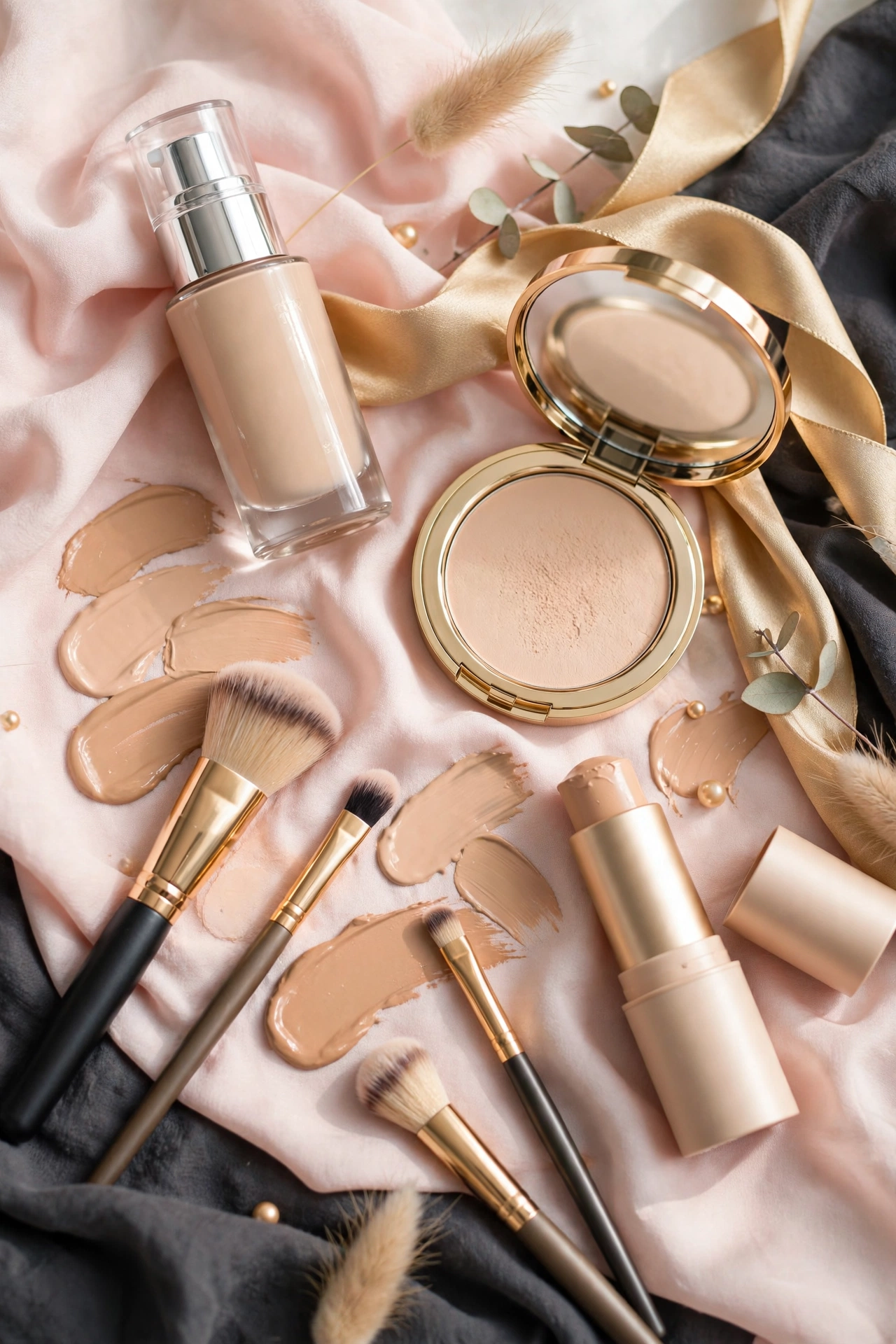
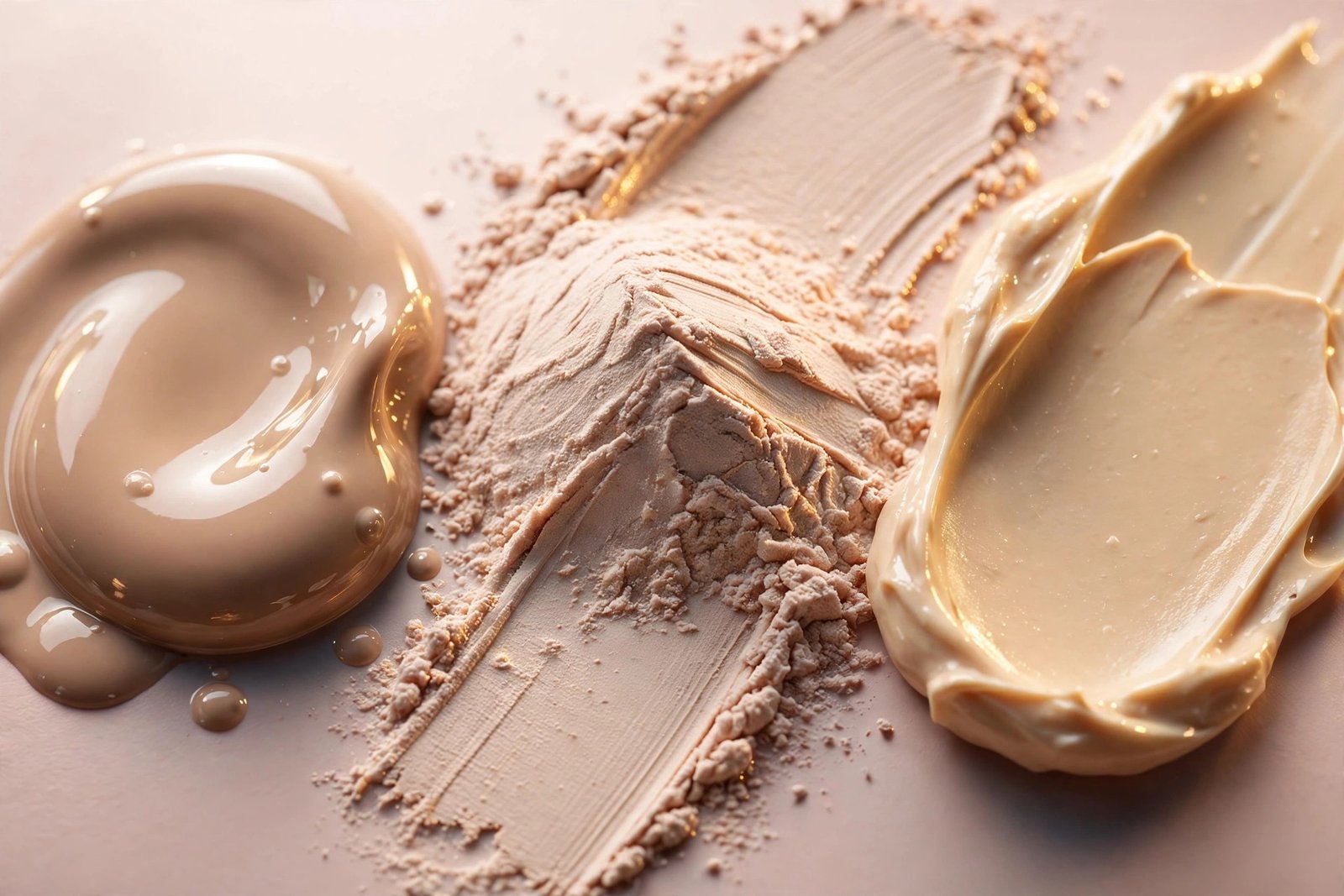
Liquid foundation is exactly what it sounds like: a fluid formula dispensed from a bottle or tube. It ranges from watery-thin skin tints to thick, full-coverage fluids. Application is flexible — fingers, damp sponge, or brush all work — and it’s the most forgiving formula for beginners because it blends easily and gives you time to work before it sets.
Pros
- Widest shade ranges. Brands launch new shades in liquid first; if you have a hard-to-match skin tone, liquid gives you the most options.
- Every coverage level and finish. Sheer to full, matte to dewy — liquid foundations cover the entire spectrum. Whatever combination of coverage level you need almost certainly exists in liquid form.
- Most blendable. Liquids melt into skin and layer gracefully, making them ideal for the thin-layer build-up technique.
- Skincare-infused options. Many modern liquid foundations include hyaluronic acid, niacinamide, or SPF — blurring the line between makeup and skincare.
Cons
- Can transfer. Liquid foundations are the most likely to rub off on clothes, phones, and hugs — setting spray or powder helps.
- Shorter wear on very oily skin. Without primer and setting, liquids can break down faster on oily skin than powder formulas.
- Spillage and shade oxidation. Pump bottles are tidy, but some liquid formulas oxidize (darken) as they dry — always test shades with a wear test.
Best For
Beginners, dry skin, normal skin, mature skin, and anyone who wants maximum shade and finish options. If you’re buying your first foundation ever, liquid is the safest starting point.
Powder Foundation
Texture and Application
Powder foundation comes as a pressed compact or loose powder with enough pigment to function as a base. It’s applied with a brush or puff, buffed onto the skin in circular motions. Application is fast — often under two minutes — which is why it’s beloved for rushed mornings and touch-ups.
Pros
- Fastest application. No blending tools, no dry-down time — buff and go.
- Excellent for oily skin. Powder absorbs oil throughout the day, keeping shine controlled with minimal touch-ups.
- Great for touch-ups. A powder compact in your bag refreshes your base anywhere, no mirror expertise required.
- Lightweight feel. Even at medium coverage, powder foundation feels like almost nothing on the skin.
- No transfer issues. Once on, powder stays put and doesn’t rub off on clothing.
Cons
- Can look dry or cakey. On dry, dehydrated, or mature skin, powder foundation settles into fine lines, clings to flakes, and emphasizes texture. This is the formula’s biggest weakness.
- Limited shade ranges. Powder foundations typically offer fewer shades than liquids, making matches harder for very fair, very deep, or olive undertones.
- Builds quickly to chalky. Layering powder over powder gets chalky fast — it’s harder to build coverage gracefully than with liquid.
- Less forgiving of poor prep. Powder over unmoisturized skin looks rough; good skincare underneath is non-negotiable.
Best For
Oily and combination skin, quick everyday routines, touch-ups over liquid foundation, and warm or humid climates. If your skin is dry or mature, approach powder foundation cautiously — or skip it in favor of liquid or cream.
Cream Foundation
Texture and Application
Cream foundation is a dense, buttery formula sold in compacts, sticks, or pots. It’s the most pigmented of the three per swipe — a little goes a long way. Application works best with fingers (the warmth melts the product), a dense brush, or a damp sponge pressed rather than buffed. Because it’s so concentrated, blending thoroughly is essential.
Pros
- High coverage in one pass. Creams deliver serious pigment with minimal product — efficient for full-coverage needs.
- Skin-like, flexible finish. Good cream formulas meld with skin and move with your expressions rather than cracking.
- Beautiful on dry and mature skin. The emollient texture doesn’t cling to dry patches and won’t settle harshly into fine lines the way powder can.
- Portable and precise. Stick formats are brilliant for targeted application and travel — no spills, no brushes required.
- Doubles as concealer. Most cream foundations are pigmented enough to spot-conceal blemishes, simplifying your routine.
Cons
- Can feel heavy. On oily skin or in hot weather, cream foundation can feel thick and look shiny by afternoon.
- Requires thorough blending. Unblended edges show more with cream than with liquid — technique matters.
- Can transfer and crease. Without setting powder, creams migrate into smile lines and rub off easily.
- Fewer sheer options. Cream formulas skew medium-to-full coverage; truly sheer creams are rare.
Best For
Dry skin, mature skin, anyone wanting high coverage efficiently, and cooler months when skin needs extra emollience. Stick creams are also excellent for combination skin as a targeted product — the best foundation for combination skin often pairs formulas.
Head-to-Head Comparison
| Liquid | Powder | Cream | |
|---|---|---|---|
| Texture | Fluid | Dry pressed/loose powder | Dense, buttery solid |
| Coverage range | Sheer to full | Light to medium (some full) | Medium to full |
| Finish options | All finishes | Mostly matte/natural | Mostly satin/natural/dewy |
| Best skin types | All, especially dry/normal/mature | Oily, combination | Dry, mature, normal |
| Application speed | Moderate | Fastest | Moderate |
| Blendability | Easiest | Easy but can cake if over-layered | Needs thorough blending |
| Touch-up friendly | Needs care | Excellent | Good (stick format) |
| Transfer risk | Highest | Lowest | Moderate |
| Beginner friendly | Most forgiving | Easy to apply, hard to fix if wrong | Demands technique |
Which Formula for Your Skin Type?
Oily skin: Powder foundation is the natural match — it absorbs oil and controls shine. If you prefer liquid, choose an oil-free matte formula and set with powder. Cream is usually the worst fit here unless used very sparingly.
Dry skin: Liquid (hydrating formulas) or cream. Both add moisture rather than absorbing it. Avoid powder foundation as your primary base — it will emphasize every dry patch.
Combination skin: Liquid is the most adaptable — apply normally, then press powder only onto the oily zones. Or use cream/liquid on dry areas and powder on the T-zone. Combination skin benefits most from mixing formulas strategically.
Sensitive skin: Liquid mineral or fragrance-free formulas are usually the gentlest. Patch-test any formula — powders with talc or fragranced creams can irritate reactive skin.
Mature skin: Liquid or cream. Both are flexible and won’t settle into fine lines the way powder can. Look for hydrating, light-reflecting formulas in a satin or dewy finish.
Acne-prone skin: Non-comedogenic liquid or powder. Powders are less likely to clog pores, but a good non-comedogenic liquid works beautifully too. Avoid heavy creams during active breakouts unless they’re specifically non-comedogenic.
Can You Combine Formulas?
Absolutely — and experienced makeup wearers do it routinely:
- Liquid + powder: The classic combination. Liquid foundation for coverage and evenness, powder pressed on top (or just on the T-zone) for longevity and shine control.
- Cream + powder: Cream stick for targeted coverage, light powder to set. Great for combination skin.
- Liquid + cream: Liquid base sheered out, cream stick as concealer on blemishes. Efficient and natural-looking.
The general rule when layering: apply wet/creamy products before dry/powder products. Liquid or cream first, powder last. Reversing the order gives you pilling and patchiness.
Frequently Asked Questions
Is liquid or powder foundation better for beginners?
Liquid, in most cases. It’s the most forgiving to blend, comes in the widest shade ranges, and works for the most skin types. Powder is easier to apply but harder to fix if you choose wrong — a dry-skinned beginner with powder foundation will struggle more than an oily-skinned beginner with liquid.
Does powder foundation provide enough coverage?
For everyday needs, usually yes — most powder foundations offer light to medium coverage, which handles uneven tone and mild redness. For significant blemishes or discoloration, you’ll need concealer underneath or a fuller-coverage formula. Some powder foundations do reach full coverage, but they’re the exception.
Can I use cream foundation every day?
Yes, if it suits your skin type. Use a thin layer sheered out with a damp sponge rather than a full stick application — cream is concentrated, and a little covers a lot. On oily skin, daily cream foundation usually requires blotting or powdering by afternoon.
Why does my powder foundation look cakey?
Usually over-application or dry skin underneath. Use less product than you think, moisturize well first, and apply with a fluffy brush in light layers rather than pressing heavily with a puff. If your skin is dry, powder may simply be the wrong formula for you — consider switching to liquid.
Do I need different tools for each formula?
Roughly: liquids work with sponges, brushes, or fingers; powders need brushes or puffs; creams work best with fingers, dense brushes, or damp sponges. A damp beauty sponge is the single most versatile tool — it handles liquid and cream beautifully.
Which formula lasts longest?
On oily skin, powder usually wins for longevity. On dry skin, a well-set liquid or cream lasts longer because powder breaks down on dry texture. Overall, longevity depends as much on primer, setting products, and skin prep as on the formula itself.
Conclusion
Liquid, powder, and cream foundations each earn their place: liquid for versatility and blendability, powder for speed and oil control, cream for rich coverage and dry-skin comfort. The “best” formula is simply the one that matches your skin type, your coverage needs, and the amount of effort you want to spend each morning.
If you’re still unsure, start with liquid — it’s the most forgiving formula for beginners and the easiest to adjust. Then, once you know how your skin behaves under makeup, experiment: add a powder for touch-ups, try a cream stick for targeted coverage, or mix formulas to build a routine that’s truly yours. Foundation isn’t a single product decision — it’s a toolkit. And now you know what each tool does.
Love this? Pin it for later!