Sheer vs Medium vs Full Coverage Foundation: Which Do You Need?
Sheer, medium, full — three little words that cause an outsized amount of confusion at the makeup counter. They describe a foundation’s coverage: how opaque it is, and how much of your natural skin it hides. Get coverage right and your base looks effortless. Get it wrong and you either look like you’re wearing nothing (when you wanted correction) or like you’re wearing a mask (when you wanted freshness).
The tricky part is that coverage claims on packaging are vague by design. One brand’s “medium” is another brand’s “full.” And coverage is independent of finish — a sheer foundation can be matte, and a full-coverage foundation can be dewy. (If finishes confuse you too, our guide to matte, dewy, satin, and natural foundation finishes sorts that out.)
This guide explains what sheer, medium, and full coverage actually look like in real life, who each level suits, and — crucially — how to build coverage up without ending up cakey. By the end, you’ll know exactly which level to reach for on any given day.
Key Takeaways
- Sheer coverage evens out tone while letting your real skin show through — best for clear skin and no-makeup looks.
- Medium coverage hides redness, uneven tone, and minor blemishes while still looking like skin — the most versatile everyday level.
- Full coverage conceals significant discoloration, acne, and hyperpigmentation — best for events, photos, and days you want maximum correction.
- Coverage is buildable: start sheer and add layers only where needed, rather than applying full coverage everywhere.
- Most beginners are happiest starting with medium coverage — it’s the most forgiving level.
What Is Foundation Coverage, Exactly?
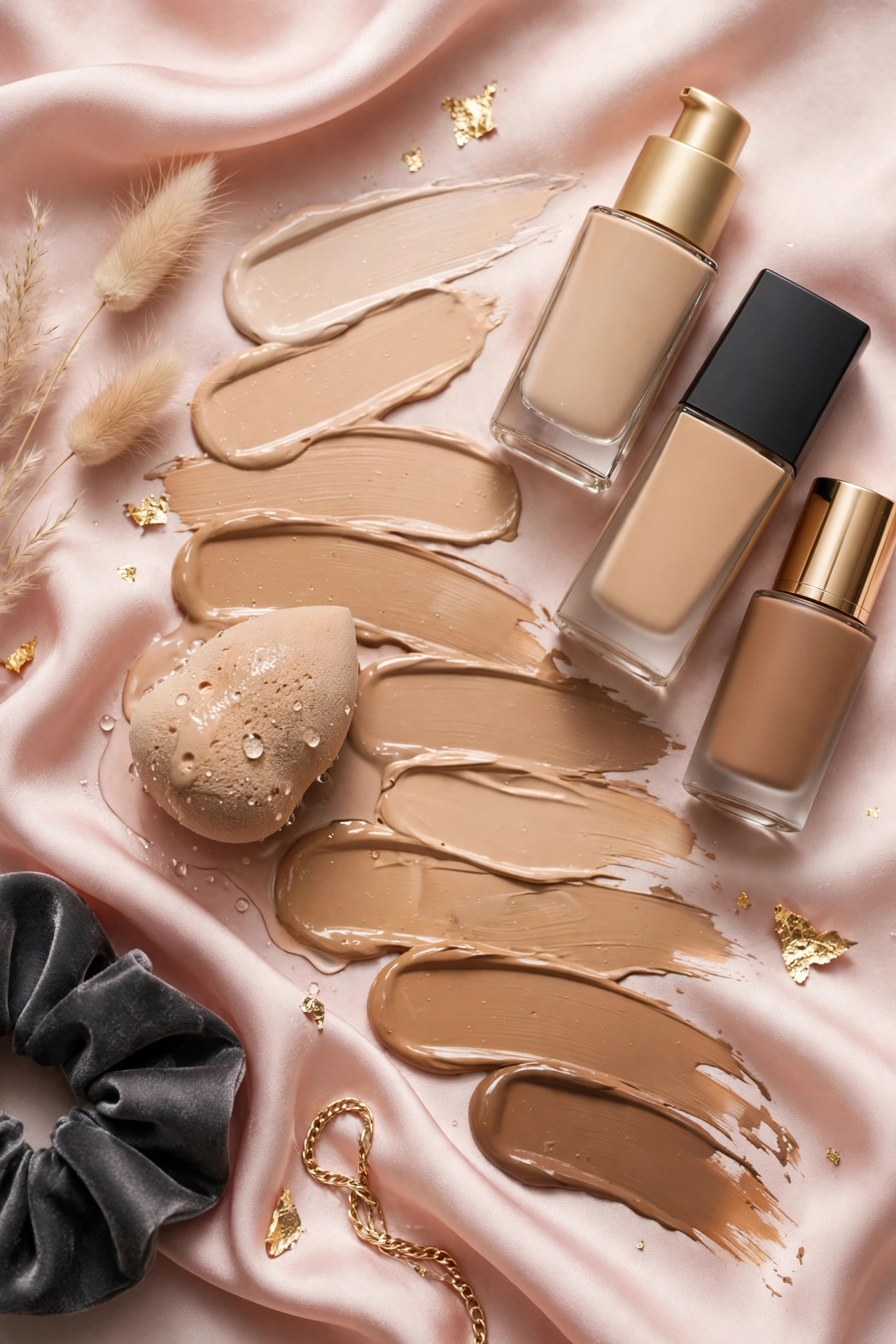
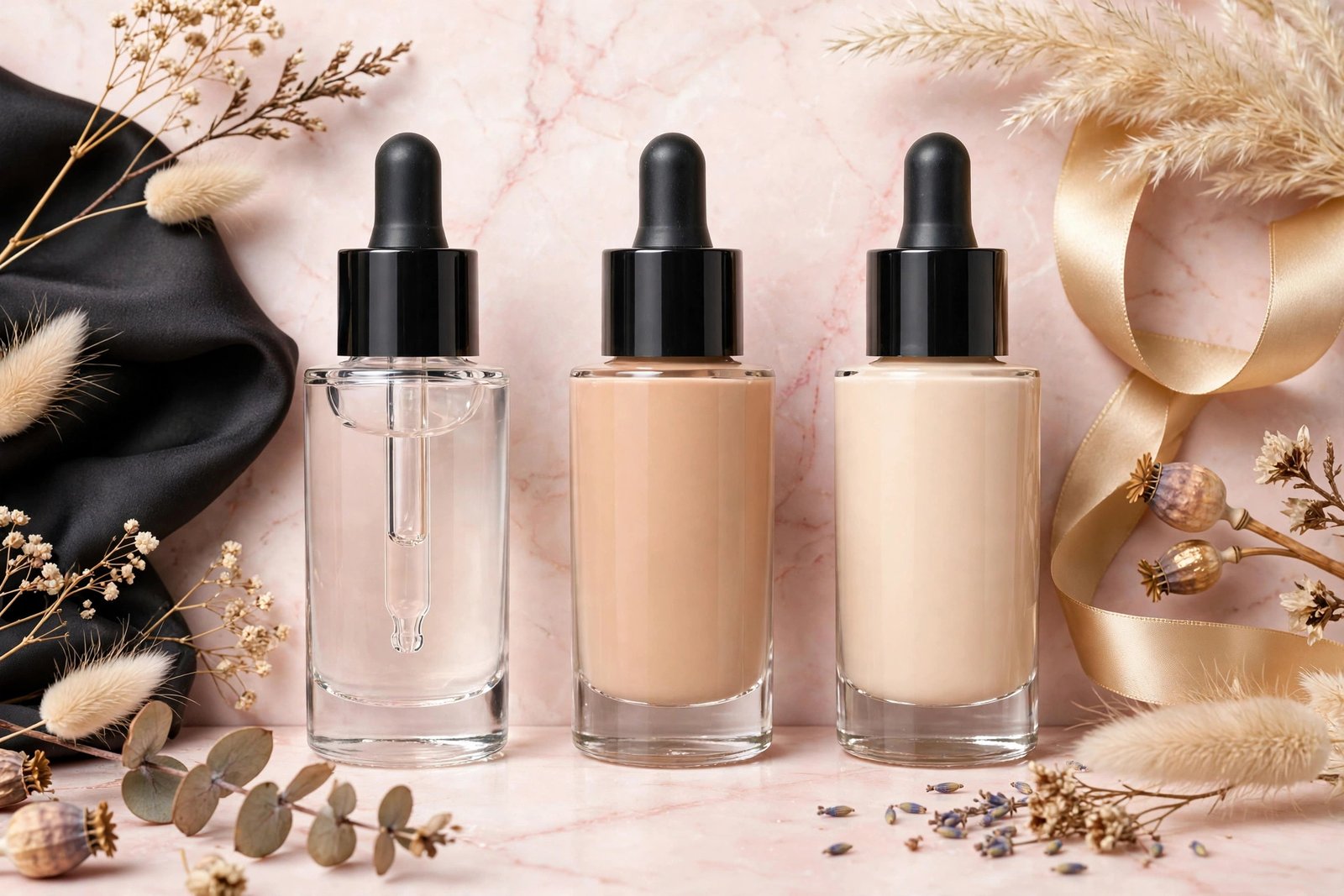
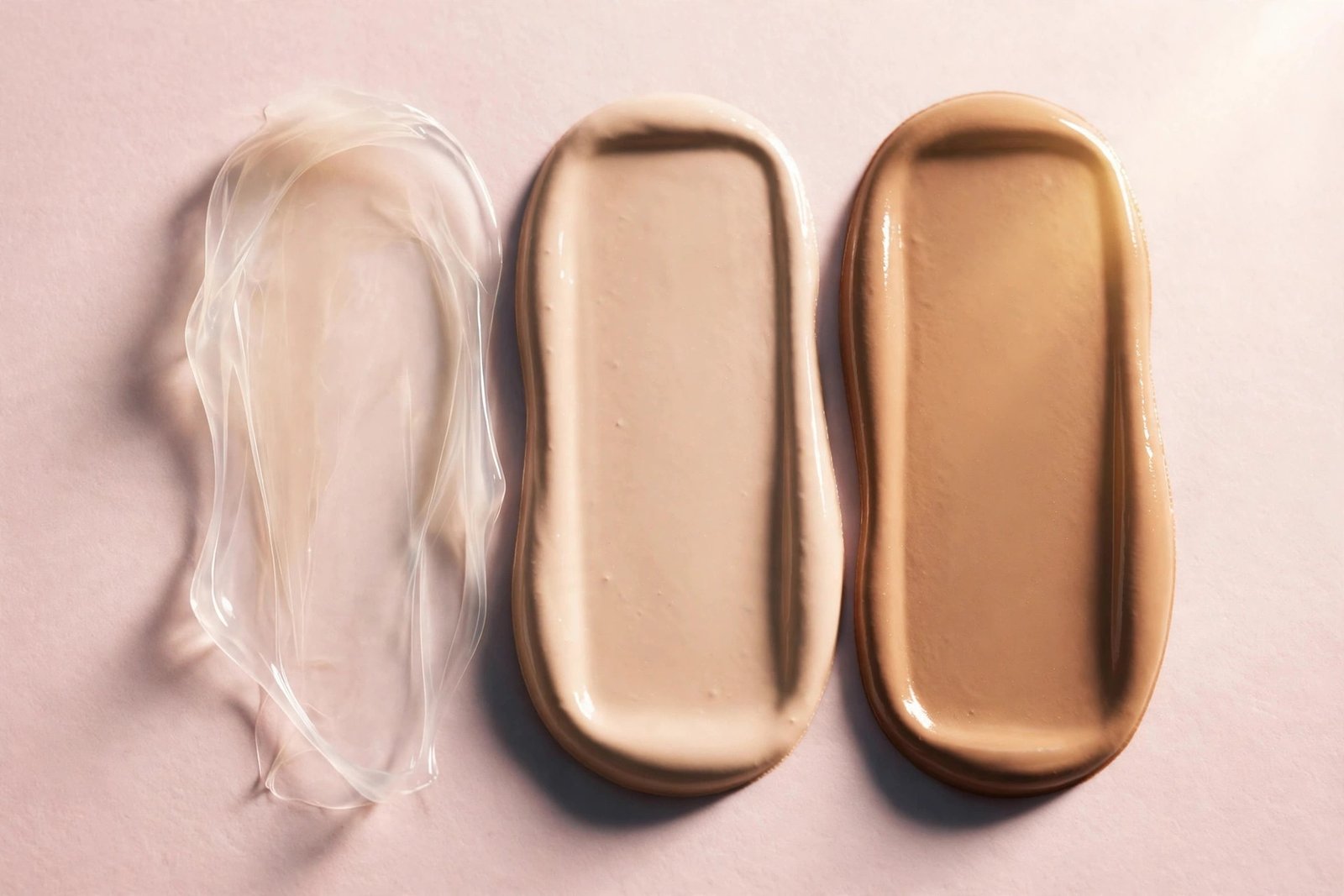
Coverage is a measure of opacity. A sheer foundation is like a tinted veil — you can see your skin through it. A full-coverage foundation is like opaque paint — it hides what’s underneath. Medium sits between the two.
Coverage is determined by the concentration of pigments in the formula. More pigment = more coverage. That’s also why full-coverage foundations tend to feel heavier and why sheer formulas feel lighter — though modern formulations have blurred those lines considerably.
One important note: coverage describes how much the foundation conceals, not how much it corrects color. A sheer green-tinted primer can neutralize redness better than a medium-coverage foundation in the wrong undertone. Coverage and shade-matching work together — our guide on how to choose the right foundation formula for your skin type covers the full selection process.
Sheer Coverage Foundation
What It Actually Looks Like
Sheer foundation evens out your overall skin tone and adds a whisper of polish, but your freckles, moles, and natural texture remain visible. Up close, it looks like really good skin rather than like makeup. From a few feet away, the difference between sheer foundation and bare skin is subtle — that’s the point.
Sheer formulas include tinted moisturizers, skin tints, BB creams (usually), and foundations explicitly labeled “sheer” or “light coverage.”
Who It’s For
- Clear or mostly-clear skin that just needs tone-evening, not correction.
- No-makeup makeup lovers who want to look polished without looking “done.”
- Teens and minimal-makeup wearers who don’t want heavy product on their face.
- Dry skin types — sheer formulas are usually hydrating and flexible, so they rarely cling or cake.
- Hot, humid days when heavy base makeup feels unbearable.
Limitations
Sheer coverage won’t hide active breakouts, significant redness, dark spots, or under-eye circles on its own. If you need correction in specific areas, pair sheer foundation with a targeted concealer — apply the sheer base everywhere, then spot-conceal only where needed. This combination gives you the lightness of sheer coverage with the correction of a heavier product, exactly where you want it.
Medium Coverage Foundation
What It Actually Looks Like
Medium coverage is the workhorse of the foundation world. It conceals redness, uneven tone, mild breakouts, and minor discoloration while still looking like skin — not like makeup. Your natural texture shows through softly, but the distracting stuff is gone. Most people looking at you would think “great skin,” not “great foundation.”
This is the coverage level most everyday foundations default to, and it’s the level makeup artists reach for most often for real-life (non-photoshoot) looks.
Who It’s For
- Almost everyone, most days. Medium coverage handles the common concerns — redness around the nose, uneven tone, the occasional blemish — without looking heavy.
- Beginners. It’s the most forgiving level: sheer enough to blend easily, pigmented enough to actually do something.
- Office and everyday wear. Polished but natural — appropriate everywhere.
- Combination skin. Medium formulas come in every finish, so you can match your skin type easily.
Limitations
Medium coverage won’t fully hide cystic acne, strong melasma patches, or heavy hyperpigmentation. For those concerns, you can either build medium coverage up in layers (see the technique section below) or step up to full coverage for the areas that need it. Many people use medium coverage daily and keep a full-coverage formula for events.
Full Coverage Foundation
What It Actually Looks Like
Full coverage foundation conceals nearly everything: breakouts, scarring, rosacea redness, vitiligo patches, tattoos (with enough layering). The skin looks flawless and uniform — which is exactly what you want for photography, stage, or evenings when maximum polish is the goal.
The trade-off is that full coverage looks the least like natural skin. Up close, it reads as makeup — beautifully applied makeup, ideally, but makeup nonetheless. It also demands better technique: mistakes show more at full opacity.
Who It’s For
- Significant skin concerns you want fully concealed: severe acne, rosacea, hyperpigmentation, scarring.
- Photography and events where cameras and lighting demand a flawless base.
- Performers and anyone under stage or studio lighting.
- People who simply prefer the look — there’s no rule that says you must want a natural finish. If you love a full-glam base, that’s a valid preference.
Limitations
Full coverage is the hardest level to wear well. It requires thorough skin prep (moisturizer, primer), careful application (thin layers, well blended), and usually setting powder to stay put. Applied too thickly or on unprepped skin, it cakes, separates, and emphasizes texture — the exact opposite of the flawless look you’re after. Beginners should practice with medium coverage first and graduate to full coverage once their blending technique is solid.
How to Build Coverage Without Looking Cakey
This is the skill that separates good base makeup from bad, regardless of which coverage level you buy. The golden rule: start with less than you think you need, and add only where needed.
Step 1: Prep the skin. Moisturizer suited to your skin type, then primer if you use one. Foundation applied to prepped skin needs less product to look even — unprepped skin drinks up foundation unevenly, tempting you to pile on more.
Step 2: Apply one thin layer everywhere. Use a damp sponge or a buffing brush and sheer the foundation out. One thin, even layer of a medium-coverage foundation covers more than you’d expect.
Step 3: Assess before adding. Wait a minute for the foundation to settle, then look in natural light. You’ll usually find that 80% of your face is done — it’s just a few areas (around the nose, chin, blemishes) that need more.
Step 4: Spot-build. Dab a tiny extra amount of foundation or concealer only onto the areas that need it, and blend the edges. Building coverage in specific spots looks infinitely more natural than a second full-face layer.
Step 5: Set strategically. A light dusting of setting powder where you get oily — not a full-face bake — keeps coverage in place without adding heaviness.
The formula you choose affects buildability too. Liquid, powder, and cream foundations build very differently — liquids layer most gracefully, while powders can get chalky if over-layered.
Coverage vs. Finish: Don’t Confuse Them
Beginners often conflate these two, so let’s make it crystal clear:
- Coverage = how much the foundation hides (sheer / medium / full).
- Finish = how the foundation looks in terms of light reflection (matte / dewy / satin / natural).
Every combination exists. You can buy a sheer matte foundation, a full-coverage dewy foundation, a medium satin foundation, and so on. When shopping, check both attributes — the coverage tells you how much correction you’ll get, and the finish tells you how it will look on your skin type. Our foundation finishes guide pairs with this article to complete the picture.
Frequently Asked Questions
How do I know which coverage level I need?
Look at your skin’s main concerns. If you mainly want to even out tone and look polished, sheer is enough. If you have redness, uneven tone, or occasional blemishes to hide, go medium. If you have significant discoloration, acne, or scarring you want fully concealed, go full. When in doubt, start with medium — it’s the easiest level to adjust up or down.
Can sheer foundation cover acne?
Not on its own. Sheer foundation will even out the redness around breakouts slightly, but active blemishes will show through. The sheer-plus-concealer strategy works well: sheer base everywhere for an even canvas, then a fuller-coverage concealer dotted exactly on blemishes and blended at the edges.
Why does my full-coverage foundation look cakey?
Almost always one of three causes: too much product, unprepped skin, or a formula that’s too dry for your skin type. Try using half the amount, moisturizing thoroughly first, and applying in thin layers with a damp sponge. If it still cakes, the formula may simply be wrong for your skin — choosing the right foundation formula can help you troubleshoot.
Can I mix two coverage levels?
Yes, and it’s a great trick. Mixing a full-coverage foundation with a moisturizer or a sheer tint gives you a custom medium. Mixing medium with a drop of full-coverage boosts opacity just slightly. Just make sure the formulas are compatible — two liquid foundations mix beautifully; a liquid and a powder won’t.
Does higher coverage mean longer wear?
Not necessarily. Wear time depends more on the formula’s staying power, your skin type, and your prep and setting routine than on coverage level. Some sheer skin tints last impressively; some full-coverage foundations break down by lunch. Check reviews for longevity rather than assuming coverage equals wear.
Should my concealer match my foundation’s coverage?
Roughly, yes — or go slightly higher. Concealer is meant for targeted correction, so a fuller-coverage concealer over a medium-coverage foundation is a classic combination. A sheer concealer over full-coverage foundation is pointless; the foundation is already doing more work than the concealer can add.
Conclusion
Coverage is simply a question of how much you want your foundation to hide — and the honest answer is different for everyone, and different on different days. Sheer coverage gives you the freshest, most skin-like result for clear skin and minimal-makeup days. Medium coverage is the versatile everyday sweet spot that handles real-life concerns without looking heavy. Full coverage delivers maximum correction for events, photos, and days when you want a flawless base.
The real skill isn’t picking a level — it’s learning to build. Start thin, assess in natural light, and add product only where your skin actually needs it. That technique makes any coverage level look better, and it’s what keeps even full-coverage foundation from ever looking cakey. Pair the right coverage with the right finish for your skin type, and your base makeup will finally do what it’s supposed to: make your skin look like the best version of itself.
Love this? Pin it for later!