Best Color Correctors for Dark Skin Tones
Color correcting can be a game-changer for dark skin — but only if you use the right shades. The pastel green and lavender correctors marketed to everyone are often far too light to work on deep skin tones; worse, they can leave an ashy or gray cast that draws more attention to the very spots you’re trying to hide.
The good news: once you know which shades actually neutralize common concerns on dark skin — orange, red, and deep peach — color correcting becomes simple and effective. This guide covers the best color corrector shades for dark skin tones, what each one fixes, and how to apply them without the ashy finish.
Key Takeaways
- Orange, red, and deep peach are the corrector shades that work on dark skin — pastel green and lavender are usually too light.
- Dark skin tends to show hyperpigmentation, dark spots, and blue-toned under-eye circles, which orange/red shades neutralize best.
- The corrector must be deep enough for your skin tone; a corrector that’s too light causes ashiness.
- Always layer corrector under foundation or a skin-tone concealer — never wear it alone.
- Corrector goes on sheer and blended; heavy application is what causes gray, cakey patches.
Why Color Correcting Is Different for Dark Skin
Most color-correcting advice online assumes light to medium skin. The classic “peach for dark circles, green for redness” guidance works when the corrector is deeper than the skin it’s correcting — but many drugstore corrector palettes only include light pastel versions that disappear uselessly (or visibly) on deep skin.
On dark skin, the most common concerns are:
- Hyperpigmentation and dark spots — often brown or dark gray in tone, left behind by acne or sun exposure.
- Blue or purple-toned dark circles — under-eye skin with a cool, deep shadow.
- Uneven tone around the mouth and eyes — areas that can look darker or grayer than the rest of the face.
Orange and red correctors work on these because orange sits opposite blue/green on the color wheel, canceling the cool tones in dark circles and the dark tones of hyperpigmentation. Deep peach works similarly for medium-deep skin. These shades are warm, rich, and pigmented enough to actually do the job on deeper complexions.
For a primer on which shades neutralize what, start with our color correcting guide for beginners.
The Best Corrector Shades for Dark Skin Tones
Orange correctors (deep skin)
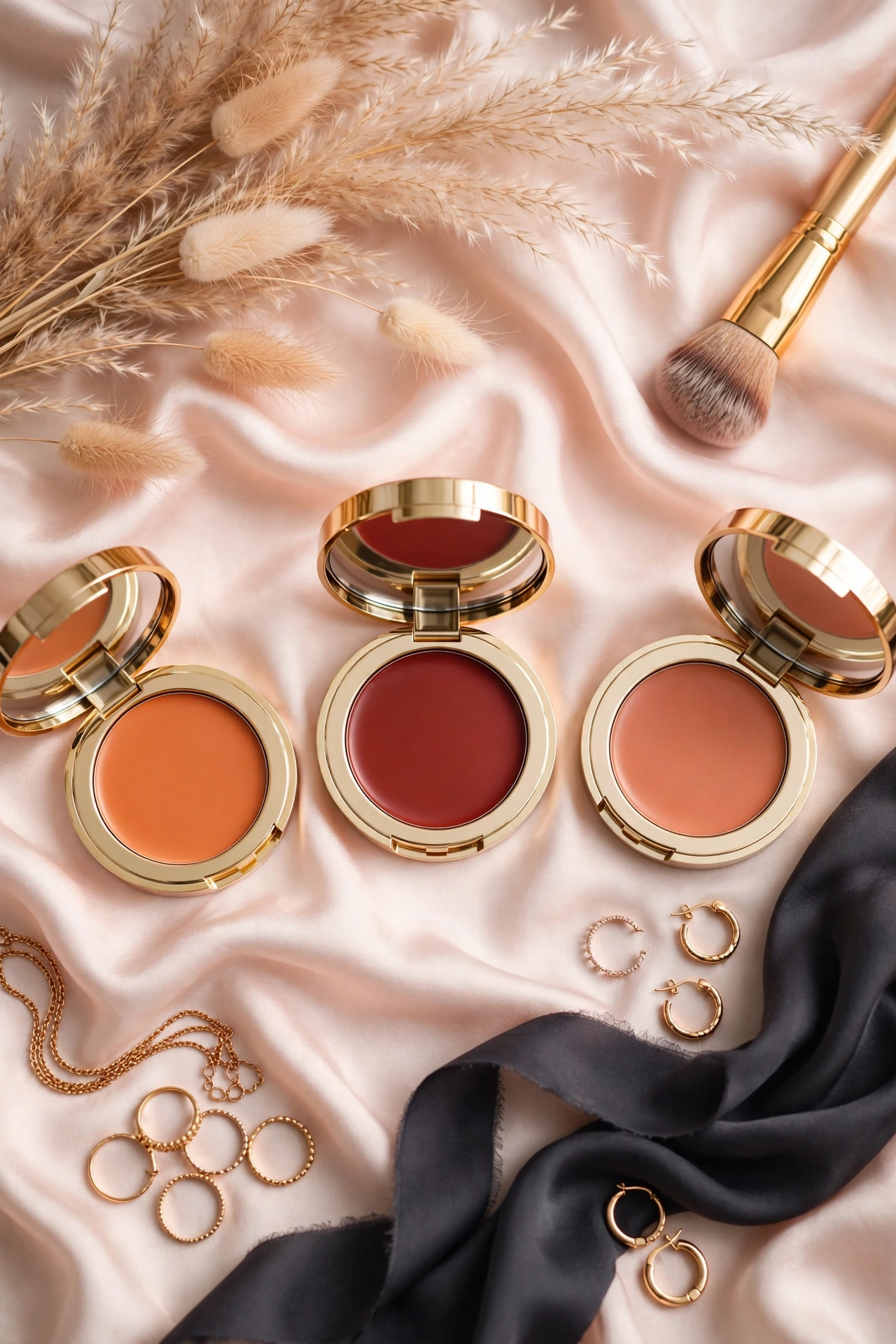
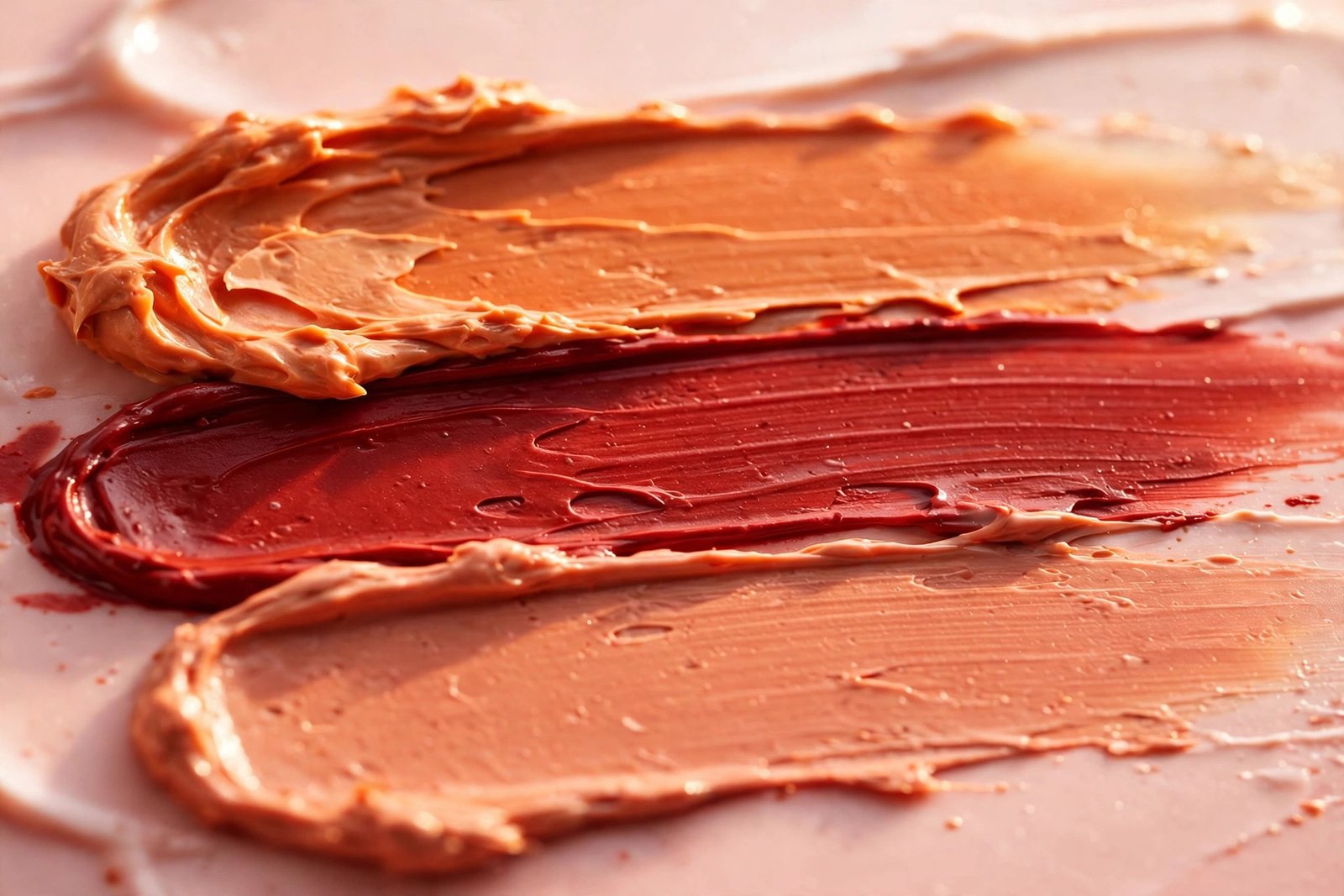
Orange is the workhorse corrector for dark skin. It neutralizes blue-toned dark circles, deep hyperpigmentation, and dark spots. For deep skin tones, look for a rich, true-orange or burnt-orange shade — not a light pastel peach, which won’t have enough pigment to cancel dark discoloration.
Use orange on: dark circles, acne marks, melasma patches, and any brown or grayish discoloration.
Red correctors (very deep skin)
Red is the deepest warm corrector and works best on very deep skin tones, where even orange can read too light. Red cancels out the darkest hyperpigmentation and severe under-eye shadows on rich, deep complexions. A tiny amount goes a long way — red is the most pigmented of the warm correctors.
Use red on: severe dark circles, deep post-acne marks, and areas of significant hyperpigmentation on very deep skin.
Deep peach correctors (medium-deep skin)
Deep peach (sometimes labeled “peach” or “salmon” in deeper ranges) is the gentler warm corrector for medium-deep skin tones. It neutralizes mild dark circles and light hyperpigmentation without overpowering the skin. If orange feels too intense for your everyday look, deep peach is the more forgiving option.
Use deep peach on: mild under-eye shadows, light dark spots, and general unevenness around the mouth on medium-deep skin.
What about green and purple correctors?
Green (for redness) and purple (for sallowness) can still be useful on dark skin — redness and dullness happen at every skin tone. The key is choosing versions formulated in deeper, more pigmented ranges rather than pastel sticks. A deep olive-toned green works on redness; skip lavender unless it’s specifically made for deep skin, since light purple almost always turns ashy. Knowing how to find your undertone helps you choose the right depth of every shade.
How to Choose the Right Shade for Your Skin Tone
The #1 rule: your corrector should be close to your skin’s depth, just warmer (more orange/red) than your natural tone. Here’s a quick reference:
- Medium-deep skin: deep peach or soft orange
- Deep skin: true orange or burnt orange
- Very deep skin: red-orange or true red
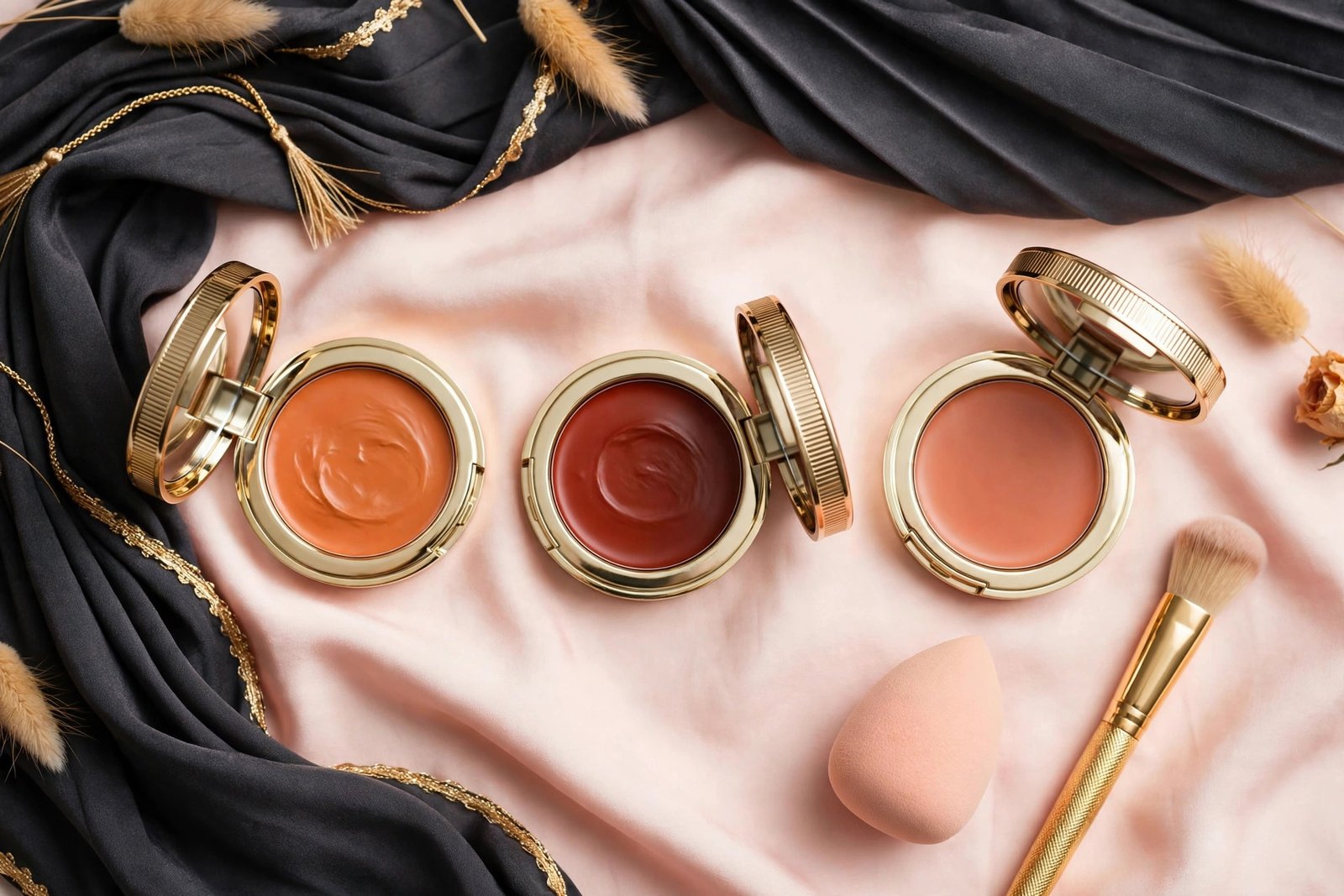
The biggest mistake is grabbing a corrector that’s several shades lighter than your skin — that’s exactly what creates the gray, ashy cast. When swatched on your jaw, the corrector should look like a warm version of your own skin, not a pastel. If you can only find corrector palettes with light shades, look for brands with extended shade ranges or use a deeply pigmented orange lipstick or cream blush as a corrector in a pinch (many makeup artists do exactly this).
How to Apply Corrector on Dark Skin (No Ashiness)
- Prep well. Moisturize and prime — corrector grips dry patches and emphasizes texture on every skin tone.
- Place it only where needed. Dab orange or red directly onto dark spots, circles, or hyperpigmented patches. Don’t blanket your whole face.
- Use less than you think. A thin, sheer layer neutralizes; a thick layer creates a visible orange mask that foundation struggles to cover.
- Blend the edges, not the center. Pat the edges outward with a damp sponge or fingertip so there’s no harsh border, but keep the pigment concentrated over the discoloration.
- Layer foundation or concealer on top. This is non-negotiable: the warm corrector tint must be covered with your skin-tone product to look natural. Apply foundation over the corrected areas, then spot-conceal anything still peeking through.
- Set lightly. A light dusting of setting powder (in your shade or translucent) locks everything without adding ashiness — avoid heavy baking with light powders.
The corrector should be invisible in the final result. If you look orange or gray after foundation, either the corrector shade was wrong or you used too much — adjust one variable at a time. Under-eye technique matters a lot here; see how to color correct dark circles by undertone for the detailed method.
Corrector Formulas: Which Type to Buy
- Liquid correctors: Easiest to blend sheer; best for under-eyes and large areas of hyperpigmentation.
- Cream sticks or pots: More pigmented; best for targeted dark spots. Warm them with your fingertip before applying.
- Corrector palettes: Often poor value for dark skin — half the shades are too light. Buy single shades in your depth instead.
Whatever formula you choose, blendability matters more than coverage. A corrector that’s hard to sheer out will always look obvious under foundation.
What to Layer Over Your Corrector
Your corrector needs a skin-tone product on top — that’s what makes the final result look like your skin:
- Foundation: A medium-coverage foundation in your exact shade, applied over corrected areas, unifies everything.
- Concealer: A concealer matching your skin tone, patted over the corrector, adds coverage exactly where needed.
If your foundation tends to run light or ashy on you, that’s a foundation-shade problem worth fixing separately — see best long-wear foundation for oily skin for shade-matching tips that apply to every skin type.
Frequently Asked Questions
Can dark skin use green color corrector?
Yes, for redness — but choose a deeper, more pigmented green rather than a pastel mint. Pastel green on dark skin tends to look chalky. Apply it sheerly and always under foundation.
Why does my corrector look gray or ashy?
Almost always because the corrector is too light for your skin tone, or you applied too much. Switch to a deeper orange or red shade and use a thinner layer. Heavy translucent setting powder over the top can also add grayness — use powder sparingly.
Do I need a corrector if my foundation has full coverage?
Maybe not. A truly full-coverage foundation in the right shade can cover moderate hyperpigmentation on its own. Correctors earn their place when discoloration still shows through full-coverage foundation — or when you’d rather use a lighter foundation and let the corrector do the targeted work.
Can I use orange lipstick as a color corrector?
Yes — this is a well-known makeup artist trick. A matte orange or red-orange lipstick, applied sheerly and blended well, works as a corrector on dark skin. Just make sure it’s a comfortable, non-drying formula and always layer foundation over it.
Should corrector go under or over primer?
Either works, but most people apply primer first, then corrector on top of the primer. The primer gives the corrector something smooth to grip and helps it last longer.
Conclusion
The best color correctors for dark skin aren’t the pastel palettes on every drugstore shelf — they’re rich orange, red, and deep peach shades with enough pigment to neutralize hyperpigmentation and dark circles without turning ashy. Match the corrector’s depth to your skin, apply it sheerly and only where needed, and always layer your skin-tone foundation or concealer on top.
Get those three things right and color correcting stops being a gamble and starts being the step that makes the rest of your base look effortless. For the full shade-by-shade system, revisit our beginner’s color correcting guide.
Love this? Pin it for later!