Tinted Moisturizer vs Foundation: Which Base Is Right for You?
This post contains affiliate links. If you buy through them, I may earn a commission at no extra cost to you.
If your ideal makeup look is “I woke up like this” — even, glowing skin with no visible product — you’ve probably stood in front of two options wondering which delivers it: tinted moisturizer or foundation? Both even out skin tone. Both come in shade ranges. But they behave very differently on the skin, and picking the wrong one is how natural-finish seekers end up looking overdone, or full-coverage lovers end up frustrated by 2pm.
This guide compares tinted moisturizer and foundation across coverage, hydration, finish, wear time, and shade matching, so you can choose with confidence. (New to shade matching entirely? Our guide to finding your undertone sorts out your warm/cool/neutral base first.)
What Is Tinted Moisturizer?
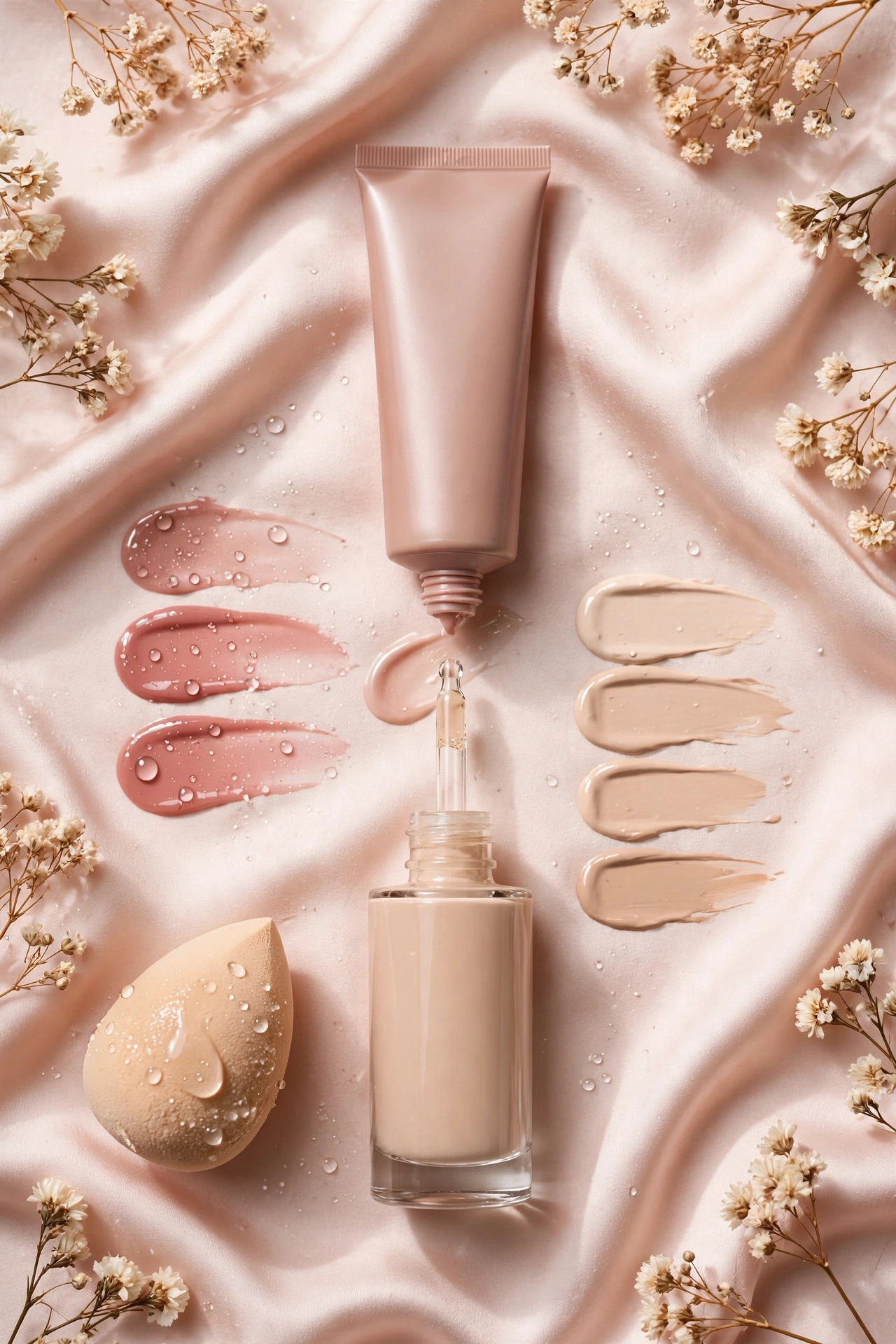
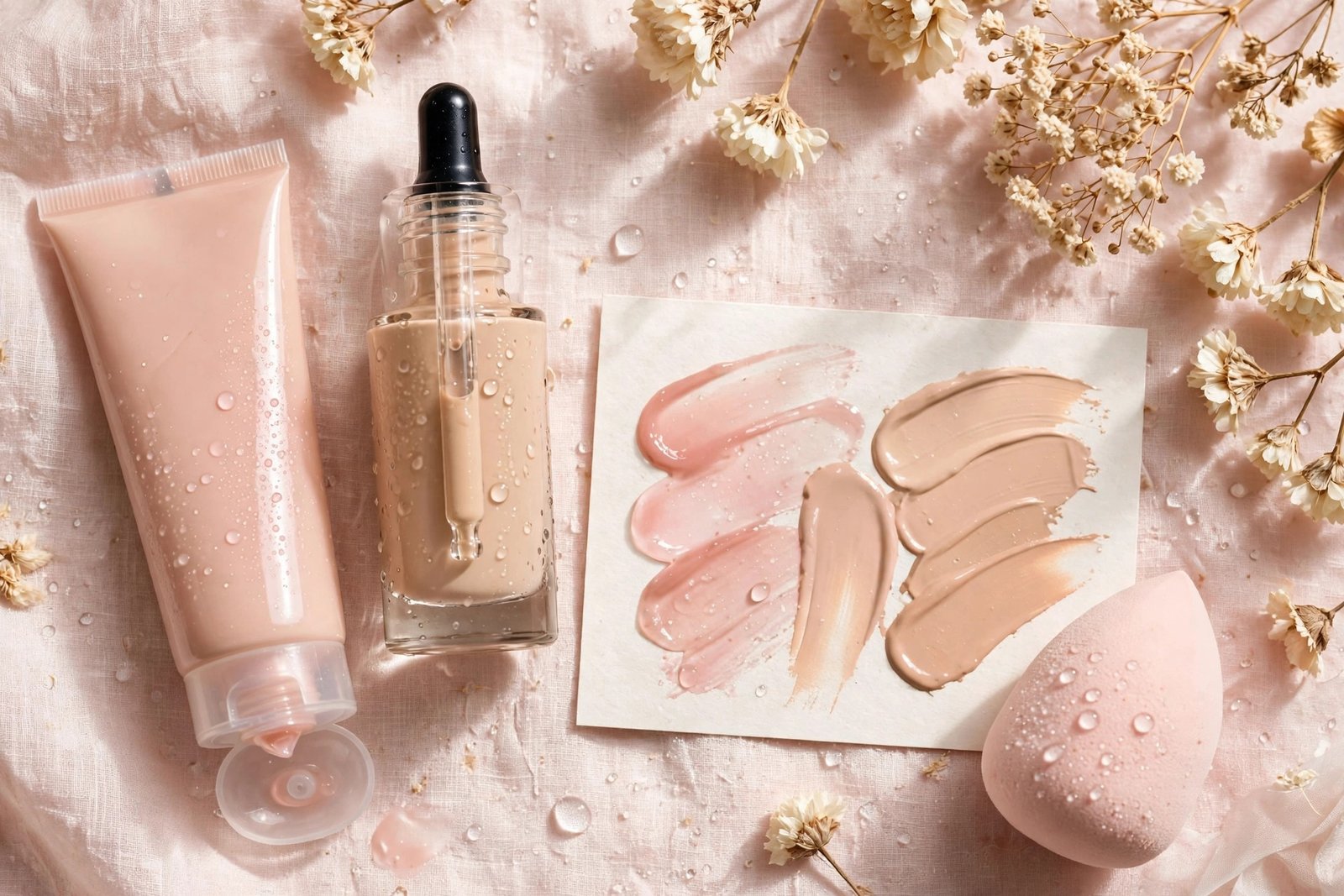
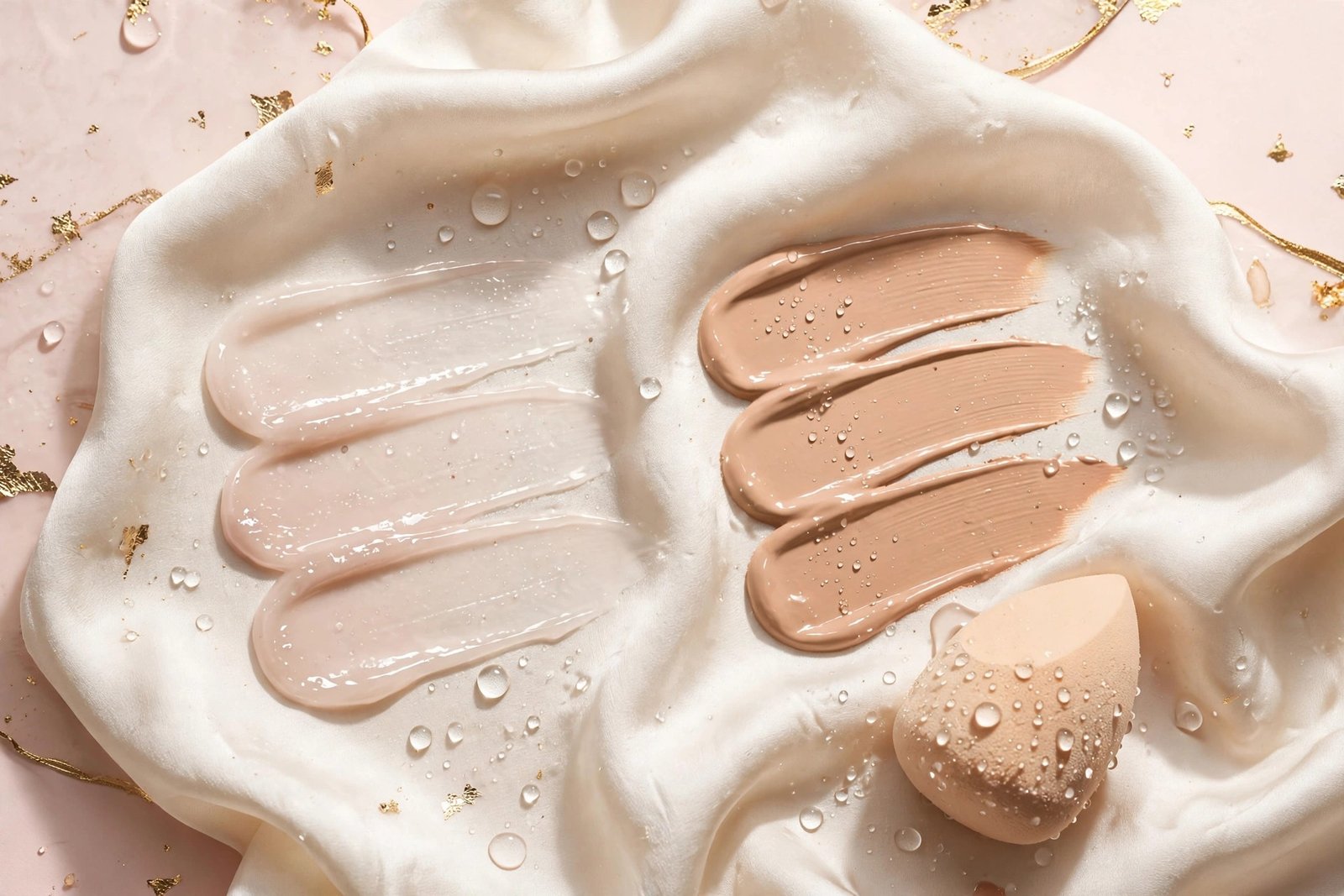
Tinted moisturizer is exactly what it sounds like: a daily moisturizer with a wash of pigment added. It sits at the sheerest end of the base-makeup spectrum — even sheerer than most BB creams — and its primary job is hydration with a hint of tone-evening, not coverage.
Popular examples include Laura Mercier Tinted Moisturizer Natural Skin Perfector (the category classic), NARS Pure Radiant Tinted Moisturizer, bareMinerals Complexion Rescue Tinted Hydrating Gel Cream, Ilia Super Serum Skin Tint SPF 40, and Saie Slip Tint Dewy Tinted Moisturizer. Drugstore options like Wet n Wild Bare Focus Tinted Hydrator have made the category widely accessible.
Typical tinted moisturizer traits:
- Barely-there coverage — evens mild dullness, won’t cover blemishes or dark spots
- Real moisturizing ingredients — hyaluronic acid, squalane, glycerin; it genuinely functions as your morning moisturizer
- Dewy, skin-like finish — the signature “glazed” natural look
- SPF in many formulas (SPF 20–40), though the same caveat applies as with BB cream: most people don’t apply enough for full labeled protection
- Small shade ranges — usually 8–20 shades, fewer undertone options than foundation
What Is Foundation? (The Short Version)
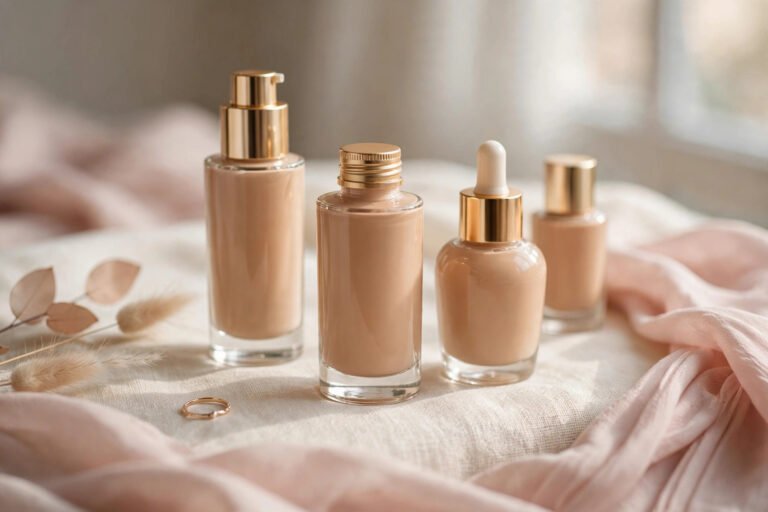
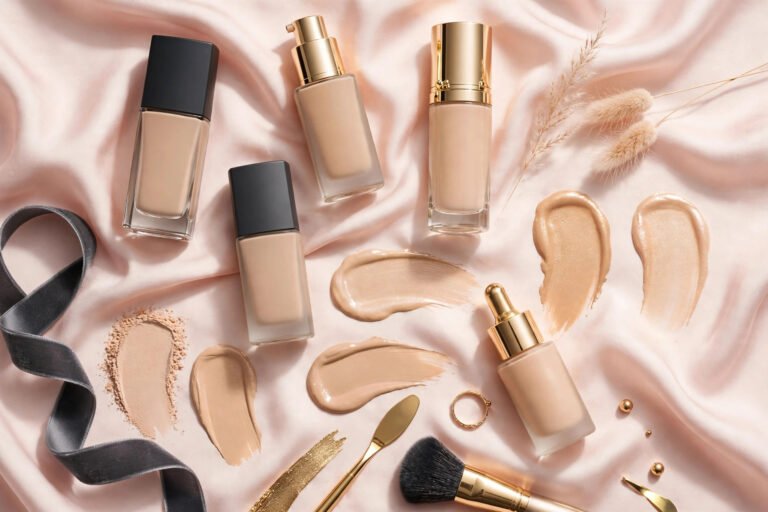
Foundation is engineered for coverage and longevity first. It spans sheer serum formulas to full-coverage mattes, with 30–50+ shades and explicit undertone coding in major lines. Where tinted moisturizer asks “how can skin look a bit better?”, foundation asks “how can skin look perfected — and stay that way?” For the full breakdown of foundation’s range, our BB cream vs foundation comparison covers how foundation compares to the other sheer-base category.
Head-to-Head: Tinted Moisturizer vs Foundation
Coverage
The defining difference. Tinted moisturizer offers the lightest coverage of any base product — it softens the look of slightly uneven tone and adds glow, but blemishes, hyperpigmentation, dark circles, and texture remain visible. Foundation starts where tinted moisturizer ends: light-coverage foundations roughly match a BB cream, while medium and full foundations can completely even out significant concerns.
If you find yourself layering three passes of tinted moisturizer trying to cover a breakout, that’s the product telling you it’s the wrong tool — you need foundation (or at least concealer) for that job.
Hydration and Skincare Benefits
Tinted moisturizer wins comfortably. Its formula is built on a moisturizer base, so dry skin gets genuine comfort and hydration that lasts. Many include niacinamide, squalane, or SPF. Foundation formulas increasingly include hydrating ingredients, but hydration is never their primary function — and matte or long-wear foundations can actively emphasize dryness. For dry skin types, tinted moisturizer is often the more comfortable daily choice.
Finish
Tinted moisturizer delivers one finish: dewy and natural. It looks like moisturized skin, never like makeup. Foundation offers the entire finish spectrum — matte, satin, natural, radiant. Oily skin types who want shine control will find most tinted moisturizers too dewy by midday; see our best long-wear foundations for oily skin for shine-proof alternatives. Combination skin can work with either — our best foundations for combination skin covers the middle ground.
Wear Time
Tinted moisturizer typically lasts 4–6 hours before fading — it’s a moisturizer first, after all. Foundation, especially long-wear formulas, holds 8–12+ hours. For a full workday, an event, or anything involving photos, foundation’s staying power is the practical choice.
Shade Range and Undertone Precision
Foundation dominates: dozens of shades with W/C/N undertone coding let you match depth and undertone exactly (see our warm undertone guide and cool undertone guide). Tinted moisturizer ranges are smaller and often undertone-vague — acceptable because sheer coverage forgives mismatch, but limiting at the extremes of fair and deep.
Application and Routine Speed
Tinted moisturizer is the fastest base in existence: fingers, 30 seconds, done — it doubles as your moisturizer step. Foundation takes more intention: primer for longevity (what makeup primer does), tools for even application, and setting for wear time. Our beginner’s step-by-step makeup guide lays out the full foundation routine.
Comparison Table
| Factor | Tinted Moisturizer | Foundation |
|---|---|---|
| Coverage | Sheerest (tone-evening only) | Sheer to full |
| Hydration | High (moisturizer-based) | Low to moderate |
| Finish | Dewy/natural only | Matte, satin, natural, radiant, dewy |
| Shade range | 8–20 shades, limited undertones | 30–50+ shades, explicit undertones |
| Wear time | 4–6 hours | 8–12+ hours |
| SPF | Often included (SPF 20–40) | Sometimes included |
| Routine speed | Fastest (replaces moisturizer) | Slower (primer, tools, setting) |
| Best for | Dry/normal skin, no-makeup looks | All skin types, coverage needs |
Who Should Choose Tinted Moisturizer?
Tinted moisturizer is your match if you:
- Want the most natural finish possible — skin that looks like skin, only better
- Have clear to mostly-clear skin with only mild unevenness to soften
- Have dry or normal skin that craves hydration and dewiness
- Want the fastest possible routine — gym, errands, work-from-home days
- Are new to base makeup and want something foolproof
- Prefer a lightweight feel and hate the sensation of foundation
Who Should Choose Foundation?
Foundation is your match if you:
- Need light-medium coverage or more — anything beyond tone-evening
- Want your base to last a full day without reapplying
- Have oily skin and need shine control (most tinted moisturizers add dew you don’t want)
- Need precise shade and undertone matching
- Are dressing for events, photos, or video, where sheer bases disappear on camera
- Want finish options — true matte, satin, or controlled radiance
The Hybrid Approach: Using Both
You don’t have to pledge allegiance. The most flexible routines mix:
- Tinted moisturizer for everyday, foundation for occasions. The classic split — low effort daily, polished when it counts.
- Tinted moisturizer + spot concealing. Sheer base all over, concealer only on blemishes and under eyes — natural look with targeted coverage.
- Seasonal switching. Tinted moisturizer in humid summer (when heavy base melts), foundation in winter (when you want more polish and dry air demands layering).
- Cocktailing. Mixing a drop of foundation into tinted moisturizer creates a custom light-medium base — useful when your skin needs a bit more than sheer but less than a full foundation application.
How to Choose: Three Questions
- What needs covering? Just dullness and mild unevenness → tinted moisturizer. Blemishes, spots, redness, dark circles → foundation (or tinted moisturizer + concealer).
- What’s your skin type? Dry skin usually loves tinted moisturizer; oily skin usually needs foundation’s oil control; normal and combination can choose by preference.
- How long and how polished? Short casual day → tinted moisturizer. Long day, event, or camera → foundation.
When in doubt, start sheer — it’s easier to add coverage (concealer, a second layer) than to remove it.
Key Takeaways
- Tinted moisturizer = sheerest coverage + real hydration + fastest routine; foundation = real coverage + shade precision + all-day wear.
- Choose tinted moisturizer for no-makeup looks, dry/normal skin, and minimal imperfections.
- Choose foundation for medium-full coverage, oily skin, long days, events, and exact shade matching.
- Tinted moisturizer fades in 4–6 hours; foundation lasts 8–12+ hours.
- The hybrid routine (sheer base + spot concealer, or seasonal switching) gives you the best of both.
- Don’t count on the SPF in either product alone — wear dedicated sunscreen underneath.
Frequently Asked Questions
Can tinted moisturizer replace my moisturizer?
For normal to oily skin, often yes — that’s its design. Dry skin usually still benefits from a dedicated moisturizer underneath, especially in winter. Either way, sunscreen goes on as its own step; don’t rely solely on the SPF in your tint.
Is tinted moisturizer good for acne-prone skin?
It can be, since lightweight, non-comedogenic formulas are less likely to clog pores than heavy foundations. But it won’t cover active breakouts — pair it with a good concealer for spots. If breakouts are widespread, a non-comedogenic light-coverage foundation may serve you better.
Why does my tinted moisturizer look greasy by afternoon?
Its dewy, moisturizer-based formula plus your skin’s natural oils. Blot midday, set the T-zone with a light translucent powder in the morning, or use an oil-free tinted formula. If oil breakthrough is constant, that’s a sign your skin wants a matte foundation instead.
What’s the difference between tinted moisturizer and BB cream?
They’re close: BB cream usually offers slightly more coverage and more active skincare ingredients (plus more consistent SPF), while tinted moisturizer is the sheerest and most moisturizer-like. If you want the absolute most natural finish, tinted moisturizer; if you want sheer-plus-a-bit-more, BB cream. Our BB cream vs foundation guide compares the full sheer-base family.
Can I wear tinted moisturizer over 40?
Absolutely — it’s often ideal for mature skin because sheer, hydrating formulas don’t settle into fine lines the way heavy matte foundations can. Look for formulas with SPF and hydrating ingredients, and prep with a good moisturizer. Many makeup artists recommend sheerer bases as skin matures.
Do I need primer under tinted moisturizer?
Usually not — its moisturizer base grips skin well on its own, and primer can make an already-dewy product slide. The exception: if your T-zone gets oily, a mattifying primer just on that area can extend wear without compromising the natural finish elsewhere.
Love this? Pin it for later!