How to Find Your Undertone: A Simple Guide to Warm, Cool & Neutral
If you’ve ever swatched a foundation on the back of your hand, bought the “right” shade, and ended up looking orange, ashy, or just… off — your undertone is almost certainly the missing piece. Skin undertone is the subtle hue underneath your skin’s surface, and it’s the single biggest factor in whether a foundation looks like skin or looks like makeup.
The good news: finding your undertone doesn’t require a professional color analysis or expensive tools. A few simple at-home tests — the vein test, the jewelry test, and the white-paper test — can reveal whether you’re warm, cool, or neutral in about five minutes. This guide walks you through each test step by step, explains what the results mean, and shows you how to translate your undertone into a foundation shade that actually disappears into your skin.
Once you know your undertone, everything else in your makeup routine gets easier: blush shades flatter you more, lipsticks look intentional instead of random, and foundation shopping stops feeling like guesswork. Let’s figure out yours.
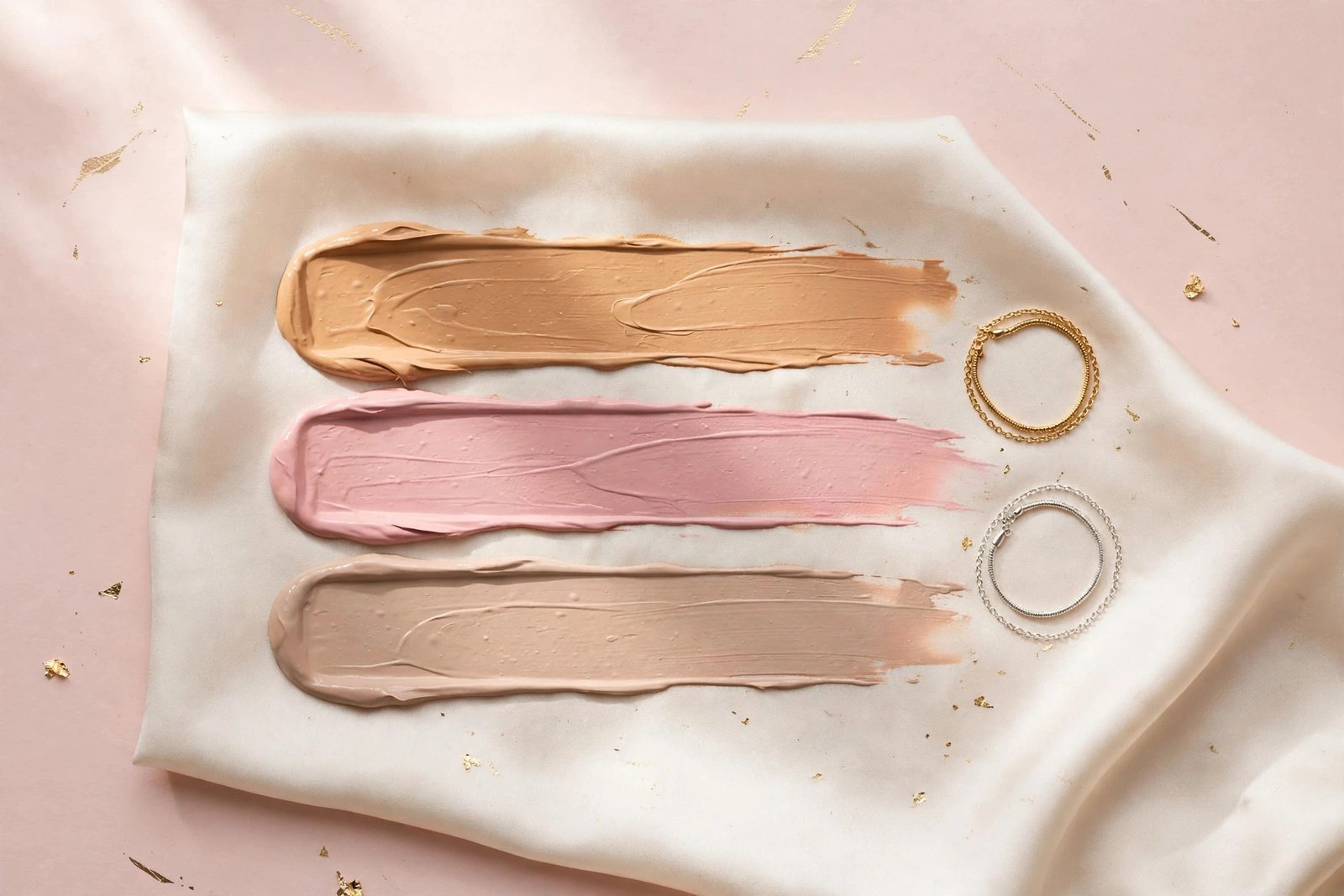
What Is a Skin Undertone (and How Is It Different From Skin Tone)?
Skin tone is the surface color of your skin — fair, light, medium, tan, deep. It changes with sun exposure, seasons, and even hormones. Undertone, on the other hand, is the underlying hue that stays constant no matter how tan or pale you get. Think of skin tone as the volume and undertone as the channel: the volume goes up and down, but the channel stays the same.
There are three main undertone categories:
- Warm undertones have golden, yellow, or peachy hues beneath the skin.
- Cool undertones have pink, red, or bluish hues beneath the skin.
- Neutral undertones have a balanced mix — neither strongly warm nor strongly cool.
Some systems also recognize olive undertones, which combine warm-looking skin with a greenish or grayish cast. Olive is often treated as its own category because people with olive undertones can struggle with both warm and cool foundations.
Here’s the key distinction that trips most people up: undertone has nothing to do with how light or dark you are. Very fair skin can be warm, and very deep skin can be cool. That’s why two people with the same surface tone can wear completely different foundation shades.
Warm vs Cool vs Neutral at a Glance
| Undertone | Underlying hue | Tends to suit | Foundation labels to look for |
|---|---|---|---|
| Warm | Golden, yellow, peachy | Gold jewelry, earthy tones | W, Warm, Golden, Honey, Amber, NC (MAC) |
| Cool | Pink, red, bluish | Silver jewelry, jewel tones | C, Cool, Rose, Porcelain, Ivory, NW (MAC) |
| Neutral | Balanced mix | Both metals, most colors | N, Neutral, Natural, Beige |
| Olive | Greenish/grayish cast | Muted, earthy shades | Neutral-olive, golden-neutral shades |
Why Your Undertone Matters for Foundation Matching
Foundation is designed to mimic your skin — not just its depth (light vs deep) but its undertone. When the undertone is wrong, even a perfectly depth-matched foundation looks off: too orange, too pink, too gray, or too yellow. Dermatologists and makeup artists consistently point to undertone mismatch as the number one reason foundation looks “wrong” on otherwise well-matched skin.
Getting it right matters beyond foundation, too. Once you know your undertone, you can:
- Choose concealer that brightens without looking chalky or orange.
- Pick blush and bronzer shades that look like a natural flush rather than sitting on top of the skin.
- Select lipstick undertones (blue-based reds vs orange-based reds) that make your teeth look whiter and your skin glow.
- Shop online with confidence, since most shade descriptions include undertone codes you can now decode.
If you’re building your routine from scratch, our beginner’s step-by-step makeup guide walks through the full application order once your shade is sorted.
Test 1: The Vein Test
The vein test is the most well-known undertone check, and it takes about ten seconds. Here’s how to do it properly:
- Go somewhere with natural daylight — stand near a window or step outside. Artificial light (especially warm indoor bulbs) distorts what you see.
- Look at the veins on the inside of your wrist, where the skin is thin.
- Ask yourself: do they look green, blue/purple, or a mix?
What the results mean:
- Green veins usually indicate warm undertones. (What you’re actually seeing is warm-toned skin filtering the blue of the veins, which reads as green.)
- Blue or purple veins usually indicate cool undertones.
- A mix of blue-green, or veins that are hard to categorize, usually indicates neutral undertones.
Tips for accuracy: If you have very fair skin, veins show up easily; if you have deeper skin, they may be harder to see — that’s normal, and the other tests below work regardless. Don’t press on your wrist (it changes the color), and compare both wrists in case one reads more clearly.
Test 2: The Jewelry Test
This test uses a simple observation about which metals flatter you — something you’ve probably already noticed without realizing it.
- Hold a piece of gold jewelry (a necklace, ring, or even gold fabric) against your face or wrist in natural light.
- Then do the same with silver jewelry.
- Notice which one makes your skin look brighter, healthier, and more even — and which one makes it look dull, sallow, or washed out.
What the results mean:
- Gold looks better → likely warm undertones. The yellow metal harmonizes with the golden hues in your skin.
- Silver looks better → likely cool undertones. The cool metal harmonizes with pink or bluish hues.
- Both look equally good → likely neutral undertones.
No jewelry handy? Hold up gold-toned and silver-toned fabric, or even compare how you look in warm white versus bright white clothing. Many people find that cream and ivory flatter warm undertones while stark optic white flatters cool undertones.
Test 3: The White-Paper Test
The white-paper test gives your eyes a neutral reference point, which makes your skin’s underlying hue easier to spot.
- In natural daylight, hold a plain white sheet of paper next to your bare face (no foundation).
- Look in a mirror and compare: does your skin look yellowish or golden next to the paper? Pinkish or rosy? Or does it look fairly balanced?
What the results mean:
- Skin looks yellow, golden, or peachy next to the white → warm undertones.
- Skin looks pink, rosy, or reddish next to the white → cool undertones.
- Skin looks grayish, or you genuinely can’t tell → neutral (possibly olive) undertones.
For the clearest read, pull your hair back and remove makeup first — foundation and even tinted moisturizer will skew the result. If your face is flushed from heat or exercise, test the side of your neck or chest instead.
Two Bonus Tests for Extra Confidence
If the three main tests agree, you’re done — trust the consensus. If they disagree, these bonus checks can break the tie.
The Sun Reaction Test
Think about what happens when you spend time in the sun (with sunscreen on, of course):
- You tan easily and rarely burn → often (not always) associated with warm or olive undertones.
- You burn first, then maybe tan → often associated with cool undertones.
- You do a bit of both → often associated with neutral undertones.
This one is the least reliable on its own — sun behavior is influenced by melanin levels and genetics beyond undertone — but it can confirm a pattern.
The Natural Hair and Eye Color Check
Undertone often (not always) correlates with your natural coloring:
- Warm undertones often pair with golden-brown, auburn, strawberry blonde, or warm black hair, and hazel, amber, or warm brown eyes.
- Cool undertones often pair with ash blonde, ash brown, cool black, or platinum hair, and blue, gray, green, or cool brown eyes.
- Neutral undertones can pair with anything — which is exactly why neutrals have the most flexibility.
Treat this as supporting evidence, not a verdict — dyed hair obviously doesn’t count, and plenty of people break the pattern.
What If Your Test Results Disagree?
Mixed results are extremely common, and they usually mean one of two things:
- You’re neutral. If the vein test says warm but the jewelry test says cool, you may simply sit in the middle — and that’s great news, because neutral undertones can wear the widest range of shades.
- You’re olive. Olive undertones are notorious for confusing the tests: veins may look green (suggesting warm), but warm foundations look too yellow while cool foundations look too pink. If foundations consistently look “almost right but slightly off” no matter the undertone label, try shades described as neutral-olive or golden-neutral.
When in doubt, swatch foundation on your jawline (not your hand — hands are often a different tone) and check it in natural daylight after a few minutes. The shade that disappears into your skin is the right one, regardless of what any test said.
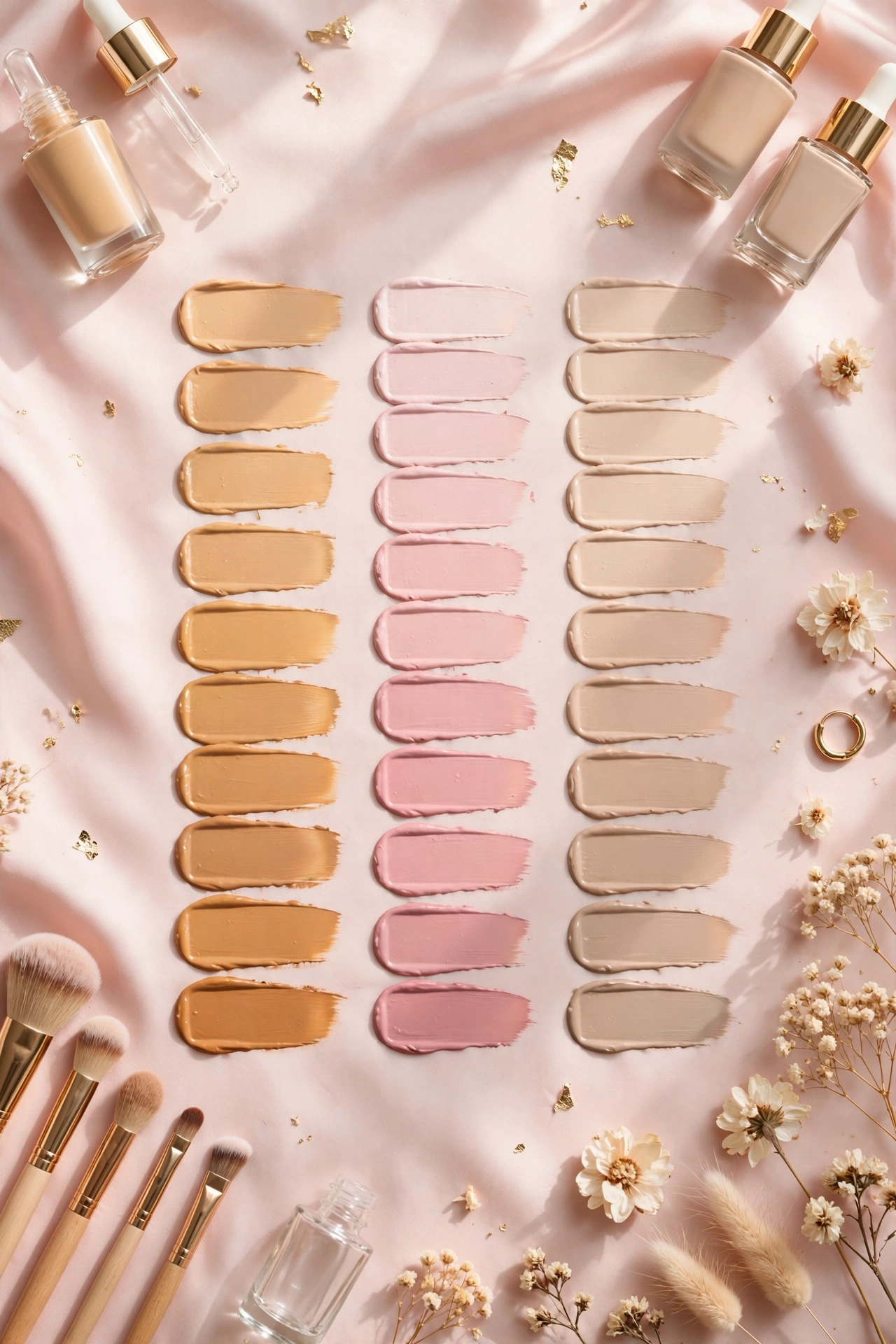
How to Match Foundation to Your Undertone
Once you know your undertone, decoding foundation shade names becomes straightforward. Most brands use a letter system:
- W / Warm / Golden / Honey → warm undertones
- C / Cool / Rose / Porcelain → cool undertones
- N / Neutral / Natural / Beige → neutral undertones
A few quirks to know: MAC’s famous NC (Neutral Cool) shades actually run warm/yellow, and NW (Neutral Warm) shades actually run cool/pink — the letters refer to the skin tone the shade is meant to correct, not the undertone it contains. NARS uses names like Stromboli and Barcelona for warm-leaning shades. When shopping, always read the shade description, not just the code.
Warm undertones should focus on golden, honey, and amber shade families (plus MAC’s warm-running NC range), while cool undertones should look for porcelain, rose, and ivory families (plus MAC’s cool-running NW range). Neutral undertones have the most flexibility — start with shades labeled N or Natural, then adjust warmer or cooler based on how they wear through the day.
One more practical tip: don’t assume a shade that matches in one brand matches in another. Undertone coding isn’t standardized — a “natural beige” from a drugstore line can run pinker or more golden than the same name from a luxury line. Always swatch the actual product, and re-check your match seasonally: most people need a slightly deeper shade in summer and a lighter one in winter, while the undertone family stays the same. The guides in the Keep Reading section below break down the best formulas and shade ranges for each undertone, plus sheerer base options that forgive small mismatches while you’re still dialing in your match.
Common Undertone Mistakes to Avoid
- Testing in artificial light. Warm indoor bulbs make everyone look warm. Always use natural daylight.
- Swatching on your hand. Your hand is usually darker, redder, or tanner than your face. Jawline swatches are far more accurate.
- Judging a shade the second it’s applied. Many foundations oxidize — darkening or turning orange as they dry. Wait 5–10 minutes before deciding.
- Assuming undertone = skin tone. Fair skin isn’t automatically cool, and deep skin isn’t automatically warm. Test, don’t assume.
- Skipping primer. An uneven base can make even a perfect shade look patchy. Our guide to what makeup primer does explains how primer helps foundation sit evenly.
Also remember that formula finish affects how a shade reads: the same undertone can look different in a matte versus dewy formula. If you have oily skin, our best long-wear foundations for oily skin covers formulas that stay true; for combination skin, see our best foundations for combination skin.
Keep Reading: Shade Matching by Undertone
Now that you know your undertone, put it to work:
- Best Foundations for Warm Undertones — formula roundup and shade ranges for golden, yellow, and peachy skin.
- Best Foundations for Cool Undertones — formula roundup and shade ranges for pink, red, and rosy skin.
- BB Cream vs Foundation — which base is right for your coverage needs and routine.
- Tinted Moisturizer vs Foundation — the natural-finish lover’s guide to choosing between sheer and full coverage.
Key Takeaways
- Undertone is the constant hue beneath your skin’s surface (warm, cool, neutral, or olive) — it’s separate from skin tone, which changes with sun exposure.
- The vein test (green = warm, blue/purple = cool, mixed = neutral), jewelry test (gold = warm, silver = cool), and white-paper test are the three most reliable at-home checks.
- Always test in natural daylight on bare skin for accurate results.
- Foundation shade codes usually include undertone letters (W, C, N) — but watch out for quirks like MAC’s reversed NC/NW naming.
- Mixed test results usually mean neutral or olive undertones; when in doubt, a jawline swatch checked in daylight after 10 minutes is the final word.
- Knowing your undertone also improves concealer, blush, bronzer, and lipstick choices — not just foundation.
Frequently Asked Questions
Can your undertone change over time?
No — your undertone is determined by genetics and stays constant throughout your life. Your surface skin tone can lighten or darken with sun exposure, seasons, or hormonal changes, but the underlying warm, cool, or neutral hue doesn’t shift. If a foundation that used to match stops matching, your surface tone changed, not your undertone.
What undertone am I if I have green veins but silver jewelry looks better?
Mixed signals like this usually point to neutral undertones, possibly leaning olive. The vein test alone can mislead — especially on deeper skin where veins are harder to read. Trust the consensus of multiple tests, and if warm and cool foundations both look slightly wrong, try neutral or olive-specific shades.
Are warm undertones more common than cool undertones?
There’s no reliable global statistic, and distribution varies significantly by ancestry and region. What matters isn’t how common your undertone is — it’s that you identify yours correctly. All three categories are well served by major foundation ranges today, with neutral shades often the easiest to find.
Do I need to know my undertone to buy tinted moisturizer or BB cream?
It helps, but it’s less critical. Sheer-coverage products blend more forgivingly, so being slightly off on undertone rarely shows. That said, matching undertone still gives the most natural result — especially around the jawline where sheer products meet bare skin. See our BB cream and tinted moisturizer comparisons for guidance.
Why does my foundation look orange a few hours after applying?
That’s usually oxidation — the formula darkening or warming as it reacts with your skin’s oils and air. Oily skin types experience it most. Choosing a formula suited to your skin type, setting with powder, or going half a shade lighter/cooler can help. Sometimes it’s also an undertone mismatch: a warm foundation on cool skin reads orange fast.
What’s the difference between neutral and olive undertones?
Neutral means a balanced mix of warm and cool — most shades in the neutral range work. Olive means the skin has a distinct greenish or grayish cast on top of warm-looking skin. Olive undertones often find that warm shades look too yellow and cool shades look too pink, and do best with neutral-olive or muted golden shades.
Love this? Pin it for later!