Leave-In Hair Products Guide: What You Actually Need
Walk down any hair aisle and you’ll face an overwhelming wall of bottles promising to detangle, smooth, protect, define, and transform your hair — most of them designed to stay in after washing. Leave-in conditioner, hair serum, heat protectant spray, curl cream, styling mousse, hair oil, dry shampoo, split-end treatments: the list grows every year, and every product claims to be essential. The truth is much simpler. Most people need just two or three leave-in products, chosen for their hair type and their actual concerns. This guide cuts through the marketing noise to explain what each category of leave-in product does, which ones overlap, which ones you can skip, and how to build a minimal routine that actually works for your hair — with deeper dives linked throughout for each specific product type.
Key Takeaways
- Most people need 2–3 leave-ins: a leave-in conditioner or detangler, a heat protectant (if you use heat), and one styling or finishing product matched to your hair type.
- Leave-in products are applied after washing on damp or dry hair and are never rinsed out — that’s what separates them from regular conditioner.
- The order matters: leave-in conditioner first, then styling products, then oils or serums to seal, and heat protectant before any hot tool.
- Product choice depends on hair type — fine hair needs lightweight formulas, curly hair needs moisture and hold, and dry or damaged hair needs richer creams and sealing oils.
What Counts as a Leave-In Product?
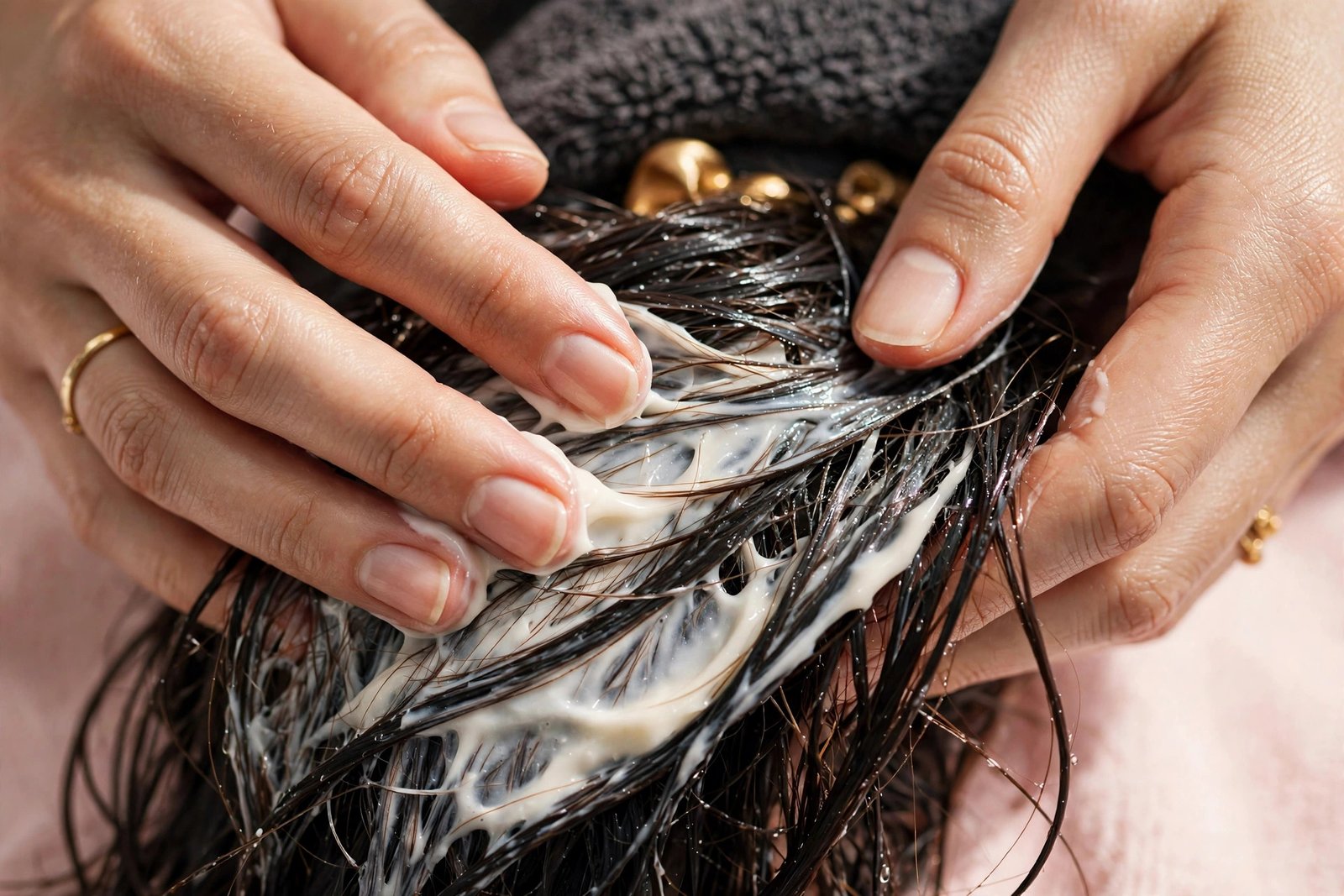
A leave-in product is exactly what it sounds like: any hair product applied after washing (or to dry hair between washes) that is not rinsed out. Regular conditioner works in the shower and gets washed away; leave-ins stay on the hair until your next wash, continuing to condition, protect, or style for hours or days. This category covers a lot of ground:
- Leave-in conditioners — lightweight conditioning applied after washing, for detangling and moisture.
- Heat protectants — sprays, creams, or serums applied before hot tools to reduce heat damage.
- Hair serums and oils — silicone- or oil-based finishers that smooth frizz, add shine, and seal in moisture.
- Styling leave-ins — mousse, gel, curl cream, and volumizing sprays that shape and hold your style.
- Specialty treatments — bond builders, scalp serums, split-end menders, and UV-protective leave-ins.
The category is broad, but your routine doesn’t need to be. Understanding what each type does helps you pick the few that solve your actual problems.
The Core Four: What Each Leave-In Type Does
1. Leave-In Conditioner
Leave-in conditioner is the foundation of most leave-in routines. It’s a lightweight conditioning formula — usually a spray, cream, or lotion — applied to damp hair after washing to add moisture, make detangling easier, and smooth the cuticle. Unlike shower conditioner, it’s designed to absorb without weighing hair down, and it keeps working between washes.
Who needs it: nearly everyone with medium-to-thick hair, curly or wavy hair, dry or damaged hair, or hair that tangles easily. Fine, very oily hair can often skip it or use a tiny amount on the ends only. If you’re not sure where to start, see our 10 top leave-in conditioners for curly hair for tested picks by curl type and budget.
2. Heat Protectant
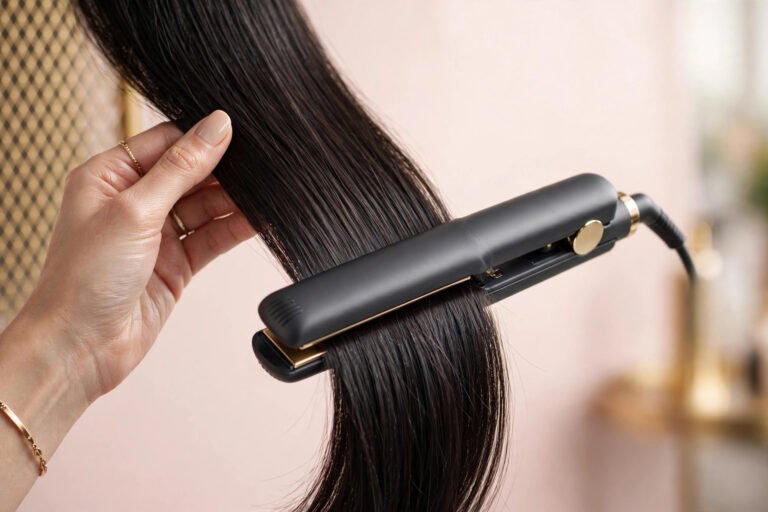
If you blow-dry, flat-iron, or curl your hair with heat — even occasionally — a heat protectant is the one non-negotiable leave-in. These products form a protective film on the hair shaft that reduces moisture loss and slows heat transfer when temperatures hit the 350–450°F range of most styling tools. Without one, repeated heat exposure degrades the protein structure of hair, leading to breakage, split ends, and a fried texture that no amount of conditioning fully reverses.
Who needs it: anyone using hot tools, even once or twice a week. If you’re on the fence, read whether you really need a heat protectant and the best heat protectant sprays compared to choose the right formula.
3. Hair Serum or Hair Oil
Serums and oils are finishing products that smooth frizz, add shine, and seal moisture into the hair shaft. They’re often confused with each other, but they work differently: serums are typically silicone-based and create a smooth, light-reflecting film (great for frizz control and shine), while oils are plant- or mineral-based and penetrate or coat the hair to add nourishment and seal in hydration. Many people benefit from understanding the real difference between hair serum and hair oil before choosing, because the wrong pick for your hair type can leave hair greasy or, conversely, under-protected.
Who needs it: frizz-prone, dry, coarse, or curly hair benefits most. Fine hair should use a drop or two of a lightweight serum rather than a heavy oil.
4. Styling Leave-Ins (Mousse, Gel, Cream)
These are the products that shape your style and hold it there: mousses add volume and light hold, gels provide definition and strong hold (especially for curls), and creams offer soft moisture and flexible hold. The right choice depends heavily on your hair’s texture and the look you want. Curly and wavy readers especially should check mousse vs. gel vs. cream — which curl styler wins to match the product to their curl pattern.
Who needs it: anyone who styles their hair beyond “wash and go” — volume seekers, curl definers, and frizz fighters. If you air-dry and are happy with the result, you may not need a dedicated styler.
What You Actually Need: By Hair Type
Fine, Straight Hair
Your challenge is avoiding weight. Heavy leave-ins flatten fine hair and make it look greasy by midday. Keep it minimal:
- Lightweight leave-in conditioner (spray formula) — ends only, a light mist.
- Heat protectant — if you blow-dry or iron. A spray formula won’t weigh hair down.
- Volumizing mousse (optional) — applied at the roots before blow-drying for lift.
Skip: heavy creams, thick oils, and butters. They’ll sit on fine hair rather than absorbing.
Wavy Hair (2A–2C)
Wavy hair needs moisture and light definition without the crunch or weight that kills the wave pattern:
- Leave-in conditioner — a light cream or spray through the mid-lengths and ends.
- Curl cream or light mousse — to encourage and hold the wave.
- Heat protectant — if you diffuse or touch up with an iron.
Skip: heavy gels unless you want a defined, crunchy-cast look that you scrunch out.
Curly Hair (3A–3C)
Curly hair is naturally drier (oils travel slowly down the twists of the strand) and needs both moisture and hold:
- Leave-in conditioner — the non-negotiable base layer; apply generously to soaking-wet hair.
- Curl cream or gel — for definition and hold, layered over the leave-in.
- Hair oil or serum — a small amount to seal the ends and scrunch out any gel cast.
Many curl routines follow the LOC or LCO method (liquid, oil, cream in some order) — the leave-in conditioner is the “L” that makes the whole system work.
Coily Hair (4A–4C)
Coily hair needs the most moisture and the richest products to keep it:
- Leave-in conditioner — rich cream formulas, applied in sections to damp hair.
- Hair oil or butter — to seal in the moisture (the LOC method shines here).
- Styling cream or gel — for twist-outs, braid-outs, and wash-and-go definition.
Dry, Damaged, or Color-Treated Hair
Damage and chemical processing raise the hair’s porosity, meaning it loses moisture fast. Prioritize repair and protection:
- Leave-in conditioner with proteins or bond-building ingredients — to fill in compromised areas of the cuticle.
- Heat protectant — absolutely essential, since damaged hair is more vulnerable to heat.
- Hair serum or oil — to seal the ends and add the shine that damaged hair loses.
Reduce heat styling frequency where possible, and be realistic: products manage damage, they don’t reverse it.
Oily Hair or Oily Scalp
Oily hair types often assume they should skip leave-ins entirely — but the ends of even oily hair can be dry, especially on longer lengths:
- Lightweight leave-in conditioner — ends only, never on the scalp or roots.
- Heat protectant — if you use hot tools.
- Dry shampoo (a different kind of leave-in) — for refreshing roots between washes.
Skip: oils and heavy serums near the roots. Apply any finishing product from the mid-lengths down.
The Correct Application Order
Layering order matters because each product needs to reach the hair in the right sequence. Apply leave-ins from lightest to heaviest, on damp (towel-dried, not dripping) hair unless a product says otherwise:
- Leave-in conditioner — the base layer; detangles and adds moisture.
- Heat protectant — if using heat, applied before any hot tool touches the hair.
- Styling products — mousse at roots, curl cream or gel through lengths.
- Serum or oil — last, to seal everything in and smooth the surface.
Between washes, you can refresh with a light mist of leave-in conditioner or a tiny amount of serum on the ends — no need to redo the full stack. One common mistake is applying oil before water-based products: oil seals the cuticle, which can block the lighter products from absorbing. Water-based first, oil last.
How Much to Use (The Mistake Almost Everyone Makes)
Over-application is the number-one reason people conclude a leave-in “doesn’t work for my hair.” Most leave-ins are concentrated, and the correct amounts are smaller than you’d guess:
- Leave-in conditioner spray: 4–6 spritzes for medium hair.
- Leave-in cream: a dime- to nickel-sized amount, more for very thick hair.
- Serum: 1–2 pumps, or a pea-sized amount; fine hair should start with one.
- Hair oil: a few drops warmed between the palms — you can always add more.
- Mousse: a golf-ball-sized amount for medium hair, less for fine hair.
- Gel: a quarter-sized amount, distributed evenly; more for very thick or long hair.
Start with less than you think you need. Hair that’s limp, greasy, or coated by midday is telling you to cut the amount, not to switch products.
Leave-In Ingredients Worth Knowing
You don’t need a chemistry degree, but a few ingredient categories help you shop smarter:
- Silicones (dimethicone, amodimethicone): smooth frizz and add shine; wash out with sulfate or clarifying shampoos. Great for frizz control, less ideal if you strictly avoid buildup.
- Humectants (glycerin, panthenol, aloe): draw moisture into the hair; excellent in humid climates, can cause frizz in very dry air if not sealed with an oil.
- Proteins (keratin, wheat protein): temporarily strengthen damaged areas; useful for damaged hair, but too much protein without moisture causes stiffness — balance is key.
- Natural oils (argan, jojoba, coconut): seal and nourish; coconut oil penetrates the shaft, while jojoba sits closer to the surface. Match the oil to your hair’s porosity.
- Heat-protective polymers (PVP, silicones): form the film that shields hair from hot tools; the active mechanism in most heat protectants.
If an ingredient list reads like a chemistry exam, focus on the first five ingredients — they make up the bulk of the formula.
What You Can Skip
Not every leave-in earns its shelf space. Honest candidates for skipping:
- Multiple products that do the same job. A leave-in conditioner plus a separate detangling spray is usually redundant — pick one.
- Split-end “repair” serums as a category: they temporarily seal splits so they look better, but they don’t fuse hair back together. A trim is the real fix; the serum is cosmetic camouflage.
- Expensive “miracle” oils with exotic marketing: a well-formulated drugstore argan oil often performs identically to a luxury bottle. Price and performance correlate weakly in this category.
- Leave-in SPF products as your only sun protection for hair: they help, but a hat does more. Use them as a supplement, not a strategy.
- Anything you bought for a problem you don’t have. Volumizer on already-voluminous hair, anti-frizz serum on hair that isn’t frizzy — the best product is the one that solves your actual concern.
Building Your Minimal Routine
Here’s how to assemble your personal leave-in lineup in three steps:
Step 1: Identify your non-negotiables. Heat user? Heat protectant is mandatory. Curly? Leave-in conditioner is mandatory. Tangle-prone or dry? Leave-in conditioner again. Start with the products that solve real, recurring problems.
Step 2: Add one targeted product. Frizz? A serum or anti-frizz cream. Flat roots? A volumizing mousse. Undefined curls? A curl cream or gel. One product per concern — resist the urge to stack three frizz fighters.
Step 3: Audit after two weeks. Hair limp by afternoon? Cut amounts or drop a layer. Ends still dry? Add a sealing oil. Scalp itchy or coated? You may be applying too close to the roots. Your routine should earn its place by solving problems, not by looking impressive on a shelf.
A realistic minimal routine for most people looks like this: leave-in conditioner + heat protectant (if using heat) + one styler or finisher. That’s it. Everything else is optional.
Frequently Asked Questions
Can I use regular conditioner as a leave-in?
It’s not ideal. Regular conditioners are formulated to be rinsed out — leaving them in can cause buildup, weigh hair down, and in some cases irritate the scalp. Leave-in conditioners are specifically formulated at lighter concentrations to stay on the hair safely. In a pinch, a tiny amount of regular conditioner on the very ends works, but it’s not a long-term substitute.
Should leave-in conditioner go on the scalp?
Generally, no. Leave-in conditioner is for the mid-lengths and ends, where hair is oldest and driest. Applying it to the scalp can cause buildup, itchiness, and faster oiliness — especially for fine or oily hair types. The exception is certain scalp-specific leave-in serums, which are formulated for scalp use.
How is leave-in conditioner different from hair serum?
Leave-in conditioner is water-based and focuses on moisture, detangling, and manageability — it’s the base layer. Hair serum is typically silicone- or oil-based and focuses on smoothing, shine, and frizz control — it’s the finishing layer. Many routines use both, in that order. For the full breakdown, see hair serum vs. hair oil — what’s the difference.
Do I need a heat protectant if I only blow-dry on low heat?
Yes — even low heat from a blow-dryer, used repeatedly, causes cumulative damage over time. “Low” on a dryer is still far hotter than hair prefers. If hot air touches your hair regularly, protect it. The only exception is fully air-drying with no heat tools at all.
Can you use too many leave-in products?
Absolutely — it’s one of the most common routine mistakes. Too many layers cause buildup, limpness, dullness, and can even attract dirt to the hair. If your hair feels coated, looks dull despite “nourishing” products, or gets greasy faster than it used to, you’re likely over-layering. Strip back to the basics and reintroduce one product at a time.
The leave-in aisle stops being overwhelming the moment you know what you’re solving for. Pick your 2–3 essentials by hair type, apply them in the right order and the right amounts, skip the redundant extras, and let the products you chose do their jobs. For deeper guidance on each category, explore our detailed comparisons — from the best heat protectant sprays to choosing between styling products for curls — and build a routine that’s minimal on purpose.
Love this? Pin it for later!