How to Transition to Gray Hair Gracefully: The Complete Guide
Deciding to stop dyeing and embrace your natural gray is liberating — and, honestly, a little daunting. The grow-out phase has a reputation for being awkward, but learning how to transition to gray hair gracefully is mostly about having a plan: how to handle the demarcation line where dye meets new growth, which blending techniques buy you time, and how to care for gray hair so it looks luminous instead of dull.
Whether you’ve been [dyeing at home for years → how-to-dye-hair-at-home-for-beginners] or coloring at the salon, this guide covers every transition method — from cold turkey to salon-assisted blending — realistic timelines, and the gray-specific hair care routine (yes, gray hair has its own needs, including yellowing prevention) that makes the result look intentional and beautiful.
Key Takeaways
- The demarcation line (where dyed hair meets gray regrowth) is the main challenge — blending techniques exist specifically to soften it.
- You have options: cold-turkey grow-out, salon blending (lowlights, gloss, babylights), dyeing it gray, or a shorter cut to skip the line entirely.
- A full transition typically takes 6–18 months depending on hair length and method — patience is the real requirement.
- Gray hair is coarser and drier than pigmented hair; it needs more moisture and gentler handling.
- Purple shampoo prevents the yellowing that makes gray hair look dull — use it 1–2x per week.
- Sun, heat, and hard water yellow gray hair fastest; protect accordingly.
First: What to Expect From the Transition
Let’s be honest about the timeline, because unrealistic expectations are why most people quit. Hair grows about half an inch per month. If your hair is shoulder-length and dyed dark, growing out the dye completely takes roughly two years of cold-turkey growth. That’s the worst case — and it’s exactly why blending methods exist.
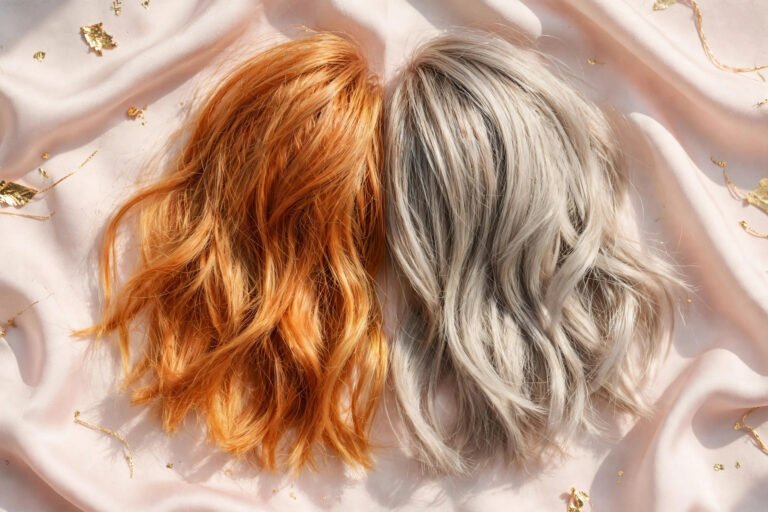
The awkward phase centers on the demarcation line: the visible boundary between your dyed lengths and your natural gray regrowth. How harsh it looks depends on contrast. Dark dye against silver regrowth is the starkest; blonde or light brown dye against gray is far more forgiving. Your strategy should match your contrast level.
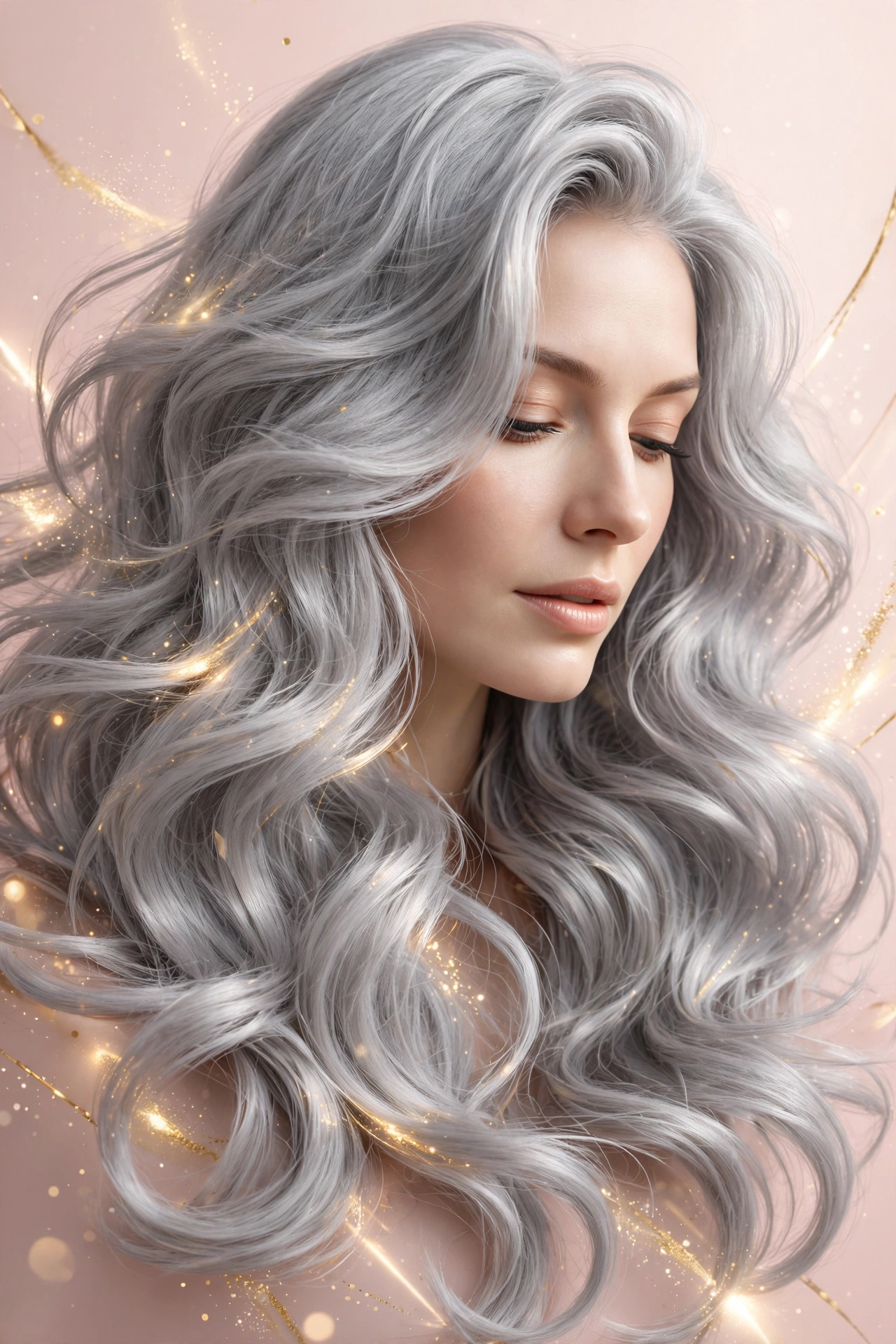
Also expect a mindset shift. Gray hair has a different texture and reflects light differently than dyed hair. The goal isn’t to make gray look like your old color — it’s to make your gray look like the best version of itself: bright, healthy, and deliberate.
The 4 Transition Methods, Honestly Compared
1. Cold turkey (just stop dyeing)
How it works: You stop coloring entirely and let the gray grow in.
Best for: Low-contrast situations (your dye was close to your natural gray), short hair, or anyone with maximum patience and minimum fuss.
Timeline: 6–24 months depending on length.
Pros: Free, zero damage, simplest.
Cons: The demarcation line is fully visible for months. High-contrast grow-outs (dark dye to silver) look stark for a long time.
Make it easier: Strategic hairstyles — headbands, scarves, textured styling that disguises the part line — and regular trims that gradually remove dyed ends.
2. Salon-assisted blending (the most popular route)
How it works: A colorist weaves in lowlights, babylights, or a demi-permanent gloss that mimics your gray pattern, softening the demarcation line so regrowth looks intentional.
Best for: Medium to high contrast grow-outs, anyone who wants to look polished through the transition.
Timeline: 6–12 months with touch-up blending sessions every 8–12 weeks.
Pros: Looks deliberate at every stage; the grow-out is genuinely graceful.
Cons: Costs money; requires finding a colorist experienced in gray blending specifically (ask to see their grow-out work).
Key techniques to ask about: gray-blending lowlights, a translucent demi-permanent gloss to diffuse the line, and face-framing brightness that mimics natural silvering.
3. Dye it gray (the shortcut)
How it works: A colorist lifts or tones your dyed lengths to a silver/gray that matches your natural regrowth, effectively skipping the line.
Best for: People whose natural gray is substantially in (50%+ gray) and who want the fastest transition.
Timeline: One to two salon sessions.
Pros: Instant result; no awkward phase.
Cons: Requires lightening dyed hair, which is damaging — especially going from dark dye to silver. Not suitable for very dark or heavily processed hair without significant breakage risk. This is firmly professional territory, not a DIY project.
4. The cut (the reset button)
How it works: You cut off the dyed lengths — anything from a pixie to a bob — removing the demarcation line in one appointment.
Best for: Anyone ready for short hair, or whose hair is long enough that the grow-out feels endless.
Timeline: Immediate.
Pros: Fastest honest method; healthy fresh start.
Cons: Requires loving (or at least accepting) short hair for a while.
There’s no universally “best” method — only the best one for your contrast level, budget, patience, and relationship with your hair length.
Blending the Demarcation Line at Home
If you’re growing out with minimal salon help, these at-home tactics soften the line:
Demi-permanent gloss close to your natural gray. A sheer silver or ash gloss over the demarcation zone diffuses the boundary without the commitment of permanent color. It fades gradually, so there’s no new line when it wears off. This borrows directly from the toning principles in the [brassiness guide → how-to-fix-brassy-hair-at-home] — you’re toning the dyed hair toward your gray, not away from it.
Root concealers and powders in gray/silver tones. The same temporary root products used for [touch-ups → how-to-touch-up-roots-at-home] come in silver shades — perfect for softening the part line between appointments or during the early months.
Strategic part changes and texture. A deep side part, zigzag part, or tousled texture breaks up the visual line far more than a flat center part. It’s styling, not chemistry, but it works.
Regular trims. Every trim removes dyed ends and shortens the transition. Even half an inch every 8 weeks compounds meaningfully over a year.
Gray Hair Care: What Changes
Gray hair isn’t just pigmented hair minus the color — the follicle changes too. Understanding this is the difference between luminous silver and dull, wiry gray:
It’s drier and coarser. Gray hair typically has a rougher cuticle and less natural oil. Step up the moisture: richer conditioners, weekly deep-conditioning masks, and leave-in products. A consistent [hair oiling routine → how-to-oil-hair-for-growth] is especially beneficial for gray hair’s thirst.
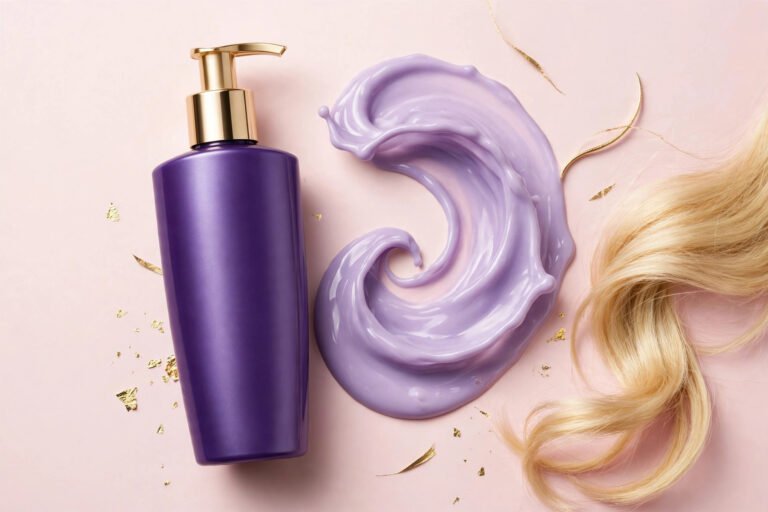
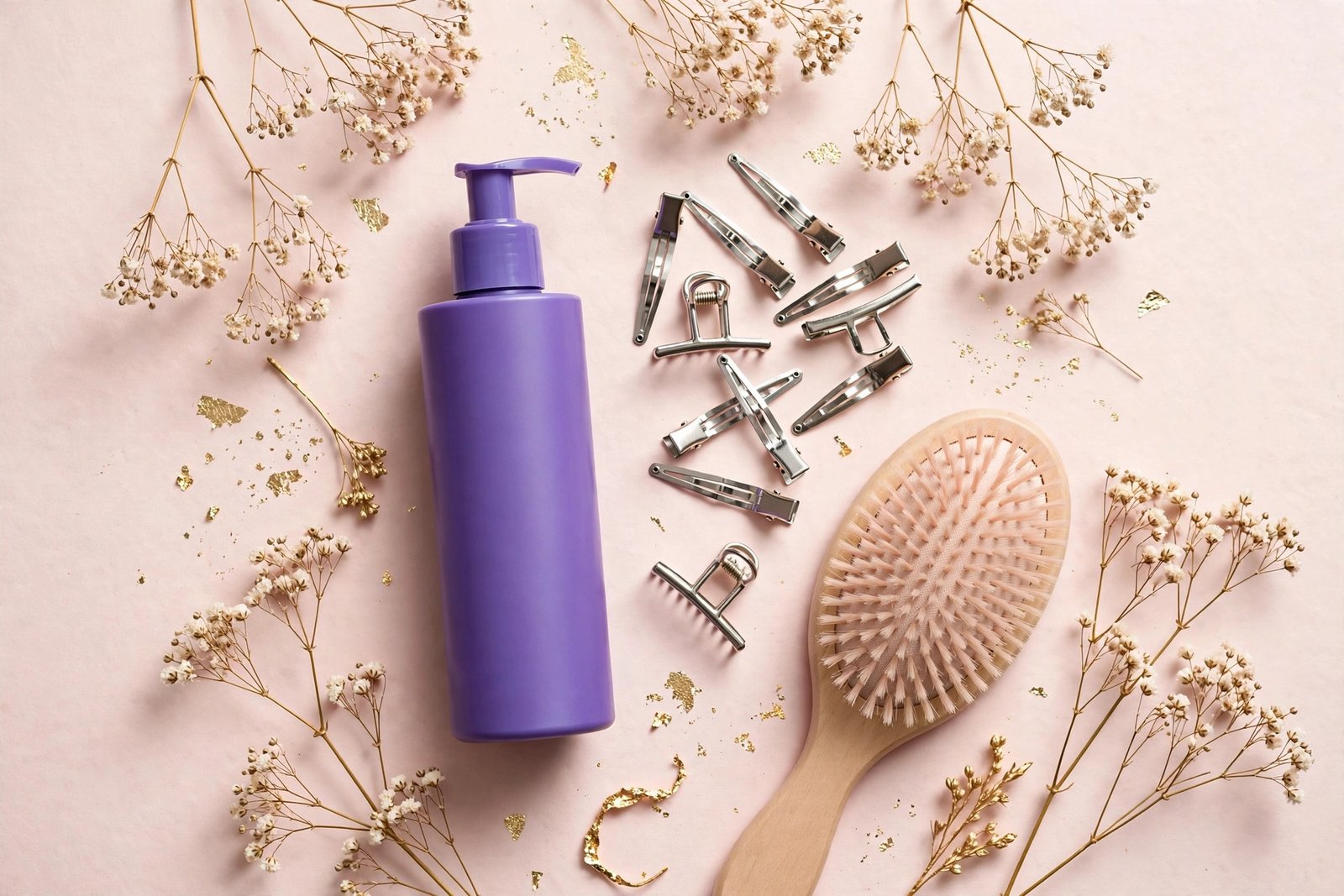
It yellows. This is gray hair’s version of brassiness. Sun exposure, heat styling, hard water minerals, chlorine, and even some styling products deposit yellow tones that make silver look dingy. The fix is the same tool blondes use: [purple shampoo 1–2 times per week → how-to-use-purple-shampoo] keeps gray bright and icy. A shower filter helps if your water is mineral-heavy.
It’s more fragile to heat. The coarser texture doesn’t mean tougher — gray hair is actually more vulnerable to heat damage. Lower your hot tool temperatures and never skip heat protectant.
Wash gently. [Sulfate-free shampoo → sulfate-free-shampoo-vs-regular-shampoo] preserves both moisture and brightness. Gray hair shows dullness faster than pigmented hair, so gentle cleansing pays visible dividends.
Consider your products’ residue. Heavy waxes, some oils, and sticky stylers can build up and yellow gray hair over time. If your silver looks dull despite purple shampoo, try a clarifying wash — buildup is often the culprit.
Styling Gray Hair to Look Intentional
The difference between “growing out dye” and “silver and stunning” is largely presentation:
- Shine is everything. Gray hair’s beauty is in its reflectivity — glossing treatments, shine serums, and healthy ends make silver look expensive.
- Keep the cut sharp. Regular trims signal intention. An undefined grow-out reads as “given up”; a well-cut grow-out reads as a choice.
- Mind your makeup and wardrobe contrast. As hair lightens to silver, some people find their old makeup shades wash them out. Slightly stronger brows, a bit more blush, and richer clothing colors often balance silver hair beautifully.
- Silver accessories harmonize. If you wore gold with dark hair, try silver jewelry with gray — it echoes the hair instead of fighting it.
Frequently Asked Questions
How long does it take to fully transition to gray hair?
With cold-turkey grow-out, roughly 6 months for a pixie, 12–18 months for a bob, and up to 2 years for long hair. Salon blending shortens the awkward phase significantly but the full grow-out still follows your hair’s growth rate — there’s no speeding up biology.
Will my gray hair match the dye if I just let it grow?
Probably not exactly — natural gray is a mix of pigmented and unpigmented strands that reads as silver, salt-and-pepper, or white, while dye is uniform. That’s why blending (lowlights, gloss) looks more natural than a raw grow-out for most people: it mimics the dimensional, multi-tonal nature of real gray.
Can I transition to gray hair without cutting it short?
Absolutely. Most people transition at their current length using blending techniques and trims. The cut is just the fastest option, not a requirement.
Why is my new gray hair so wiry and coarse?
Gray hair follicles produce hair with a different structure — the cuticle layer is often thicker and the strand can be more oval, which reads as coarse or wiry. It’s normal, not damage. Moisture-heavy care, regular conditioning, and avoiding harsh sulfates manage it well.
How do I keep gray hair from looking yellow?
Purple shampoo 1–2x per week is the core defense. Add sun protection (hats, UV sprays), heat protectant, and mineral defense (shower filter or periodic clarifying) for the full shield. The [purple shampoo guide → how-to-use-purple-shampoo] covers timing and over-toning fixes in detail.
Should I stop dyeing cold turkey or get it blended at a salon?
If your dye is close to your natural gray (light brown, blonde) and your hair is short, cold turkey is very doable. If you’re growing out dark dye or want to look polished throughout, salon blending is worth every penny — book a consultation with a colorist who shows gray-blending work in their portfolio.
Transitioning to gray is a long game, but it’s one of the most rewarding hair decisions you can make — freedom from the dye cycle, lower maintenance, and hair that’s entirely, authentically yours. Soften the line with blending, protect the brightness with [purple shampoo → how-to-use-purple-shampoo] and [gentle, color-safe washing → sulfate-free-shampoo-vs-regular-shampoo], nourish the new texture with [regular oiling → how-to-oil-hair-for-growth], and give it time. Your silver era is worth the wait.
how to dye hair at home for beginners
how to use purple shampoo
fix brassy hair at home
how to touch up roots at home
sulfate-free vs regular shampoo
hair oiling for growth
Love this? Pin it for later!