Sulfate-Free vs Regular Shampoo: What’s the Real Difference?
Walk down any hair aisle and you’ll see “sulfate-free” splashed across bottle after bottle — usually with a higher price tag. But what do sulfates actually do, and does switching really make a difference for your hair? The answer depends on your hair type more than the marketing suggests.
For curly hair especially, the cleanser you use matters: curls are drier by nature, and the wrong shampoo can undo a whole wash day. If you’re building a curly hair routine that works for beginners, understanding the sulfate debate is one of the smartest first steps.
What Are Sulfates, and What Do They Do in Shampoo?
Sulfates are surfactants — the cleansing agents that lift dirt, oil, and product buildup off your hair and scalp so they rinse away. The two most common are sodium lauryl sulfate (SLS) and sodium laureth sulfate (SLES). They’re cheap, effective, and responsible for that rich, foamy lather most people associate with a “good” wash.
Here’s the catch: sulfates are indiscriminate cleaners. They don’t just remove excess oil and buildup — they can also strip away the natural oils (sebum) your scalp produces to keep hair moisturized and protected. That’s why hair washed with a strong sulfate shampoo can feel “squeaky clean” but also dry, rough, or frizzy afterward.
That stripping effect is the entire debate in a nutshell:
- On straight, oily hair, a strong cleanse is often exactly what’s needed — the scalp produces plenty of oil, and it travels down the hair shaft easily.
- On curly, dry, or color-treated hair, oil has a harder time traveling down the spiral of each strand, so stripping what’s there leaves the hair vulnerable to dryness, frizz, and color fading.
“Sulfate-free” shampoos replace SLS and SLES with gentler surfactants, most commonly coco-glucoside, cocamidopropyl betaine, or sodium cocoyl isethionate. These still cleanse — they just do it more gently, leaving more of your hair’s natural moisture intact.
Sulfate-Free vs Regular Shampoo: The Comparison
| Factor | Regular (Sulfate) Shampoo | Sulfate-Free Shampoo |
|---|---|---|
| Cleansing power | Strong — removes heavy oil, styling product buildup, and mineral residue effectively | Milder — handles everyday oil and light buildup; may struggle with heavy waxes or silicones |
| Lather | Thick, abundant foam | Lighter lather or low-foam; still cleans, just with less bubbles |
| Moisture retention | Can strip natural oils, leaving hair drier (especially curls and fine hair) | Preserves more natural oils; hair typically feels softer after washing |
| Color-treated hair | Fades dye faster — strong surfactants open the cuticle and wash out color molecules | Gentler on dye; color lasts noticeably longer |
| Scalp | Great for very oily scalps; can irritate sensitive, dry, or eczema-prone scalps | Kinder to sensitive scalps; may leave very oily scalps feeling under-cleansed |
| Who it’s best for | Straight, fine, or oily hair that gets greasy fast | Curly, coily, dry, damaged, or color-treated hair |
| Cost | Usually cheaper | Often costs more |
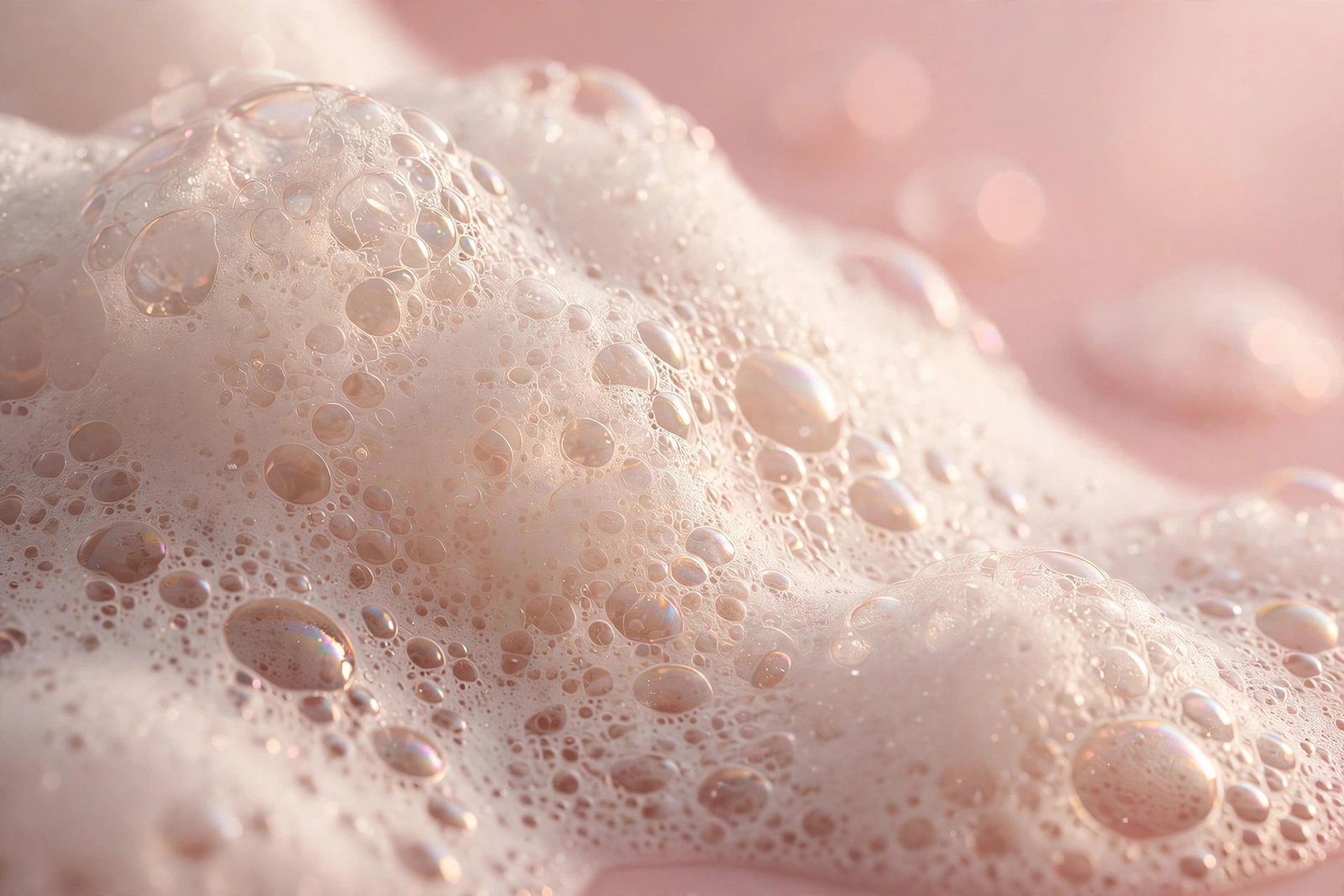
The important thing to know: lather does not equal cleanliness. The amount of foam has nothing to do with how well a shampoo cleans — it’s just how much air the surfactant traps. A low-lather sulfate-free shampoo is still doing its job; it just feels different.
Who Should Switch to Sulfate-Free Shampoo?
Curly and coily hair
This is the group that benefits most. Curly hair is naturally drier because scalp oils can’t easily travel down twisted strands, and sulfates strip what little moisture reaches the lengths. Many people notice less frizz and more defined curls within a few washes of switching. If curls are your hair type, sulfate-free is usually the default recommendation — it’s why the cleansing step in a beginner-friendly curly hair routine is built around gentle cleansers.
Color-treated hair
Every wash removes a little dye, and sulfate shampoos remove it faster. If you’ve invested in a salon color (or even box dye), switching to sulfate-free stretches the time between touch-ups. Many color-protecting lines are sulfate-free for exactly this reason.
Dry, damaged, or bleached hair
Chemically processed and heat-damaged hair already has a compromised cuticle. A gentler cleanse helps preserve moisture and protein, so hair breaks less and feels smoother over time.
Sensitive or dry scalps
If your scalp gets itchy, flaky, or tight after washing, sulfates may be contributing. Gentler surfactants are less likely to trigger irritation — though if flaking persists, see a dermatologist, since it could be a condition that needs treatment.
Who Can Stick With Regular Shampoo?
Sulfate-free isn’t automatically better for everyone — and for some hair types, regular shampoo is the better choice.
Very oily scalps: If your hair gets greasy within a day of washing, you may need the stronger cleansing power of sulfates to feel truly clean. Sulfate-free formulas can leave fine, oily hair looking limp and under-washed.
Fine, straight hair: Fine strands get weighed down easily, and gentle cleansers sometimes don’t remove enough oil at the roots, leaving hair flat. Many people with fine, straight hair prefer the clean, voluminous feeling of a regular shampoo.
Heavy product users: If you use lots of styling products — waxes, gels, dry shampoo, heavy silicones — sulfates break through buildup that gentler cleansers can leave behind. Even committed sulfate-free users often do a periodic “clarifying” wash with a sulfate shampoo to reset.
Dandruff-prone scalps: Many medicated dandruff shampoos contain sulfates because the active ingredients need a strong delivery base. If a dermatologist recommended a specific shampoo, stick with it rather than switching for sulfate-free sake.
Bottom line: there’s nothing wrong or harmful about sulfates for hair that can handle them. The anti-sulfate movement started with curly hair needs — and for curls, the advice is sound. For everyone else, it’s a “try it and see” situation, not a rule.
The Transition Period: Myth or Real?
You’ve probably heard that hair goes through an “adjustment” or “detox” period after switching to sulfate-free — a few weeks of greasiness, waxiness, or dullness before things improve. Is it real?
Partly. Here’s what’s actually happening:
- Your scalp was overproducing oil to compensate for being stripped by harsh sulfates. When you switch to a gentler cleanser, it takes a few washes — typically 1 to 2 weeks — for oil production to rebalance. During that window, hair can feel oilier than usual.
- Any silicone or wax buildup from old products may not dissolve fully in gentler cleansers, leaving a coated feeling until it’s washed out. One clarifying wash with a regular shampoo before you start the switch prevents this.
- Some of it is perception: sulfate-free shampoos leave more natural oil behind, and if you’re used to the squeaky-stripped feeling, “still soft and conditioned” can initially read as “not clean.”
What isn’t real: the idea that your hair is “purging toxins.” Hair doesn’t detox. Give the switch two to three weeks of consistent use before judging — and if your scalp is still genuinely greasy after that, the formula may just be too gentle for your oil level.
How to Choose the Right Shampoo for Your Hair
- Start with your hair type, not the label. Curly, dry, or color-treated? Start sulfate-free. Fine, straight, or very oily? Regular is fine — possibly better.
- Check the ingredient list, not just the front of the bottle. Look for sodium lauryl sulfate, sodium laureth sulfate, or ammonium lauryl sulfate. If none are there, it’s genuinely sulfate-free. Note that “sulfate-free” doesn’t automatically mean gentle — some replacement surfactants can still be drying, so look for moisturizing ingredients like glycerin, aloe, or panthenol too.
- Do one clarifying wash first. Before switching, use a regular clarifying shampoo once to remove all old buildup. That way you’re judging the new shampoo fairly.
- Adjust your wash frequency. Sulfate-free cleansers are gentler, which means some people can stretch washes longer — while others with oily scalps may need to wash slightly more often. Find what works for you with this guide to how often you should wash your hair.
- Give it three weeks. Don’t decide after one wash. Let your scalp’s oil production rebalance before you conclude it’s not working.
- Keep a clarifying shampoo on hand. Even sulfate-free devotees benefit from an occasional deep cleanse every few weeks to prevent buildup — especially if you use styling products.
Frequently Asked Questions
Is sulfate-free shampoo actually better for your hair?
It’s better for hair that’s prone to dryness — curly, coily, color-treated, bleached, or damaged hair. For fine, straight, or very oily hair, regular shampoo often performs better because the stronger cleanse prevents limpness and grease. “Better” depends entirely on your hair type.
Do sulfate-free shampoos clean as well as regular ones?
For everyday dirt, sweat, and light product use, yes — gentler surfactants clean effectively. They can struggle with heavy buildup from waxes, thick silicones, or lots of dry shampoo. If you use heavy styling products, pair your sulfate-free routine with an occasional clarifying wash.
Why does my hair feel greasy after switching to sulfate-free shampoo?
Usually one of three things: your scalp is still rebalancing oil production (give it 1–2 weeks), old product buildup hasn’t been fully removed (do a clarifying wash first), or the formula is simply too gentle for your oil level. If greasiness persists after three weeks, sulfate-free may not suit your scalp.
Can I use sulfate-free shampoo every day?
Yes — in fact, daily washing is where sulfate-free shampoos shine, since they’re less likely to cause cumulative dryness than daily sulfate washing. That said, most hair types don’t need daily washing; check how washing frequency affects different hair types before deciding.
Are sulfates bad for your health?
There’s no scientific evidence that sulfates in shampoo pose a health risk — they rinse off and don’t penetrate the scalp in meaningful amounts. The concerns are cosmetic: dryness, frizz, color fading, and scalp irritation. The “sulfates are toxic” claim is marketing, not science.
Key Takeaways
- Sulfates (SLS and SLES) are strong surfactants that cleanse effectively but can strip natural oils — which hits curly, dry, and color-treated hair hardest.
- Sulfate-free shampoos use gentler cleansers that preserve moisture, reduce frizz, and help color last longer.
- Curly, coily, dry, damaged, or color-treated hair benefits most from going sulfate-free.
- Fine, straight, or very oily hair often does better with regular shampoo — gentler isn’t always better.
- The “transition period” is mostly your scalp rebalancing oil production (1–2 weeks) — do one clarifying wash before switching for the fairest test.
- Lather doesn’t equal cleanliness, and sulfates aren’t a health hazard — choose based on your hair type, not the marketing.
Love this? Pin it for later!