How to Refresh Second Day Curls in 5 Minutes
You woke up to curls that looked incredible yesterday — and this morning they’re flat at the roots, frizzy at the ends, and a few rogue strands are sticking out at odd angles. Sound familiar? Refreshing second day curls is the skill that separates a good curly hair routine from a frustrating one. Done right, it takes about five minutes and makes day-two hair look nearly as good as wash day.
The good news: you don’t need to re-wash, re-style from scratch, or drench your hair. Refreshing is a targeted reset — you reactivate the products already in your hair, add a little moisture, and reshape the curl pattern. Here’s exactly how to do it, plus what works for different curl types and the mistakes that turn a refresh into a frizz bomb.
If you’re still building your wash-day foundation, start with this beginner’s curly hair routine before diving into non-wash-day styling.
Why Do Curls Fall Flat Overnight?
To refresh curls well, it helps to know what happened to them while you slept. Curls lose their shape overnight for a few predictable reasons:
- Compression. Eight hours of your head pressed against a pillow flattens the crown and crushes curl clumps, especially on the side you sleep on.
- Friction. Cotton pillowcases rough up the hair cuticle, creating frizz and loosening the curl pattern. (This is why the curly hair routine recommends sleeping on a satin or silk pillowcase, or with hair in a loose pineapple on top of your head.)
- Moisture loss. Air, fabric, and room humidity pull water out of the hair shaft overnight. Curly hair is naturally drier than straight hair because scalp oils travel down twists and bends slowly — so it shows dryness faster.
- Product breakdown. The gel cast or styling cream that held your curl pattern on wash day gradually breaks down with movement, friction, and time.
A refresh reverses all four: you add back light moisture, smooth the cuticle, reform the curl clumps, and reactivate hold — without starting over.
The 5-Minute Refresh Method: Step by Step
This is the core technique. It works on any wash-day curl pattern that’s gone limp or frizzy — you just adjust the amount of product and water by curl type (more on that below).
Step 1: Mist with Water
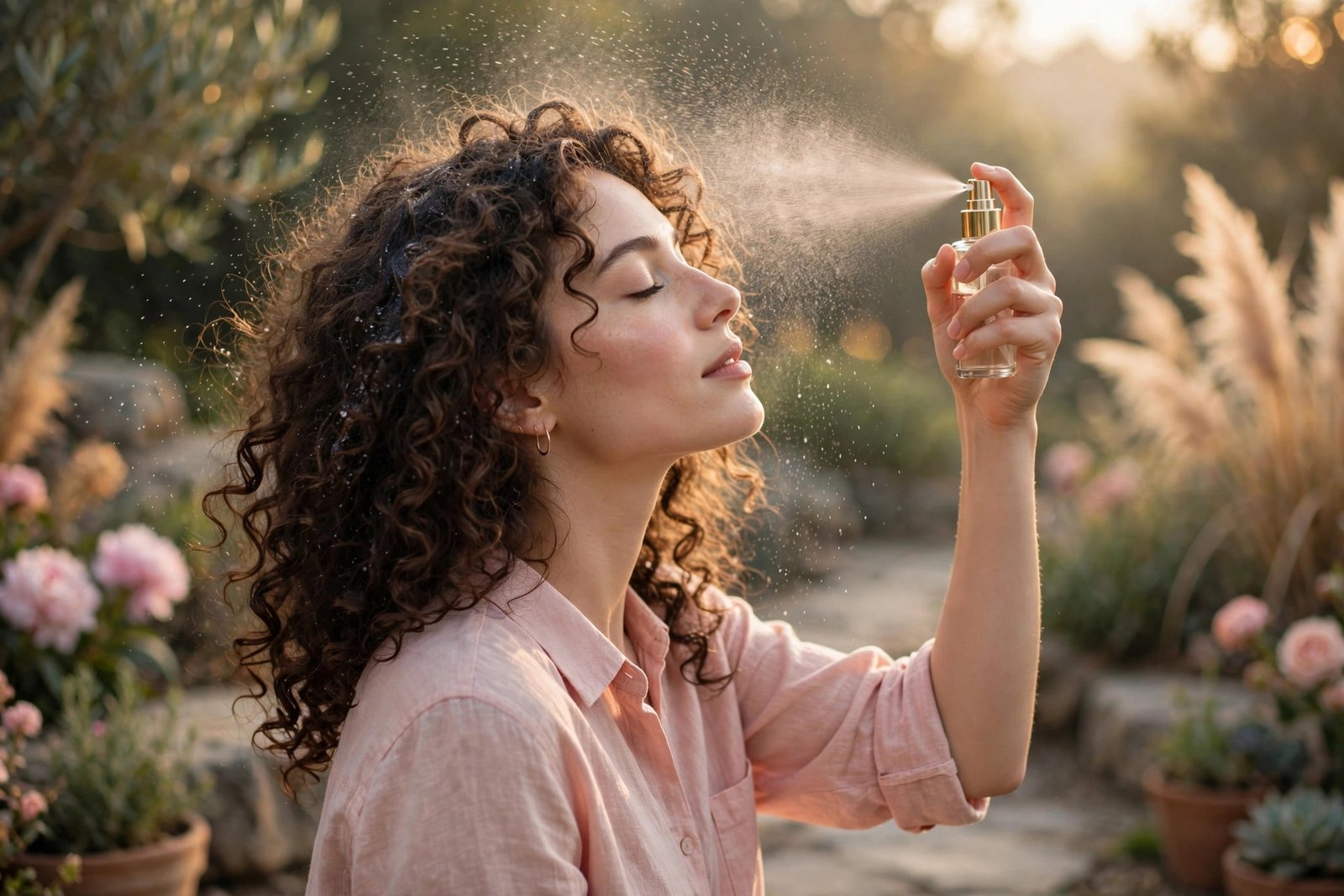
Fill a spray bottle with plain water (some people add a pea-sized amount of leave-in conditioner to it — a homemade “refresh spray”). Lightly mist the sections that need help: the flattened crown, frizzy ends, and any misshapen clumps.
The key rule: damp, not dripping. You want to reactivate yesterday’s products, not dissolve them. A fine mist is ideal — a few pumps per section. If you over-wet the hair, the curl clumps separate, you lose definition, and drying takes much longer. Hair should feel slightly damp to the touch, like it would 20 minutes after washing.
Focus the water where curls have lost their shape rather than soaking your whole head. The underside and back often still look fine and need nothing at all.
Step 2: Apply Leave-In (Sparingly)
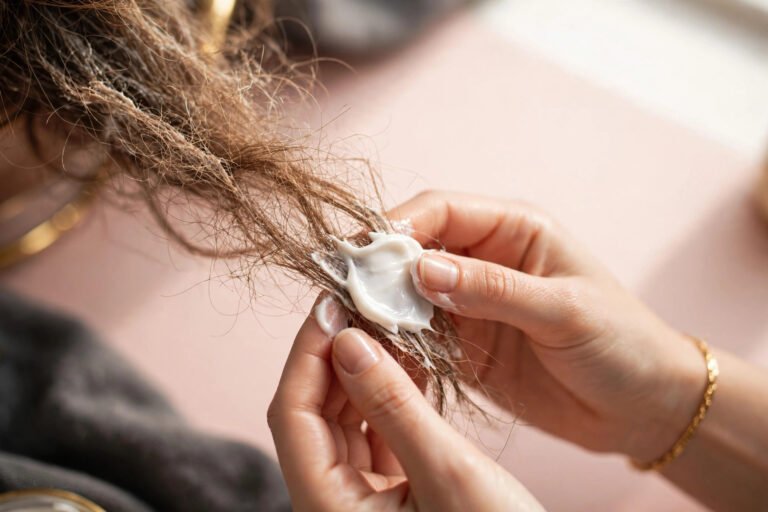
Rake a small amount of leave-in conditioner or a curl cream through the dampened sections, or smooth it over the surface with praying hands. This does two things: it adds back the moisture lost overnight, and it gives the curls something soft and pliable to reform around.
Less is more. A dime-sized amount for medium hair is usually plenty — you’re topping up, not re-styling. Too much product on day two creates buildup, weighs curls down, and can make hair look stringy or greasy by midday. If a section is just frizzy (not dry), you can skip leave-in there and go straight to scrunching.
Step 3: Scrunch to Reform the Pattern
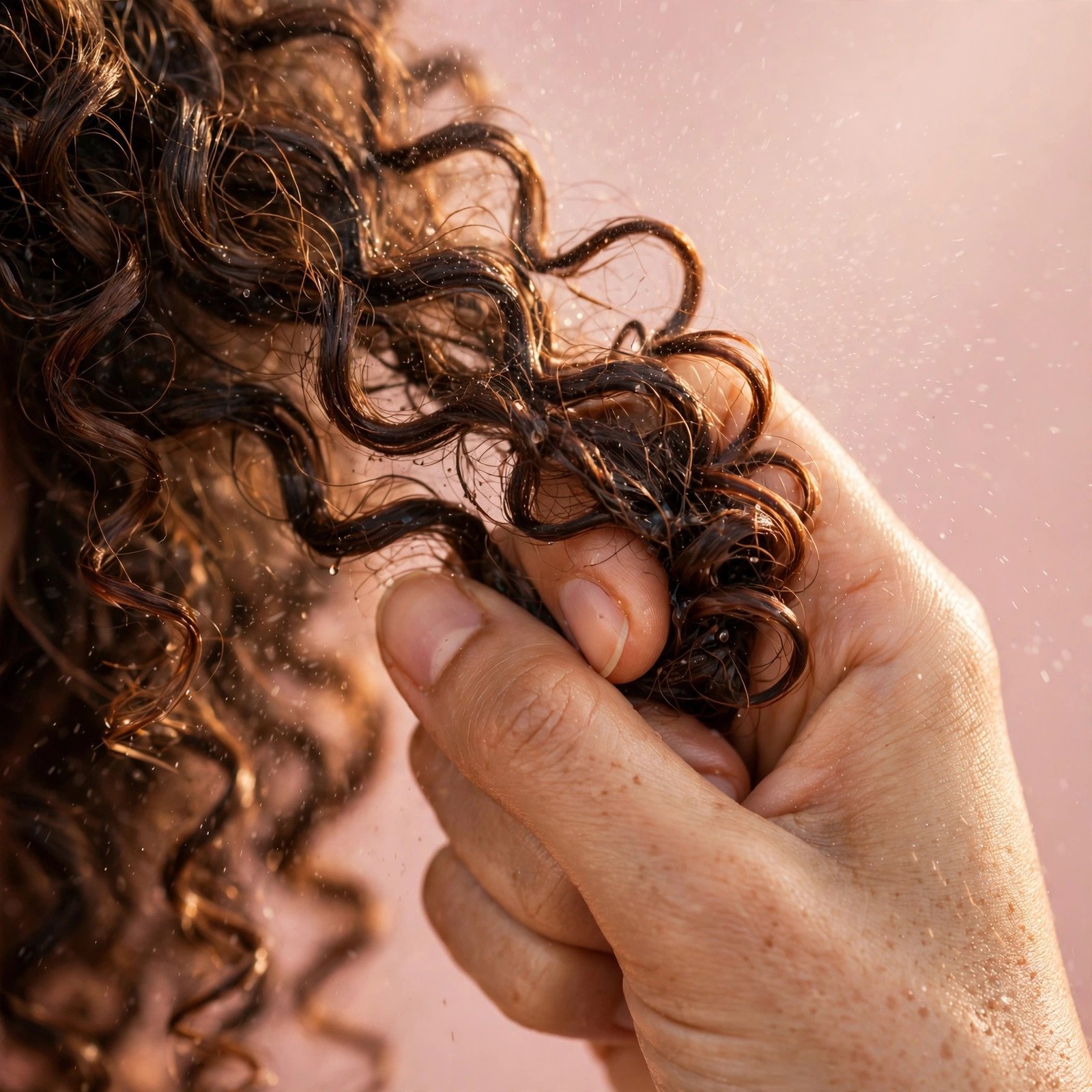
Flip your head forward or to the side and scrunch each section upward toward the scalp, squeezing firmly. This is the move that rebuilds the curl pattern — the combination of dampness, a little product, and upward compression encourages the hair to coil back into its clumps.
For sections that lost their shape entirely, twist them gently around your finger to recreate the curl, then scrunch. For frizz around the crown, smooth a tiny amount of product over the surface with flat hands (praying hands), then scrunch the ends.
Let air-dry, or diffuse on low heat for a few minutes if you’re in a hurry. Don’t touch the curls while they dry — every touch during drying breaks up the forming pattern and creates frizz. If you diffuse, see this guide on diffusing vs air drying curly hair for the full comparison.
The 5-minute version: mist the worst sections, smooth leave-in over the crown frizz, scrunch everything upward, and go. Save the finger-coiling and diffusing for mornings when you have extra time.
What Products to Use for Refreshing
You don’t need a separate shelf of “refresh products” — most of what you need is already in your routine. The best refresh products share one trait: they’re light enough to layer on top of yesterday’s products without buildup.
Refresh spray: Water in a fine-mist bottle is the baseline. A premixed refresh spray (water plus a light leave-in) saves a step. Look for fine misters rather than trigger sprayers — even, light coverage matters.
Leave-in conditioner: A lightweight liquid or milky leave-in is ideal for refreshing. Heavy, buttery leave-ins meant for deep wash-day moisture tend to weigh second-day curls down. Apply to dampened sections only.
Curl cream: If your curls need more definition than leave-in provides, a light curl cream adds shaping power. Smooth it over sections with praying hands, then scrunch.
Gel or mousse (optional): For curls that won’t hold their shape with cream alone, a small amount of light-hold gel or mousse scrunched into the ends recreates the cast that broke down overnight. Mousse is the lightest option and works well for wavy hair that gets weighed down easily.
Oil (use sparingly): A drop of lightweight oil smoothed over dry, frizzy ends after the curls are set can seal in moisture and add shine. Apply it last, never before water — oil blocks water from entering the hair shaft.
What to avoid on refresh day: heavy butters, thick deep conditioners, dry shampoo at the roots (it dulls curl shine and adds gritty buildup), and anything with strong hold that will stack on top of yesterday’s products and turn crunchy.
Refreshing by Curl Type
The basic method is the same, but the amounts change significantly by curl type:
Wavy hair (2A–2C): Waves are the easiest to weigh down. Use mostly water and a light mousse — skip leave-in unless the ends are genuinely dry. Focus the refresh on the mid-lengths and ends; refreshing the roots of wavy hair often just makes it look flat and oily. A light mist plus scrunch is usually all waves need.
Curly hair (3A–3C): The classic refresh candidate. Water mist plus a small amount of leave-in or curl cream, scrunched upward, restores most day-two curls. Finger-coil any stubborn sections. This curl type benefits most from sleeping in a pineapple or with a satin bonnet, which preserves clumps overnight and makes the morning refresh much shorter.
Coily hair (4A–4C): Coils and tight curls typically need more moisture and more product than looser patterns. Use a slightly heavier hand with the water mist and layer leave-in with a cream or light oil to seal. Protective overnight styles — twists, braids, or a satin bonnet — preserve the pattern far better than loose hair, and the refresh becomes mostly about re-moisturizing rather than reshaping.
Fine hair (any pattern): Fine curls collapse under product weight faster than coarse hair. Keep everything light: water mist, a tiny amount of leave-in, and mousse instead of cream or gel. Refresh the canopy (top layer) most, since that’s what shows.
What NOT to Do When Refreshing Curls
These are the mistakes that turn a quick refresh into a full re-wash:
-
Don’t brush or comb dry curls. This is the number-one refresh killer. Brushing breaks up curl clumps and turns them into a halo of frizz. If you need to detangle, do it only on soaking wet hair with conditioner — never during a refresh.
-
Don’t over-wet the hair. Dripping wet hair dissolves yesterday’s products completely, separates clumps, and forces you into a full dry-and-style cycle. Damp, not wet, is the rule.
-
Don’t pile on heavy product. Layering thick cream over yesterday’s gel creates buildup, stringiness, and that coated feeling. Light layers only.
-
Don’t use hot tools to “fix” curls. A flat iron or curling iron on already-styled curls creates heat damage and mismatched texture. If heat is needed, a diffuser on low is the curl-safe option.
-
Don’t touch curls while they dry. Every poke, fluff, or adjustment during drying breaks the reforming pattern and creates frizz. Scrunch, then hands off until fully dry. You can gently fluff the roots for volume once everything is dry.
-
Don’t refresh the same sections endlessly. If you’ve misted and scrunched a section twice and it still won’t cooperate, it needs a wash, not more product. Adding a third layer just builds up.
When to Just Wash Instead
Refreshing is a bridge between wash days, not a replacement for washing. Here are the signs that today is a wash day, not a refresh day:
- It’s day 3 or 4 and the refresh isn’t holding. Products lose effectiveness with each layering. If yesterday’s refresh barely lasted, today’s won’t either.
- Your scalp is itchy, oily, or flaky. No amount of curl refreshing fixes scalp issues — and layering product over an irritated scalp makes it worse.
- The curls are limp at the roots. Refreshing reshapes the lengths, but flattened, oily roots need a cleanse. Dry shampoo is a temporary patch, not a fix.
- There’s visible buildup. If your hair feels coated, looks dull, or products seem to sit on top instead of absorbing, it’s time to clarify and start fresh.
- The shape is gone, not just messy. A refresh reactivates an existing pattern. If the curls have completely dropped out and won’t reform with water and scrunching, the style has run its course.
Most curl types can stretch 2–3 days between washes with good refreshing; some coily hair routines go longer with protective overnight styles. The refresh extends your style’s life — it doesn’t extend it indefinitely.
Frequently Asked Questions
Can you refresh curls without any product?
Yes, if yesterday’s products are still mostly intact. A plain water mist plus scrunching reactivates the gel or cream already in your hair — the water temporarily “wakes up” the hold. This works best on day two when buildup is minimal. By day three, most hair needs at least a little leave-in to avoid dryness.
Why do my refreshed curls look frizzy instead of defined?
Usually one of three causes: you used too much water (clumps separated), you touched the hair while it dried (pattern broke apart), or you skipped product on sections that needed moisture. Try less water, hands-off drying, and a small amount of leave-in on the frizziest sections.
Should I refresh curls every morning?
Only the sections that need it. Many people find the back and underside of their hair still look fine on day two — refreshing just the crown and the face-framing pieces takes two minutes and avoids unnecessary buildup. Assess before you mist.
Can I refresh curls with just water and oil?
Water plus oil is a reasonable minimalist refresh, but order matters: water first, then a tiny amount of oil smoothed over the ends to seal. Oil applied to dry hair before water blocks moisture from getting in. This combo works best for coarser, drier curl types; fine or wavy hair usually does better with water plus a light leave-in.
How do I keep second day curls from getting flat overnight in the first place?
Overnight protection does more for day-two hair than any morning refresh. Sleep on a satin or silk pillowcase (or wear a satin bonnet), and gather hair into a loose, high “pineapple” ponytail so the curls aren’t crushed. The less damage overnight, the shorter your morning refresh — sometimes just a quick mist and scrunch is enough.
Key Takeaways
- Refreshing second day curls means reactivating yesterday’s products with light moisture — not re-washing or re-styling from scratch.
- The 5-minute method: mist with water (damp, not dripping), smooth on a small amount of leave-in or curl cream, scrunch upward, and let dry hands-off.
- Adjust by curl type: wavy hair needs mostly water and mousse; coily hair needs more moisture and sealing; fine hair needs the lightest touch of all.
- Never brush dry curls, never over-wet, and keep product layers light — buildup is the enemy of multi-day curls.
- Protect curls overnight with a satin pillowcase or bonnet and a loose pineapple to make the morning refresh dramatically easier.
- Know when to stop refreshing: an itchy scalp, limp roots, or curls that won’t reform after two attempts mean it’s wash day.
Love this? Pin it for later!