Why Is My Hair Dry and Brittle? Causes and How to Fix It
If your hair feels rough, looks dull, and snaps when you brush it, you’re dealing with dry, brittle hair — one of the most common hair complaints. The good news? Most causes of dryness are fixable once you know what’s behind them.
Hair becomes dry and brittle when it loses moisture and natural oils, or when the protective outer layer (the cuticle) is damaged. Below, we’ll walk through the most common causes, how to assess your damage level, and a step-by-step repair routine to bring your hair back to health.
Common Causes of Dry, Brittle Hair
Heat Damage
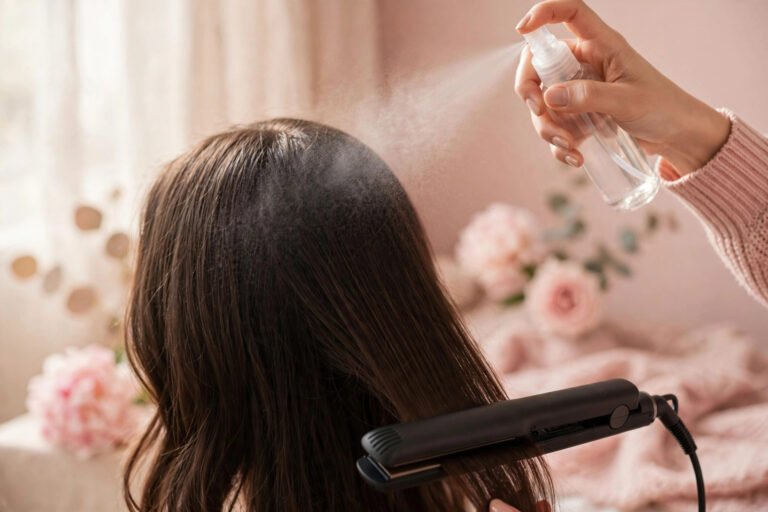
Frequent use of flat irons, curling wands, and blow dryers is the number one cause of dry, brittle hair. High temperatures strip moisture from the hair shaft and crack the cuticle, leaving hair rough and prone to breakage. Even one session at excessive heat can cause lasting damage, and daily heat styling compounds the problem quickly.
If you straighten or curl your hair regularly, check out our guide on how to fix frizzy hair after straightening for targeted repair tips.
Chemical Processing
Hair dye, bleach, perms, and relaxers all alter the hair’s structure. Bleach is especially harsh — it lifts the cuticle to remove pigment, which also lets moisture escape. Overlapping color applications (coloring already-colored hair) multiplies the damage. Even “gentle” box dyes can dry hair out over time.
Environmental Factors
Sun exposure, wind, chlorinated pool water, and hard water minerals all contribute to dryness. UV rays break down the proteins in hair just like they damage skin. Salt water and chlorine strip natural oils, leaving hair coarse and tangled after swimming.
Overwashing
Washing your hair too often strips away sebum, the natural oil your scalp produces to keep hair moisturized. If you’re shampooing daily with a harsh sulfate shampoo, your hair never gets a chance to retain moisture. This is especially true for curly and coily hair types, which are naturally drier.
Product Buildup
Ironically, using too many products can make hair feel dry. Silicones, waxes, and heavy styling products build up on the hair shaft over time, blocking moisture from getting in. Hair looks dull and feels coated rather than soft.
Lack of Conditioning
Skipping conditioner — or not leaving it on long enough — is a simple but common cause. Conditioner seals the cuticle after shampooing and replaces lost moisture. Without it, the cuticle stays raised and rough.
Age and Hormonal Changes
As we age, the scalp produces less oil, and hair naturally becomes drier and more fragile. Hormonal shifts (pregnancy, menopause, thyroid issues) can also change hair texture and moisture levels.
How to Assess Your Damage Level
Before starting a repair routine, figure out how damaged your hair actually is. Try these simple tests:
The Stretch Test: Take a single wet strand and gently stretch it. Healthy hair stretches about 30% and bounces back. If it snaps immediately, your hair lacks elasticity and needs protein. If it stretches excessively without breaking, it needs moisture.
The Porosity Test: Drop a clean, dry strand into a glass of water. If it floats for a long time, you have low porosity (moisture has trouble getting in). If it sinks quickly, you have high porosity (moisture escapes easily — common in damaged hair).
The Visual Check: Look at your ends. Split ends, white dots along the shaft, and a rough texture when you run fingers upward all signal damage. If breakage is severe and widespread, a trim may be necessary before repair can begin.
Repair Routine: Step-by-Step
Step 1: Get a Trim
If your ends are split or severely damaged, no product will fuse them back together. Trimming off the worst damage gives the rest of your hair a fresh start. You don’t need a dramatic cut — even half an inch removes the most fragile ends.
Step 2: Switch to a Gentle Shampoo
Replace harsh sulfate shampoos with a sulfate-free or low-sulfate formula. Focus shampoo on the scalp (where oil builds up), not the lengths. Shampooing the ends directly strips the moisture they desperately need.
Step 3: Deep Condition Weekly
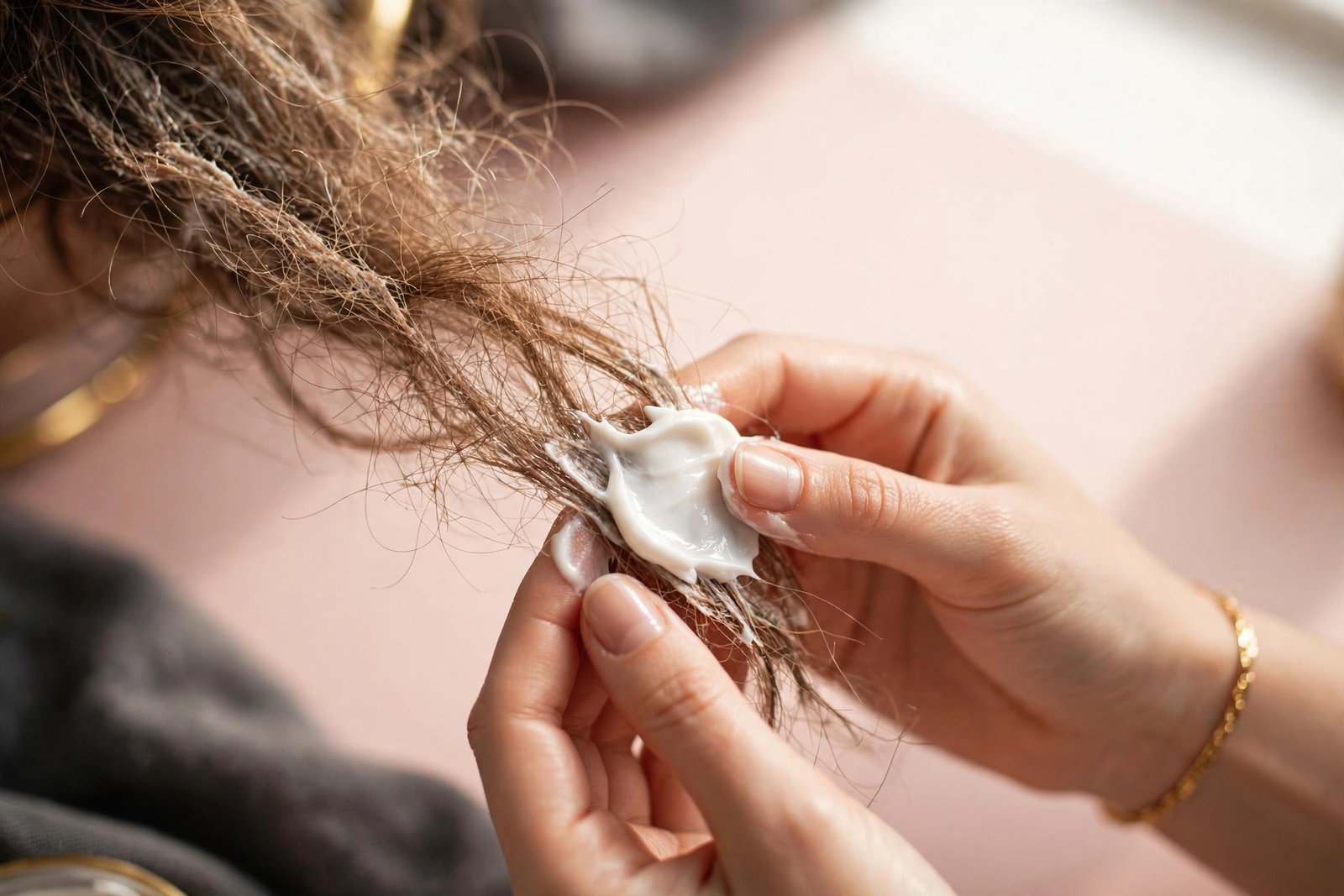
A weekly deep conditioning treatment is the single most impactful step for dry hair. Apply a rich mask to damp hair, focusing on mid-lengths to ends. Leave it on for 10–20 minutes — covering your hair with a shower cap traps body heat and helps the product penetrate.
Step 4: Add a Leave-In Conditioner
After washing, apply a leave-in conditioner to damp hair before styling. This provides ongoing moisture and makes detangling easier, which means less breakage from brushing.
Step 5: Seal with Oil
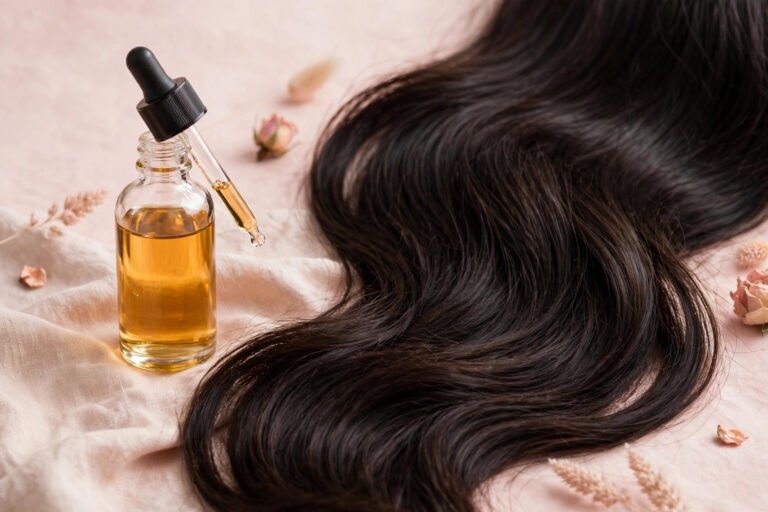
Oils lock in the moisture from your conditioner. For dry hair, argan oil, jojoba oil, or sweet almond oil work well. Apply a small amount to the ends — a little goes a long way, and too much will weigh hair down.
Step 6: Reduce Heat (or Protect It)
Cut back on heat styling as much as possible. When you do use heat, always apply a heat protectant first, and keep temperatures moderate (below 350°F/175°C for most hair types). For more on protecting straightened hair, see our beginner’s hair care routine guide.
Best Ingredients for Dry, Brittle Hair
When shopping for products, look for these proven moisturizing and repairing ingredients:
- Shea butter — Rich emollient that softens and seals in moisture
- Argan oil — Lightweight oil that adds shine without heaviness
- Glycerin — A humectant that draws moisture from the air into hair
- Aloe vera — Soothes the scalp and provides lightweight hydration
- Keratin and hydrolyzed proteins — Temporarily fill in gaps in damaged cuticles, improving strength and elasticity
- Panthenol (Pro-Vitamin B5) — Penetrates the hair shaft to improve moisture retention
- Ceramides — Help restore the hair’s natural lipid barrier
For severely damaged hair, alternate between moisture-focused products (shea butter, oils) and protein treatments. Too much protein without moisture can make hair stiff and brittle — balance is key.
What to Avoid
- Daily heat styling without protection — the fastest route to brittle hair
- Overlapping bleach or color on already-processed hair
- Brushing wet hair aggressively — wet hair is at its most fragile; use a wide-tooth comb and detangle gently from ends upward
- Tight hairstyles that pull and snap fragile strands
- Skipping trims — split ends travel upward if left alone
- Very hot water — lukewarm water is gentler on both hair and scalp
- Rubbing hair dry with a towel — squeeze gently with a microfiber towel or cotton T-shirt instead
Frequently Asked Questions
How long does it take to repair dry, brittle hair?
It depends on the severity. With consistent care, you should notice improved softness within 2–3 weeks. Significant structural repair takes 2–3 months, since hair grows about half an inch per month and damaged sections need to grow out.
Can dry, brittle hair be fully repaired?
Damaged hair can’t be permanently “healed” — the hair shaft is not living tissue. But the right routine dramatically improves its appearance, feel, and manageability, and prevents further damage while healthy new growth comes in.
Should I stop coloring my hair if it’s dry and brittle?
Not necessarily, but give it a break if damage is severe. When you resume, space out appointments, avoid overlapping color on previously colored sections, and add bond-building treatments to your routine.
Is coconut oil good for dry hair?
It depends on your hair type. Coconut oil works well for many people, but those with low-porosity or protein-sensitive hair sometimes find it makes hair feel stiff. If coconut oil doesn’t agree with your hair, try argan or jojoba oil instead.
Does drinking more water help dry hair?
Hydration supports overall health, but dry hair is primarily a surface-level issue caused by external damage and moisture loss from the hair shaft. Topical treatments and gentle handling make a much bigger difference than water intake alone.
Can I repair dry hair without cutting it?
If the damage is mild to moderate, yes — consistent deep conditioning, reduced heat, and gentle handling can significantly improve how your hair looks and feels. But if you have extensive split ends or white dots along the shaft, those sections are too far gone to save. A small trim removes the worst damage and lets the rest of your hair recover faster. Think of it as pruning: cutting away the dead ends helps the healthy hair thrive.
Key Takeaways
- Dry, brittle hair is usually caused by heat damage, chemical processing, overwashing, or environmental factors
- Assess your damage with the stretch test and porosity test before starting treatment
- A repair routine centers on gentle cleansing, weekly deep conditioning, leave-in products, and sealing with oil
- Look for shea butter, argan oil, glycerin, and proteins in your products
- Avoid daily unprotected heat, aggressive brushing when wet, and skipping trims
- Visible improvement takes 2–3 weeks; full recovery takes a few months of consistent care
For a complete foundation, pair this repair routine with our hair care routine for beginners to keep your hair healthy long-term.
Love this? Pin it for later!