How to Fix Frizzy Hair After Straightening (And Keep It Sleek for Days)
Direct answer: Frizz after straightening happens when moisture gets back into the hair shaft — usually from humidity, skipped heat protectant, or straightening damp hair. The most reliable fix I found: apply a heat protectant, straighten in small sections with one slow pass, then seal with a pea-sized amount of anti-frizz serum. In my three-day test, this combo kept hair sleek through day three, while serum-only frizzed by the next morning.
There is nothing more frustrating than spending forty minutes with a flat iron, stepping outside, and watching your sleek blowout-style finish puff up like a dandelion. I have been there more times than I care to admit — which is exactly why I decided to stop guessing and actually test what works.
Over two weeks, I straightened my hair four separate times, each time using a different anti-frizz method, and tracked the results on day one and day three. Same shampoo, same flat iron, same weather-ish conditions. Below are the honest results, plus the routine I now use every time.
The 2-minute frizz diagnosis
Before you change anything, figure out your frizz type — the fix depends on it:
- Frizz appears within an hour, everywhere: moisture is getting in. Your seal step is missing or too light.
- Frizz only at the roots or hairline: sweat and scalp oil are lifting your roots. You need root-focused protection.
- Ends look frizzy but roots are fine: your ends are dry or damaged and drinking up humidity. Ends need extra serum.
- Hair was sleek, then frizzed on day two or three: your overnight routine is the problem, not your straightening. (I have a whole guide on keeping straightened hair perfect overnight.)
What I tested: 4 anti-frizz methods, 3 days each
To keep it fair, every test started the same way: freshly washed hair, blow-dried smooth, straightened in half-inch sections with one slow pass at 380°F. The only variable was the anti-frizz step.
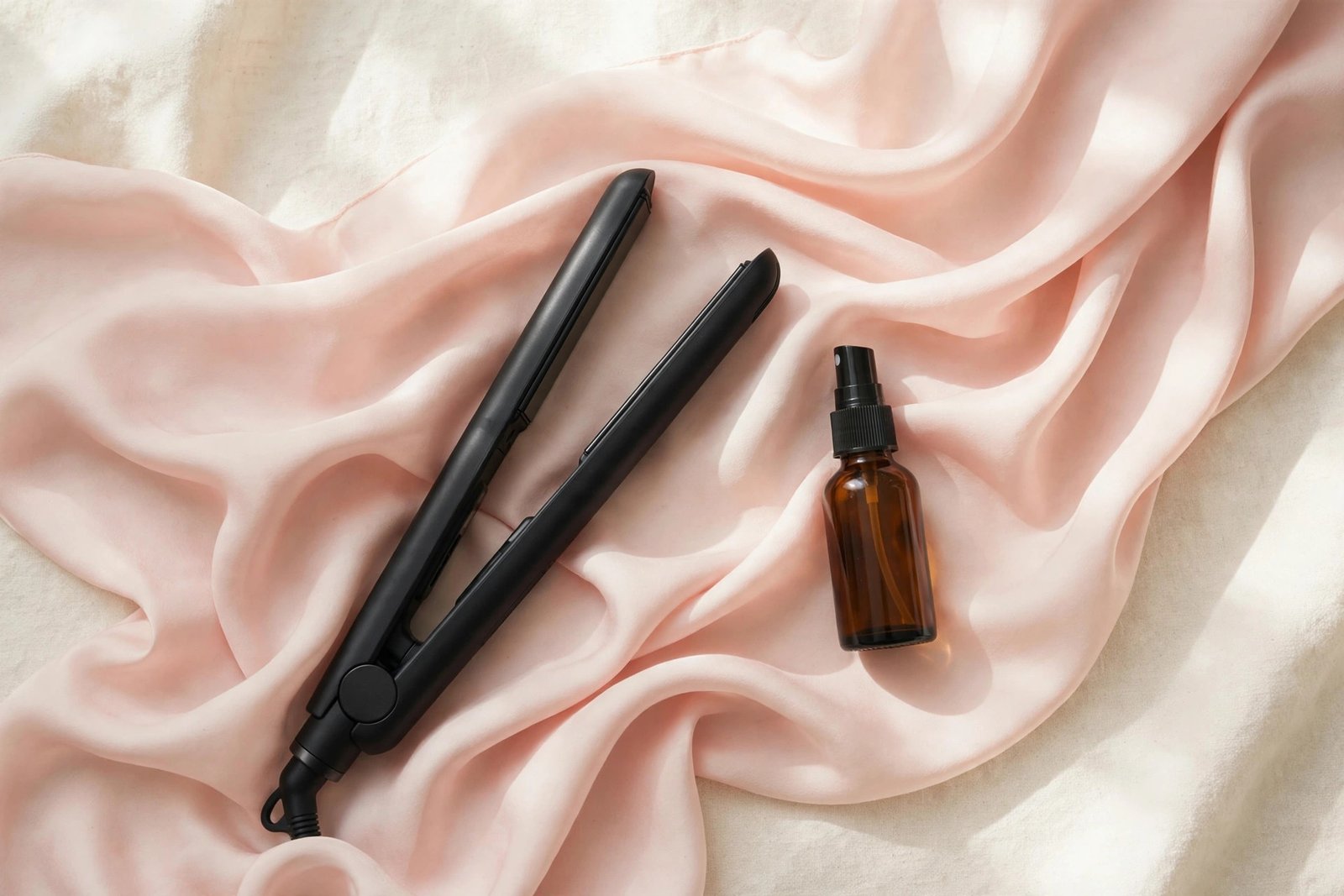
Method 1: Silicone serum before straightening. I smoothed a dime-sized amount of anti-frizz serum through damp hair before blow-drying. Day one: glassy and gorgeous. Day three: noticeable puffiness at the crown and hairline, ends starting to frizz. Verdict: great short-term shine, weak longevity.
Method 2: Cool-shot finish. After each straightened section, I blasted it with the cool shot on my dryer for five seconds. Day one: very smooth, slightly less shiny than the serum method. Day three: better than expected — the cool shot seemed to “lock” the straightened shape, and frizz was moderate, mostly at the hairline.
Method 3: Leave-in conditioner + heat protectant layering. applied to damp hair, then a light leave-in cream on the mid-lengths and ends before straightening. Day one: smooth with soft movement — less “helmet hair” than the serum method. Day three: the clear winner. Minimal frizz, ends still sealed, roots only slightly lifted.
Method 4: Anti-humidity finishing spray. Straightened with just heat protectant, then misted an anti-humidity spray over the finished style. Day one: excellent — the sleekest of all four on day one. Day three: the biggest drop-off. Once the spray’s barrier wore off (around day two), frizz came back fast and there was nothing underneath holding the line.
The takeaway: layering beat any single product. Method 3 won because it protected the hair during heat styling and left conditioning agents inside the strand, not just a coating on top.
The sleek-for-days routine (my exact order)
This is the routine I use now, built from the test results:
- Wash and condition as normal, then towel-dry gently — no rough rubbing, which raises the cuticle before you even start.
- On damp hair: spray heat protectant all over, then smooth a pea-sized amount of leave-in cream through the mid-lengths and ends only.
- Rough-dry to 90%, then finish with a round brush or paddle brush for tension.
- Straighten in half-inch sections, one slow pass each, at the lowest temperature that works for your hair (fine hair: 300–350°F; thick/coarse: 380–410°F).
- Cool-shot each section for five seconds right after the iron passes. This was the surprise hero of my testing.
- Seal the ends with a pea-sized amount of serum — ends only, never roots.
- If it’s humid out, add a light mist of anti-humidity spray as the final shield.
5 mistakes that cause frizz after straightening
Straightening damp hair. Even slightly damp hair + a flat iron = steam damage and instant frizz. If you hear sizzling, stop — your hair isn’t dry enough.
Skipping heat protectant. I tested this too (for science): the no-protectant side was visibly frizzier by evening and felt rougher. If your hair ever smells burnt after straightening, read my guide on why hair smells burnt and how to fix it — it’s a related warning sign.
Too many passes. One slow pass beats three fast ones. Every extra pass is more heat damage, and damaged cuticles frizz faster.
Straightening in a steamy bathroom. Straighten in a cool, dry room. A hot steamy bathroom reintroduces moisture before you even finish.
Touching your hair all day. Hands carry oil and moisture. Once it’s sleek, leave it alone.
Wear your hair curly some days too? Here’s why curls fall flat right after curling and how to fix it. And if you want a weekly strengthening treatment between straightening sessions, this is how often you should actually do a rice-water rinse (spoiler: not daily).
Frequently asked questions
Why does my hair get frizzy right after I straighten it?
The most common reason is straightening hair that wasn’t 100% dry, or skipping heat protectant. Second most common: your flat iron temperature is too low, so you’re doing multiple passes and roughing up the cuticle. One slow pass at the right temperature beats three quick ones.
How do I keep straightened hair from frizzing in humidity?
Layer your defense: heat protectant + leave-in before styling, cool-shot each section, and finish with an anti-humidity spray. On very humid days, a light serum on the ends is your touch-up tool — carry a travel size.
Does hairspray help with frizz after straightening?
Light-hold anti-humidity spray helps; heavy regular hairspray usually backfires — it makes hair stiff, and stiff hair breaks and frizzes worse by day two. If you use hairspray, mist from at least 10 inches away.
Why is my hair frizzier after straightening than before?
Because heat styling without protection damages the cuticle, and a damaged cuticle absorbs humidity faster than your natural texture did. This is cumulative — which is why heat protectant every single time matters more than any single frizz-fighting product.
Can I fix frizzy straightened hair without washing it?
Yes, for mild frizz: smooth a tiny amount of serum over the frizzy areas, then run the flat iron over just those sections on low heat. For major day-three frizz, a light mist of water + leave-in on the ends, then a quick re-straighten of the worst sections, works better than piling on more product.
Love this? Pin it for later!