Why Do My Curls Fall Flat Immediately After Curling? 7 Fixes That Actually Work
Direct answer: Curls fall flat when the hair cools in a stretched-out position instead of setting in its curled shape. The single biggest fix: pin each curl up right after releasing it from the iron and let it cool completely before touching it. In my hold-time test, pinned-and-cooled curls lasted over 8 hours, while curls I let drop and cool hanging lasted barely 2.
You curl your hair, it looks incredible for twenty minutes, and by the time you leave the house it is halfway to straight. I lived this cycle for years, blaming my “stubborn” hair — until I realized my hair wasn’t the problem. My cooling method was.
I tested it properly: same iron, same temperature, same day — half my head cooled with curls pinned up, the other half left to drop and cool hanging. I logged the hold time honestly. The difference was honestly shocking, and it changed how I curl my hair forever.
Why curls fall: the quick diagnosis
Curls are just heat-shaped hair, and heat-shaped hair only holds if it cools in the curled shape. Match your symptom:
- Curls drop within 30–60 minutes: you’re not cooling them set — this is the #1 cause.
- Curls hold on the ends but the roots go flat: your sections are too big, or you’re not getting tension at the root.
- Curls look great then slowly loosen all day: normal gravity + no prep product. Fixable with the right prep.
- One side holds, the other doesn’t: technique inconsistency (usually rushing the second side).
What I tested: pinned cooling vs dropped cooling
Same curling iron (1.25-inch barrel), 380°F, ten seconds per section, alternating sides of my head so conditions were identical:
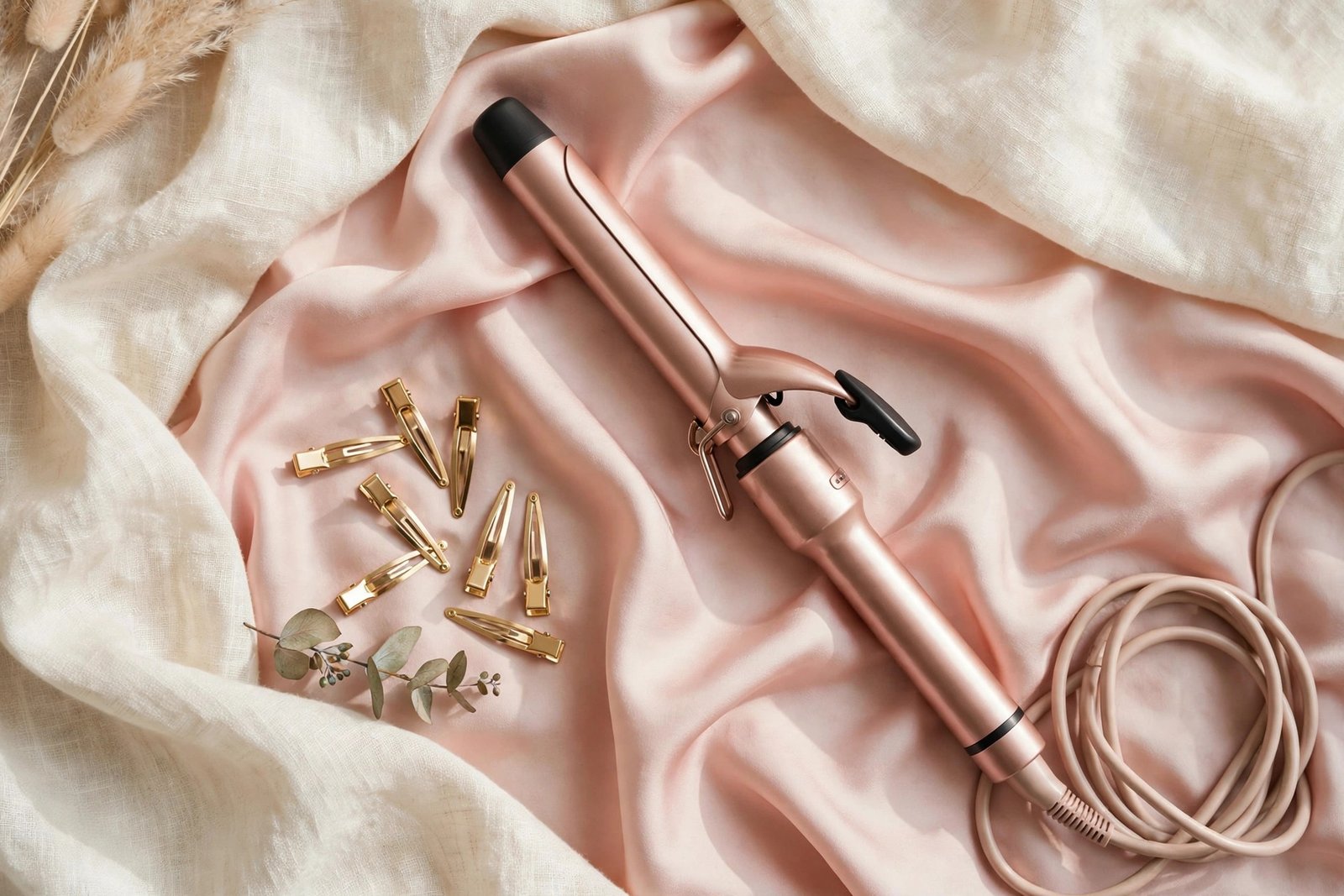
Pinned side: After releasing each curl, I immediately rolled it back up and pinned it flat against my head with a duckbill clip, then moved on. I left all clips in for 15 minutes after finishing, then removed them and gently shook out.
Dropped side: I released each curl and let it fall naturally, only running my fingers through at the very end like most tutorials show.
The hold-time log:
– Hour 0: both sides looked great (dropped side actually looked slightly better — bouncier).
– Hour 2: dropped side visibly loosening; pinned side still tight.
– Hour 4: dropped side essentially waves; pinned side still defined curls.
– Hour 8: pinned side still had real curl shape; dropped side was nearly straight with a slight bend.
Pinned cooling won by a landslide. The dropped side looked better for about fifteen minutes and then lost all day. Lesson learned: never judge a curl at minute zero.
The 7 fixes
1. Pin every curl to cool (the big one). Roll each curl back up after releasing it, clip it to your head, and don’t touch it until every section is done and cooled — at least 10–15 minutes. This alone fixed about 70% of my droop problem.
2. Use smaller sections. Thick sections don’t heat through evenly, so the inside never sets. Sections should be no wider than your iron’s barrel — about one inch.
3. Prep with the right product. A light mousse or curl-enhancing cream on damp hair before blow-drying gives the hair “grip.” Heavy oils and silicones before curling, on the other hand, weigh curls down — save those for after.
4. Get the temperature right. Too cool and the curl never sets; too hot and you damage the cuticle (damaged hair holds nothing). For most hair: 350–380°F. Fine hair should stay at the lower end.
5. Don’t touch them while they’re warm. This includes the “shake it out for a natural look” step — do that only after cooling completely. Touching warm curls stretches them out before they’ve set.
6. Cool shot or cool-down time. If you don’t want to pin, at least let each section hang untouched for a full minute before moving on, or hit it with your dryer’s cool shot for five seconds. Some cooling discipline beats none.
7. Finish with flexible-hold spray. Once curls are cool and shaken out, mist a flexible-hold hairspray from 10 inches away. Crunchy extra-hold spray looks dated and actually makes curls heavier, which pulls them down faster.
What not to do
- Don’t curl dirty, product-heavy hair. Day-three hair with dry shampoo buildup won’t hold a curl well. Start relatively clean.
- Don’t brush curls out with a paddle brush. If you want softer waves, use fingers or a wide-tooth comb only.
- Don’t skip heat protectant. If your hair ever smells scorched after hot tools, check my guide on why hair smells burnt after straightening — burnt-smelling hair is damaged hair, and damaged hair won’t hold a style.
Frequently asked questions
Why do my curls fall flat but everyone else’s stay?
It is almost never “just your hair type.” Fine, silky, or very long hair does need more help — smaller sections, proper cooling, and prep product — but the mechanics are the same for everyone. Start with pinned cooling; it is the highest-impact change.
Should I curl second-day hair or freshly washed hair?
Freshly washed and fully dried is best for hold, as long as you use a prep product. The old “dirty hair holds better” advice really means “hair with some grip holds better” — a light mousse gives you that grip without the grease.
What temperature should a curling iron be?
350–380°F for most hair types. Fine or damaged hair: 300–350°F. Thick or coarse hair can go to 400°F. Hotter is not better — it just trades today’s curls for tomorrow’s damage.
Why do my curls look good then go flat in humidity?
Humidity breaks the hydrogen bonds that hold your curl shape. Pinned cooling plus a light anti-humidity spray helps, but on very humid days, accept softer waves rather than fighting for tight curls — you’ll enjoy your hair more.
Do I really need to pin every single curl?
For maximum hold, yes. For everyday curls, pinning just the top and front sections (the ones everyone sees and that frame your face) gets you most of the benefit with half the fuss.
Love this? Pin it for later!