Why Is My Scalp Itchy? 8 Causes and Remedies That Work
An itchy scalp is distracting, embarrassing, and — worst of all — usually mistreated. Most people throw random products at the itch: an anti-dandruff shampoo, then a moisturizing mask, then an oil treatment, each for a few days, none of them working. The reason is simple: itch is a symptom, not a diagnosis. The remedy that fixes dandruff-related itch can actively worsen dryness-related itch, and vice versa.
This guide walks you through the eight most common causes of scalp itch, how to tell them apart by their distinctive signs, and the remedy matched to each cause. Treat the cause and the itch resolves; treat the wrong cause and you can chase it for months. For the full maintenance picture once the itch is under control, see our [scalp care routine guide → scalp-care-routine-guide].
Key Takeaways
- Scalp itch is a symptom with many causes — matching the remedy to the cause is what makes treatment work.
- The four big causes: dandruff (oily flakes), dryness (dry flakes, tight skin), product buildup, and allergic/contact reactions.
- Dandruff itch worsens with oils; dryness itch improves with gentle moisture — getting this backward is the most common mistake.
- New itch within days of a new product strongly suggests an allergic or irritant reaction — stop the product first.
- Don’t scratch: it damages the scalp barrier and can cause infection. Treat the cause instead.
- Itch with redness, swelling, sores, or hair loss needs a dermatologist, not a home remedy.
Cause 1: Dandruff (Seborrheic Dermatitis Spectrum)
Signs: white to grayish flakes that may look oily or waxy; itch that intensifies when you haven’t washed in a day or two; scalp looks or feels oily; flakes visible on shoulders and dark clothing.
Why it itches: the yeast Malassezia overgrows on oily scalps, triggering inflammation — and inflammation itches.
Remedy: anti-dandruff shampoo with zinc pyrithione or ketoconazole, used 2–3x weekly, left on the scalp 3–5 minutes per wash. Wash more frequently during flares. Avoid heavy scalp oils — they feed the yeast. Full protocol in [how to get rid of dandruff fast → how-to-get-rid-of-dandruff-fast].
Cause 2: Dry Scalp
Signs: small, dry, powdery flakes (not oily); scalp feels tight, especially right after washing; itch worse in winter or in dry climates; you likely have dry skin elsewhere on your body too.
Why it itches: lack of moisture compromises the skin barrier; a compromised barrier itches and flakes.
Remedy: switch to a gentle, sulfate-free, fragrance-free shampoo; wash less frequently (every 3–4 days); use lukewarm — not hot — water; consider a hydrating scalp serum with hyaluronic acid or glycerin. Lightweight oils (jojoba, squalane) can help dry scalps — the opposite advice from dandruff scalps, which is exactly why diagnosis matters.
Cause 3: Product Buildup
Signs: itch that builds gradually over days after washing; scalp feels coated or “waxy”; roots go flat fast; no significant flaking, or flakes that look like product residue rather than skin.
Why it itches: layers of styling products, silicones, dry shampoo, and insufficiently rinsed conditioner irritate the skin and trap sweat and oil against it.
Remedy: a clarifying shampoo used once (scalp only, thorough rinse), then a reset of habits — rinse longer, keep conditioner off the scalp, don’t layer dry shampoo for days. Adding regular [scalp exfoliation → how-to-exfoliate-scalp-at-home] prevents recurrence.
Cause 4: Allergic or Irritant Contact Reaction
Signs: itch (sometimes intense) starting within hours to a few days of a new product — shampoo, dye, styling product, or treatment; may include redness, small bumps, or a burning sensation; the pattern matches where the product was applied.
Why it itches: the immune system reacting to an ingredient (common culprits: fragrance, methylisothiazolinone/MI preservatives, PPD in hair dye, essential oils) or simple chemical irritation.
Remedy: stop the suspect product immediately and don’t “push through” — reactions worsen with continued exposure. Wash the scalp gently with a fragrance-free shampoo to remove residue. Switch to fragrance-free, hypoallergenic formulas going forward. If there’s swelling, spreading redness, or blistering, see a doctor promptly.
Cause 5: Infrequent Washing / Sebum Irritation
Signs: itch that reliably appears on day 3–4+ without washing and disappears after a good shampoo; scalp smells slightly sour; no persistent flaking between washes.
Why it itches: accumulated sebum, sweat, and dead skin irritate the scalp — and provide food for Malassezia, which can tip into early dandruff.
Remedy: wash more often — as often as your scalp needs, which for oily scalps may be daily. “Training” your scalp by stretching washes rarely works and usually causes exactly this itch. Proper scalp-focused washing technique matters more than frequency debates.
Cause 6: Psoriasis or Eczema
Signs: thick, silvery-white or yellowish scales; well-defined raised patches that may extend past the hairline onto the forehead or neck; itch ranging from mild to severe; may have similar patches on elbows, knees, or elsewhere.
Why it itches: autoimmune-driven rapid skin cell turnover and inflammation.
Remedy: this needs medical diagnosis — see a dermatologist. OTC coal tar or salicylic acid shampoos can help manage symptoms, but psoriasis and eczema often need prescription treatment. Don’t try to scrub the scales off aggressively; that worsens inflammation (the Koebner phenomenon in psoriasis).
Cause 7: Folliculitis (Infected Follicles)
Signs: itchy or painful small red bumps or pimples on the scalp, sometimes with pus; tenderness when touching the scalp; may follow sweating, tight hairstyles, or scratching.
Why it itches (and hurts): bacterial or fungal infection of the hair follicles.
Remedy: keep the scalp clean, avoid scratching and tight styles, don’t share hats or brushes. Mild cases sometimes resolve with antibacterial shampoo, but spreading, painful, or persistent bumps need a doctor — folliculitis can require prescription antibiotics or antifungals, and severe cases can cause scarring hair loss.
Cause 8: Head Lice (Less Common in Adults, Worth Ruling Out)
Signs: intense itching, especially behind the ears and at the nape of the neck; visible nits (tiny white eggs) attached firmly to hair shafts near the scalp — unlike dandruff flakes, nits don’t brush off easily.
Why it itches: allergic reaction to lice saliva.
Remedy: OTC permethrin treatment per label directions, fine-tooth nit combing, washing bedding and hats in hot water. If you have school-age children with itchy scalps, check for this first — it’s the most common cause in that age group.
Quick Diagnosis: Which Cause Is Yours?
| What you notice | Most likely cause |
|---|---|
| Oily/waxy flakes, itch worse when dirty | Dandruff |
| Dry powdery flakes, tight scalp, worse in winter | Dry scalp |
| Coated feeling, no real flakes, builds after washing | Product buildup |
| Started days after a new product, redness/bumps | Allergic/irritant reaction |
| Itch appears day 3–4, gone after shampooing | Infrequent washing |
| Thick silvery scales, defined patches | Psoriasis/eczema |
| Painful red bumps or pimples | Folliculitis |
| Intense itch behind ears, nits stuck to hair | Head lice |
When in doubt between dandruff and dryness — the two most confused causes — remember the oil test: if your scalp looks or feels oily and flakes look waxy, treat for dandruff. If your scalp feels tight and flakes are dry powder, treat for dryness. Treating dandruff like dryness (adding oils) is the single most common reason itch persists for months.
What to Do Right Now for Itch Relief
While you’re diagnosing and treating the cause:
- Cool rinse or cool compress on the scalp calms itch quickly without products.
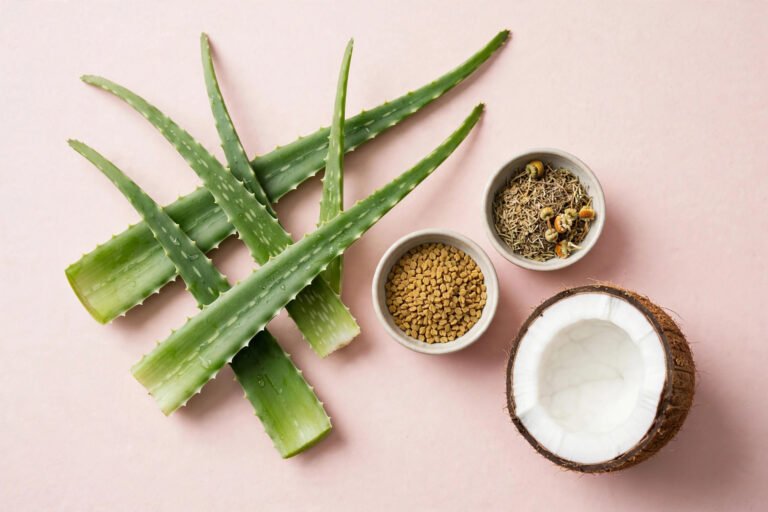
- Aloe vera gel (pure, fragrance-free) soothes mild irritation for 20–30 minutes before washing.
- Don’t scratch — press or tap the itchy spot instead. Scratching breaks the skin barrier and can turn a simple itch into an infected one.
- Wash with lukewarm water and a gentle, fragrance-free shampoo to remove whatever’s irritating the scalp.
- Avoid hot water, new products, essential oils, and heavy styling products until you know the cause.
Preventing Scalp Itch Long-Term
Once the current itch is resolved, keep it away with the fundamentals from our [scalp care routine → scalp-care-routine-guide]: cleanse the scalp properly and often enough, exfoliate every 1–2 weeks to prevent buildup, rinse products out thoroughly, introduce new products one at a time (so you can identify culprits), and don’t ignore early signs — mild itch treated early rarely becomes a months-long problem.
Frequently Asked Questions
Why is my scalp itchy but I don’t see flakes?
Many causes don’t produce visible flakes: early buildup, mild allergic reactions, infrequent washing, and folliculitis can all itch with a normal-looking scalp. The absence of flakes points away from dandruff and toward buildup, irritation, or washing habits.
Can stress cause an itchy scalp?
Stress doesn’t directly cause itch, but it worsens nearly every underlying cause — it increases oil production (feeding dandruff), weakens the skin barrier, and triggers flares of psoriasis and eczema. Managing stress supports treatment.
Is an itchy scalp a sign of hair loss?
Itch alone doesn’t cause hair loss, but several itchy conditions are associated with shedding: severe dandruff/seborrheic dermatitis, psoriasis, and folliculitis can all increase hair fall, and chronic scratching damages follicles. If shedding accompanies your itch, read our [hair fall control guide → hair-fall-control-complete-guide].
Why does my scalp itch more at night?
You’re less distracted, so you notice it more — but there’s also truth to it: body temperature rises in bed (warmth intensifies itch), and lying down increases blood flow to the scalp. Cool bedding and a pre-bed gentle wash can help.
Can shampoo cause an itchy scalp?
Absolutely — it’s one of the most common causes. Fragrance, harsh sulfates, and preservatives like methylisothiazolinone are frequent culprits. If itch started with a new shampoo, switch to a fragrance-free formula for two weeks as a test.
When should I see a dermatologist for an itchy scalp?
If itch persists beyond 2–3 weeks of correct treatment, or if you have redness, swelling, sores, crusting, patches of hair loss, severe pain, or thick scaling. These signal conditions that need medical diagnosis.
Identify your cause from the table above, apply the matched remedy consistently for two weeks, and most scalp itch resolves. If it doesn’t — or if any warning signs appear — a dermatologist visit is the fastest path to relief, not another product.
complete scalp care routine
fast dandruff remedies
scalp exfoliation methods
hair fall control guide
best shampoo for oily scalp and dry ends
Love this? Pin it for later!