Best Shampoo for Oily Scalp and Dry Ends: 2026 Balancing Guide
Oily scalp plus dry ends is one of the most common — and most frustrating — hair complaints. Your roots go flat and greasy by day two, while your ends feel straw-like no matter how much conditioner you use. The instinct is to hunt for one magic shampoo that fixes both. Here’s the honest truth dermatologists and trichologists agree on: no single shampoo optimally treats both problems, because they’re opposite problems. The scalp needs thorough cleansing; the ends need moisture and protection.
That doesn’t mean you’re stuck. The fix is a combination of the right product type plus the right technique — and technique matters more than the bottle. This guide covers what to look for in a balancing shampoo, the product categories that work best, the washing method that solves the paradox, and how this fits into a full [scalp care routine → scalp-care-routine-guide].
Key Takeaways
- Oily scalp + dry ends is a technique problem as much as a product problem: shampoo the scalp, condition the ends — separately.
- Look for balancing shampoos: effective but not harsh cleansers, lightweight formulas, no heavy oils or butters near the top of the ingredient list.
- Double shampooing (scalp only) cleans roots thoroughly without over-stripping lengths.
- Conditioner and masks belong on mid-lengths and ends only — never on the scalp.
- Clarifying shampoo once every 1–2 weeks resets buildup; daily use over-dries ends.
- If ends stay dry despite good technique, the issue may be damage or porosity, not your shampoo.
Why You Get Oily Roots and Dry Ends Together
This combination has a few common causes, and knowing yours changes the fix:
Natural oil distribution. Sebum is produced at the scalp and travels down the hair shaft — but on long hair, it rarely reaches the ends. The longer your hair, the more pronounced the gap: oily roots, parched ends. This is simply physics, not a defect.
Over-washing the lengths. Shampooing the full length of your hair every wash strips the ends of the little oil they had. Most people apply shampoo everywhere out of habit — the single biggest contributor to this problem.
Product buildup at the roots. Heavy conditioners, masks, oils, and styling products applied near the scalp weigh roots down and make them look oilier faster, while the ends — the part that actually needs those products — get too little.
Damage and porosity. Bleach, heat styling, and chemical treatments make ends porous: they lose moisture fast and feel dry regardless of what your scalp does. If your ends are damaged, no shampoo alone will fix them — they need targeted repair treatments and eventually trims.
What to Look for in a Balancing Shampoo
Forget marketing claims (“for combination hair” is rarely regulated). Read the formula:
Effective but balanced cleansers. You need a shampoo that genuinely cleanses an oily scalp — very mild “low-poo” formulas often leave oily scalps under-cleansed, which causes buildup. Look for proven surfactants (like sodium laureth sulfate in moderate amounts, or effective sulfate-free alternatives like sodium lauroyl methyl isethionate) rather than the gentlest possible formula.
Lightweight, not “moisturizing.” Heavily moisturizing shampoos deposit conditioning agents on the scalp, weighing down oily roots. Choose a shampoo marketed as balancing, volumizing, or clarifying-light — and get your moisture from conditioner applied to the ends instead.
No heavy oils/butters high on the ingredient list. Shea butter, coconut oil, and argan oil in a shampoo are fine at low concentrations but counterproductive near the top of the list for oily scalps.
Helpful additions: salicylic acid (keeps scalp pores clear between washes), zinc PCA or niacinamide (help regulate surface oil), tea tree or rosemary (mild antimicrobial support). These are bonuses, not requirements.
What to avoid: 2-in-1 shampoo-conditioners (they under-cleanse the scalp and under-condition the ends — the worst of both), “ultra-moisturizing” or “damage repair” shampoos as your daily driver, and anything that leaves your scalp feeling coated rather than clean.
The Technique That Matters More Than the Bottle
This is the part that actually solves the problem, and it costs nothing:
- Shampoo the scalp only. Apply shampoo to your scalp with fingertips, massage 60 seconds, and let the rinse carry it through the lengths. The ends get cleaned by the runoff — that’s enough.
- Double shampoo when needed. If the first wash barely lathers, do a second. The first removes surface oil; the second cleanses. This is especially important for very oily scalps.
- Condition mid-lengths to ends only. Apply conditioner from the ears down (or mid-shaft down for long hair). Keep it completely off the scalp — conditioner on the scalp is a top cause of “my roots get greasy so fast.”
- Rinse thoroughly. Residue is the enemy. Rinse longer than feels necessary, especially at the crown and behind the ears.
- Weekly reset. Use a clarifying shampoo once every 1–2 weeks (scalp only) to remove the styling-product and mineral buildup that makes roots go flat. Follow with a good conditioning treatment on the ends.
Most people who switch to this technique report that their “impossible” combination hair becomes manageable within two weeks — often before they even change products.
Best Shampoo Types for Oily Scalp and Dry Ends (2026)
Rather than naming specific bottles that may be discontinued or reformulated, here are the categories that consistently perform best — what to search for and what to expect:
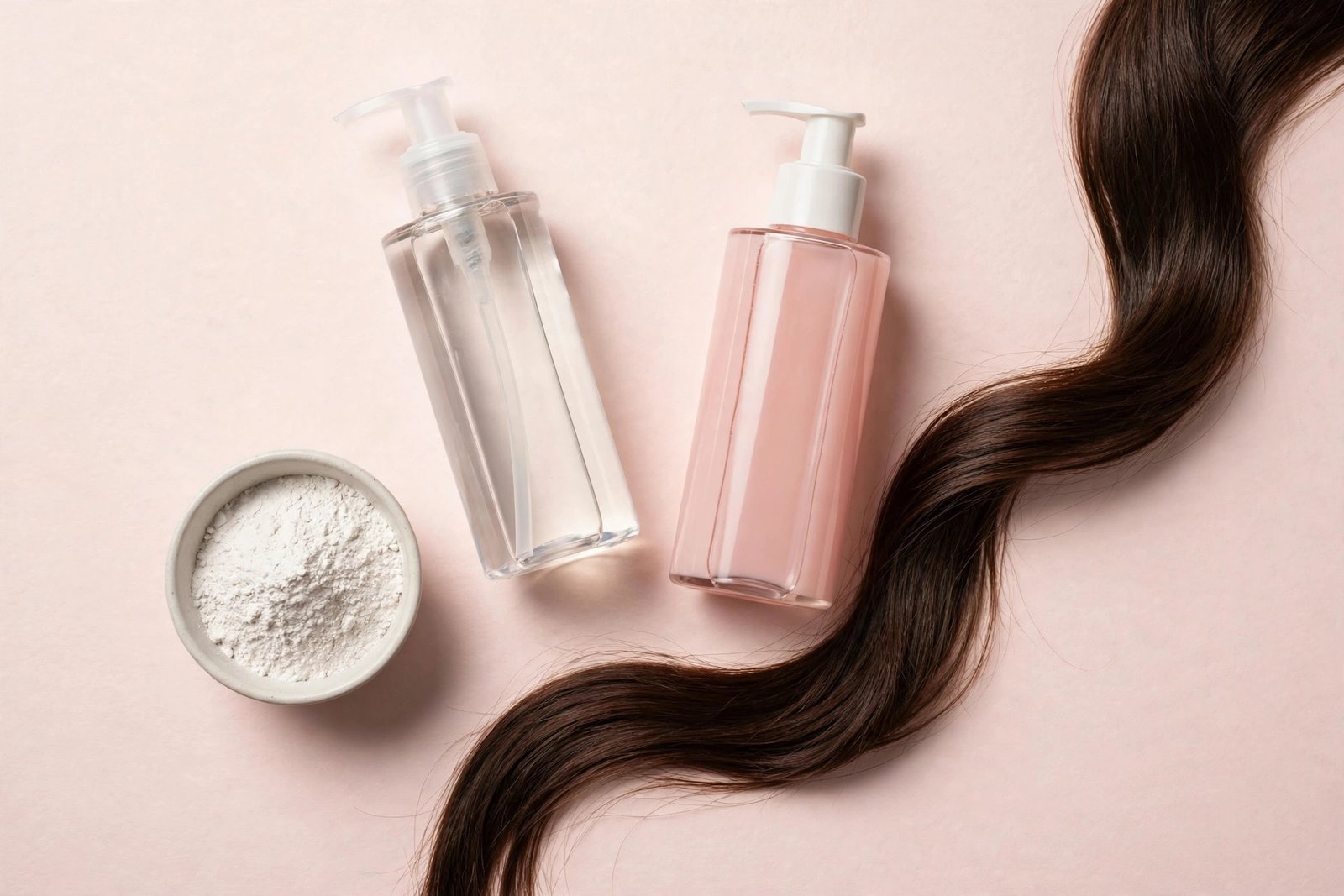
Balancing/volumizing shampoos. The best daily-driver category for this hair type. Formulated to cleanse effectively without heavy conditioning agents. Look for “volumizing,” “balancing,” or “for oily roots” on the label, and check that oils/butters aren’t in the first five ingredients.
Salicylic acid shampoos. Excellent for oily scalps prone to buildup — the BHA keeps pores clear and extends the time between washes. Use 2–3 times per week, alternating with a gentler shampoo if ends feel dry.
Clay-infused shampoos. Kaolin or bentonite clay absorbs excess oil at the scalp. Effective but potentially drying — best as a once-weekly reset rather than a daily shampoo, paired with a rich conditioner on the ends.
Micellar shampoos. Use micelle technology to lift oil gently. A good middle ground for scalps that are oily but reactive to stronger surfactants. Often the best pick for combination hair that’s also color-treated.
Clarifying shampoos (weekly reset). Stronger cleansers designed to strip buildup. Essential every 1–2 weeks for oily scalps that use styling products — but never as a daily shampoo, or your ends will suffer.
What about co-washing? Conditioner-only washing is generally a poor fit for oily scalps — it doesn’t cleanse sebum effectively and usually worsens root greasiness. Better suited to very dry, curly hair types.
Sample Routine: Oily Scalp, Dry Ends
Wash days (every 1–2 days, as your scalp dictates):
– Pre-shampoo (weekly): [scalp exfoliation → how-to-exfoliate-scalp-at-home] — salicylic acid serum or gentle scrub
– Shampoo: balancing shampoo, scalp only, double-wash if needed
– Condition: rich conditioner or mask, mid-lengths to ends only, 3–5 minutes
– Optional: lightweight leave-in on ends only, never on the scalp
Weekly:
– Clarifying shampoo reset (scalp only) + deep conditioning mask (ends only)
Between washes:
– Dry shampoo at the roots on day 2 if needed — applied the night before works best
– A drop of hair oil on the very ends only, never near the scalp
This routine is a specialized version of our full [scalp care routine → scalp-care-routine-guide] — same four steps, tuned for combination hair.
When Shampoo Isn’t the Problem
If you’ve fixed your technique and tried balancing formulas but the ends are still straw-like, consider:
- Damage: bleach, frequent heat, or chemical treatments create porosity that no shampoo fixes. Protein treatments, bond builders, and regular trims are the answer.
- Hard water: mineral buildup makes ends feel rough and look dull. A chelating/clarifying shampoo or shower filter helps.
- Over-conditioning the scalp: if roots are still greasy fast, audit what’s touching your scalp — leave-ins, oils, and heavy stylers creep up during the day.
- Shedding concerns: an oily, irritated scalp can contribute to increased shedding. If hair fall is part of the picture, see our [hair fall control guide → hair-fall-control-complete-guide].
Frequently Asked Questions
Should I use different shampoos for my scalp and ends?
You don’t need two shampoos — you need one good balancing shampoo applied to the scalp plus conditioner applied to the ends. Technique beats product count.
How often should I wash if my scalp is oily but ends are dry?
Wash when your scalp needs it — usually every 1–2 days for truly oily scalps. Protect the ends by keeping shampoo off them and conditioning them well. Stretching washes causes scalp buildup without meaningfully helping the ends.
Is sulfate-free better for oily scalp and dry ends?
Not automatically. Some sulfate-free formulas under-cleanse oily scalps, causing buildup that makes roots greasier. Others cleanse beautifully. Judge by results — a clean, comfortable scalp after washing — not by the sulfate-free label alone.
Can dry shampoo replace washing?
No — dry shampoo absorbs surface oil but doesn’t cleanse. It’s a between-wash bridge, not a substitute. Relying on it for days creates the buildup that clogs follicles.
Why do my ends still feel dry even with conditioner?
Possible causes: the conditioner isn’t rich enough for your damage level, you’re rinsing it off too quickly (give it 3–5 minutes), hard water mineral buildup, or the ends are damaged beyond what conditioning can fix and need trimming.
Does oiling the scalp help with this hair type?
Usually not — adding oil to an already-oily scalp worsens greasiness and can feed dandruff-causing yeast. Oil the ends if you like, but keep oils off an oily scalp.
Start with the technique change tonight — scalp-only shampooing, ends-only conditioning — and give it two weeks. For most combination hair, that’s the entire fix. Then build the full routine with our [scalp care guide → scalp-care-routine-guide].
complete scalp care routine
scalp exfoliation methods
fast dandruff remedies
hair fall control guide
itchy scalp causes and remedies
Love this? Pin it for later!