Postpartum Hair Loss: Why It Happens and How to Recover
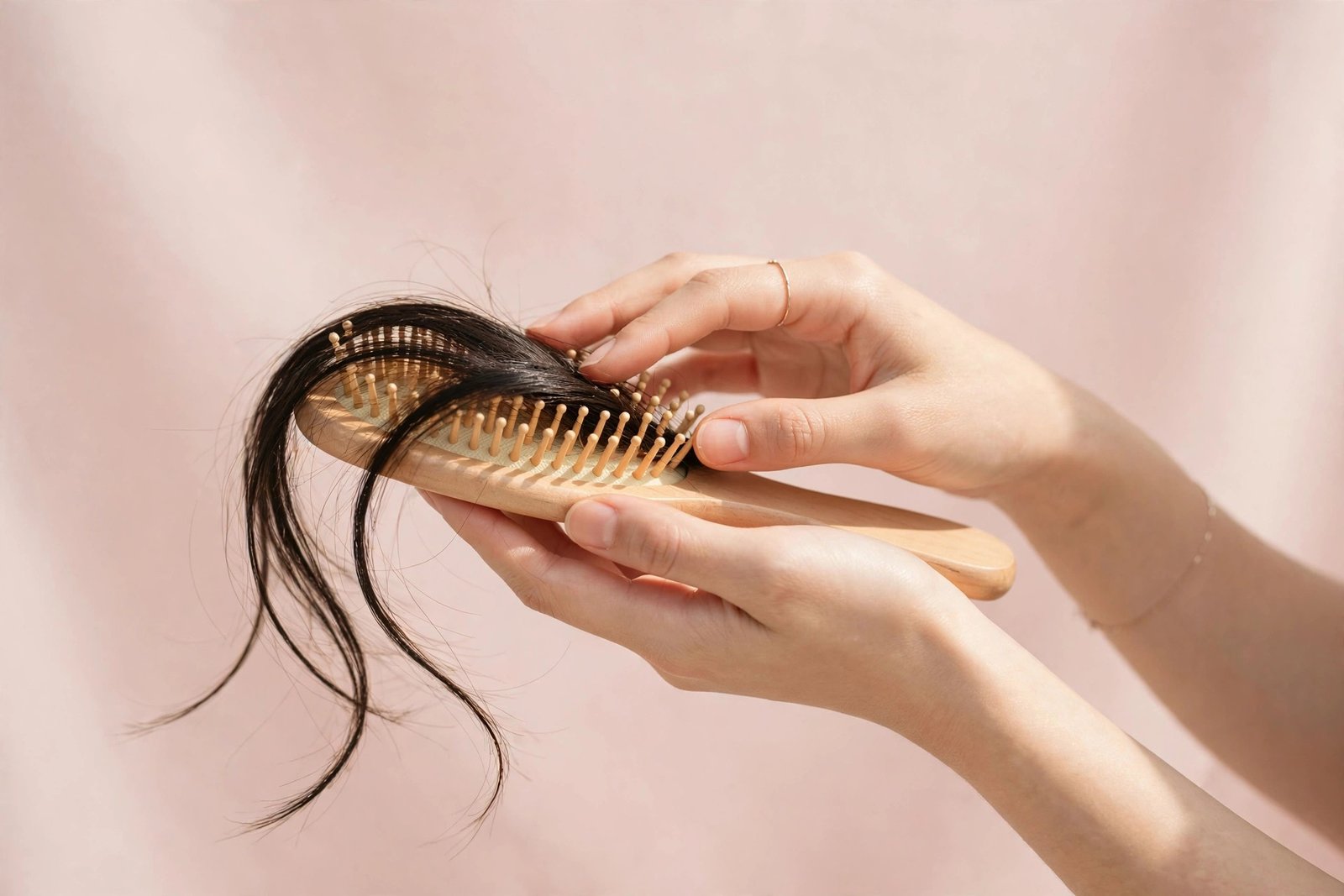
Around three to four months after giving birth, many new mothers notice something alarming: handfuls of hair in the shower, on the pillow, in the baby’s tiny fingers. If this is you, here’s the most important thing first — postpartum hair loss is extremely common, well understood, and almost always temporary. You’re not going bald, and in most cases your hair will recover on its own.
This guide explains why postpartum shedding happens, the typical timeline, what actually helps recovery, and when it’s worth seeing a doctor. For the general science of shedding, see our hair fall control complete guide.
Note: This guide is for general information. If you’re experiencing symptoms beyond hair shedding — extreme fatigue, mood changes, or other concerns — talk to your doctor or midwife.
Why Postpartum Hair Loss Happens
During pregnancy, high estrogen levels keep more hairs than usual in the anagen (growth) phase — which is why many women notice thicker, fuller hair while pregnant. After delivery, estrogen drops sharply, and all those “extra” hairs shift into the telogen (resting/shedding) phase at once.
The result: 2–4 months after birth, shedding increases dramatically. Dermatologists call this postpartum telogen effluvium — the same mechanism behind shedding after illness, surgery, or severe stress. It’s your hair cycle normalizing, not your hair dying.
Contributing factors that can make it worse:
- Iron deficiency: Blood loss during delivery plus the demands of pregnancy commonly leave new mothers low in iron and ferritin — both strongly linked to shedding.
- Sleep deprivation: Fragmented sleep raises stress hormones, which can prolong the shedding phase.
- Nutritional gaps: Breastfeeding increases calorie, protein, iron, and calcium needs. Undereating — common when caring for a newborn — can trigger additional shedding.
- Thyroid changes: Postpartum thyroiditis affects a meaningful minority of new mothers and can cause hair loss alongside fatigue and mood changes.
The Typical Timeline
| When | What’s happening |
|---|---|
| Pregnancy | Hair looks thicker; fewer hairs shed than usual |
| 0–2 months postpartum | Usually quiet — shedding hasn’t started yet |
| 2–4 months postpartum | Shedding begins and ramps up |
| 3–6 months postpartum | Peak shedding for most women — this is the hardest phase emotionally |
| 6–9 months postpartum | Shedding slows; fine new regrowth (“baby hairs”) appears along the hairline |
| 9–12 months postpartum | Density noticeably recovering for most |
| 12–15 months postpartum | Hair typically back to pre-pregnancy fullness |
Most women recover fully without treatment. If shedding hasn’t clearly improved by 12 months, or it started much later than 4 months postpartum, check in with your doctor.
What Helps: Nutrition First
Postpartum recovery starts from the inside. Breastfeeding or not, your body is recovering from a major event:
- Protein: Aim for adequate protein at every meal — eggs, lentils, chicken, fish, dairy, soy. Hair is keratin; it can’t rebuild without amino acids.
- Iron: The single most important nutrient to check. Ask your doctor about ferritin testing, especially if delivery involved significant blood loss. Pair iron-rich foods with vitamin C.
- Continue prenatal vitamins: Most providers recommend continuing them while breastfeeding — they cover folate, iron, and other basics.
- Vitamin D: Deficiency is common postpartum and linked to shedding; get your levels checked.
- Stay hydrated and eat enough: Undereating is a shedding trigger. If meals are hard to manage with a newborn, keep simple protein-rich snacks (nuts, yogurt, eggs, cheese) within reach.
- Omega-3s: Fatty fish, walnuts, and flaxseed support scalp health and may help with the dryness many new moms notice.
Don’t megadose biotin or “hair gummies” without guidance — read our evidence breakdown on whether biotin works for hair growth first.
Gentle Hair Care During the Shedding Phase
Your hair is more fragile right now. Treat it accordingly:
- Wash regularly. A clean scalp sheds less problematically than an oily, inflamed one. Find your rhythm in our hair washing guide.
- Detangle with care. Wide-tooth comb, conditioner in, start from ends. Wet hair + rough brushing = breakage on top of shedding.
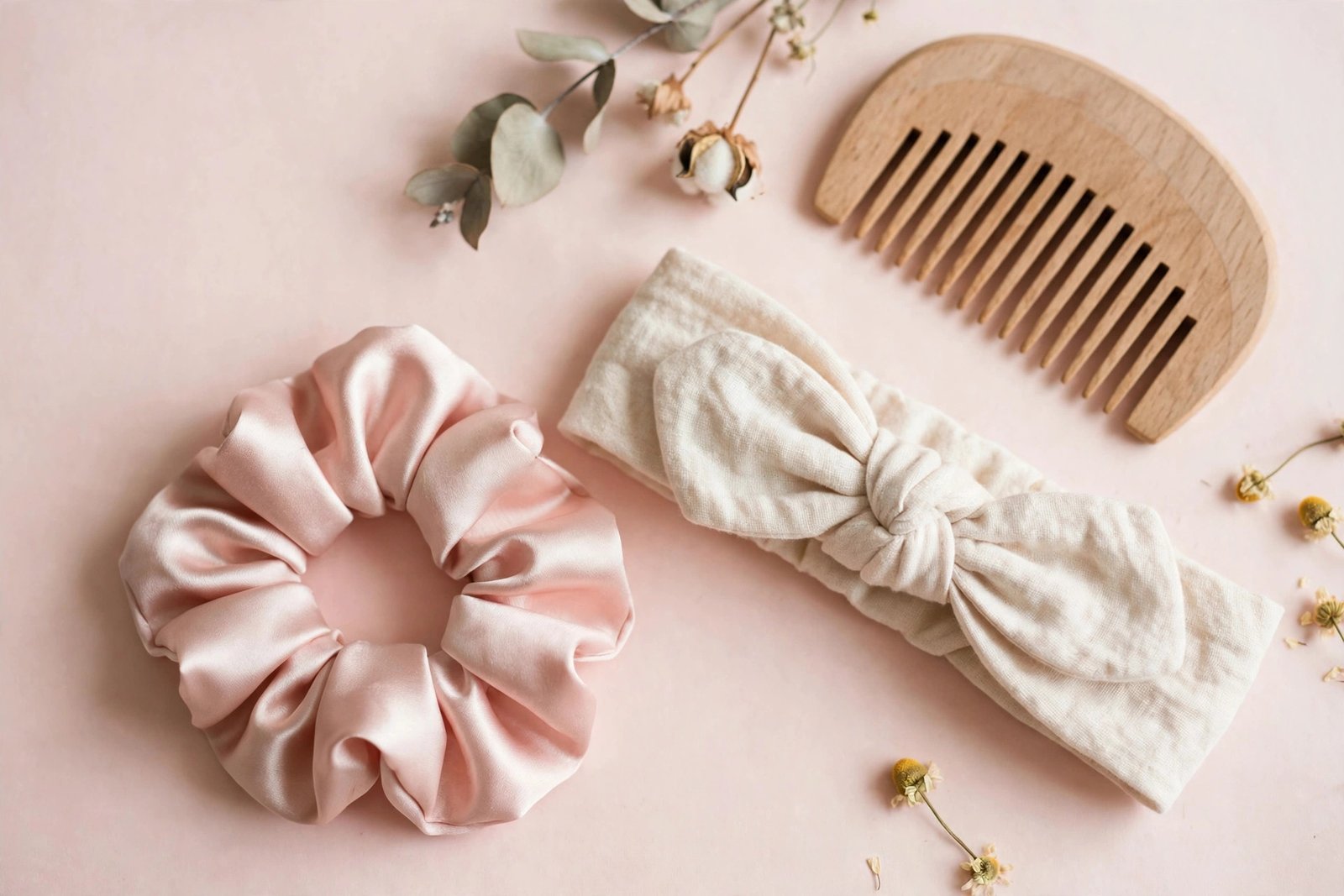
- Go loose. Skip tight ponytails, top knots, and slicked-back styles — traction on already-shedding hair accelerates loss along the hairline. Soft scrunchies over elastic bands.
- Cut back on heat. If you can air-dry or use low heat for a few months, your fragile regrowth will thank you. When you do use heat, use a protectant (do you need heat protectant).
- Consider a trim or restyle. Many moms find a shoulder-length cut or long layers make shedding less visible and regrowth easier to blend. Shorter styles also reduce the weight pulling on fragile roots.
- Sleep on silk or satin. Less friction means less overnight breakage of fine new hairs (silk pillowcase benefits).
- Gentle scalp massage. A few minutes daily with fingertips supports circulation. If you oil, keep it light and wash thoroughly — see the best oils for hair fall.
Styling Tricks While You Wait for Regrowth
- Volumizing at the roots: Blow-dry upside down or use a volumizing mousse — fine regrowth lies flat, so lift is everything.
- Strategic parting: A zigzag or deep side part disguises a widening part line.
- Headbands and scarves: Cover sparse temples stylishly while baby hairs grow in.
- Avoid heavy oils and butters on roots: They flatten fine regrowth and make thinning more visible.
- Tinted root powders or fibers: Cosmetic fibers (keratin-based) can visually fill sparse areas for events — they’re temporary and wash out.
Dealing With “Baby Hairs” and Regrowth
Around 6–9 months, you’ll notice short, frizzy hairs along your hairline and part — that’s regrowth, and it’s a good sign, even though it can look unruly. Tame them with:
- A tiny amount of light serum or aloe gel smoothed over the hairline
- A soft-bristle brush or clean mascara wand for flyaways
- Patience — they’ll gain length and weight over the following months
When to See a Doctor
Postpartum shedding is normal, but see your doctor or a dermatologist if:
- Shedding hasn’t improved by 12 months postpartum
- You have round bald patches (possible alopecia areata — needs prompt treatment)
- Shedding is accompanied by extreme fatigue, feeling cold, weight changes, or mood symptoms (possible thyroid issue — postpartum thyroiditis is treatable)
- Your hairline is receding in a pattern rather than shedding all over
- You had severe blood loss at delivery and never had iron levels rechecked
- You’re losing eyebrows or body hair too
A simple blood panel (ferritin, vitamin D, TSH) answers most questions quickly.
Frequently Asked Questions
Will my hair grow back after postpartum hair loss?
For the vast majority of women, yes — fully. Postpartum telogen effluvium is temporary by definition: the follicles aren’t damaged, they’re just cycling. Most see clear recovery by 9–12 months postpartum without any treatment beyond good nutrition and gentle care.
Can breastfeeding cause hair loss?
Breastfeeding itself doesn’t cause hair loss — the hormonal shift after delivery does, whether or not you breastfeed. However, breastfeeding increases nutritional demands, so inadequate intake while nursing can worsen shedding. Eating enough (especially protein and iron) matters more than anything topical.
Should I cut my hair short if I’m losing hair postpartum?
You don’t have to, but many moms find it helps practically and emotionally: shorter hair sheds less noticeably, puts less weight on fragile roots, and makes regrowth easier to blend. If a big chop feels drastic, long layers or a collarbone cut is a good middle ground.
Are hair loss treatments safe while breastfeeding?
Most women don’t need medical treatment for postpartum shedding since it resolves on its own. Minoxidil and many oral hair-loss medications are not recommended while breastfeeding — discuss any treatment with your doctor first. Stick to nutrition, gentle care, and cosmetic camouflage during this period.
Why is my hair texture different after pregnancy?
Hormonal shifts can temporarily change texture — some women notice their hair becomes curlier, straighter, drier, or oilier postpartum. This usually normalizes as hormones stabilize over the first year. Adjust your routine to what your hair needs now (see what hair porosity is and why it matters) rather than fighting it.
Key Takeaways
- Postpartum hair loss is telogen effluvium from the post-delivery estrogen drop — common, well understood, and almost always temporary.
- Timeline: shedding starts 2–4 months postpartum, peaks around 3–6 months, and usually resolves by 9–12 months.
- Nutrition matters most: adequate protein, iron (get ferritin checked), continued prenatals, and eating enough — especially while breastfeeding.
- Be gentle: loose styles, careful detangling, less heat, regular washing, silk pillowcase.
- Regrowth “baby hairs” around 6–9 months are a good sign — tame flyaways with light serum, not heavy products.
- See a doctor if shedding persists past 12 months, comes with bald patches or other symptoms, or you suspect thyroid issues.
- For the complete shedding science and routine, read the hair fall control complete guide.
Love this? Pin it for later!