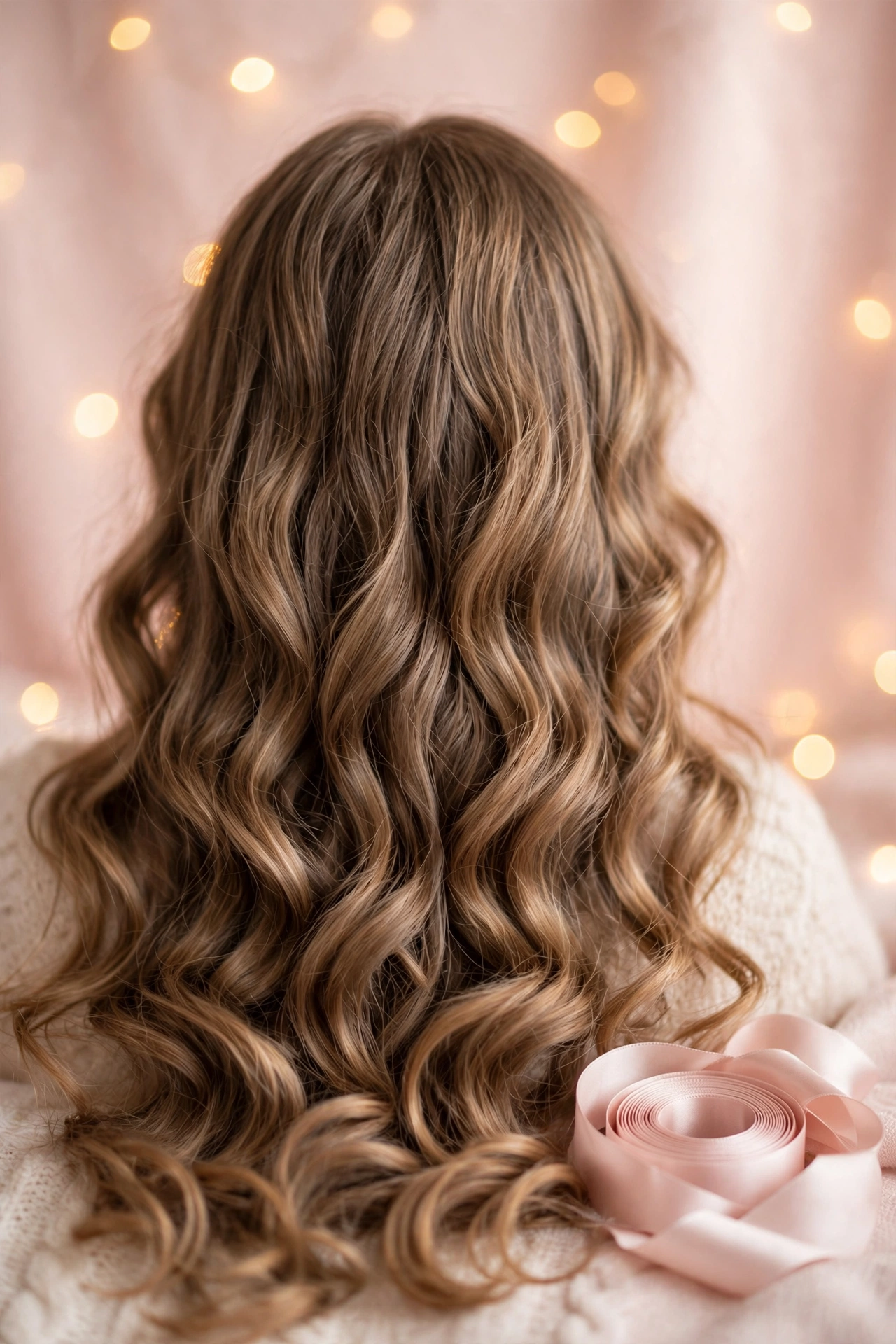
Heatless Holiday Curls: Overnight Waves for Parties
Party season is the heaviest heat-styling stretch of the year — and the exact moment your hair is already stressed by dry winter air, indoor heating, and wool hats. Heatless curls solve both problems at once: you wake up with party-ready waves, and your hair takes zero heat damage getting there.
The concept is simple — shape damp hair, dry in that shape overnight, release in the morning — but details determine defined waves versus frizz. This tutorial covers the three most reliable methods (sock curls, braid waves, foam rollers), their timing and dampness needs, which setting products help, and morning finishing.
For pairing these waves with updos, half-up styles, and accessories, see the complete holiday hair styles guide.
Key Takeaways
- Heatless curls work by drying hair in a shaped position overnight — dampness level is the single biggest success factor.
- Hair should be 60-80% dry (damp, not wet) when you set it; too wet won’t dry by morning, too dry won’t hold the shape.
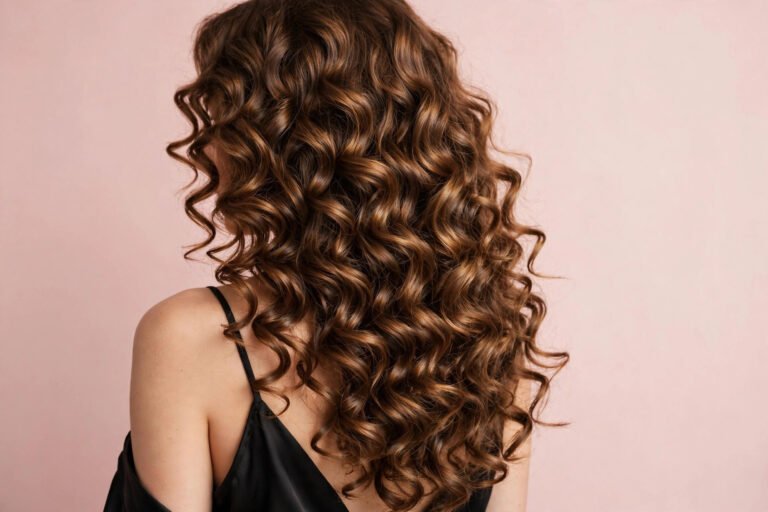
- Sock curls give the most defined curls, braid waves give the most natural beachy texture, foam rollers give the most uniform volume.
- A light setting product (mousse or curl cream) dramatically improves hold versus setting on bare damp hair.
- Morning finishing — finger-combing, not brushing, plus a flexible-hold spray — determines how long the waves last.
The Science in One Paragraph
Hair holds shape through hydrogen bonds — temporary bonds that break when wet and reform as hair dries. Heat styling reforms them fast with temperature; heatless styling does it slowly with time. That’s why dampness matters: shape hair while damp (bonds broken), release only when fully dry (bonds reformed). Release early and waves fall within the hour.
Before You Start: Prep Rules for All Three Methods
Wash timing. Set heatless curls on freshly washed hair — unlike updos, which prefer day-old hair, heatless methods need the damp-setting window that only comes from washing. Wash in the evening, then set.
Dampness: 60-80% dry. Air-dry or rough-dry (no brushing) until damp but not dripping — no water should squeeze out when pressed. Thick hair can start slightly damper; fine hair should start nearer 80% dry.
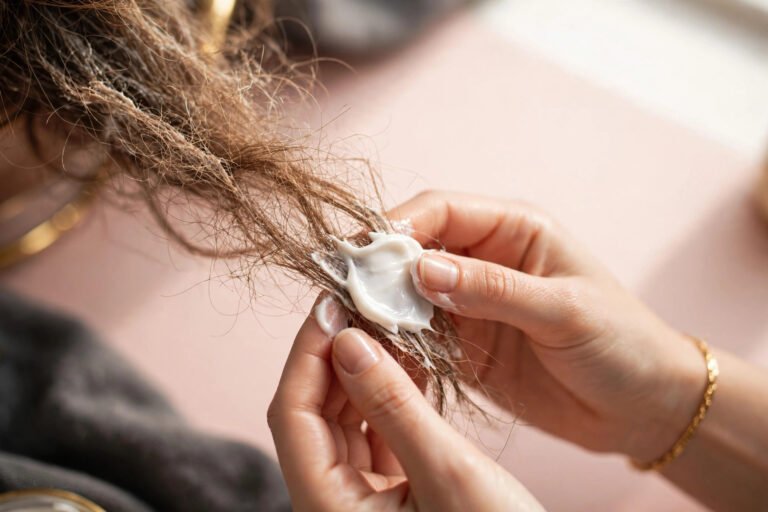
Setting product. Apply a golf-ball of lightweight mousse or curl cream through the lengths (not roots — it kills volume). This most-skipped step most improves results: product gives reforming bonds grip. Avoid heavy oils or butters before setting — they resist the shape.
Detangle gently. Comb through with a wide-tooth comb while damp. Knots set into the shape overnight become much harder to remove in the morning.
Protect the set. A silk or satin pillowcase cuts friction versus cotton — less frizz, less disruption. A satin bonnet or scarf wrapped over the set works too.
Method 1: Sock Curls (Most Defined Curls)
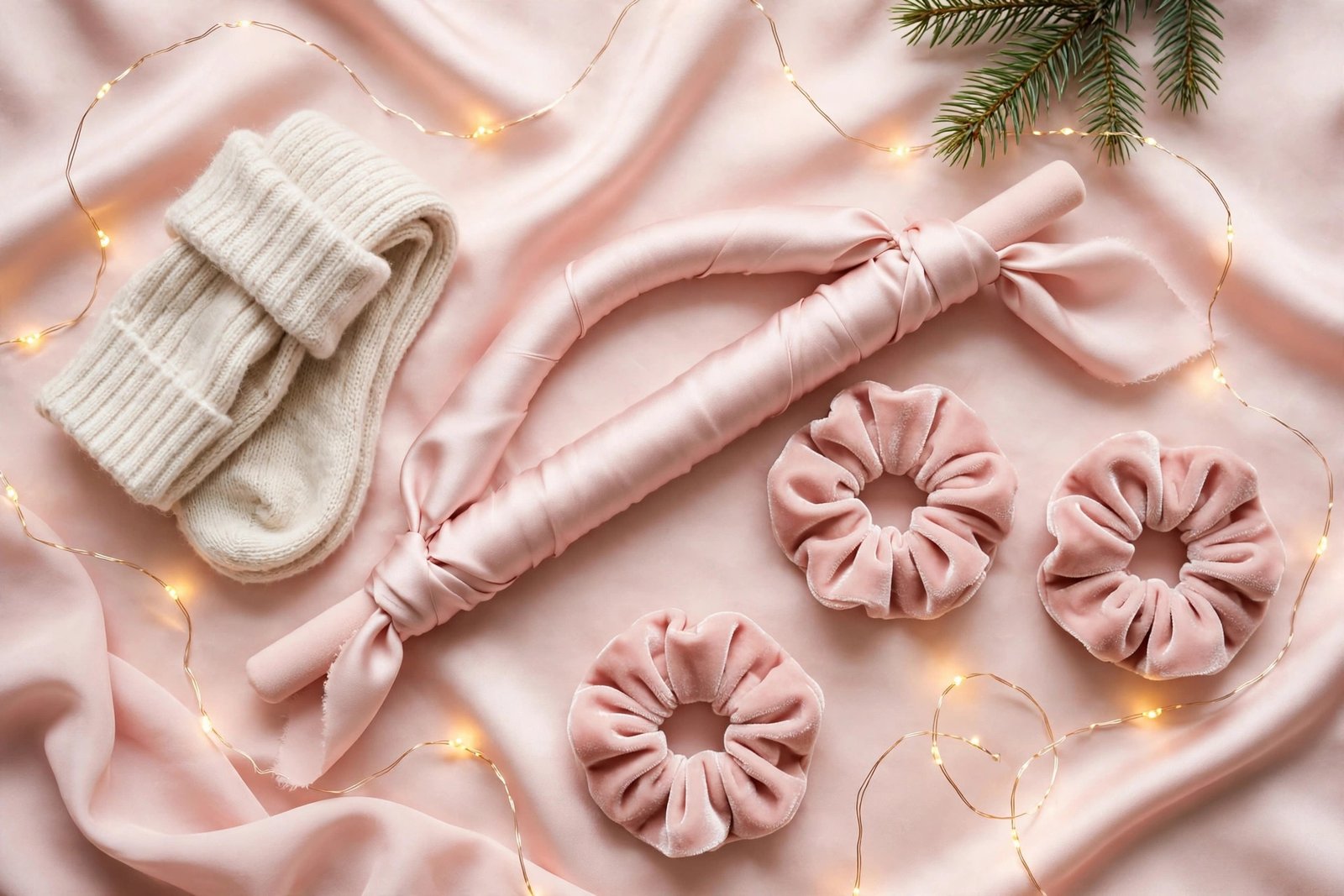
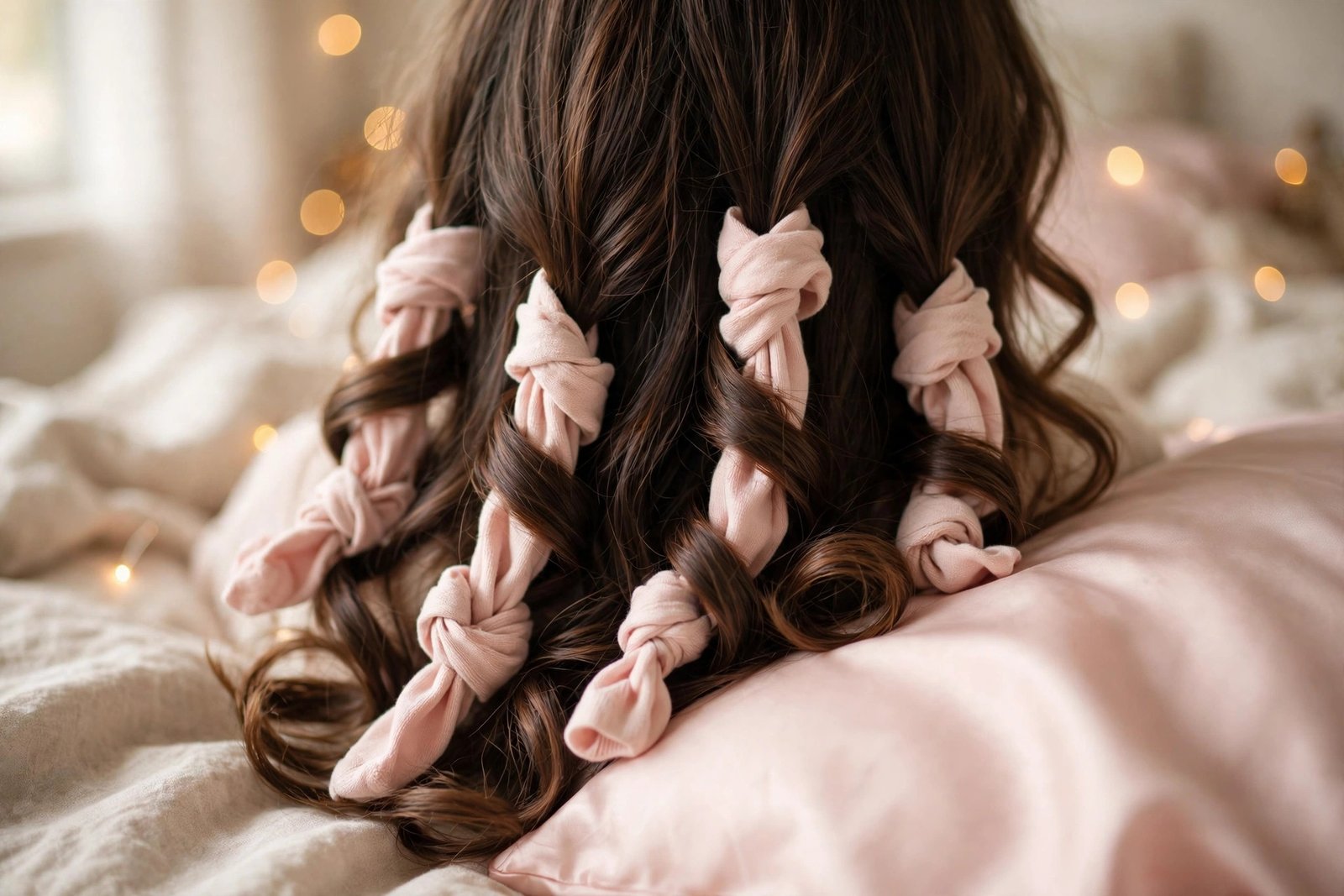
Sock curls — wrapping sections around a soft sock or heatless curl headband — produce the most defined, bouncy curls. Best for: party looks wanting real curl definition, medium to long hair.
What you need: 1-2 long socks (or a heatless curl headband), small scrunchies or clips, setting mousse.
Step 1. With hair at 70% dry and mousse applied, part hair as you want to wear it. If using a sock, fold it so you have a long, soft rod. If using a headband-style rod, place it over your head like a headband.
Step 2. Take a 1-2 inch front section on one side. Wrap it around the sock away from your face, adding hair as you wrap downward (like a French twist). Keep it smooth and snug, not strangling-tight.
Step 3. Continue wrapping down the sock to the ends, secure with a scrunchie, and repeat on the other side. Smaller sections = tighter curls; larger = looser waves.
Step 4. Sleep on it. A silk pillowcase helps enormously here — the socks stay put better with less friction.
Step 5 (morning). Unwrap gently and finger-comb only — brushing turns defined curls to frizz. Shake roots for volume, mist with flexible-hold hairspray.
Timing: 10-15 minutes to set; 7-8 hours overnight. Best for: defined curls and bounce.
Method 2: Braid Waves (Most Natural Texture)
Braids produce soft, beachy, natural-looking waves — less “done” than sock curls, which makes them perfect for daytime holiday events, Christmas brunch, or anyone who wants effortless-looking texture. Best for: shoulder-length and longer; the easiest method to sleep on.
What you need: Small elastics, mousse or curl cream.
Step 1. With hair at 70-80% dry and product applied, part hair down the middle and divide into two sections (one per side). For tighter waves, divide into 4-6 smaller sections instead.
Step 2. Braid each section in a regular three-strand braid, starting as close to the roots as comfortable — mid-shaft starts leave the top straight and disconnected. Keep tension even.
Step 3. Secure ends with small elastics (not tight ponytail holders, which dent). For extra wave through the very ends, you can twist the last inch around your finger before securing.
Step 4. Sleep on it — braids are the flattest method and the most comfortable for side sleepers.
Step 5 (morning). Undo, finger-comb, tousle. If roots look flat, flip upside down and massage them, or cool-blow-dry just the crown. Finish with texturizing spray (not hairspray) — it enhances beachy texture without stiffening.
Timing: 5-10 minutes to set; 7-8 hours overnight. Best for: natural, effortless waves.
Variation — rope twists: Split each section in two, twist each half the same direction, then twist the halves around each other oppositely. This creates a slightly more defined, spiral wave.
Method 3: Foam Rollers (Most Volume and Uniformity)
Foam rollers give the most uniform, voluminous curls — the closest heatless equivalent to a professional roller set. Best for: fine hair that needs volume, vintage-inspired holiday looks, and anyone who wants consistent curls all over rather than varied texture.
What you need: Foam rollers (medium for waves, small for tighter curls — about 10-14 for full coverage), setting mousse.
Step 1. With hair at 60-70% dry (rollers need slightly damper hair than the other methods because the foam absorbs some moisture) and mousse applied, divide hair into sections roughly the width of each roller.
Step 2. Starting at the front, wrap each section smoothly around a roller, rolling away from the face. Keep hair taut — bumps and overlaps set permanently overnight.
Step 3. Secure each roller. Most foam rollers bend to lock; if yours don’t, a bobby pin through the roller works. Place rollers in rows: front row rolling back, sides rolling down, back rolling down.
Step 4. Sleep on it — the least comfortable method for side sleepers. A silk pillowcase and back-sleeping help; set them an hour before bed so you’re not adjusting at sleep time.
Step 5 (morning). Unroll (don’t pull) from the bottom up. Finger-comb, flip upside down and shake for volume, mist with flexible-hold hairspray.
Timing: 15-20 minutes to set; 7-8 hours overnight. Best for: uniform volume and vintage-style curls.
Setting Products: What Actually Helps
Not all products help heatless sets — some actively hurt. Here’s what works and what doesn’t:
Helpful: Lightweight mousse (the best heatless setting product — hold without weight), curl creams, light leave-in on dry-prone ends, texturizing spray as a morning finisher.
Harmful: Heavy oils or butters (coat hair, resist shape), strong-hold gels (dry crunchy, flake when finger-combed), silicone-heavy serums (too slippery to hold the wrap).
Morning finish matters as much as the set: finger-comb, never brush. Flip upside down for root volume. Flexible-hold hairspray for defined curls, texturizing spray for beachy waves. Smooth serum over frizzy sections with flat palms — never rake through.
Troubleshooting: When Heatless Curls Don’t Work
Waves fell flat within an hour. Usually released too early — hair dry on the surface may still be damp inside the wrap, especially thick hair. Set earlier in the evening, or blow-dry the set on cool for 5-10 minutes before bed. Skipping setting product is the other main cause. For deeper diagnosis, see why curls fall flat after curling.
Frizzy instead of defined. Usually friction: cotton pillowcase, tossing, or morning brushing. Switch to silk, secure the set, finger-comb only. Very dry and brittle hair frizzes more — address dryness first.
Uneven results. Inconsistent section sizes, tension, or dampness. Keep all three uniform — sections that dried before setting won’t hold shape. Mist dry-feeling sections lightly before wrapping.
Uncomfortable to sleep on. Braid waves are the flattest and most sleep-friendly; switch methods if socks or rollers keep you up. Comfort matters — poor sleep isn’t worth perfect waves.
Roots too flat compared to wavy lengths. This is normal — the setting methods shape the lengths, not the roots. Fix in the morning: flip upside down and massage roots, use dry shampoo or texturizing powder at the crown, or set 2-3 velcro rollers at the crown while you do your makeup.
Frequently Asked Questions
How long do heatless curls actually last?
Typically 6-10 hours with setting product and proper finishing — enough for an evening event. Fine hair relaxes sooner; coarse hair often holds into the next day.
Can I do heatless curls on short hair?
Shoulder-length and longer works best. Chin-length bobs can get waves from small braids, but socks and rollers need more length to wrap. For short holiday hair, see the holiday hair styles guide for suitable options.
Do heatless curls work on straight, resistant hair?
Yes, with adjustments: smaller sections, slightly damper starting hair, stronger mousse, and the sock method for maximum definition. Understanding your hair’s porosity helps too — low-porosity hair resists shape-setting.
Is it bad to sleep with damp hair?
Sleeping with soaking-wet hair regularly isn’t ideal, but heatless-curl dampness (60-80% dry, not dripping) is different — and the silk pillowcase helps scalp comfort too. Fine for occasional party prep, not as a nightly habit.
Can I speed up heatless curls during the day instead of overnight?
Partially. You can set any of these methods on damp hair and let them air-dry for 3-4 hours during the day, possibly with 10-15 minutes of blow-dryer heat over the set to accelerate. But the full overnight window gives the most reliable results — the slow, complete drying is what locks the shape in.
Heatless curls seem fussy until you’ve done them twice — then they’re ten minutes at night and zero morning effort. For party season, when hair is already stressed by dry air, that’s a trade worth making.
Love this? Pin it for later!