Holiday Fragrance Layering Guide: Make Perfume Last
There is nothing more frustrating than spraying your favorite perfume in the morning and finding it gone by lunch. Winter actually gives fragrance a head start — cold air slows evaporation, so scents linger longer than in summer heat. But the real secret to all-day fragrance is not a stronger perfume. It is layering: building scent in stages so each layer anchors the next.
Fragrance layering sounds like perfumer jargon, but the technique is simple and takes about ninety seconds. Moisturized skin holds scent dramatically better than dry skin, oils trap fragrance molecules close to the skin, and applying perfume in the right order over the right base can double or triple its wear time. This guide covers exactly how to do it — plus which scent families pair well together and which winter notes are worth seeking out.
If you are shopping for fragrance gifts this season, layering knowledge also makes a wonderful add-on: tuck a handwritten “how to make it last” card into any perfume gift. For the full seasonal gifting picture, see the Christmas beauty gifts guide.
Key Takeaways
- Layering (lotion → oil → perfume) can double or triple how long fragrance lasts on skin.
- Moisturized skin holds scent far better than dry skin — never spray perfume on completely dry skin.
- Apply fragrance to pulse points and one unexpected spot (like the back of the neck or behind knees) for the longest wear.
- Pair scents within complementary families: vanilla loves amber, citrus loves florals, woods love spice.
- Winter notes — vanilla, amber, sandalwood, cinnamon, musk — are naturally longer-lasting than light summer notes.
- When layering two different scents, keep one dominant and one supporting to avoid a muddled result.
How Fragrance Layering Actually Works
Perfume evaporates in stages: bright top notes fade first (usually within an hour), heart notes carry the middle, and base notes linger longest. Layering works by giving those volatile molecules something to cling to. Dry skin is like a smooth slide — fragrance slips right off. Moisturized, slightly oily skin is like velvet — scent molecules catch and release slowly over hours.
The standard layering order, from skin outward:
- Scented or unscented body lotion — the moisture base. Apply generously to the areas where you will spray perfume. A lotion in the same scent family as your perfume (vanilla lotion under vanilla perfume) amplifies and extends the fragrance. Unscented lotion works perfectly too — the moisture is what matters most.
- Body oil or scented oil — the anchor. A thin layer of oil over lotion creates a barrier that dramatically slows evaporation. This single step makes the biggest difference for most people. Jojoba, sweet almond, or a scented body oil all work.
- Perfume or eau de parfum — the star. Sprayed over the lotion-and-oil base, it now has a grippy, moisturized surface to settle into instead of bare dry skin.
Optional fourth layer: a matching scented body wash or scrub in the shower builds the foundation before you even get dressed. And a light mist on hair or clothing (from a distance, to avoid staining) extends the scent trail even further.
Scent Families That Pair Well Together
You do not need a perfumery degree to layer successfully — just a basic map of which scent families get along:
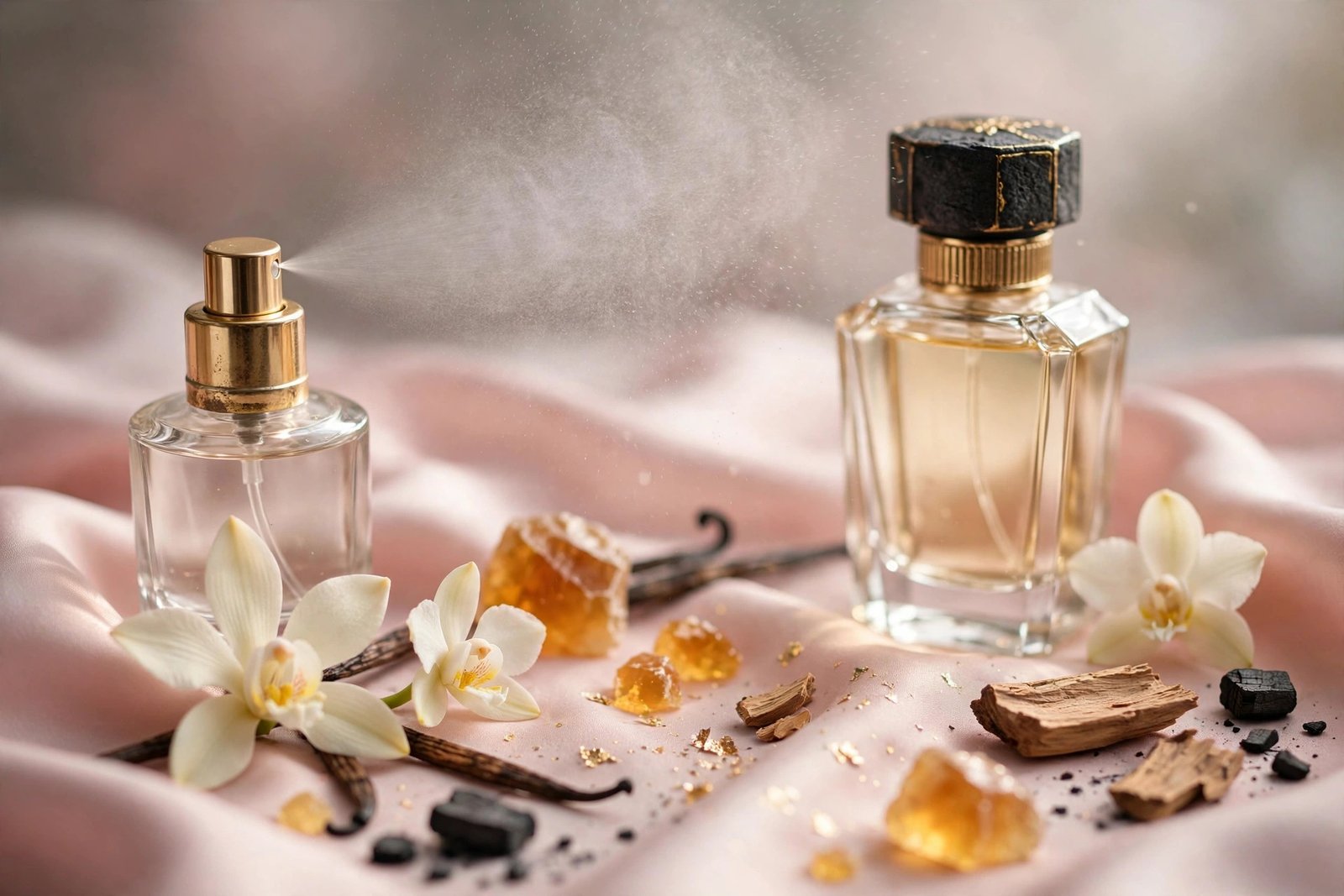
- Vanilla + amber — the classic warm pairing. Both are sweet, cozy, and very “holiday.” Nearly foolproof together.
- Vanilla + sandalwood or musk — vanilla’s sweetness grounded by creamy woods or soft musk. Sophisticated and long-wearing.
- Citrus + florals — bright and fresh. A citrus lotion under a floral perfume keeps the combination lively rather than heavy. Great for daytime.
- Spice + woods — cinnamon, clove, or cardamom layered with cedar or sandalwood. Warm, festive, and very December.
- Coconut + vanilla — the gourmand dream team. Sweet, beachy-warm, and beloved in body products.
- Rose + oud or patchouli — romantic and rich. A little goes a long way; keep the stronger note light.
Families to layer cautiously: two heavy orientals together can become overwhelming, and very green/fresh scents can clash with deep gourmands. When in doubt, pair one strong scent with one simple supporting player — a vanilla body oil under almost any perfume is rarely wrong.
A practical tip for beginners: start by layering products from the same scent line (matching lotion + perfume). Brands design these to work together, so it is training wheels for layering. Once you see how much longer the scent lasts, experiment with cross-brand pairings.
The Application Order: Lotion, Oil, Perfume
Timing matters as much as order. Here is the routine step by step:
Right after showering (skin slightly damp): apply body lotion all over, with extra on the spots where you will spray perfume — neck, wrists, inner elbows, behind ears. Damp skin absorbs lotion better, and the moisture gets sealed in.
Two to three minutes later: smooth a thin layer of body oil over the pulse points. You do not need much — a few drops warmed between your palms, pressed onto the neck, wrists, and décolletage. If your oil is scented, choose one in the same family as your perfume.
After dressing: spray perfume onto the prepared pulse points. Two to four sprays is plenty — layered fragrance projects more than you expect, so start light. Hold the bottle 5–6 inches from skin.
The spots most people miss: the back of the neck (scent rises with body heat all day), behind the knees (creates a subtle scent trail when walking), and the inner elbows (warm, protected, long-wearing). Hair ends carry scent beautifully too — spray into the air and walk through the mist rather than spraying hair directly, which can be drying.
What not to do: do not rub your wrists together after spraying. It crushes the top notes and shortens the fragrance’s life. Spray and let it settle untouched.
Pulse Points and Why They Matter
Pulse points are simply places where blood vessels run close to the skin — and where body heat is highest. Heat diffuses fragrance, which is why the same perfume smells stronger (and evolves faster) on warm skin than on a cold testing strip.
The classic pulse points, ranked roughly by effectiveness: sides of the neck, behind the ears, wrists, inner elbows, behind the knees, and the décolletage. In winter, consider that scarves and high collars trap scent around the neck beautifully — a spray at the base of the throat under a scarf creates a personal scent cloud that lasts for hours.
One caution for winter: heavy coats and dry indoor heating can mute fragrance by midday. A midday refresh — one spray on the wrists or a dab of a matching solid perfume — brings it back without starting over. Travel-size atomizers exist precisely for this.
Winter Fragrance Notes Worth Seeking Out
Not all scent notes are built for December. Light citruses and airy aquatics evaporate quickly in cold, dry air. These winter notes have natural staying power:
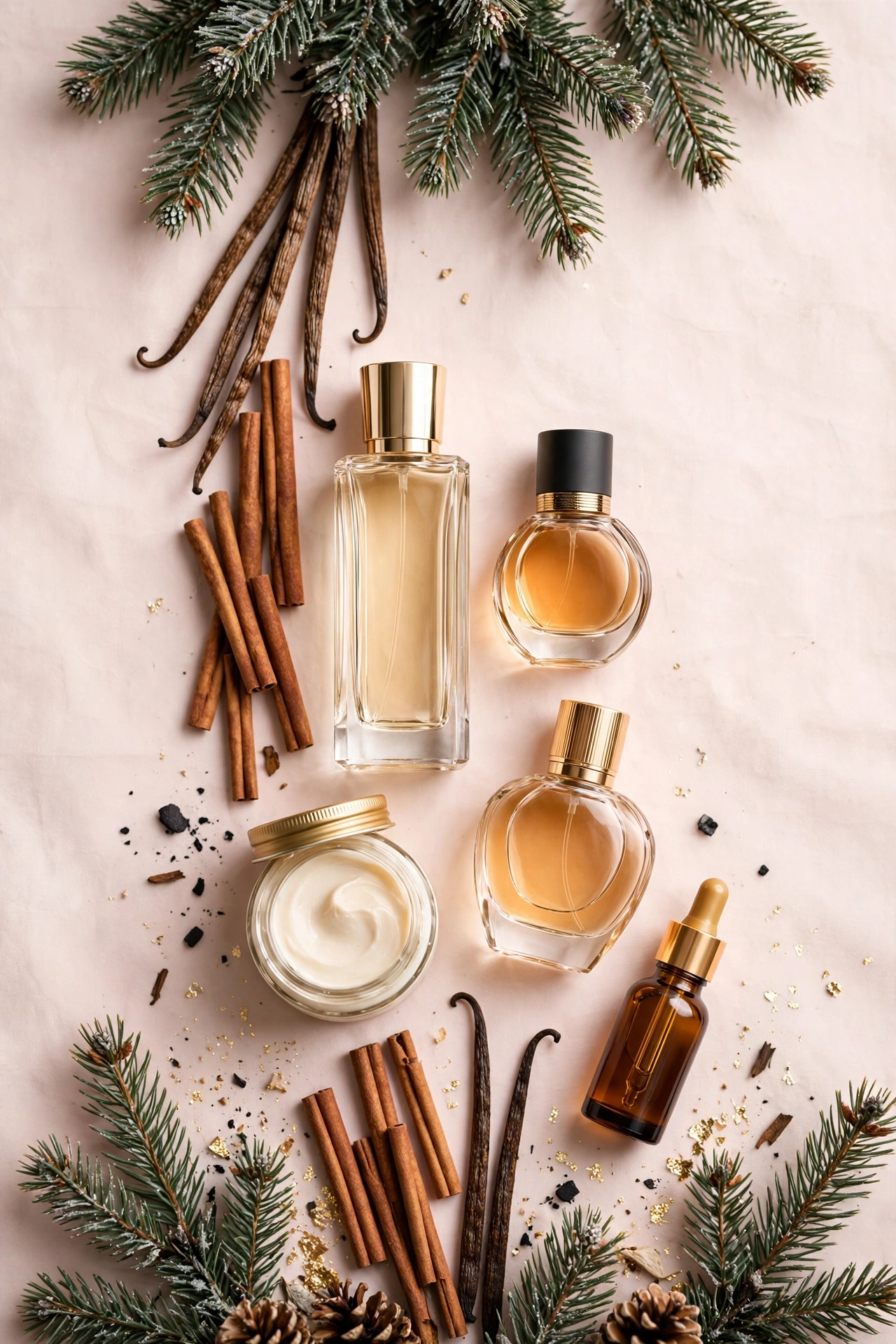
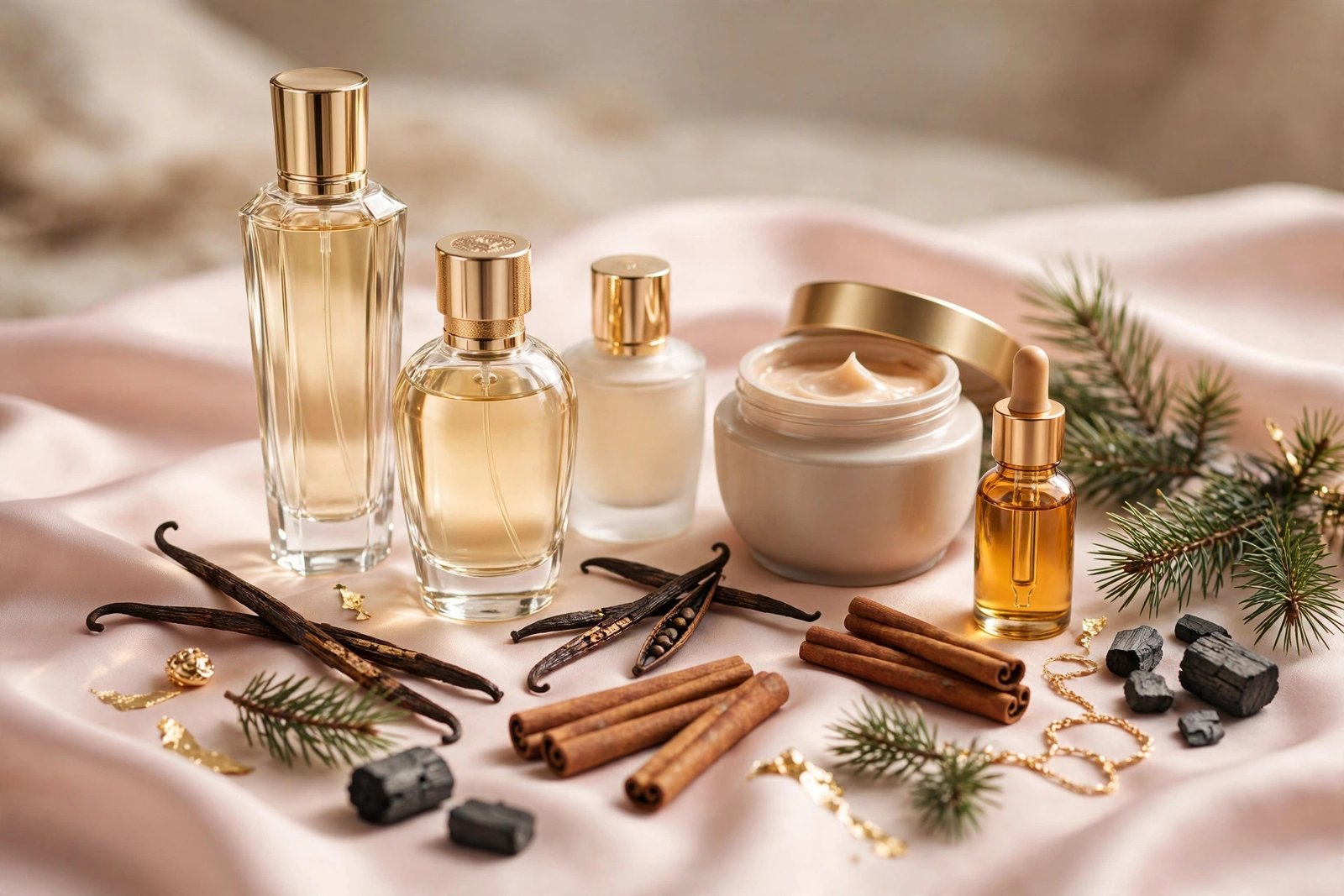
- Vanilla and tonka bean — sweet, warm, and exceptionally long-lasting. The backbone of most beloved winter fragrances.
- Amber — rich, resinous warmth. Amber-heavy scents can last 8+ hours on moisturized skin.
- Sandalwood and cedarwood — creamy woods that anchor lighter notes and wear close to the skin for hours.
- Cinnamon, clove, and cardamom — festive spice notes that feel unmistakably holiday.
- Musk — soft, skin-like, and a superb fixative that makes everything layered over it last longer.
- Patchouli and oud — deep, intense, and very long-wearing. Use sparingly; a little dominates.
When shopping for a winter perfume — for yourself or as a gift — check the base notes on the description. If vanilla, amber, woods, or musk appear in the base, the fragrance is built to last. If the base is mostly citrus and light florals, expect a beautiful but brief wear. For gifting, the Christmas beauty gifts guide covers how to choose fragrance gifts that land well.
Layering Mistakes to Avoid
- Too many competing scents. Three different strong fragrances (scented lotion + scented oil + perfume, all different) create mud, not complexity. Keep supporting layers in the same family or unscented.
- Over-spraying because you can’t smell it. Nose blindness is real — you stop noticing your own scent long before others do. Ask someone you trust rather than adding a sixth spray.
- Layering on dry, unmoisturized skin. This is the #1 reason perfume “doesn’t last.” The lotion step is non-negotiable in winter.
- Rubbing wrists together. It breaks down top notes and shortens wear. Spray and leave it alone.
- Spraying only clothing. Fabric holds scent well but doesn’t develop it — perfume needs skin warmth to bloom through its stages. Do both, not clothing alone.
- Mixing wildly clashing families. Fresh aquatic body spray over deep oud perfume will fight all day. When experimenting, test on one wrist first and live with it for an hour before committing.
Frequently Asked Questions
Does layering really make perfume last longer?
Yes — noticeably. The lotion-and-oil base gives fragrance molecules something to grip, slowing evaporation significantly. Most people find their perfume lasts 2–3 times longer with proper layering versus spraying on dry skin, especially in winter when skin tends to be driest.
Should the lotion and perfume be the same scent?
It helps but isn’t required. Same-scent or same-family layering (vanilla lotion + vanilla perfume) amplifies and extends the fragrance most reliably. Unscented lotion works just as well as a base — the moisture is the active ingredient, so to speak. Avoid layering strongly different scents until you’re comfortable with pairing.
Where should I apply perfume for maximum longevity?
Pulse points where skin is warm: sides of the neck, behind ears, inner elbows, wrists, behind knees. The back of the neck is the secret weapon — body heat carries the scent upward all day. In winter, spray at the base of the throat before putting on a scarf to trap the scent.
Can I layer two different perfumes together?
Yes, with care. Choose one dominant scent and one supporting player in a complementary family (like vanilla + amber). Spray the stronger one first, lightly, then add the lighter one. Test the combination on one wrist for an hour before wearing it out — some pairings that smell great on paper clash on skin.
Why does my perfume disappear by lunchtime?
Almost always one of three reasons: dry unmoisturized skin (the biggest culprit), too few sprays on too few spots, or a fragrance built on light top notes with a weak base. Try the lotion → oil → perfume routine for a week — for most people, that single change fixes it.
The Bottom Line
Long-lasting fragrance is not about buying the strongest perfume — it is about giving scent something to hold onto. Moisturize, add a whisper of oil, spray strategically on warm pulse points, and choose winter-friendly base notes. Ninety seconds of layering buys you hours of wear, and once the routine becomes habit, you will wonder why your perfume ever disappeared by noon. Try it with the bottle you already own before buying anything new — the technique might be all you were missing.
Love this? Pin it for later!