How to Exfoliate Your Scalp at Home: 7 Safe Methods That Work
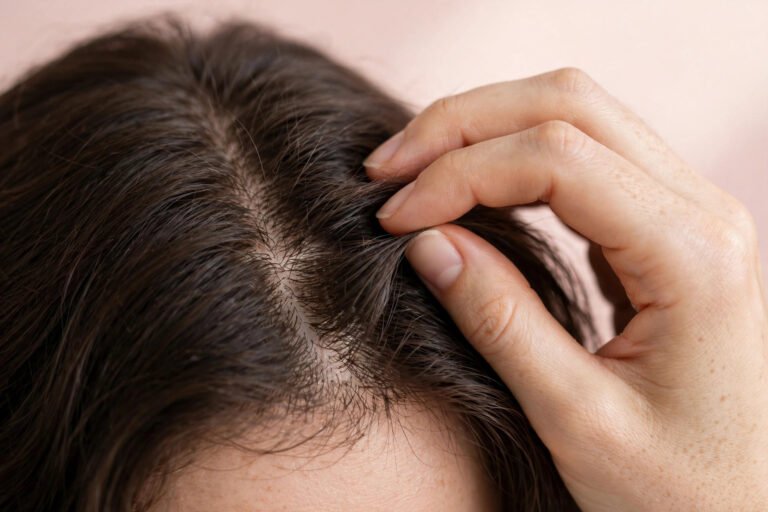
Your scalp sheds dead skin cells every day — just like the skin on your face. But unlike your face, your scalp is usually covered by hair, which traps those dead cells along with sebum, styling products, and hard-water minerals. Over time this creates a layer of buildup that makes roots look dull and flat, feeds the yeast behind dandruff, and can even block follicles.
Scalp exfoliation removes that layer. It’s the step that makes the biggest visible difference in a [scalp care routine → scalp-care-routine-guide] after proper cleansing — and it’s easy to overdo, which is why this guide covers not just how to exfoliate, but how often, which method suits your scalp type, and the mistakes that cause the irritation people blame on “sensitive skin.”
Key Takeaways
- Scalp exfoliation removes dead skin, oil, and product buildup that shampoo alone leaves behind.
- Chemical exfoliants (salicylic acid, AHAs) suit sensitive or inflamed scalps; physical scrubs suit resilient, non-irritated scalps.
- Most scalps need exfoliation only once every 1–2 weeks — more frequent exfoliation usually causes irritation, not better results.
- Never exfoliate a red, broken, sore, or freshly sunburned scalp.
- DIY scrubs work but must be fine-grained and used gently — coarse salt scrubbed hard does real damage.
- Exfoliation boosts the effectiveness of other treatments: anti-dandruff shampoos and scalp serums absorb better afterward.
Physical vs. Chemical Scalp Exfoliation: Which Is Right for You?
These are the two families of scalp exfoliation, and choosing the right one matters more than choosing a brand.
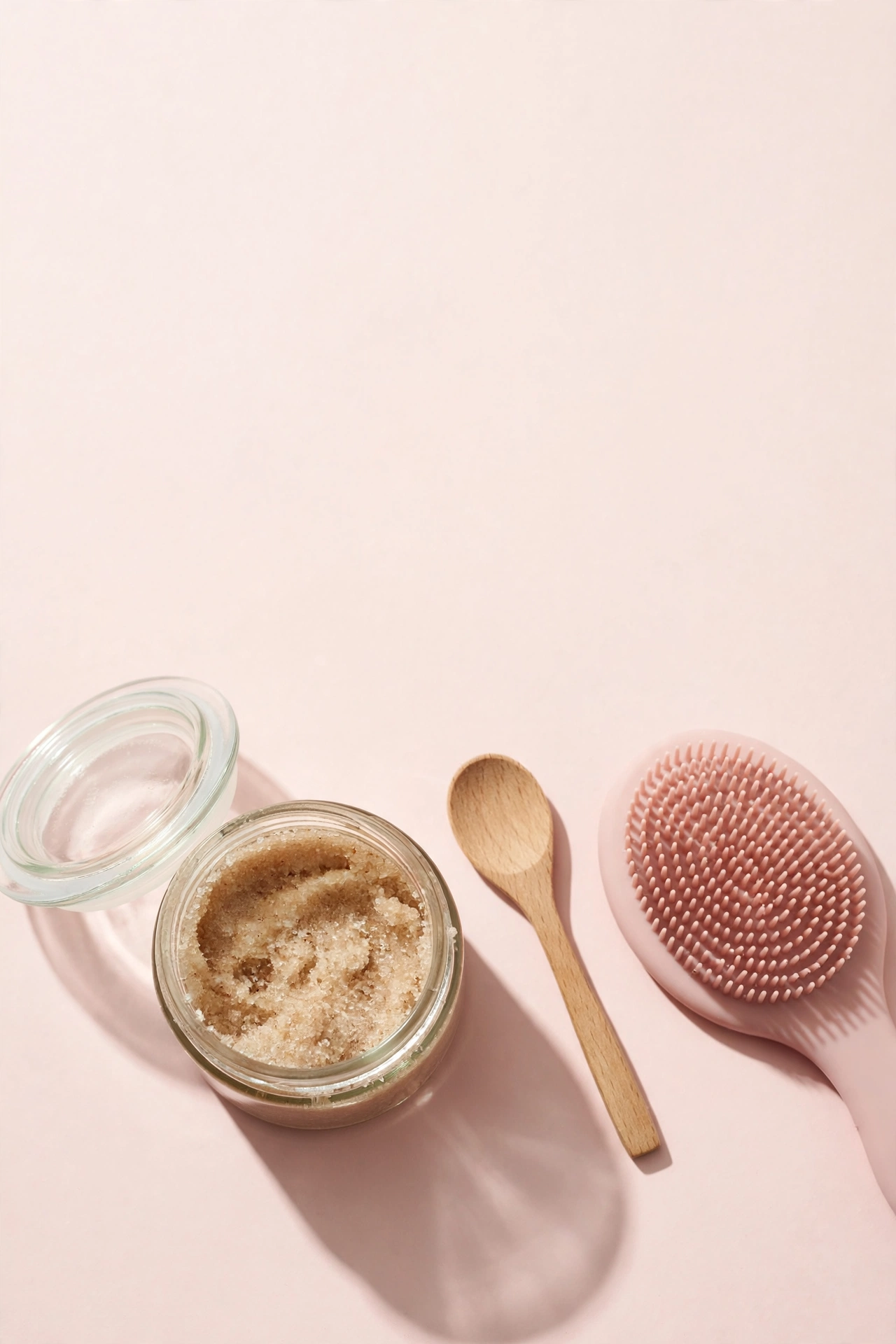
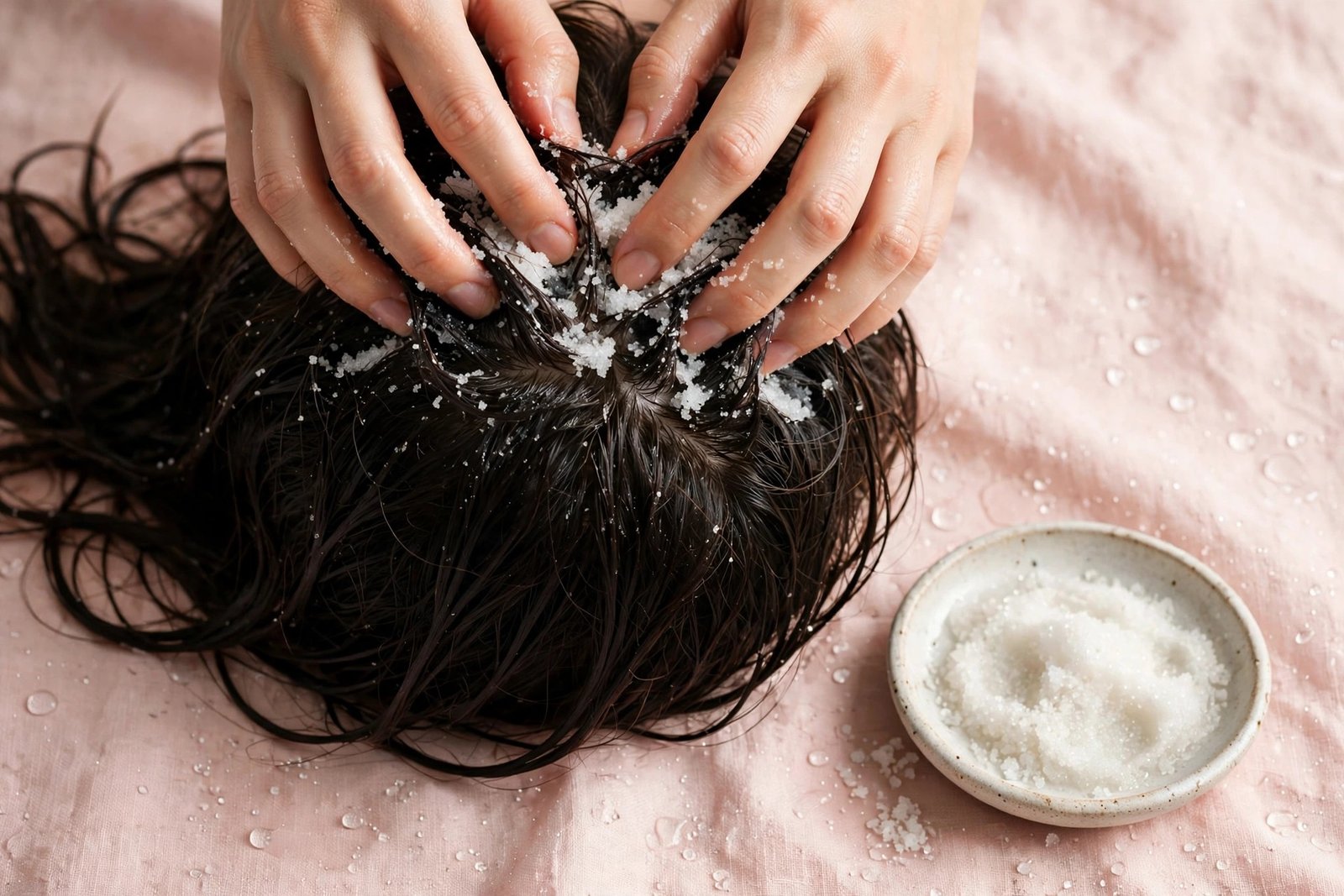
Physical exfoliation uses texture to buff away dead skin — scrubs with sugar, salt, jojoba beads, or ground coffee, plus silicone scalp massager brushes. It works immediately and feels satisfying, but it relies entirely on your technique: too much pressure or too coarse a particle causes micro-tears in the scalp. Best for: resilient, non-sensitive scalps without active inflammation, dandruff flares, or sores.
Chemical exfoliation uses acids to dissolve the bonds between dead skin cells so they rinse away — no scrubbing needed. Salicylic acid (a BHA, oil-soluble, so it gets into oily pores) is the gold standard for scalps. AHAs like glycolic and lactic acid work on the surface and suit dry, flaky scalps. Best for: sensitive scalps, dandruff-prone scalps, anyone with active flaking, and beginners — it’s much harder to overdo.
Trichologists generally favor chemical exfoliation for most people because technique errors are nearly impossible: you apply, wait, and rinse. Physical scrubs fail when enthusiasm exceeds gentleness.
7 Ways to Exfoliate Your Scalp at Home
1. Salicylic Acid Scalp Serum (Best Overall)
The most recommended method by dermatologists. Apply a salicylic acid scalp serum or pre-shampoo treatment to a dry scalp, leave 10–15 minutes, then shampoo as normal. It dissolves dead skin and unclogs follicles without any scrubbing. Use once weekly. Look for 1–2% salicylic acid in a lightweight, rinse-off formula.
2. Sugar Scalp Scrub (Best DIY Physical Method)
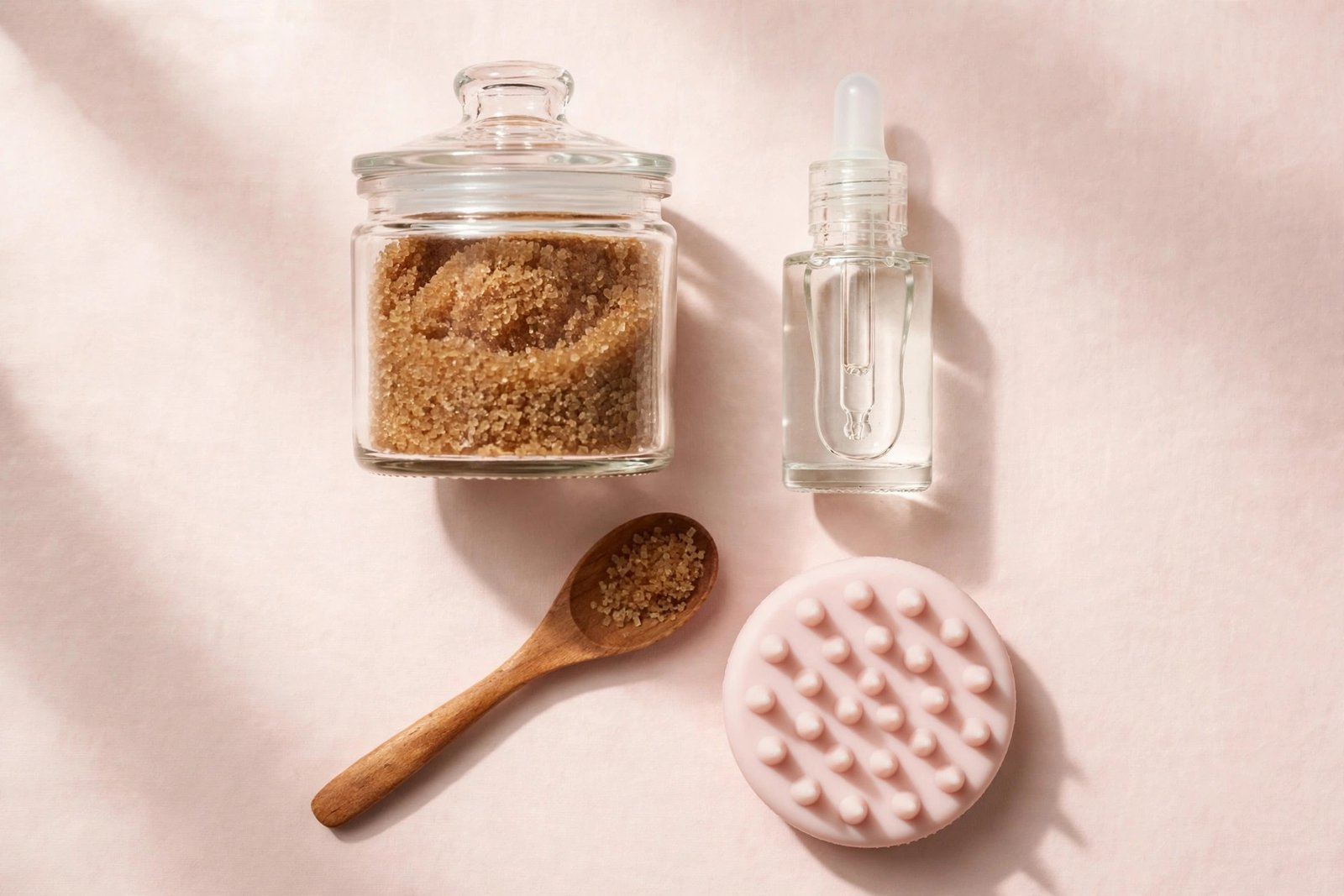
Brown or fine white sugar dissolved partially in a carrier (a tablespoon of your regular shampoo, or a teaspoon of jojoba oil) makes an effective gentle scrub. Sugar crystals are rounded and dissolve as you massage, which makes them more forgiving than salt. Massage into a wet scalp with fingertips for 60 seconds, then shampoo thoroughly. Use every 1–2 weeks.
3. Glycolic or Lactic Acid Scalp Treatment
AHA-based scalp toners and pre-shampoo treatments suit dry, flaky scalps that don’t tolerate salicylic acid’s oil-cutting action. They smooth surface flaking and improve moisture retention afterward. Apply to the scalp before shampooing, leave 5–10 minutes, rinse. Every 1–2 weeks.
4. Clay Scalp Mask
Bentonite or kaolin clay masks absorb excess oil and draw out impurities from the scalp — a form of exfoliation-plus-detox. Mix clay powder with water (never metal utensils with bentonite) into a yogurt consistency, apply to the scalp, leave 10–15 minutes (don’t let it fully harden and crack), then shampoo out thoroughly. Best for oily scalps, every 1–2 weeks. If your scalp is oily with dry ends, pair this with the balancing approach in our [best shampoo for oily scalp and dry ends → best-shampoo-for-oily-scalp-dry-ends] guide.
5. Silicone Scalp Massager Brush
Not a chemical or scrub, but a mechanical aid: soft silicone bristles used with shampoo help distribute product evenly and lift dead skin during your normal wash. Use light pressure in small circles, only on wet shampooed hair. This is the gentlest “daily-safe” option — though even this shouldn’t replace proper exfoliation, it keeps buildup lower between sessions.
6. Apple Cider Vinegar Rinse (Mild Chemical Exfoliation)
Diluted ACV (1 part vinegar to 4–5 parts water) provides very mild exfoliation through acidity while removing mineral and product buildup. Pour over the scalp after shampooing, leave 1–2 minutes, rinse well. Weekly at most — it’s acidic enough to irritate sensitive scalps and can dry hair with overuse. Also useful as a supporting step when you’re learning [how to get rid of dandruff fast → how-to-get-rid-of-dandruff-fast].
7. Exfoliating Shampoo (Easiest Habit)
Some shampoos contain low levels of salicylic acid, zinc, or gentle physical particles, giving you mild exfoliation in your normal wash. These are the lowest-effort option and suit maintenance between deeper treatments — but they don’t replace a dedicated weekly exfoliation session for real buildup.
DIY Scalp Scrub Recipes (That Won’t Damage Your Scalp)
Two safe, simple recipes using kitchen ingredients:
Gentle brown sugar scrub: 2 tablespoons fine brown sugar + 1 tablespoon jojoba or sweet almond oil + 3 drops tea tree oil (optional, patch test first). Massage into a wet scalp for 60 seconds with fingertips. Shampoo twice afterward to remove all oil residue.
Soothing oatmeal scrub: 2 tablespoons finely ground colloidal oatmeal + 1 tablespoon honey + enough water to make a paste. Oatmeal is anti-inflammatory and extremely gentle — this is the best DIY option for sensitive scalps. Massage gently, leave 5 minutes, rinse and shampoo.
Rules for every DIY scrub: use fine particles only (no coarse sea salt, no coffee grounds — both can scratch); always apply to wet hair, never dry; fingertip pressure only; shampoo thoroughly afterward, because leftover scrub ingredients become the next layer of buildup.
How Often Should You Exfoliate Your Scalp?
- Normal scalp: once every 1–2 weeks
- Oily scalp: once weekly
- Dry or sensitive scalp: once every 2 weeks, chemical only
- Dandruff-prone scalp: once weekly during flare-ups (salicylic acid is ideal here — it clears scale so anti-dandruff actives penetrate)
- Never: on a red, broken, sunburned, or actively sore scalp; within 48 hours of chemical treatments (color, bleach, relaxers)
The signs of over-exfoliation are unmistakable once you know them: tightness, stinging when applying normal products, redness lasting over an hour, or new flaking appearing after exfoliating. If any of these show up, stop exfoliating for 2–3 weeks and let the barrier recover.
Scalp Exfoliation Mistakes to Avoid
- Exfoliating too often. Weekly is the maximum for most scalps; “daily scalp scrub” routines damage the skin barrier.
- Scrubbing with nails or hard brushes. Fingertips or soft silicone only. Nails cause micro-tears that invite infection.
- Using body or face scrubs on the scalp. Many contain fragrances, harsh particles, or comedogenic oils unsuitable for the scalp environment.
- Exfoliating right before chemical hair treatments. Freshly exfoliated skin absorbs color and bleach chemicals more aggressively — wait at least 48 hours.
- Skipping the shampoo afterward. Exfoliation loosens debris; shampoo removes it. A scrub followed by conditioner-only is just rearranging buildup.
- Exfoliating an already-irritated scalp. If your scalp is currently itchy, red, or flaring, treat the underlying issue first — see [why is my scalp itchy → why-is-my-scalp-itchy-causes-remedies] to identify the cause.
Frequently Asked Questions
Can I exfoliate my scalp every day?
No. Daily exfoliation strips the scalp’s protective barrier and causes the irritation, tightness, and reactive oiliness you’re trying to fix. Once weekly is the sweet spot for most people.
Is scalp exfoliation good for hair growth?
It supports healthy growth indirectly: removing buildup keeps follicles clear and improves blood circulation through massage. It won’t change your genetic growth rate, but it removes obstacles to reaching it.
Can I use a face exfoliant on my scalp?
Sometimes — a salicylic acid face toner can work as a scalp pre-treatment in a pinch. But face scrubs with harsh particles and fragranced formulas are best avoided. Scalp-specific products are formulated for the scalp’s oilier, hair-covered environment.
Should I exfoliate before or after shampooing?
Before (as a pre-shampoo treatment) for serums, scrubs, and masks — then shampoo to remove everything loosened. ACV rinses go after shampooing. Exfoliating shampoos are used in place of your regular shampoo.
Does scalp exfoliation help with dandruff?
Yes, significantly — especially salicylic acid, which dissolves the scale so anti-fungal actives can reach the skin. Exfoliation alone won’t cure dandruff (you still need an anti-fungal active), but it makes treatment much more effective.
Can exfoliation make hair fall out?
Proper gentle exfoliation doesn’t cause hair loss. But aggressive scrubbing can break hairs at the root and damage follicles. If you’re noticing increased shedding, be honest about your technique — and see our [hair fall control guide → hair-fall-control-complete-guide] for the full picture.
Start simple: pick one method that matches your scalp type, use it once this week before shampooing, and notice how your roots feel at day two. That clean, light feeling at the roots is what a proper [scalp care routine → scalp-care-routine-guide] builds on.
complete scalp care routine
fast dandruff remedies
best shampoo for oily scalp and dry ends
itchy scalp causes and remedies
beginner hair care routine
Love this? Pin it for later!