How to Treat Keratosis Pilaris: Smooth “Strawberry Legs” for Good
If the backs of your arms, thighs, or buttocks are covered in tiny, rough, goosebump-like dots, learning how to treat keratosis pilaris can be genuinely life-changing. Often called “chicken skin” or “strawberry legs,” keratosis pilaris (KP) is one of the most common skin conditions in the world — and one of the most misunderstood. It is not acne, it is not contagious, and scrubbing it harder will not make it go away.
KP happens when keratin, the protein that protects your skin, builds up and plugs hair follicles. The result is rough texture and sometimes redness or dark dots around each follicle. The fix is a two-part routine: gently dissolve the plugs with chemical exfoliants, then keep the skin deeply moisturized so new plugs do not form. Most people see smoother skin in three to six weeks.
Key Takeaways
- Keratosis pilaris is a keratin buildup in hair follicles — not acne — so acne treatments will not fix it and may irritate it.
- The winning formula: chemical exfoliation (lactic acid, salicylic acid, or urea) plus rich, consistent moisturizing.
- Physical scrubs make KP worse by irritating the skin; stick to gentle chemical exfoliants.
- Urea and lactic acid moisturizers are the gold standard for KP — see [the best body lotion for dry, bumpy skin → best-body-lotion-for-dry-bumpy-skin].
- Consistency beats intensity: daily gentle care smooths KP over weeks, while aggressive treatments cause redness.
- KP often improves with age and is worse in dry winter months — adjust your routine seasonally.
Is It Keratosis Pilaris or Body Acne?
This distinction matters because the treatments are opposites in some ways. Here is how to tell them apart:
Keratosis pilaris looks like:
– Tiny, uniform, rough bumps — like permanent goosebumps or sandpaper
– Usually on the backs of upper arms, front of thighs, buttocks, and sometimes cheeks
– Bumps are skin-colored, red, or brown; rarely inflamed or painful
– The skin feels dry and rough even between the bumps
– Often runs in families and flares in dry weather
Body acne looks like:
– Varied lesions: blackheads, whiteheads, red pimples, sometimes cysts
– Usually on the back, chest, and shoulders
– Bumps are inflamed, can be painful, and may leave marks
– For the full acne treatment plan, see [how to get rid of body acne → how-to-get-rid-of-body-acne]
If your bumps are rough and dry rather than inflamed and oily, KP is the likely diagnosis. When in doubt, a dermatologist can confirm in seconds.
The KP Treatment Routine That Works
KP responds to steady, gentle care — not aggressive intervention. Here is the routine dermatologists recommend:
Step 1: Gentle Chemical Exfoliation
Chemical exfoliants dissolve the keratin plugs without the irritation of scrubbing. Your best options:
- Lactic acid (5 to 15%): An alpha-hydroxy acid that exfoliates and hydrates at the same time — ideal for KP because the skin is usually dry. Available in body lotions and creams.
- Urea (10 to 20%): A keratolytic that softens and breaks down hardened keratin while drawing moisture into the skin. One of the most effective single ingredients for KP.
- Salicylic acid (1 to 2%): A beta-hydroxy acid that loosens plugs inside the follicle. Good for KP with more prominent dark dots, though slightly more drying than lactic acid.
Use your exfoliating product once daily at first. If you are comparing acids for skin concerns generally, [this salicylic vs. glycolic acid breakdown → salicylic-acid-vs-glycolic-acid-acne] explains how they differ.
Step 2: Moisturize Immediately and Generously
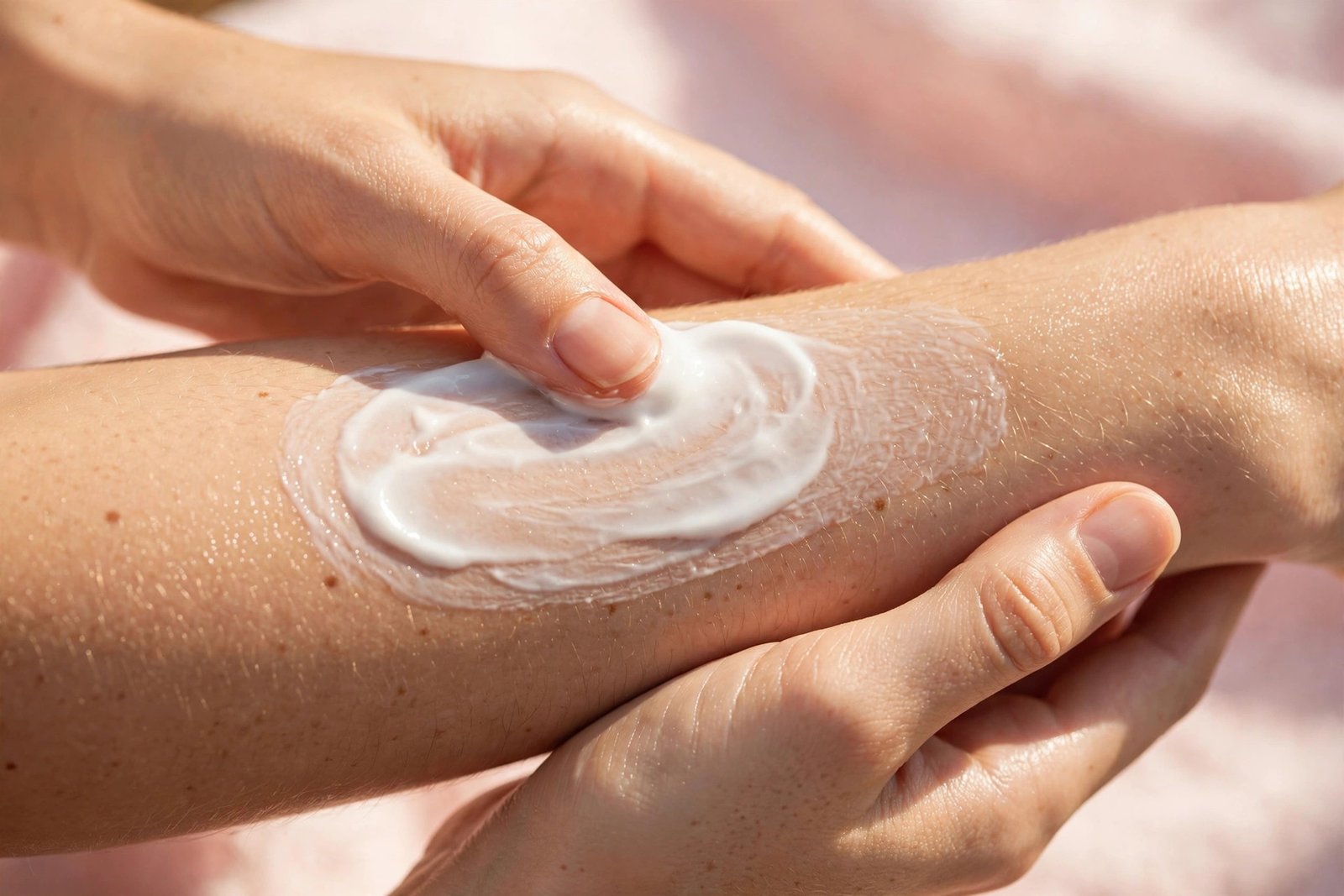
Exfoliation without moisture leaves KP skin dry and irritated, which triggers more keratin buildup. Apply a rich moisturizer within three minutes of showering, while skin is still damp. Look for formulas containing urea, lactic acid, ceramides, or shea butter. A lotion that combines exfoliation and moisture in one step is the easiest path to consistency — [these body lotions for dry, bumpy skin → best-body-lotion-for-dry-bumpy-skin] are formulated exactly for this.
Step 3: Keep Showers Short and Lukewarm
Hot, long showers strip the natural oils KP-prone skin desperately needs. Keep showers under 10 minutes and lukewarm. Use a gentle, fragrance-free body wash rather than harsh soap, and skip the loofah-on-KP-areas scrubbing.
What Makes KP Worse (Avoid These)
- Physical scrubs and rough brushes. They irritate follicles and increase redness without removing plugs. This is the number one mistake.
- Picking at the bumps. Picking KP bumps causes scarring and dark marks that last far longer than the bumps themselves.
- Acne treatments like benzoyl peroxide. Designed for oily, inflamed skin, they dry out and irritate KP without addressing the keratin plugs.
- Fragranced products. Fragrance is a common irritant on already-sensitive KP skin.
- Skipping moisturizer in summer. KP often looks better in humid months, which tempts people to drop the routine — then it rebounds.
“Strawberry Legs”: KP on the Legs
“Strawberry legs” — dark dots on the legs resembling strawberry seeds — is usually KP, trapped hair, or [ingrown hairs → how-to-prevent-ingrown-hairs-after-shaving] from shaving, and often a combination. The KP routine above smooths the texture, while better shaving technique addresses the ingrown-hair component. Exfoliating before shaving (gently, with a chemical exfoliant rather than a harsh scrub) helps both issues at once — the two concerns share more of a routine than most people realize.
Seasonal and Long-Term Management
KP is a chronic tendency, not a one-time fix. Manage expectations and adjust:
- Winter: KP almost always worsens in dry, cold months. Step up to a richer moisturizer and consider a humidifier in the bedroom.
- Summer: Humidity helps, but sunburn inflames KP badly. Sunscreen on exposed KP areas is non-negotiable — and it prevents the dark marks from worsening.
- Long term: Many people find KP fades significantly with age. The goal until then is management: smooth, comfortable skin through consistent, gentle care.
KP on the Face: Cheeks Need a Gentler Touch
Keratosis pilaris can also appear on the cheeks, especially in teenagers — rough, slightly red bumps across the outer cheeks that are often mistaken for acne. Facial KP needs the same philosophy at a lower intensity: the skin on your cheeks is far thinner than your arms, so skip body-strength urea creams and strong exfoliants there.
For facial KP, a gentle lactic acid serum or a mild PHA exfoliant used 2 to 3 times weekly, plus a ceramide-rich moisturizer, is usually enough. Do not use your body KP products on your face unless they are specifically labeled safe for facial use. And as with body KP, sun protection matters — UV worsens the redness that makes cheek KP most noticeable.
Do KP Home Remedies Work?
The internet is full of DIY KP cures. Here is an honest assessment of the popular ones:
- Coconut oil: A decent occlusive moisturizer, but it does nothing to dissolve keratin plugs and is comedogenic for some people. As a body moisturizer it is fine; as a KP treatment it is incomplete without an exfoliant.
- Apple cider vinegar: Sometimes suggested as a “natural exfoliant,” but it is acidic, unpredictable in strength, and a common irritant. A formulated lactic acid lotion does the same job safely and measurably.
- Dry brushing: Popular, but essentially physical exfoliation — the same irritation risk as scrubs, with the same limited benefit for actual plugs. Gentle chemical exfoliants outperform it.
- Oatmeal baths: Genuinely soothing for itchy, irritated KP skin, especially in winter. They calm symptoms but do not treat the plugs — pair with your exfoliating routine rather than replacing it.
The pattern: home remedies that moisturize or soothe are harmless additions, but none replace the core routine of chemical exfoliation plus consistent moisturizing. Save your money for a good urea or lactic acid lotion.
When to See a Dermatologist
KP is harmless, but see a dermatologist if the redness is severe, the bumps are spreading rapidly, over-the-counter routines have done nothing after three months, or the appearance is significantly affecting your confidence. Prescription-strength urea or tretinoin creams and in-office treatments are options for stubborn cases.
Frequently Asked Questions
Can keratosis pilaris be cured permanently?
There is no permanent cure, but it can be managed to the point of being barely noticeable. Consistent exfoliation and moisturizing keep it smooth, and it often improves with age.
How long does it take to see results?
Most people notice smoother texture in 3 to 6 weeks of daily care. Redness and dark dots take longer — often 2 to 3 months — to fade.
Is keratosis pilaris the same as strawberry legs?
Strawberry legs is a descriptive term for dark-dotted legs that is often caused by KP, but it can also come from ingrown hairs or clogged pores after shaving. The KP routine plus better shaving technique covers both causes.
Can I use body acne wash on KP?
A gentle salicylic acid wash is fine and can help loosen plugs, but harsh acne treatments like strong benzoyl peroxide will irritate KP skin. Moisturizing matters more for KP than for acne.
Does shaving make KP worse?
Shaving does not cause KP, but it can irritate KP-prone skin and add ingrown hairs to the mix. Exfoliate gently before shaving, use a sharp razor, and moisturize after.
Are expensive KP products worth it?
Not necessarily. The active ingredients — urea, lactic acid, salicylic acid — matter far more than the brand. An affordable urea or lactic acid lotion used daily beats an expensive product used sporadically.
Can keratosis pilaris appear on the buttocks?
Yes, the buttocks are a common KP site, especially where underwear elastic creates friction. The same routine applies — gentle chemical exfoliation plus rich moisturizing — and breathable cotton underwear reduces the friction component.
Does diet affect keratosis pilaris?
There is no strong evidence that any specific food causes or cures KP. Some people report improvement with omega-3-rich foods or vitamin A, but these are anecdotes, not proven treatments. Focus on the topical routine first; it is where the real results come from.
Keratosis pilaris is stubborn but very manageable once you stop treating it like acne and start treating it like what it is: dry, keratin-plugged skin that wants gentle exfoliation and serious moisture. Build the routine above around a good [body lotion for dry, bumpy skin → best-body-lotion-for-dry-bumpy-skin], give it six weeks, and pair it with [ingrown hair prevention → how-to-prevent-ingrown-hairs-after-shaving] if shaving adds to your leg texture. For genuinely inflamed breakouts elsewhere on the body, the [body acne guide → how-to-get-rid-of-body-acne] is your next stop.
body acne pillar guide
best body lotion for dry, bumpy skin
preventing ingrown hairs
salicylic acid vs glycolic acid
Love this? Pin it for later!