Skincare Routine for Beginners: Step-by-Step Guide for Every Skin Type
If you’ve ever stood in the skincare aisle feeling completely overwhelmed — serums, essences, toners, acids, retinoids — you’re not alone. The beauty world loves to make skincare sound complicated, but here’s the truth: a good beginner skincare routine only needs a few steps, done consistently.
This guide strips away the noise. You’ll learn exactly which steps matter (and which you can ignore for now), the correct order to apply products, how to tailor everything to your skin type, and the mistakes that trip up almost every beginner. By the end, you’ll have a simple routine you can start tonight.
Why the Order of Your Skincare Routine Matters
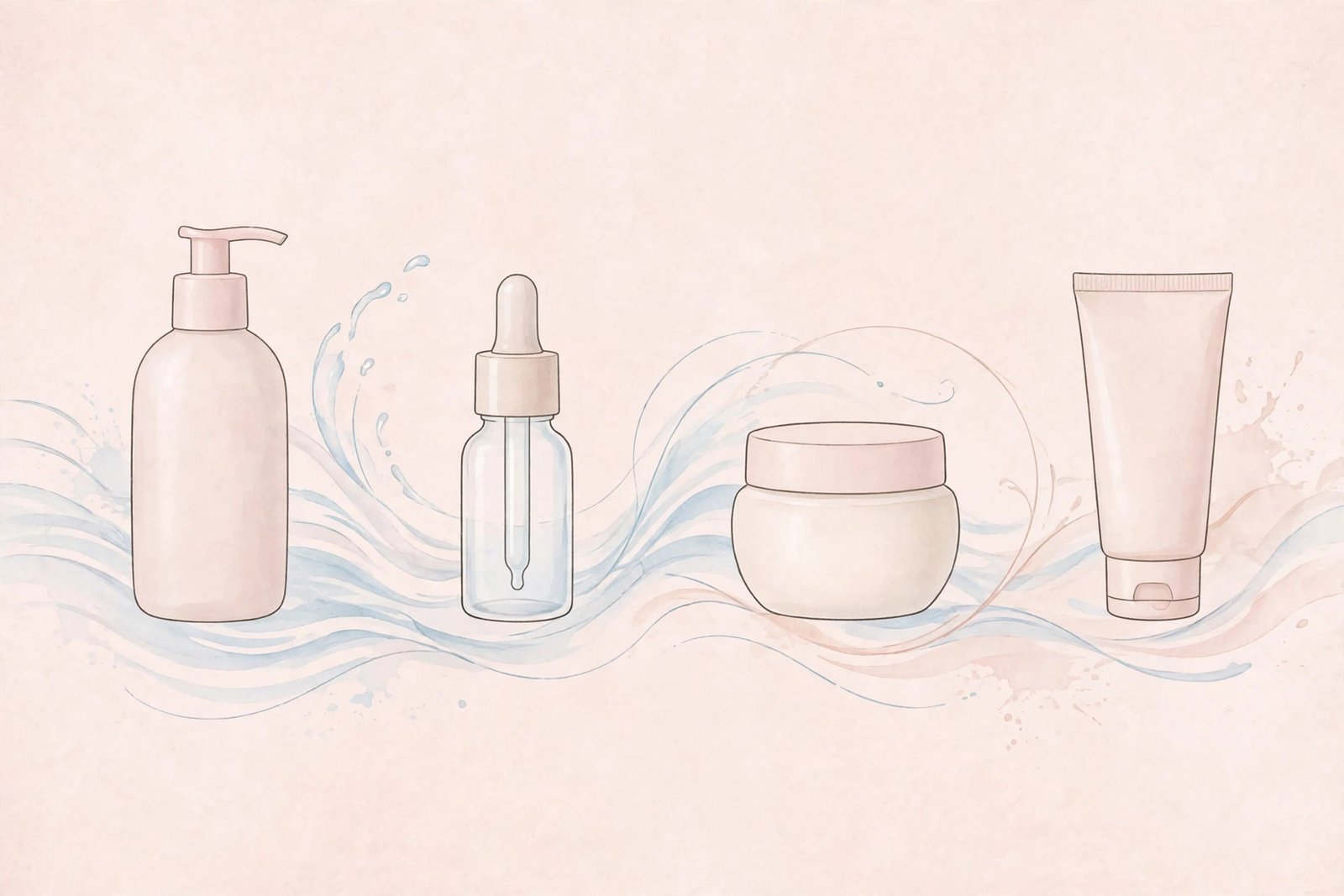
Skincare products are designed to work in a specific sequence, and getting the order wrong can make even great products underperform. The general rule dermatologists recommend is simple: apply products from thinnest to thickest consistency.
Here’s why this matters. Lightweight, water-based formulas (like toners and serums) are designed to penetrate the skin. Heavier creams and oils create a barrier on top. If you apply a thick moisturizer first, it can block the lighter products underneath from absorbing properly — meaning you’re essentially wasting them.
There’s also a functional reason: sunscreen always goes last in your morning routine (before makeup) because it needs to form an even protective film over everything else. Cleanser always goes first because nothing absorbs well through a layer of dirt, oil, and leftover makeup.
The good news? For beginners, you only need to remember four steps, which we’ll cover next. Once those become habit, you can experiment with extras — but the order principle stays the same no matter how many products you eventually use.
The 4 Essential Steps Every Beginner Needs
Forget the 10-step routines you see on social media. Dermatologists widely agree that most people only need three core steps, plus one optional step when you’re ready. Let’s break each one down.
Step 1: Cleanser (Morning and Night)
Cleansing is the foundation of every routine. At night, it removes makeup, sunscreen, sweat, and the day’s buildup. In the morning, it clears away the oil and sweat your skin produced overnight so your other products can absorb cleanly.
What to look for: A gentle cleanser suited to your skin type. Gel or foaming cleansers work well for oily skin, while cream or milky cleansers tend to suit dry and sensitive skin better. The key word is gentle — your face should feel clean and comfortable after washing, never tight or squeaky. That tight feeling is a sign the cleanser is too harsh and stripping your skin’s natural moisture barrier.
How to use it: Massage a small amount over damp skin for about 30–60 seconds, then rinse with lukewarm water. Hot water can irritate the skin, so keep it comfortably warm. Pat dry with a clean towel — don’t rub.
Beginner tip: If you wear heavy makeup or waterproof sunscreen, consider double cleansing at night: an oil-based cleanser or balm first to dissolve makeup, followed by your regular gentle cleanser. For most beginners wearing light makeup, a single thorough cleanse is perfectly fine.
Step 2: Moisturizer (Morning and Night)
Moisturizer does two jobs: it adds hydration to the skin and seals it in so it doesn’t evaporate. Even oily skin needs moisturizer — skipping it can actually cause your skin to produce more oil to compensate for the dryness.
What to look for: Match the texture to your skin type. Lightweight gel or lotion formulas suit oily and combination skin. Richer creams suit dry skin. If you’re sensitive, look for fragrance-free options with simple ingredient lists — fewer ingredients means fewer potential irritants.
How to use it: Apply to slightly damp skin (right after cleansing, or after any treatment product) to lock in extra hydration. A pea-to-dime-sized amount is usually enough for the whole face. Don’t forget your neck — it shows signs of aging just like the face does.
Step 3: Sunscreen (Every Morning)
This is the single most important anti-aging and skin-health step in any routine. Dermatologists consistently rank daily sunscreen above every serum and treatment on the market. UV damage causes wrinkles, dark spots, and — most seriously — increases skin cancer risk. And it happens even on cloudy days and through windows.
What to look for: A broad-spectrum sunscreen with at least SPF 30. “Broad-spectrum” means it protects against both UVA (aging) and UVB (burning) rays. Chemical vs. mineral is personal preference — chemical formulas tend to blend in more invisibly, while mineral (zinc oxide/titanium dioxide) formulas are often recommended for sensitive skin.
How to use it: Apply as the last step of your morning routine, about 15 minutes before sun exposure. You need roughly a quarter teaspoon for the face alone — most people apply far too little. Reapply every two hours if you’re outdoors for extended periods.
Keep reading: best sunscreens for oily acne-prone skin with no white cast
Beginner tip: If sunscreen feels like a chore, try a moisturizer with SPF 30+ for your morning routine. It’s not quite as protective as a dedicated sunscreen applied generously, but it’s far better than nothing — and the best sunscreen is the one you’ll actually wear every day.
Step 4 (Optional): Treatment
Once your three core steps are habitual (give it 2–3 weeks), you can add one treatment product targeting your main concern. This is where ingredients like vitamin C (brightening), niacinamide (pores and oil control), or retinoids (fine lines and texture) come in.
The beginner rule: Add only ONE new active product at a time, and wait at least two weeks before introducing another. This way, if your skin reacts, you’ll know exactly which product caused it.
Keep reading: how to layer vitamin C and niacinamide together
A note of caution: Active ingredients are powerful. Start with lower concentrations, use them as directed (many are night-only), and always patch test a new product on a small area of skin first. If you experience persistent redness, burning, or breakouts that don’t settle within a week or two, stop using the product. For persistent skin concerns, a dermatologist can give you personalized guidance.
Your Routine by Skin Type
The four steps above work for everyone, but the products you choose should match your skin type. Here’s how to tailor each step.
Oily Skin
Oily skin produces excess sebum, which can lead to shine, enlarged pores, and breakouts. The goal is balance — not stripping all the oil away (which backfires by triggering even more oil production).
- Cleanser: A gentle gel or light foaming cleanser. Avoid harsh “deep clean” formulas that leave skin feeling tight.
- Moisturizer: A lightweight, oil-free gel or lotion. Look for ingredients like hyaluronic acid or glycerin for hydration without heaviness. Don’t skip this step — dehydrated oily skin overproduces oil.
- Sunscreen: An oil-free or matte-finish formula. Gel-based sunscreens tend to feel most comfortable on oily skin.
- Treatment (optional): Niacinamide is a popular choice for oily skin — it’s widely used to help manage excess oil and the appearance of pores.
Extra tip: Blotting papers used midday can manage shine without disturbing your makeup or sunscreen. Resist the urge to wash your face more than twice a day — over-cleansing strips the skin and makes oiliness worse.
Dry Skin
Dry skin doesn’t produce enough oil, so it can feel tight, look flaky, and show fine lines more easily. The priority here is nourishment and barrier support.
- Cleanser: A cream, milky, or oil-based cleanser that cleans without stripping. Avoid foaming cleansers, which tend to be more drying.
- Moisturizer: A richer cream with ingredients like ceramides, shea butter, or squalane. These help reinforce the skin’s moisture barrier. You may want a heavier formula at night than in the morning.
- Sunscreen: A hydrating formula — many sunscreens designed for dry skin include moisturizing ingredients. Avoid mattifying formulas, which can feel uncomfortable.
- Treatment (optional): Hyaluronic acid serums can add an extra layer of hydration. Apply to damp skin, then seal with moisturizer.
Extra tip: If your skin still feels dry after moisturizing, try the “sandwich” method: apply moisturizer to damp skin, wait a minute, then apply a second thin layer. Layering light applications often works better than one thick one.
Combination Skin
Combination skin is oily in the T-zone (forehead, nose, chin) and normal-to-dry on the cheeks. It requires a balanced approach — and sometimes different products for different areas.
- Cleanser: A gentle gel cleanser that balances without over-drying the cheeks.
- Moisturizer: A medium-weight lotion. Some people with combination skin use a lighter formula on the T-zone and a richer one on dry cheeks (“multi-moisturizing”).
- Sunscreen: A balanced formula — not too matte, not too rich. Many daily sunscreens work well here.
- Treatment (optional): Targeted treatments work well — for example, a niacinamide product on the oily T-zone only.
Extra tip: You don’t need a complicated routine. Start with balanced, middle-of-the-road products and only customize by zone if you notice specific areas need something different after a few weeks.
Sensitive Skin
Sensitive skin reacts easily — redness, stinging, or irritation from products that others tolerate fine. The golden rule: less is more.
- Cleanser: An ultra-gentle, fragrance-free cream or milky cleanser. Fewer ingredients is better.
- Moisturizer: A simple, fragrance-free cream with barrier-supporting ingredients like ceramides or colloidal oatmeal. Avoid products with alcohol, strong fragrances, or essential oils.
- Sunscreen: Mineral sunscreens (zinc oxide based) are often recommended for sensitive skin since they sit on top of the skin rather than absorbing into it.
- Treatment (optional): Be very cautious here. Introduce one product at a time, patch test carefully, and consider skipping actives entirely until your basic routine is solid. Many people with sensitive skin do best with just the three core steps.
Extra tip: When trying any new product, patch test on a small area (like behind the ear or along the jawline) for 24–48 hours before applying it to your full face. This simple step prevents most bad reactions.
7 Common Beginner Mistakes to Avoid
Almost everyone makes at least a few of these when starting out. Knowing them in advance saves your skin — and your wallet.
1. Starting With Too Many Products
The single most common mistake. Excited beginners buy a cleanser, toner, two serums, an eye cream, a moisturizer, a sleeping mask, and a facial oil — then use them all at once. When irritation or breakouts follow, there’s no way to tell which product caused it.
Do this instead: Start with the three core steps (cleanser, moisturizer, sunscreen). Add one new product every two weeks, maximum.
2. Over-Exfoliating
Exfoliating acids and scrubs promise glowing skin, so beginners often use them daily. But over-exfoliation damages the skin’s protective barrier, leading to redness, sensitivity, breakouts, and a rough texture — the opposite of what you wanted.
Do this instead: If you exfoliate, start with once a week and see how your skin responds. And never combine multiple exfoliating products (like an acid toner plus a scrub) in the same routine.
Keep reading: how to repair a damaged skin barrier
3. Skipping Sunscreen
Many beginners invest in serums and treatments but skip the one product dermatologists consider most important. No brightening serum can outpace the dark spots and wrinkles caused by unprotected sun exposure.
Do this instead: Make sunscreen non-negotiable every morning. It’s the highest-impact step in your entire routine.
4. Expecting Overnight Results
Skincare works on the skin’s renewal cycle, which takes roughly 28 days (longer as we age). Most products need 4–6 weeks of consistent use before you can fairly judge them.
Do this instead: Take a “before” photo when you start a new product, then compare after a month. And resist the urge to switch products every week — constant switching irritates skin and makes it impossible to know what’s working.
5. Using Too Much Product
More product doesn’t mean better results — it means clogged pores, pilling, and wasted money. A pea-sized amount of serum or a dime-sized amount of moisturizer is enough for the whole face.
Do this instead: Start with less than you think you need. You can always add more, but you can’t easily remove excess.
6. Ignoring Your Skin Type
Using a heavy cream meant for dry skin on oily skin (or a stripping gel cleanser on dry skin) creates problems that the “right” products for your type would never cause.
Do this instead: Identify your skin type using the guide above, and choose products formulated for it. When in doubt, start with products labeled for sensitive skin — they’re the least likely to cause issues.
7. Copying Someone Else’s Routine Exactly
Your favorite influencer’s 8-step routine was designed for their skin, their climate, and their concerns. What works beautifully for oily skin in a humid climate may be a disaster for dry skin in winter.
Do this instead: Use routines you see online as inspiration, not prescription. Adapt the principles to your own skin, and pay attention to how your face responds.
How to Build Your Routine Step by Step
Ready to start? Here’s a practical week-by-week plan that takes you from zero to a complete routine without overwhelming your skin (or your budget).
Week 1: The Basics
Buy just two products: a gentle cleanser and a moisturizer suited to your skin type. Use them morning and night. That’s it. This establishes the habit and lets your skin adjust to being cleansed and moisturized consistently.
Morning: Cleanser → moisturizer
Night: Cleanser → moisturizer
Week 2: Add Sunscreen
Add a broad-spectrum SPF 30+ sunscreen to your mornings. Apply it after moisturizer. If the combination of moisturizer plus sunscreen feels too heavy, you can switch to a moisturizing sunscreen and skip the separate moisturizer in the morning.
Morning: Cleanser → moisturizer → sunscreen
Night: Cleanser → moisturizer
Weeks 3–4: Observe and Adjust
Live with your three-step routine for two full weeks. Pay attention:
– Does your skin feel comfortable all day, or tight/dry by afternoon? (You may need a richer moisturizer.)
– Is your T-zone very shiny by midday? (You may need a lighter moisturizer or a mattifying sunscreen.)
– Any new breakouts or irritation? (One of your products may not suit you — try swapping one at a time.)
Week 5 and Beyond: Add One Treatment (Optional)
If you have a specific concern — dark spots, fine lines, clogged pores — now is the time to add one targeted treatment. Apply it after cleansing and before moisturizer. Remember the rules: one new product at a time, patch test first, and give it at least a month before judging results.
Morning: Cleanser → treatment (if it’s a daytime-safe one like vitamin C) → moisturizer → sunscreen
Night: Cleanser → treatment (like retinoids, which are night-only) → moisturizer
A Note on Budget
You don’t need expensive products to have great skin. Many dermatologists point out that a simple routine with affordable drugstore products consistently used will outperform an expensive routine used sporadically. Spend your money on sunscreen (where formula elegance really matters for daily compliance) and save on cleanser (it washes off anyway — it doesn’t need to be fancy).
Frequently Asked Questions
How long does it take to see results from a new skincare routine?
Most people need 4–6 weeks of consistent use before judging a routine. Skin cells renew roughly every 28 days, so products need at least one full cycle to show visible changes. Sunscreen is the exception — its protective benefits start immediately.
Should I wash my face in the morning if I washed it at night?
Yes, a gentle morning cleanse is recommended. Overnight, your skin produces oil and sweat, and your night products leave residue. A quick cleanse gives your morning products a fresh surface to absorb into. If your skin is very dry or sensitive, a splash of lukewarm water followed by moisturizer can be enough — listen to your skin.
Can I use the same moisturizer day and night?
Absolutely. There’s no rule requiring separate day and night moisturizers as a beginner. Many people prefer a lighter formula in the morning (especially under sunscreen and makeup) and a richer one at night, but one good moisturizer used twice daily works perfectly well.
Do I really need sunscreen if I work indoors?
Yes. UVA rays — the ones responsible for premature aging — penetrate window glass. If you sit near windows during the day, you’re getting UV exposure. Daily sunscreen is one of the few skincare steps dermatologists recommend universally, regardless of lifestyle.
What should I do if a product irritates my skin?
Stop using the new product immediately and go back to your basic routine (cleanser, moisturizer, sunscreen) until your skin calms down — usually a few days to a week. When reintroducing products, add them back one at a time. If irritation is severe, persistent, or accompanied by swelling, see a dermatologist rather than trying to troubleshoot it yourself.
Is expensive skincare better than drugstore skincare?
Not necessarily. Price often reflects packaging, marketing, and brand positioning more than effectiveness. What matters most is using the right types of products for your skin consistently. Many affordable products contain the same proven ingredients as luxury ones. Focus on consistency first, and upgrade selectively later if you want to.
How do I know my skin type?
Wash your face with a gentle cleanser, pat dry, and wait one hour without applying any products. Then observe: if your face feels tight all over, you likely have dry skin. If your T-zone is shiny but cheeks feel normal, that’s combination. Shiny all over suggests oily skin. If your skin looks and feels comfortable, it’s likely normal. If it looks red or feels irritated, you may have sensitive skin. Skin type can also change with seasons, age, and climate — so reassess occasionally.
Key Takeaways
- You only need 3 core steps to start: a gentle cleanser, a moisturizer, and a broad-spectrum sunscreen every morning. Everything else is optional.
- Order matters: Apply products from thinnest to thickest — cleanser first, sunscreen last.
- Match products to your skin type: Oily, dry, combination, and sensitive skin each do best with different textures and formulas.
- Introduce products slowly: One new product every two weeks, with patch testing. This is how you avoid 90% of beginner problems.
- Sunscreen is non-negotiable: It’s the single highest-impact step for both skin health and appearance, every single day.
- Consistency beats complexity: A simple routine you follow daily will always outperform an elaborate one you abandon after a week.
- Give it time: Allow 4–6 weeks before judging any new product or routine change.
Starting a skincare routine doesn’t have to be overwhelming or expensive. Pick your three core products, follow the order above, tailor them to your skin type, and be patient with the process. Your future skin will thank you — and if you ever want to explore specific concerns in more depth, you’ll find detailed guides right here to walk you through each one.
Love this? Pin it for later!