Post-Party Skin Detox: Recover After Late Nights
You stayed out too late, you slept too little, and now your face is telling the whole story: puffy eyes, dull skin, maybe a new breakout forming along the jawline. Late nights are rough on skin for concrete, fixable reasons — dehydration, fluid retention, and a disrupted repair cycle — and a targeted morning-after routine can undo most of the visible damage in under thirty minutes.
A post-party skin detox is not about harsh scrubs or “purging toxins.” It is gentle, strategic recovery: removing the night’s buildup, calming puffiness, flooding skin with hydration, and skipping aggressive products that would make tired skin worse.
This guide covers the full protocol — the midnight shortcut for nights when you can barely function, the complete morning-after routine step by step, and the ingredients and habits that speed recovery. Your skin will forgive the late night faster than you think.
Key Takeaways
- Never sleep in makeup: even a 60-second micellar wipe-down beats a full face left on overnight.
- Double cleansing in the morning removes the night’s residue without stripping already-tired skin.
- Cold tools, chilled spoons, or a cold rinse constrict blood vessels and visibly reduce puffiness fast.
- Sheet masks and hyaluronic acid serums rehydrate faster than heavy creams on dehydrated morning-after skin.
- Skip strong actives (retinoids, strong acids, vitamin C) the morning after — comfort skin first, treat later.
- Drink water and cut back on salt the day after; internal hydration supports the external routine.
- One late night will not ruin your skin — it is the repeated makeup-sleeping habit that causes real damage.
What a Late Night Actually Does to Your Skin
Understanding the damage makes the recovery steps feel purposeful. Alcohol is a diuretic: it pulls water from your body, including your skin, which is why morning-after skin looks deflated, fine lines look deeper, and the under-eye area looks hollow. Salty party snacks and cocktails cause fluid retention at the same time, which sounds contradictory but is not — your body holds water in tissues (hello, puffy eyes and swollen face) while your skin cells themselves are dehydrated. That combination of puffy-plus-dry is the classic morning-after look.
Sleep deprivation hits the skin’s repair cycle. Most collagen production and cell turnover peak during deep sleep, so a short night literally means less overnight repair. Blood vessels dilate with fatigue and alcohol, which deepens dark circles and redness. And if makeup stayed on all night, pores spent hours trapped under foundation, powder, and setting spray mixed with sweat and oil — a recipe for clogged pores and breakouts within a day or two.
None of this is permanent from a single night. Skin is remarkably resilient, and a good recovery routine addresses each mechanism: cleansing handles the buildup, cold handles the puffiness, hydration handles the dehydration, and rest handles the rest. For the bigger seasonal picture of keeping skin resilient through the whole party season, this winter holiday skincare guide covers the routine adjustments that make late nights less damaging in the first place.
The Midnight Shortcut: When You Can Barely Function
Let us be realistic: some nights, a ten-step routine is not happening. The goal on those nights is damage control in under two minutes. Keep a dedicated “too tired” kit on your nightstand: micellar water or cleansing wipes, a simple moisturizer, and lip balm. That is all you need.
Step one: remove the makeup. Saturate a cotton pad or wipe with micellar water and press it over your eyes for ten seconds before wiping — this dissolves mascara and eyeliner without harsh rubbing. Wipe the whole face until the pad comes away mostly clean. It will not be a perfect cleanse, but it removes the bulk of foundation, sunscreen residue, and grime.
Step two: moisturize generously with a simple, fragrance-free moisturizer — its job is to support your barrier overnight so you wake up less dehydrated. Step three: lip balm.
That is the whole shortcut. It takes ninety seconds and prevents the worst outcome — a full face of makeup marinating on your skin for eight hours. The morning routine below does the real recovery work. If you want to upgrade this habit into a proper evening routine on normal nights, this guide to how to double cleanse explains the full two-step method.
Morning After, Step by Step
Give yourself twenty to thirty minutes for the full morning recovery. Start with a thorough double cleanse. The oil or balm first cleanse melts away any remaining makeup, sunscreen, and sebum from the night; the gentle water-based second cleanse removes the residue. Use lukewarm water and take a full sixty seconds on the second cleanse, massaging upward — the massage helps move fluid causing puffiness.
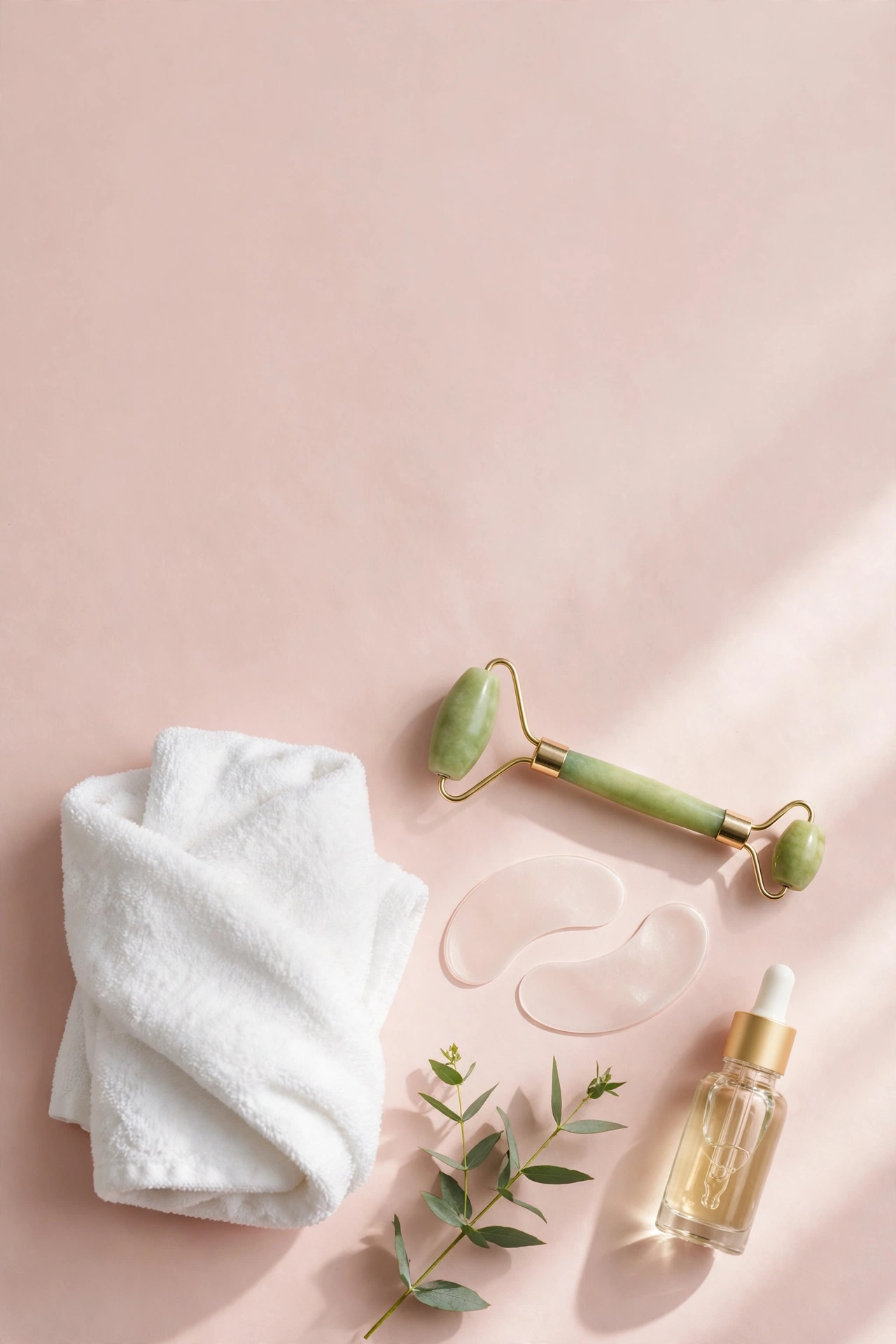
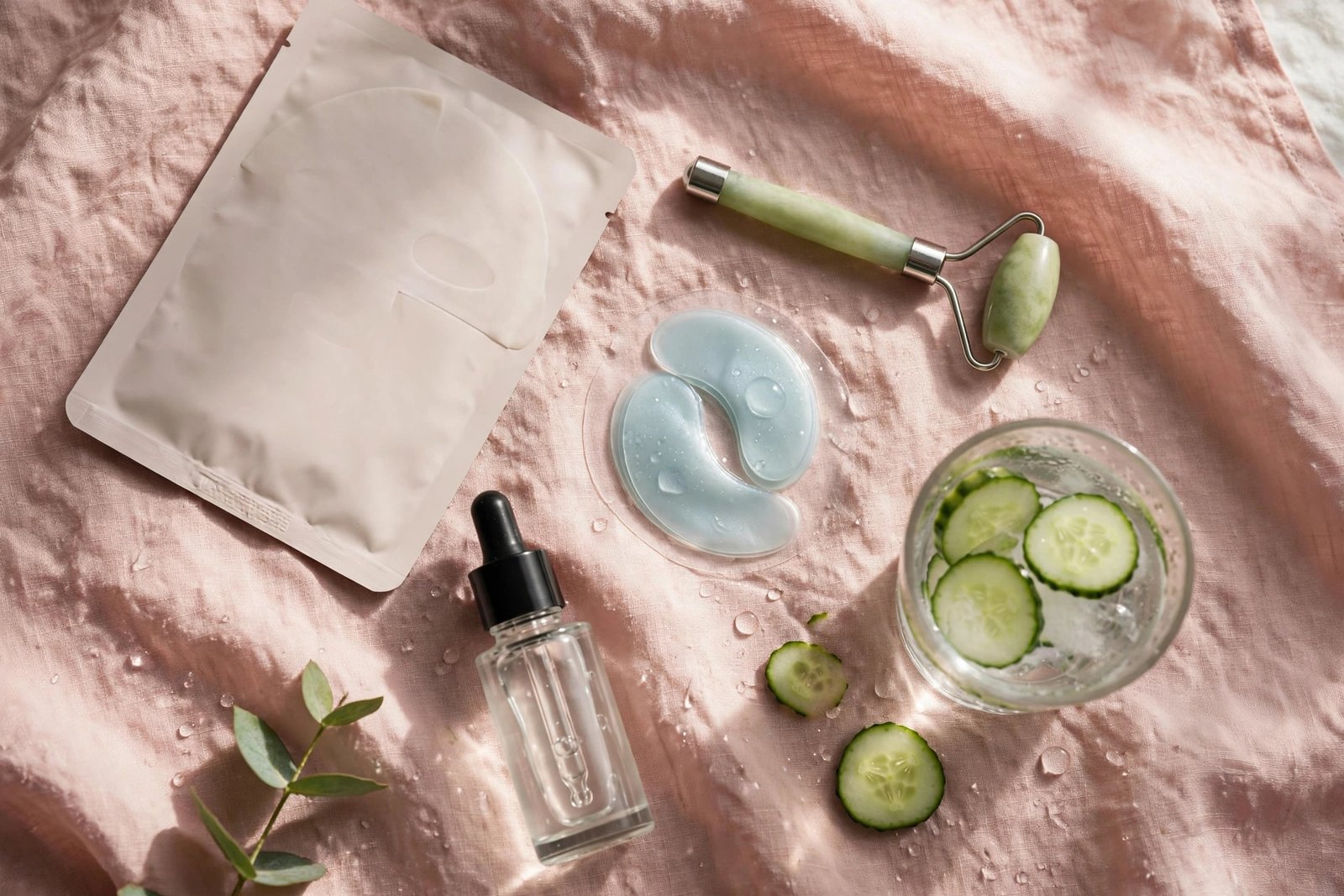
Next, depuff: cold constricts blood vessels and reduces swelling fast. A chilled roller, gua sha, cold spoons, or a cold-water splash all work. Spend three to five minutes rolling or pressing outward and downward along the lymphatic pathways: from the center of the face toward the ears, and down the neck. Focus extra time under the eyes and along the jawline, where fluid pools overnight. Caffeine-based eye products add a second depuffing mechanism — caffeine constricts blood vessels topically — and this breakdown of The Ordinary caffeine solution for dark circles explains how that ingredient works.
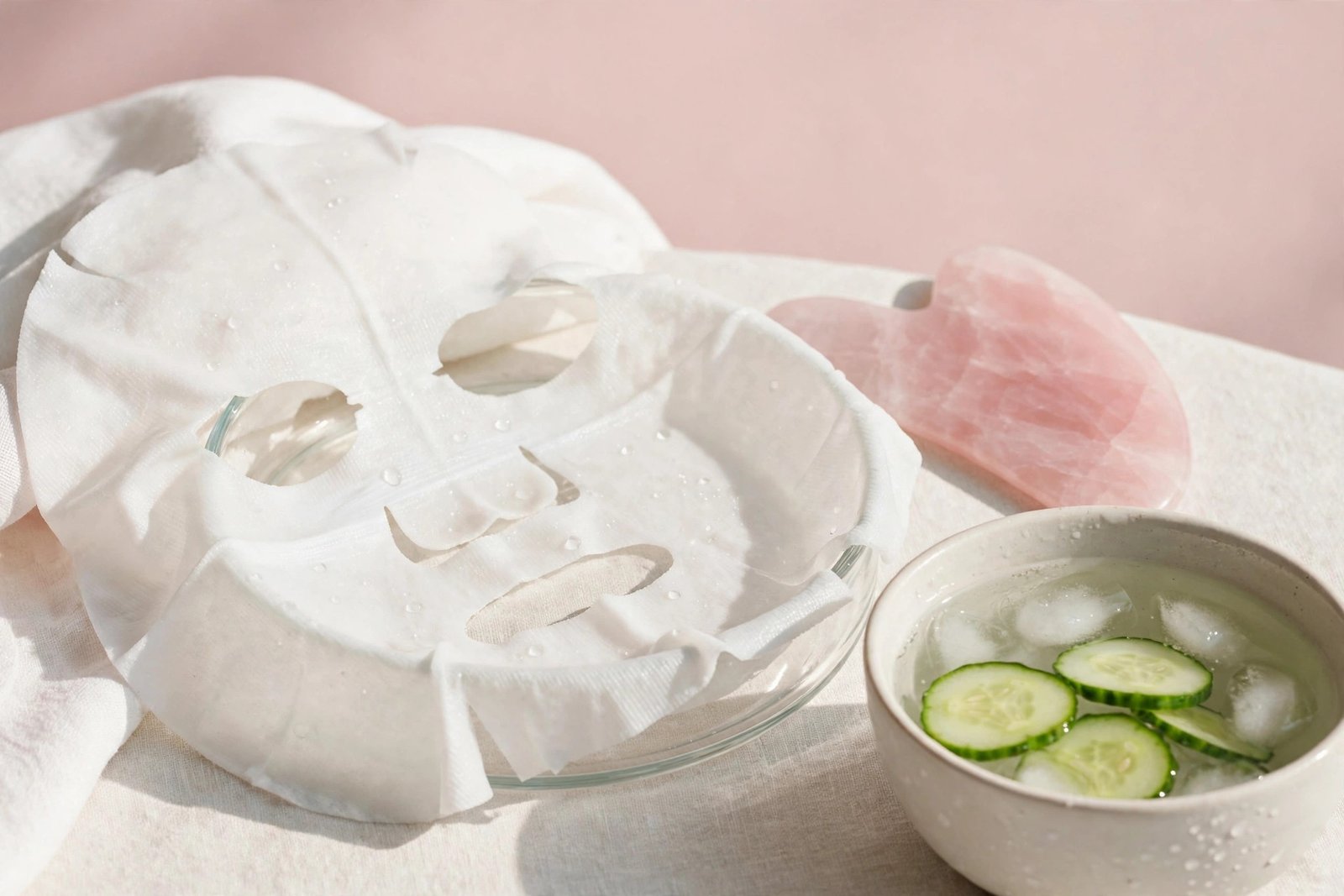
Now rehydrate — the core of the detox. Apply a hydrating toner or essence to damp skin, then a hyaluronic acid serum, then a sheet mask for ten to fifteen minutes. The sheet mask is the hero step: it delivers a concentrated dose of hydrating and soothing ingredients while the occlusive sheet prevents evaporation, forcing absorption. If you do not have sheet masks, layer your hydrating serum twice instead. After the mask, seal everything with your regular moisturizer — a ceramide-rich cream is ideal for supporting the barrier while it recovers.
Finish with SPF if heading outside — tired skin is more vulnerable to UV, and a lightweight hydrating sunscreen keeps recovery on track. For more on handling morning puffiness as a regular concern rather than an occasional one, see this guide on how to depuff your face in the morning.
What to Skip the Morning After
Knowing what not to do matters as much as the routine itself. Tired, dehydrated skin has a compromised barrier and lower tolerance — this is the wrong morning for aggressive treatments. Skip chemical exfoliants entirely: no glycolic acid, no salicylic acid, no exfoliating toners. They will sting, increase redness, and can trigger flaking on already-stressed skin. Skip retinoids too, including the night after — give your barrier at least 24 hours of comfort before reintroducing strong actives.
Skip harsh physical scrubs for the same reason. Skip new products you have never tried — a reactive morning is the worst time to test something unfamiliar. Skip very hot water, which worsens dehydration, and skip heavy, full-coverage makeup if you can; it tends to settle into dehydrated fine lines and emphasize the tiredness you are trying to hide. If you must wear makeup, a tinted moisturizer or skin tint over your well-hydrated base looks far fresher than full foundation.
Also skip “detoxing” clay masks or stripping treatments — your skin needs replenishment, not punishment, and clay masks worsen tightness on dehydrated skin.
Ingredients That Speed Recovery
Certain ingredients genuinely accelerate the bounce-back. Hyaluronic acid and glycerin are the hydration workhorses — they draw water into the skin and plump up the dehydrated look within minutes. Niacinamide supports barrier recovery while calming redness, making it one of the best morning-after ingredients. Centella asiatica (cica) and aloe vera soothe irritation and reduce the red, blotchy look that poor sleep brings.
Caffeine, as mentioned, constricts blood vessels and helps with puffiness and dark circles — it works in eye creams and in chilled tea bags pressed under the eyes in a pinch (green tea adds antioxidants too). Antioxidants like vitamin E help counter the oxidative stress that comes with poor sleep, though save strong vitamin C serums for a day when your barrier feels normal again, since they can sting compromised skin.
Ceramides deserve special mention: a ceramide-rich moisturizer rebuilds the lipid layer that late nights weaken. If skin still feels tight by evening, do a second hydration round or use an overnight sleeping mask. Sleeping on a clean silk pillowcase also helps: it reduces friction and absorbs less of your night products than cotton, covered in detail in this guide to silk pillowcase benefits for skin and hair.
Frequently Asked Questions
Will one night of sleeping in makeup ruin my skin?
One night causes short-term problems — clogged pores, dullness, often a breakout within 48 hours — but the real harm comes from making it a habit. If it happens, do a thorough double cleanse in the morning and do not compound it by skipping cleansing again.
What is the fastest way to depuff my face in the morning?
Cold plus lymphatic massage. Chill a roller, gua sha, or spoons, then massage outward and downward for three to five minutes. A cold rinse helps too. Caffeine eye products add a topical constricting effect. Most visible puffiness reduces significantly within ten minutes of cold treatment.
Should I exfoliate the morning after a late night?
No. Tired, dehydrated skin has a weakened barrier and exfoliants — chemical or physical — are likely to cause stinging, redness, and flaking. Wait until your skin feels calm and hydrated again, usually the next day, before resuming exfoliation.
Do sheet masks actually help, or are they just relaxing?
They genuinely help with dehydration. The sheet creates an occlusive barrier that prevents evaporation, forcing the hydrating serum into the skin more effectively than the same serum applied openly. For morning-after dehydration specifically, they are one of the fastest fixes available.
Can drinking water fix my tired skin?
It helps, but it is not a complete fix. Internal hydration supports overall skin function, and rehydrating after alcohol is important for how you feel. But the visible dullness and dehydration respond faster to topical hydration — serums, masks, and moisturizers applied directly to the skin.
A post-party skin detox is really a kindness routine: gentle cleansing, cold for puffiness, deep hydration, and patience with strong actives. Keep the midnight shortcut kit on your nightstand through the whole holiday season, and late nights become something your skin bounces back from by breakfast.
Love this? Pin it for later!