Winter Holiday Skincare Guide: Glow Through the Season
The holiday season is hard on skin. Cold air pulls moisture from your face the moment you step outside, indoor heating strips it further while you sleep, and late nights of parties, rich food, and skipped routines leave complexions looking dull and tired. If your summer glow has quietly disappeared by December, you are not imagining it — winter is genuinely one of the most demanding seasons for skin.
The good news is that a winter holiday skincare routine does not require a total overhaul or a shelf of expensive new products. It mostly requires a few smart adjustments: a gentler cleanser, a richer moisturizer, smarter layering, and the discipline to keep using SPF even when the sun feels weak. Small changes, layered consistently, protect your skin barrier and keep your glow through the coldest months.
This guide covers everything you need: how cold weather actually affects your skin, exactly how to adjust each step of your routine, how to handle indoor heating, which weekly treatments earn their place, and how to recover when the party season catches up with you. Consider this your season-long reference for holiday skin health.
Key Takeaways
- Cold air holds less moisture, so skin loses water faster in winter — richer creams and hydrating layers counteract this.
- Indoor heating is often more drying than outdoor cold; a humidifier near your bed makes a measurable difference.
- Swap foaming or gel cleansers for cream or milky formulas to stop stripping your skin barrier.
- Layer hydration (hydrating serum under a cream or oil) instead of relying on a single heavy product.
- Keep using SPF daily — winter UV and snow glare still cause damage and pigmentation.
- Cut back on strong exfoliants and actives if your barrier shows stress signs like stinging or flaking.
- Weekly sheet masks, overnight masks, and gentle exfoliation treatments keep skin resilient all season.
How Cold Weather Affects Your Skin
Understanding why winter is rough on skin makes every routine adjustment feel logical instead of random. The core problem is moisture loss. Cold air simply holds less water vapor than warm air, so the air around your face in December is genuinely drier than in July. That dry air pulls water out of your skin through a process called transepidermal water loss, and the effect is strongest on the parts of your body left exposed: your face, neck, and hands.
Your skin barrier — the outermost layer of lipids that keeps moisture in and irritants out — takes a beating in this environment. When the barrier weakens, skin feels tight after cleansing, makeup sits on top instead of blending, fine lines look more visible, and the skin may sting when you apply products that never bothered you before. Many people mistake this barrier stress for a new sensitivity or allergy, but it is usually just seasonal dryness weakening the barrier’s defenses.
Wind adds mechanical stress on top of everything else. Cold wind disrupts the lipid layer directly, which is why a single long walk on a blustery day can leave cheeks red, raw, and chapped. Central heating and hot showers compound the damage: hot water melts the skin’s natural oils, and heated indoor air with very low humidity keeps drawing moisture from skin all evening and night. This is why winter dryness often feels worst first thing in the morning, after hours in heated air.
Different skin types respond differently. Dry and sensitive skin types feel the change first and hardest, often needing the biggest routine adjustments. Oily skin sometimes improves slightly because lower humidity reduces surface oil, but over-cleansing “to be safe” can push oily skin into dehydration, where the skin overproduces oil to compensate. Combination skin may need zone treatment: a richer cream on cheeks and a lighter formula on the T-zone. If you want a deeper dive into repairing winter damage specifically, this winter skin barrier repair routine walks through the full recovery protocol.
Adjusting Your Cleanser for Winter
Cleanser is the first place to adjust because it sets the tone for everything that follows. Foaming cleansers and gel cleansers that felt refreshing in summer can leave winter skin squeaky, tight, and stripped. That tight feeling is not cleanliness — it is your barrier crying out. Switch to a cream, milky, or balm cleanser for the winter months. These formulas dissolve sunscreen, makeup, and daily grime without disrupting the lipid layer, and they often leave a light conditioning film that actually helps the next steps absorb better.
If you double cleanse in the evening, keep the oil or balm first step — it is perfect for winter — but make your second cleanser gentler than your summer one. A low-pH cream cleanser or a hydrating gel cleanser with glycerin works well. In the morning, many people with dry or sensitive skin do better skipping a full cleanse and rinsing with lukewarm water instead. Your skin does not accumulate much overnight beyond a little sebum and product residue, and a water rinse preserves the barrier for the day ahead. Oily skin types can still cleanse in the morning, but a gentle formula is the safer bet.
Water temperature matters more than most people realize. Hot water feels wonderful on a freezing morning, but it strips natural oils far faster than lukewarm water. Keep face washing to comfortably warm — never hot — water, and keep showers shorter than you might like. If your skin feels tight within a minute of cleansing, that is feedback: your cleanser or water temperature is too harsh for the season. For a full breakdown of the evening double-cleanse method, see this guide on how to double cleanse.
Exfoliation: Less Is More in Winter
Exfoliation is where winter routines most often go wrong. Summer skin tolerates acids and scrubs well because the barrier is well-hydrated and resilient. Winter skin, already moisture-compromised, can tip into irritation with the same routine. That does not mean stopping exfoliation entirely — dead skin buildup is exactly what makes winter skin look dull and makes foundation look patchy — but it does mean dialing back frequency and strength.
If you use chemical exfoliants like glycolic or salicylic acid, drop from daily or every-other-day use to once or twice a week. Consider switching to gentler options: lactic acid and mandelic acid exfoliate effectively with less irritation, and polyhydroxy acids (PHAs) are the mildest chemical exfoliants available, suitable for even sensitive winter skin. Enzyme exfoliants from papaya or pumpkin are another gentle route. Physical scrubs with rough particles are risky in winter — the barrier is already fragile, and mechanical abrasion can create micro-tears that worsen dryness.
Watch for the warning signs of over-exfoliation: stinging when applying normal products, persistent redness, flaking that does not resolve with moisturizer, or a shiny, almost plastic look to the skin. If any of these appear, pause all exfoliants for a week and focus on barrier repair with ceramides and a simple moisturizer. When you resume, start at half your previous frequency. A helpful reference for calibrating your schedule is this guide on how often to exfoliate your face.
Moisturizer and Hydration Layering
Moisturizer is the single most impactful swap you can make for winter. Lightweight gel moisturizers that worked in humid months often cannot hold up against dry winter air. Look for cream or balm textures with barrier-supporting ingredients: ceramides, cholesterol, and fatty acids rebuild the lipid layer, while squalane and shea butter seal moisture in. Niacinamide is a strong winter ingredient because it supports barrier function while also helping with the dullness and uneven tone that cold weather brings.
But the real winter secret is not a heavier cream alone — it is layering. Hydration layering means applying water-attracting ingredients first, then sealing them in. The classic method: apply a hydrating serum with hyaluronic acid or glycerin to slightly damp skin, then layer your moisturizer on top, and optionally finish with a few drops of facial oil or an occlusive balm on the driest areas. Each layer has a job, and together they hold moisture far better than any single product. This technique is sometimes called the “sandwich method,” and it is especially effective before makeup — which is why it features heavily in this winter makeup prep skincare routine.
Hyaluronic acid deserves a special note because it behaves differently in dry environments. It draws water from wherever it can find it — ideally from your damp skin and humid air, but in very dry heated rooms it can theoretically pull water from deeper skin layers if applied to dry skin with nothing on top. The fix is simple: always apply it to damp skin and always seal it with moisturizer. Used correctly, it is one of winter’s best ingredients. This detailed guide explains how to use hyaluronic acid serum correctly.
Do not neglect the areas beyond your face. Hands crack, the neck shows dryness early, and lips chap relentlessly. Keep a rich hand cream where you will actually use it — by the sink, in your bag — and give your neck the same serums and moisturizer your face gets. Lips need their own strategy entirely, covered in this guide to dry lip remedies for winter.
Don’t Skip SPF in Winter
Sunscreen might feel pointless when the sky is gray and the sun sets at five, but winter UV exposure is real and sneaky. Up to 80 percent of UV rays penetrate cloud cover, and UVA rays — the ones responsible for premature aging and pigmentation — stay fairly constant year-round. If you ski or spend time in snow, the risk multiplies: snow reflects up to 80 percent of UV rays, effectively dosing your face twice, including from below. Winter sunburns on the slopes are a classic surprise.
The practical move is to keep your morning SPF habit exactly as it is in summer. If your summer sunscreen feels too heavy or pills under winter layers, switch to a more hydrating formula — many moisturizers with SPF 30 work well in winter, and Korean and Japanese sunscreens are famous for elegant, moisturizing textures. Apply the standard amount (about two finger-lengths for the face) and do not forget ears, neck, and the backs of hands.
Winter is also prime season for treating dark spots and pigmentation, precisely because UV exposure is lower. If you use vitamin C, niacinamide, or other brightening ingredients, they work more effectively when you are not fighting constant new sun damage — as long as you maintain daily SPF to protect the progress. Just introduce brightening actives carefully if your barrier is already stressed, and never layer strong actives on irritated skin.
Handling Indoor Heating and Dry Air
Here is an uncomfortable truth: the eight hours you spend in heated indoor air often dry your skin more than the thirty minutes you spend in the cold. Forced-air heating and radiators drop indoor humidity to desert levels, sometimes below 20 percent. Your skin spends all night in that environment, which is why winter mornings so often start with tight, flaky, creased skin.
The single best investment is a humidifier in your bedroom. Raising bedroom humidity to 40–60 percent gives your skin a recovery window every night, and many people notice a difference within a few days: less morning tightness, fewer dry patches, better makeup application the next day. Clean the humidifier regularly according to its instructions — a dirty humidifier can spread irritants.
Smaller habits help too. Keep showers warm rather than hot and under ten minutes when you can. Apply body moisturizer within a few minutes of toweling off, while skin is still slightly damp, to trap that water. Drink water normally — hydration helps overall health, though it will not single-handedly fix dry skin — and consider that very long, very hot baths, however comforting, are among the most drying things you can do to your skin in winter. If you travel during the holidays, dry airplane cabins and unfamiliar hotel heating create the same problem on the road; this holiday travel skincare essentials guide covers how to pack and adapt.
Weekly Treatments Worth Your Time
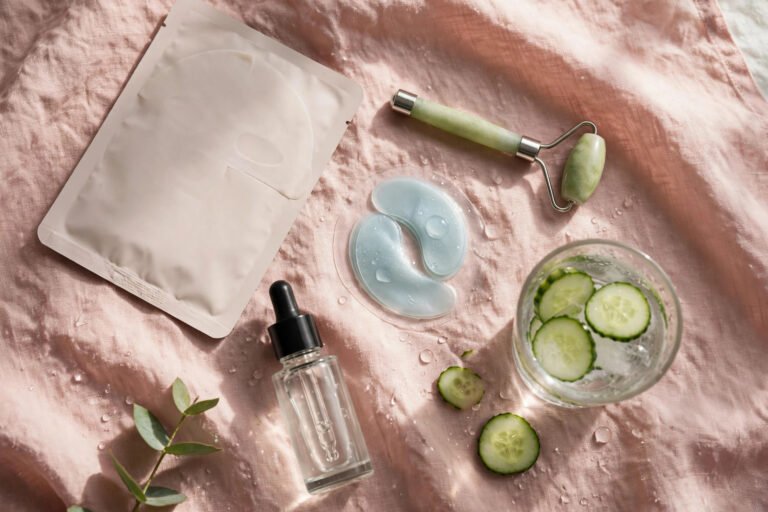
A solid daily routine handles maintenance, but weekly treatments are what keep winter skin genuinely glowing rather than merely surviving. The highest-value weekly step is a hydrating mask — sheet masks, cream masks, or overnight sleeping masks. Use one to three times a week depending on how dry your skin feels. Sheet masks deliver a concentrated dose of hydrating ingredients, while overnight masks seal everything in while you sleep, which pairs beautifully with a bedroom humidifier.
Gentle exfoliating treatments once a week keep dullness at bay without the risks of daily acids. A mild enzyme mask or a low-strength lactic acid treatment smooths flaky buildup so your moisturizer and makeup perform better. Follow every exfoliating treatment with deep hydration — never exfoliate and leave skin bare.
Do not forget the extras that support the whole system. A weekly lip scrub and overnight lip treatment prevent the cracked-lip cycle before it starts. An eye cream or eye mask helps with the crepey, tired look that dry air gives the under-eye area. And a rich hand mask or simply sleeping in cotton gloves over hand cream once a week rescues cracked knuckles. These small rituals add up, and they make the holiday season feel like self-care rather than damage control.
Surviving Party Season: Late Nights and Recovery
The holidays bring late nights, and late nights show on skin fast: puffiness, dark circles, dullness, and dehydration. Alcohol is a diuretic that depletes the body’s water, salty party food causes fluid retention and puffiness, and short sleep disrupts the skin’s overnight repair cycle. You do not need to skip the parties — you need a recovery plan.
The non-negotiable rule: never sleep in your makeup, no matter how late it is. Even a quick micellar water wipe-down followed by moisturizer is vastly better than nothing. Keep makeup remover wipes or micellar water and a simple moisturizer on your nightstand for the nights when the full routine is not happening. Future-you will be grateful.
For the morning after, a structured recovery routine works wonders: double cleanse to remove the night’s buildup, use cold tools or chilled spoons to depuff, then rehydrate aggressively with a sheet mask or hyaluronic acid serum layered under moisturizer. Skip strong actives and exfoliants the morning after — tired, dehydrated skin needs comfort, not challenge. The full protocol lives in this post-party skin detox routine, which walks through every step from midnight shortcuts to morning recovery.
Frequently Asked Questions
Should I change my whole skincare routine for winter?
Not the whole routine — just strategic swaps. Change your cleanser to a gentler formula, upgrade to a richer moisturizer, add a hydrating serum layer, reduce exfoliation frequency, and keep your SPF. Your core routine structure (cleanse, treat, moisturize, protect) stays the same; the textures and intensity adjust to the season.
Why does my skin get oily and dry at the same time in winter?
This is dehydrated skin, not a skin-type change. Cold air and heating pull water from your skin while your oil glands keep producing sebum, so the surface feels both tight and shiny. The fix is adding water-based hydration (serums, essences) rather than stripping oil away — harsh cleansing makes dehydration worse.
Is a humidifier really worth it for skin?
Yes — it is one of the highest-impact, lowest-effort winter skincare moves. Raising bedroom humidity to 40–60 percent reduces overnight moisture loss significantly. Most people notice less morning tightness and flaking within the first week of consistent use.
Can I still use retinol in winter?
Yes, but with adjustments. If your barrier is stressed, reduce frequency or switch to a gentler retinoid or lower strength. Always buffer with moisturizer (apply moisturizer first, then retinol, or mix), and never combine retinol with exfoliating acids on the same night in winter unless your skin tolerates it well.
Do I need different products for day and night in winter?
It helps. Daytime calls for lighter layers that sit well under makeup plus SPF; nighttime is when you can use richer creams, facial oils, and overnight masks without worrying about pilling or shine. If you buy one winter upgrade, make it a richer night cream — overnight is when barrier repair happens.
How do I stop my foundation from looking flaky in winter?
Flaky foundation is almost always a skincare problem, not a makeup problem. Gentle exfoliation once a week, hydration layering before makeup, waiting a few minutes between skincare steps, and a hydrating primer solve most cases. Heavy matte foundations tend to emphasize flakes — switch to a hydrating or dewy formula for the season.
A winter holiday skincare routine is not about perfection or a twelve-step ritual — it is about protecting your barrier, layering hydration intelligently, and giving your skin recovery support during the hardest season of the year. Start with the cleanser and moisturizer swaps, add a humidifier, keep your SPF habit, and build in one or two weekly treatments. Your skin will carry its glow straight through to spring.
Love this? Pin it for later!