Holiday Travel Skincare Essentials: What to Pack
Holiday travel and good skin are natural enemies. Airplane cabins have humidity levels drier than most deserts, hotel heating blasts all night, new climates shock your skin, and your carefully organized ten-step routine does not fit in a quart-sized bag. The result, too often, is arriving at the family gathering with dull, tight, breakout-prone skin.
The solution is bringing the right things in the right sizes, with a simplified routine designed for travel. A smart travel kit covers cleansing, hydration, barrier protection, and sun protection in TSA-friendly formats, plus a few in-flight and climate-change strategies that prevent most travel skin problems before they start.
This guide covers exactly what to pack, how to decant without contamination, how to simplify your routine for trips, and how to handle the specific challenges of flights and climate changes. Pack smart once and your skin will survive every holiday trip intact.
Key Takeaways
- Simplify to 4–5 steps for travel: cleanser, hydrating serum, moisturizer, SPF, plus one treatment.
- Every liquid in your carry-on must be 3.4 oz (100 ml) or less in a single quart-sized bag — decant everything else.
- Decant into clean, airtight containers and label everything; never share or double-dip on the road.
- In-flight hydration means layering before boarding and a sheet mask or facial mist mid-flight.
- Research your destination’s climate: cold-dry needs richer products, warm-humid needs lighter ones.
- Keep your routine consistent for the first 48 hours in a new climate before adjusting.
- Checked bags get lost — always keep skincare essentials in your carry-on.
The Simplified Travel Routine
The biggest packing mistake is trying to bring the full home routine. Travel is the time to strip down to essentials that cover every skin need with minimum products. A five-step travel routine handles nearly everything: a gentle cleanser, a hydrating serum, a moisturizer, SPF for daytime, and one multitasking treatment (like a gentle exfoliant or a calming serum) for the specific issues travel causes.
Choose multitaskers deliberately. A cream cleanser that removes makeup means skipping a separate makeup remover. A moisturizer with niacinamide covers both hydration and barrier support. A tinted SPF combines sun protection with light coverage for daytime outings. Every product that does two jobs is one fewer bottle in the bag.
Keep your actives minimal on the road. Travel already stresses skin with dry air, schedule disruption, and new water; adding strong retinoids or acids on top invites irritation. If you use prescription or strong actives at home, consider pausing the most aggressive ones during short trips, or at minimum reducing frequency. Your skin will not regress in a week — but it can easily get irritated, and irritated skin photographs badly at family gatherings. For the full at-home routine to return to after the trip, the winter holiday skincare guide has the complete seasonal framework.
TSA Rules and Decanting Done Right
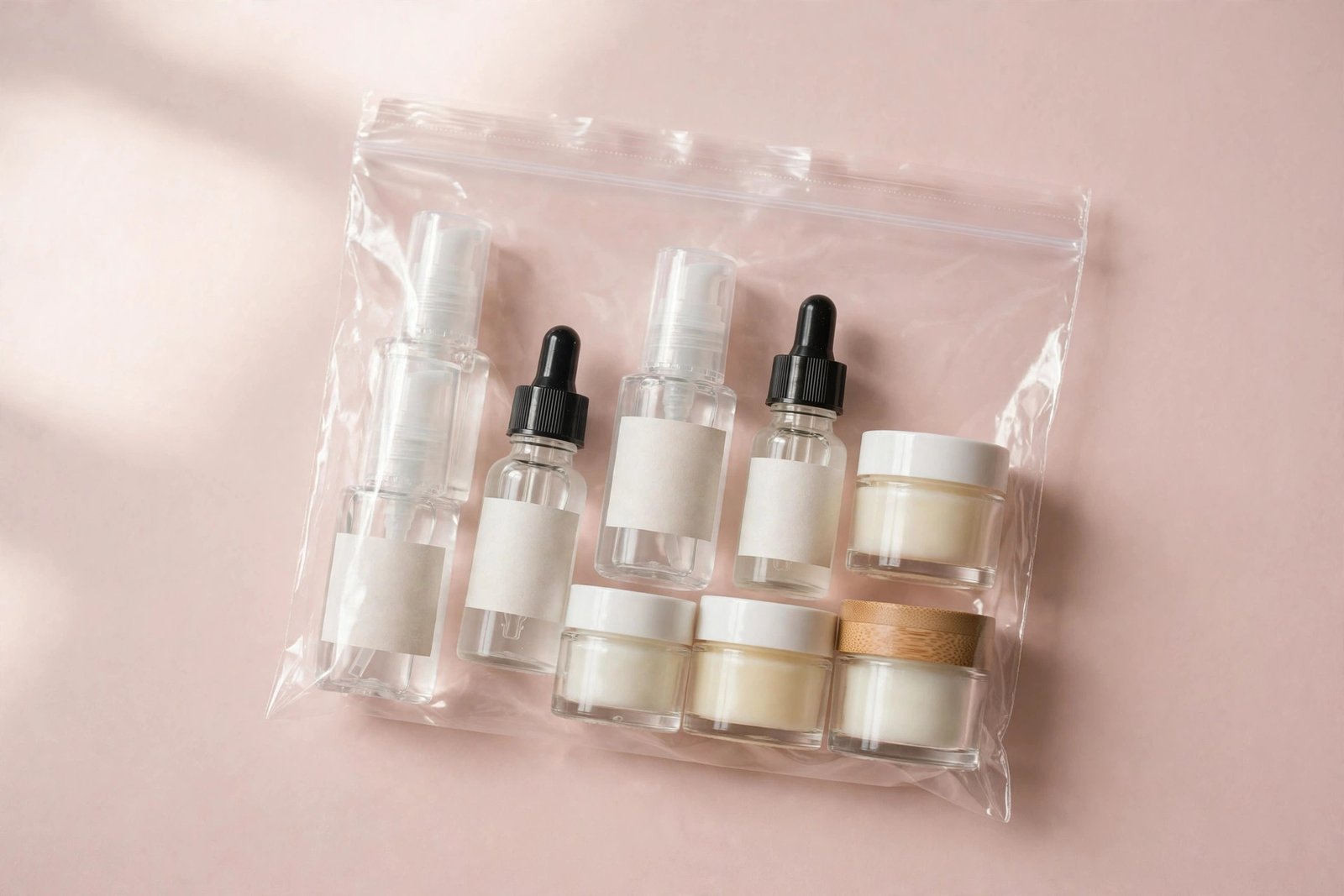
The TSA liquid rule is non-negotiable for carry-ons: each container must be 3.4 ounces (100 ml) or smaller, all containers must fit in one clear quart-sized zip-top bag, and each passenger gets one bag. This covers all gels, creams, lotions, and pastes — which is essentially all of skincare. Solid formats bypass the rule entirely: bar cleansers, solid moisturizers, and sunscreen sticks do not count as liquids, making them excellent travel choices.
Decanting — transferring products into smaller travel containers — is how most people handle the size limit, and doing it hygienically matters. Buy small airtight containers (15–30 ml jars and bottles are plenty for a week) and sanitize them before filling: wash with hot soapy water, rinse well, and let them air-dry completely. Use a clean spatula or pump to transfer product rather than fingers, and label every container with the product name and whether it is AM or PM. Unlabeled mystery jars lead to using the wrong product at the wrong time.
Decant only what you need plus a small buffer — a week’s worth, not a month’s. Air exposure degrades active ingredients, so decanted products have a shorter effective life; use them up on the trip rather than saving leftovers for months. And never decant prescription products into unmarked containers if there is any chance of confusion with non-prescription ones. When in doubt, bring the original packaging for anything medicated.
In-Flight Skin Survival
A long flight is one of the most dehydrating experiences your skin will face. Cabin humidity typically sits between 10 and 20 percent — drier than the Sahara — for hours at a time. The strategy is to board with skin already protected and maintain hydration during the flight, rather than trying to rescue severely dehydrated skin after landing.
Before boarding, do a full hydrating routine: cleanse, hydrating serum on damp skin, a rich moisturizer, and a facial oil or occlusive balm as the final seal. This layered barrier slows moisture loss dramatically during the flight. Skip makeup for the flight if you can — foundation over dehydrated skin looks worse after four hours, and bare skin absorbs hydrating products better.
Mid-flight, a sheet mask is the single best move — fifteen minutes of occlusive hydration makes a visible difference on landing. If sheet masks feel too conspicuous, a facial mist followed by patting in a little extra moisturizer every couple of hours works too. Drink water steadily — cabin dehydration affects your whole body, not just skin. Avoid alcohol on the plane if skin condition matters for the trip — it compounds dehydration significantly. And do not touch your face: airplane surfaces carry bacteria, and tired travelers touch their faces constantly without realizing it.
Adapting to Climate Changes
Holiday travel often means a climate switch — flying from a humid city to dry mountain air, or from cold weather to a warm destination. Skin needs 48 to 72 hours to adjust its oil and water balance to a new environment, so the rule is: keep your routine stable for the first two days, observe, then adjust only if needed. Changing everything on arrival day usually causes more problems than the climate itself.
Going somewhere colder and drier than home is the most common holiday scenario. Pack your richest moisturizer and a facial oil even if you would not use them at home — you will likely need them by day two. A humidifier request at the hotel is worth making; many hotels provide them on request. Going somewhere warmer and more humid calls for the opposite: lighter layers, a gel moisturizer option, and blotting papers for midday shine. If you are oily-skinned heading into humidity, this guide on how to control oily skin throughout the day has tactics that travel well.
New water is an underrated factor. Different cities have different water hardness, and very hard or heavily chlorinated water can irritate sensitive skin or trigger breakouts. If skin reacts badly in the first day or two, try rinsing with bottled or micellar water for a day to test whether tap water is the issue.
Packing List: The Essentials
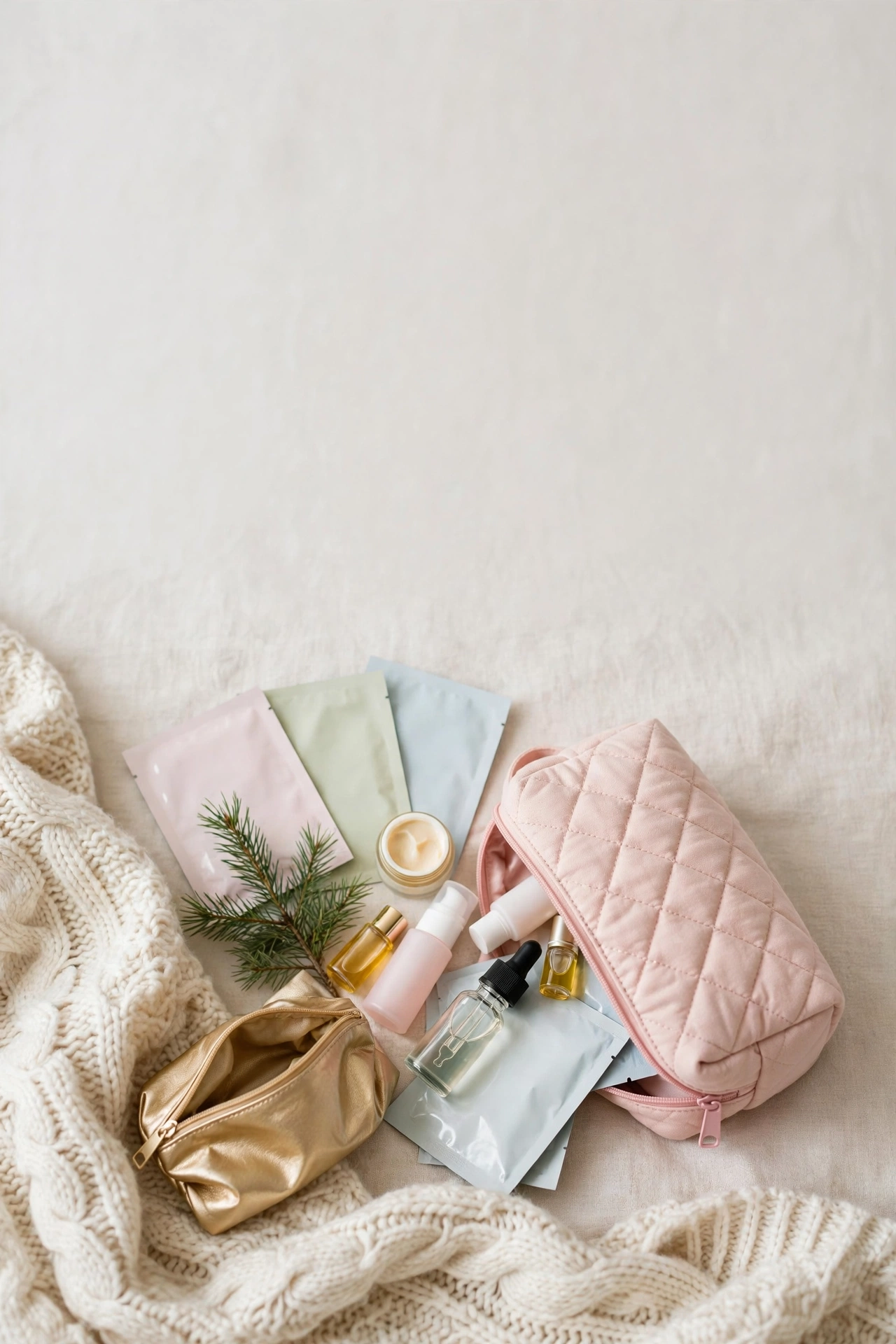
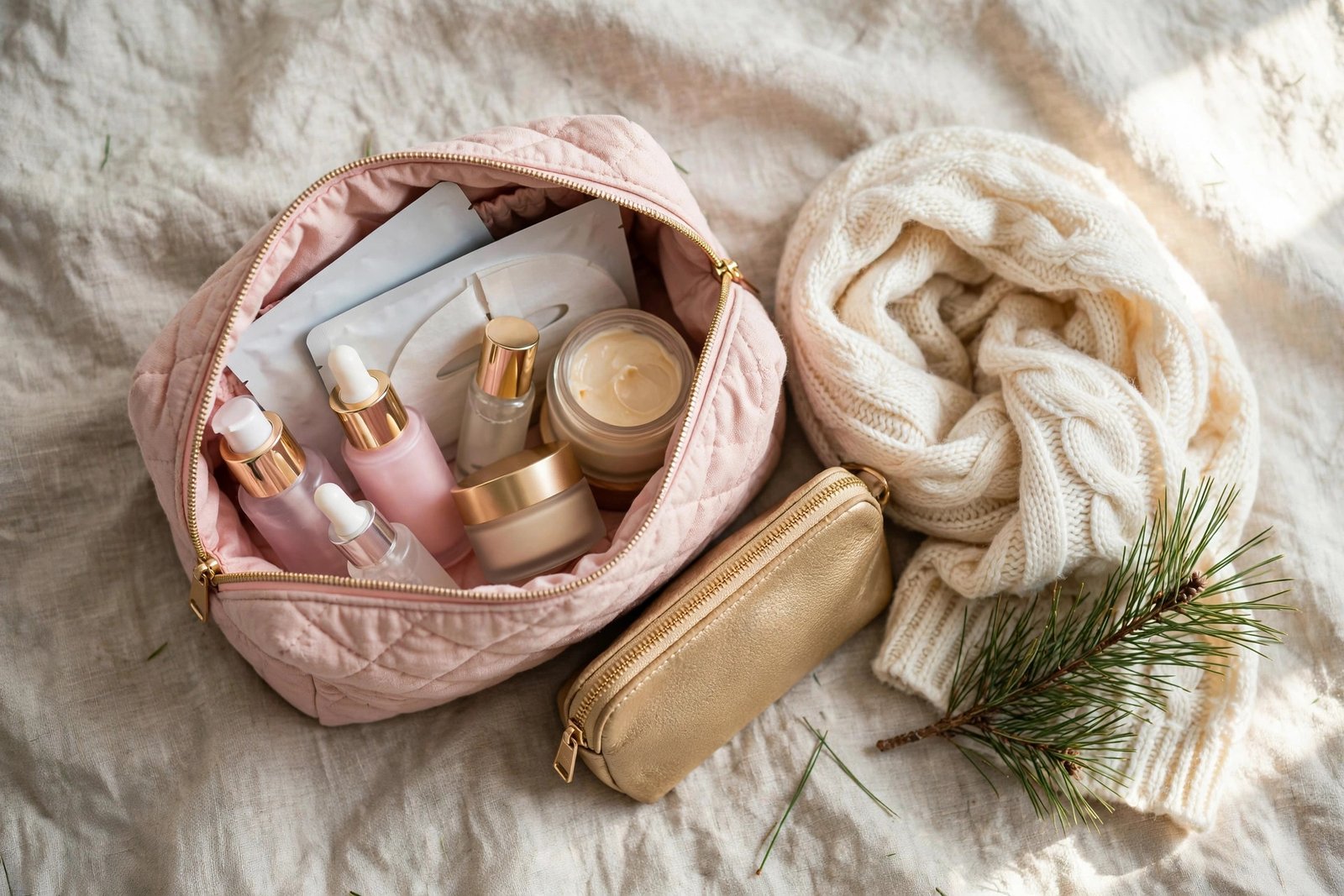
Here is the concrete packing list for a week-long holiday trip, carry-on friendly. Cleanser: one gentle cream or balm cleanser in a travel tube, plus a few individually wrapped makeup remover wipes as backup. Hydration: one hydrating serum (hyaluronic acid or glycerin-based) in a 30 ml bottle — serums are potent, so a little goes far. Moisturizer: one rich cream in a 30–50 ml jar, chosen for your destination’s climate. SPF: one hydrating sunscreen, 50 ml or less. Treatment: one multitasker — a gentle exfoliating toner used twice during the trip, or a calming serum if your skin is reactive.
The extras that earn their bag space: three to four sheet masks (flat, light, and the best in-flight and post-flight rescue available), a lip balm with SPF, hand cream (travel wrecks hands too), and a small facial mist for flights and dry hotel rooms. For serums specifically, a well-chosen hydrating formula does heavy lifting in a tiny bottle — this roundup of best hydrating serums for dry skin helps you pick one worth the bag space.
Pack all of it in your carry-on, not your checked bag. Lost luggage is common during holiday travel chaos, and replacing a full skincare routine at your destination is expensive and stressful. The quart bag of essentials plus sheet masks in your personal item means your skin routine survives even if your suitcase does not. If you are building your travel routine from scratch, this skincare routine for beginners is a good template to simplify from.
Frequently Asked Questions
Can I bring full-size skincare products in my checked bag?
Yes — the 3.4 oz limit applies only to carry-ons. Full sizes are fine in checked luggage. But keep at least a minimal routine (cleanser, moisturizer, SPF) in your carry-on in case your checked bag is delayed or lost, which happens often during holiday travel.
How do I keep my skincare routine on a short trip?
Simplify to the essentials: cleanser, hydrating serum, moisturizer, SPF. Drop extra treatments and strong actives for trips under a week. Your skin maintains its condition fine on a simplified routine for a few days; consistency with the basics beats a complicated routine you abandon.
Will airplane air really damage my skin?
One flight will not cause lasting damage, but cabin air (10–20 percent humidity) severely dehydrates skin temporarily, leading to tightness, dullness, and sometimes breakouts a day or two later. Layering hydrating products before boarding and using a sheet mask mid-flight prevents most of it.
Should I change products for a different climate?
Wait 48 hours before changing anything — skin needs time to adjust, and immediate overhauls often backfire. Then adjust only what the climate demands: richer products for cold-dry destinations, lighter layers for warm-humid ones. Bring options for both if you are unsure.
Are solid skincare products good for travel?
Excellent. Cleansing bars, solid moisturizers, and sunscreen sticks bypass TSA liquid limits entirely, cannot leak in your bag, and last a long time. They are the most packing-efficient format available and worth considering for frequent travelers.
Holiday travel does not have to mean a week of bad skin. Simplify the routine, decant smartly, protect aggressively during flights, and give your skin two days to adjust to each new climate. Pack the essentials in your carry-on and you will arrive — and photograph — like yourself.
Love this? Pin it for later!