How to Depuff Your Face in the Morning: 10 Fast Methods That Work
You wake up, glance in the mirror, and barely recognize yourself — puffy eyelids, a swollen-looking jawline, cheeks that feel full. Morning facial puffiness is one of the most common beauty complaints, and it happens to almost everyone at some point.
The good news: a puffy face in the morning is almost always temporary, and there are plenty of fast, effective ways to bring down the swelling before you head out the door. Most methods take five to ten minutes, and many use things you already have at home.
This guide covers why your face puffs up overnight, the fastest depuffing methods ranked by speed, and the lifestyle habits that prevent puffiness from happening in the first place. For a broader look at looking polished with minimal effort, see our complete beauty tips for beginners guide.
Why Your Face Puffs Up Overnight
Before fixing puffiness, it helps to understand what’s causing it. Morning facial swelling is usually the result of fluid pooling in the tissues of your face while you sleep.
Fluid Retention During Sleep
When you lie flat for seven or eight hours, gravity stops pulling fluid downward the way it does when you’re upright. Lymphatic fluid — the clear fluid that carries waste products through your body — moves more slowly at night, and some of it settles in the soft tissues of your face, especially around the eyes where the skin is thinnest.
This is completely normal. Your lymphatic system doesn’t have its own pump (unlike blood, which the heart circulates), so it relies on muscle movement to keep flowing. Since you’re still all night, drainage slows down.
Common Triggers That Make It Worse
Some factors make morning puffiness more noticeable:
- Salty food the night before. Sodium causes your body to hold onto water, and the effects show up on your face by morning. That late-night ramen or salty snack is a classic culprit.
- Alcohol. Alcohol dehydrates you, which paradoxically causes your body to retain water. It also disrupts sleep quality, making puffiness worse.
- Sleeping position. Sleeping face-down or on your side presses one side of your face into the pillow, restricting drainage on that side. Back-sleepers tend to have less uneven puffiness.
- Allergies or sinus congestion. If your sinuses are inflamed, the surrounding tissue swells. Seasonal allergies are a major cause of persistent morning puffiness.
- Not drinking enough water. Dehydration signals your body to conserve water, leading to retention.
- Crying before bed. Tears are salty, and the fluid accumulates around the eyes.
- Hormonal fluctuations. Many people notice more puffiness during certain phases of their menstrual cycle.
If puffiness is sudden, severe, only on one side, or accompanied by pain, redness, or vision changes, see a doctor — those can be signs of something that needs medical attention. But garden-variety morning puffiness is a cosmetic issue with simple fixes.
Cold Methods: The Fastest Way to Depuff
Cold is the single fastest depuffing tool you have. Low temperatures constrict blood vessels, which reduces swelling and fluid buildup almost immediately. If you only have three minutes, use cold.
1. Cold Water Splash
The simplest method: splash your face with cold water 10–15 times, or fill a bowl with cold water and ice cubes and dunk your face for 10–15 seconds at a time. The shock of cold triggers vasoconstriction — blood vessels tighten, pushing excess fluid out of the tissues.
This won’t give you a sculpted jawline, but it noticeably reduces overall puffiness in under two minutes.
2. Ice Roller or Cold Spoon
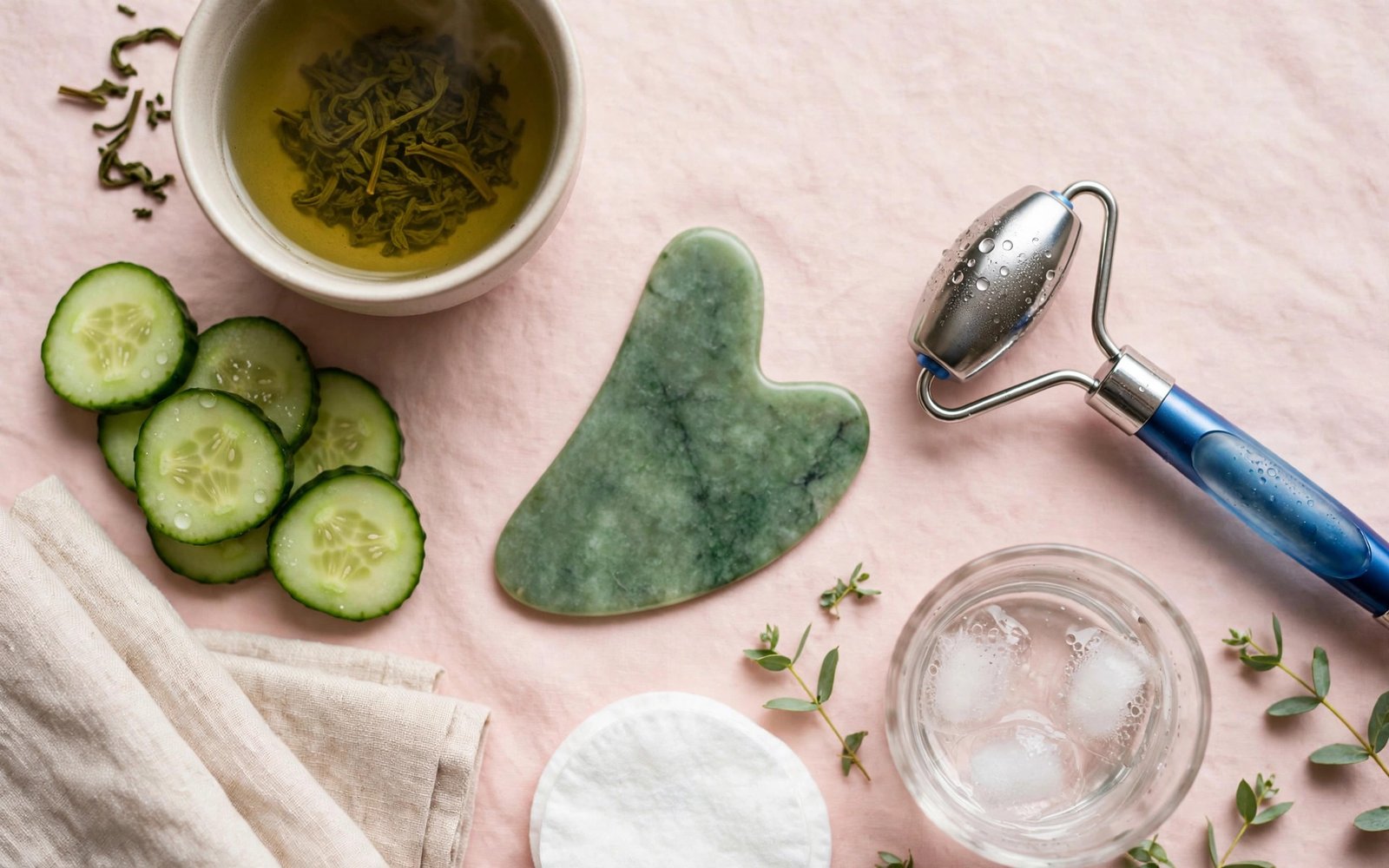
Keep a jade roller, stainless steel roller, or even two metal spoons in the fridge or freezer. In the morning, roll the cold tool upward and outward across your face — from the center of your forehead outward, from nose to ears across the cheeks, and from chin along the jawline.
The combination of cold + the rolling motion is more effective than cold alone because you’re also manually encouraging lymphatic drainage. Spend about two minutes on this.
Tip: Don’t press hard. The lymphatic vessels sit just under the skin, so light pressure is actually more effective than digging in.
3. Cold Compress or Chilled Eye Patches
For puffy eyes specifically, cold compresses are hard to beat. Options include:
- A damp washcloth run under cold water and wrung out
- Chilled gel eye masks (keep one in the fridge)
- Slices of cold cucumber (the classic — they conform to the eye area and stay cool)
- Used green tea bags, chilled (the caffeine may help constrict blood vessels further)
Leave any of these on for 5–10 minutes while you do something else — brush your teeth, pick out clothes, make coffee.
4. Ice Cubes in a Soft Cloth
Wrap a few ice cubes in a thin cotton cloth or muslin and glide it over puffy areas. This is more intense than a cold compress, so keep it moving — don’t hold ice directly on one spot for more than a few seconds, and never apply ice directly to skin without a barrier.
This method works fast but isn’t the most comfortable. Save it for mornings when you really need dramatic results.
Massage Techniques for Lymphatic Drainage
Your lymphatic system needs movement to drain fluid. A quick facial massage manually does what your muscles weren’t doing overnight. You don’t need any special training — just follow the direction of lymph flow: always toward the ears and down the neck.
5. The 2-Minute Finger Massage
Using your fingertips (with a little facial oil or moisturizer to prevent tugging), follow this sequence:
- Forehead: Place fingertips at the center of your forehead and sweep outward toward your temples. Repeat 5 times.
- Under eyes: Using your ring fingers (they naturally apply the least pressure), gently sweep from the inner corner of each eye outward toward the temples. Repeat 5 times.
- Cheeks: Place fingers beside your nose and sweep outward and slightly upward toward your ears. Repeat 5 times.
- Jawline: Starting at your chin, sweep along the jawline toward your ears. Repeat 5 times.
- Neck: Sweep downward from behind your ears to your collarbones. This is the critical final step — it directs all that mobilized fluid into the lymph nodes where it can drain. Repeat 5–10 times.
The whole sequence takes about two minutes and makes a visible difference, especially around the eyes and jawline.
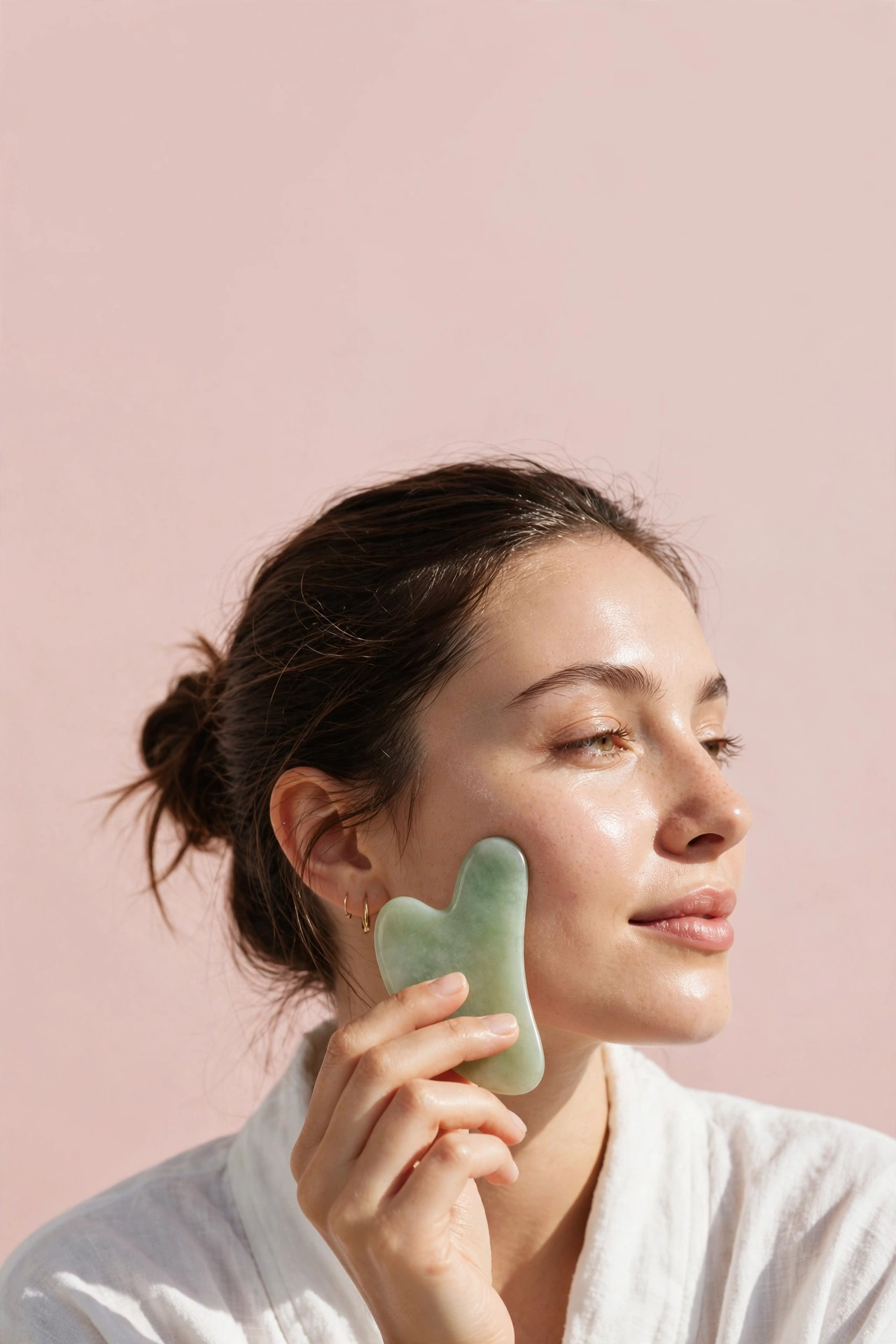
6. Jade Roller or Gua Sha Stone
Facial tools aren’t magic, but they do make lymphatic massage easier and more consistent. A jade roller is the simplest option — roll upward and outward, always ending with downward strokes on the neck.
The key with any tool is direction and consistency, not pressure or expensive materials. A $5 rose quartz roller used correctly beats a $50 tool used randomly.
Gua Sha for Morning Puffiness
Gua sha deserves its own section because it’s become the go-to morning depuffing ritual for good reason — when done correctly, it’s one of the most effective manual techniques.
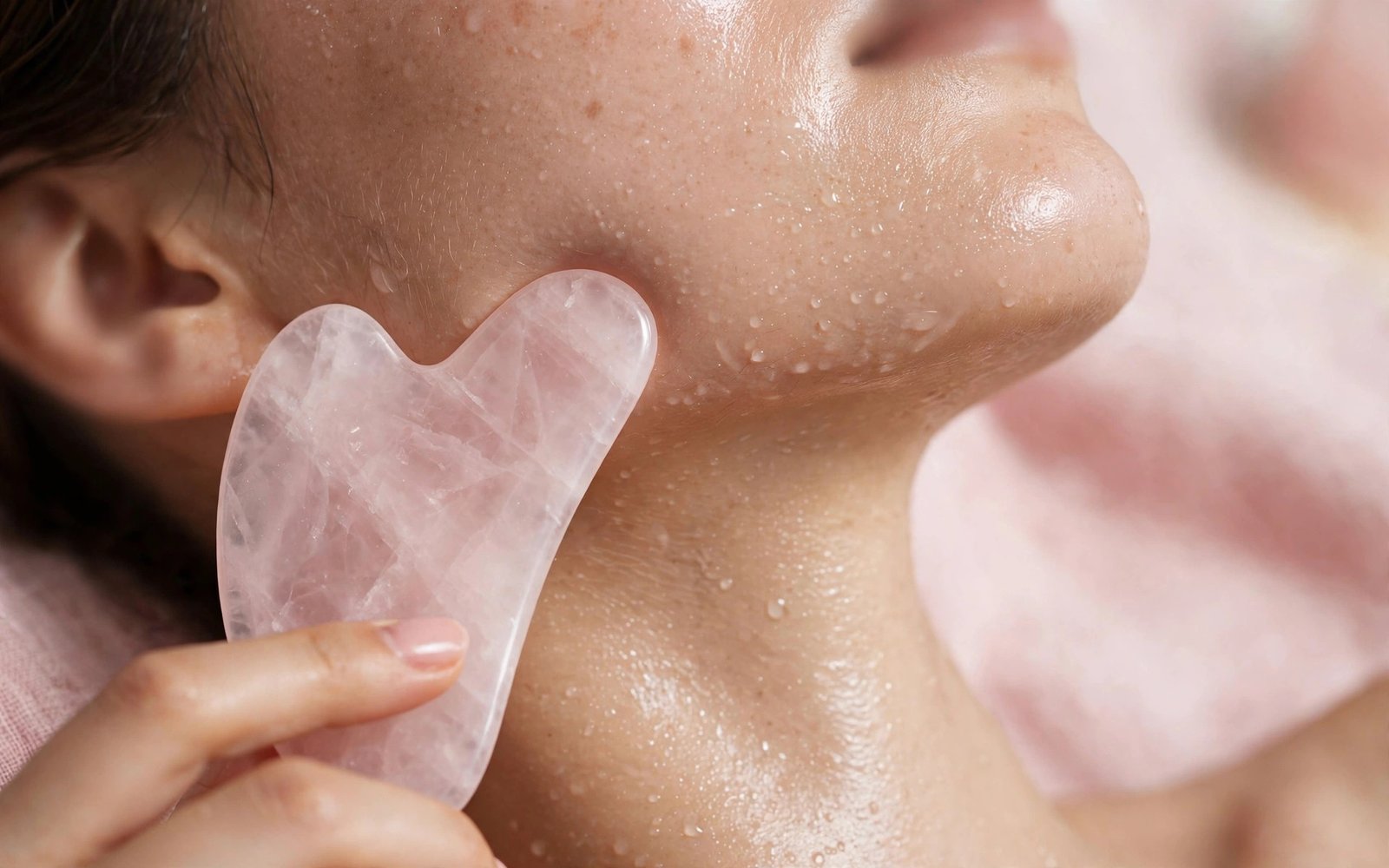
7. The 5-Minute Gua Sha Routine
You’ll need a gua sha stone (the wing-shaped or heart-shaped ones work well for the face) and a facial oil to prevent pulling.
- Prep: Apply 3–4 drops of facial oil all over your face and neck.
- Neck first: Using the long edge of the stone, sweep downward from behind your ears to your collarbones, 5 times each side. Always start here to “open” the drainage pathway.
- Jawline: Place the notch of the stone on your chin and glide along the jawline to your ear. 5 times each side.
- Cheeks: Using the flat edge, sweep from beside your nose outward to your ears. 5 times each side.
- Under eyes: Using the narrow end or corner, very gently sweep from the inner eye corner outward. Use almost no pressure here — the skin is extremely thin. 3–5 times each side.
- Forehead: Sweep from the center outward to the temples. 5 times.
- Neck again: Finish with downward neck sweeps to drain everything you mobilized.
Important notes: Keep the stone nearly flat against your skin (about 15 degrees, not perpendicular). Use light to medium pressure — you should never bruise. And consistency matters more than intensity: five minutes every morning beats an aggressive 20-minute session once a week.
Gua sha won’t permanently reshape your face (despite some dramatic before-and-after photos online), but it is genuinely effective at reducing fluid-related puffiness.
Lifestyle Fixes That Prevent Puffiness
The fastest depuffing method is the one you don’t need because you prevented the puffiness. These habits won’t fix this morning’s swelling, but they’ll reduce how often you wake up puffy.
8. Adjust Your Sleep Setup
- Elevate your head slightly. An extra pillow (or a wedge pillow) keeps your head above your heart, which helps fluid drain instead of pooling. You don’t need to sleep sitting up — even a slight incline helps.
- Sleep on your back when possible. Side and stomach sleeping compress one side of the face. If you’re a dedicated side sleeper, a silk or satin pillowcase at least reduces friction.
- Keep your room cool. Heat causes blood vessels to dilate, which can worsen puffiness.
9. Evening Habits That Matter
- Cut back on salty foods after dinner. You don’t need to eliminate salt, but that extra-soy-sauce midnight snack shows up on your face.
- Limit alcohol in the evening, especially right before bed.
- Stay hydrated throughout the day. It sounds counterintuitive, but drinking enough water tells your body it doesn’t need to hoard fluid.
- Remove makeup before bed. Leftover makeup (especially around the eyes) can cause irritation and inflammation overnight. If you’re building a full routine, our skincare routine for beginners covers the right order for nighttime products.
- Manage allergies. If you wake up puffy regularly during allergy season, an antihistamine before bed (as directed) or a saline nasal rinse can make a significant difference.
10. Morning Habits
- Drink a large glass of water first thing. Kickstarts your system and signals your body to release retained fluid.
- Get moving. Even light exercise — a short walk, some stretching — activates the muscle contractions that drive lymphatic flow.
- Cut back on morning sodium if you’re having a puffy day. Skip the salty breakfast and opt for potassium-rich foods (bananas, avocados, leafy greens), which help balance fluid levels.
For more on how nutrition affects your skin’s appearance, check out our guide on the best foods for clear, glowing skin.
FAQ: Morning Face Puffiness
How long does morning puffiness normally last?
For most people, noticeable puffiness fades within 30 minutes to an hour of waking up as you start moving around and gravity does its work. If yours regularly lasts several hours, the lifestyle fixes above (sleep position, sodium, hydration, allergies) are worth addressing.
Why is only one side of my face puffy?
This is almost always from sleeping on that side. The compressed side drains more slowly. Try sleeping on your back, or at least alternate sides. If one-sided swelling appears suddenly without a sleep-position explanation, or doesn’t resolve, see a doctor.
Do those “depuffing” skincare products actually work?
Caffeine-based eye creams can help mildly — caffeine is a vasoconstrictor, so it temporarily tightens blood vessels. Cooling applicators (metal tips, ceramic) help through the cold effect. But no cream will do what cold + massage + time does. Manage expectations: products are a nice supplement, not a replacement for the techniques above.
Can gua sha get rid of a double chin?
Gua sha reduces fluid-related puffiness along the jawline, which can make the area look more defined temporarily. But it doesn’t remove fat or permanently change bone/facial structure. If jawline puffiness is your main concern, the lymphatic drainage techniques above will give you the most visible short-term improvement.
Is it normal for my eyes to be the puffiest part?
Yes. The skin around your eyes is the thinnest on your body (about 0.5mm compared to 2mm elsewhere), so fluid accumulation shows there first and most dramatically. That’s why eye-specific methods (cold compresses, gentle under-eye massage) are worth the extra minute.
When should I see a doctor about facial puffiness?
See a doctor if puffiness is sudden and severe, affects only one side without explanation, comes with pain, redness, warmth, vision changes, or difficulty breathing, or if it doesn’t improve at all throughout the day. These can indicate allergies, infection, thyroid issues, or other conditions that need medical evaluation.
Key Takeaways
- Morning facial puffiness is caused by fluid pooling overnight when lymphatic drainage slows during sleep — it’s normal and temporary.
- Cold is the fastest fix: ice rollers, cold compresses, or even cold water constrict blood vessels and reduce swelling in minutes.
- Massage moves fluid out: always sweep toward the ears and down the neck to follow lymphatic flow. Two minutes with your fingertips makes a real difference.
- Gua sha works for depuffing when done correctly (flat angle, light pressure, always finish with neck drainage) — but it won’t permanently reshape your face.
- Prevention beats treatment: sleep slightly elevated, cut evening sodium and alcohol, stay hydrated, and manage allergies.
- Most morning puffiness resolves on its own within an hour — these methods just speed things up for days when you need to look your best fast.
Love this? Pin it for later!