Does Toothpaste Get Rid of Pimples? The Truth
It’s one of the internet’s most persistent skincare hacks: dab toothpaste on a pimple before bed, wake up to flatter skin. Millions of people have tried it. But does toothpaste actually get rid of pimples — or is this a myth that does more harm than good?
Dermatologists are unambiguous on this one: toothpaste is not an acne treatment, and using it on pimples can irritate, burn, and inflame your skin. Here’s why the myth persists, what’s really happening when toothpaste “works,” and what to use instead.
Key Takeaways
- Toothpaste can dry out a pimple’s surface, which is why the myth persists — but it doesn’t treat acne and often causes irritation.
- Ingredients like sodium lauryl sulfate, menthol, baking soda, and whitening agents can cause redness, peeling, chemical burns, and contact dermatitis.
- Dermatologists unanimously advise against using toothpaste on pimples.
- Benzoyl peroxide, salicylic acid, and pimple patches are proven, safer overnight alternatives.
- If toothpaste already irritated your skin, stop immediately and focus on gentle barrier repair.
Why People Think Toothpaste Works on Pimples
The myth survives because there’s a grain of observable truth in it. Many toothpastes contain drying and antibacterial-adjacent ingredients — baking soda, alcohol, menthol — that can shrink the surface appearance of a pimple overnight by dehydrating it. Old-school toothpaste formulas also contained triclosan, an antibacterial agent (now largely removed from toothpaste).
So someone dabs on toothpaste, wakes up to a slightly flatter, drier pimple, and concludes it “worked.” What’s actually happened: the pimple’s surface dried out while the underlying clog, bacteria, and inflammation remain untouched. The pimple often rebounds — now joined by red, irritated skin around it that makes the whole area look worse and harder to conceal.
It’s the skincare equivalent of putting out a candle while the house is on fire: a visible short-term change that addresses nothing underneath. And because the drying effect is real enough to photograph, the myth gets “confirmed” by thousands of sincere testimonials from people who simply didn’t know what clear, healthy healing actually looks like.
Why Dermatologists Say Don’t Put Toothpaste on Pimples
Toothpaste is formulated for tooth enamel — the hardest substance in the human body — not for the delicate skin on your face. Its ingredient list reads like a recipe for irritation:
- Sodium lauryl sulfate (SLS): A harsh detergent that strips the skin barrier, causing dryness, redness, and peeling.
- Baking soda: Highly alkaline (pH around 9), which disrupts skin’s naturally acidic pH (around 5.5) and damages the moisture barrier.
- Menthol and mint oils: Create a cooling sensation that many mistake for “working,” but they’re common irritants and allergens.
- Whitening agents (peroxides, abrasives): Designed to scrub stains off enamel — far too harsh for facial skin and a frequent cause of chemical burns in DIY use.
- Fluoride: Beneficial for teeth; a known irritant for perioral skin in sensitive individuals.
The result dermatologists see in clinic: contact dermatitis, chemical burns, increased redness and swelling around the original pimple, and post-inflammatory dark marks that last far longer than the pimple would have. In other words, the “cure” routinely creates a bigger cosmetic problem than the breakout itself.
What to Use Instead of Toothpaste (Overnight Options)
If you want something that actually flattens a pimple by morning, these are the proven options:
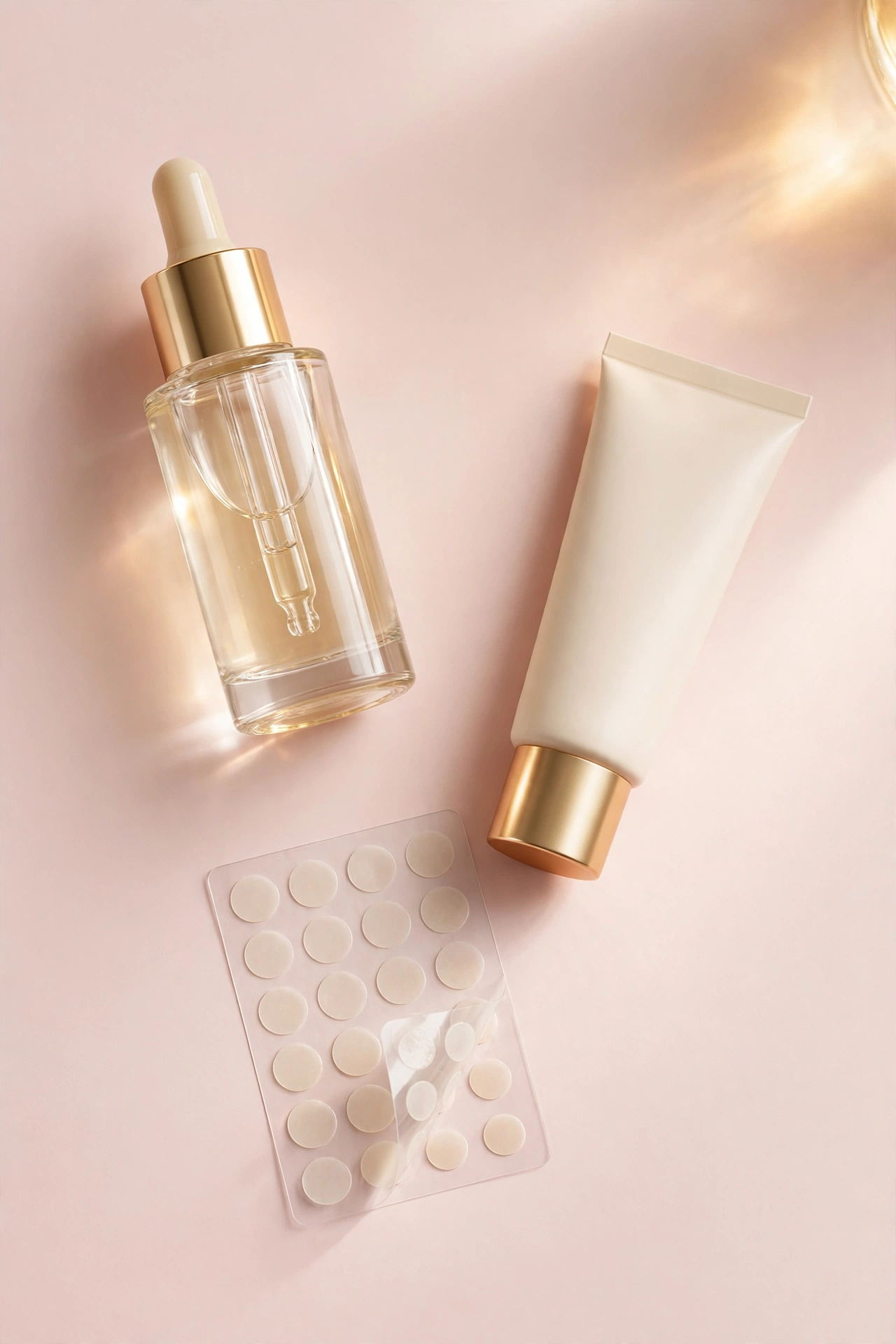
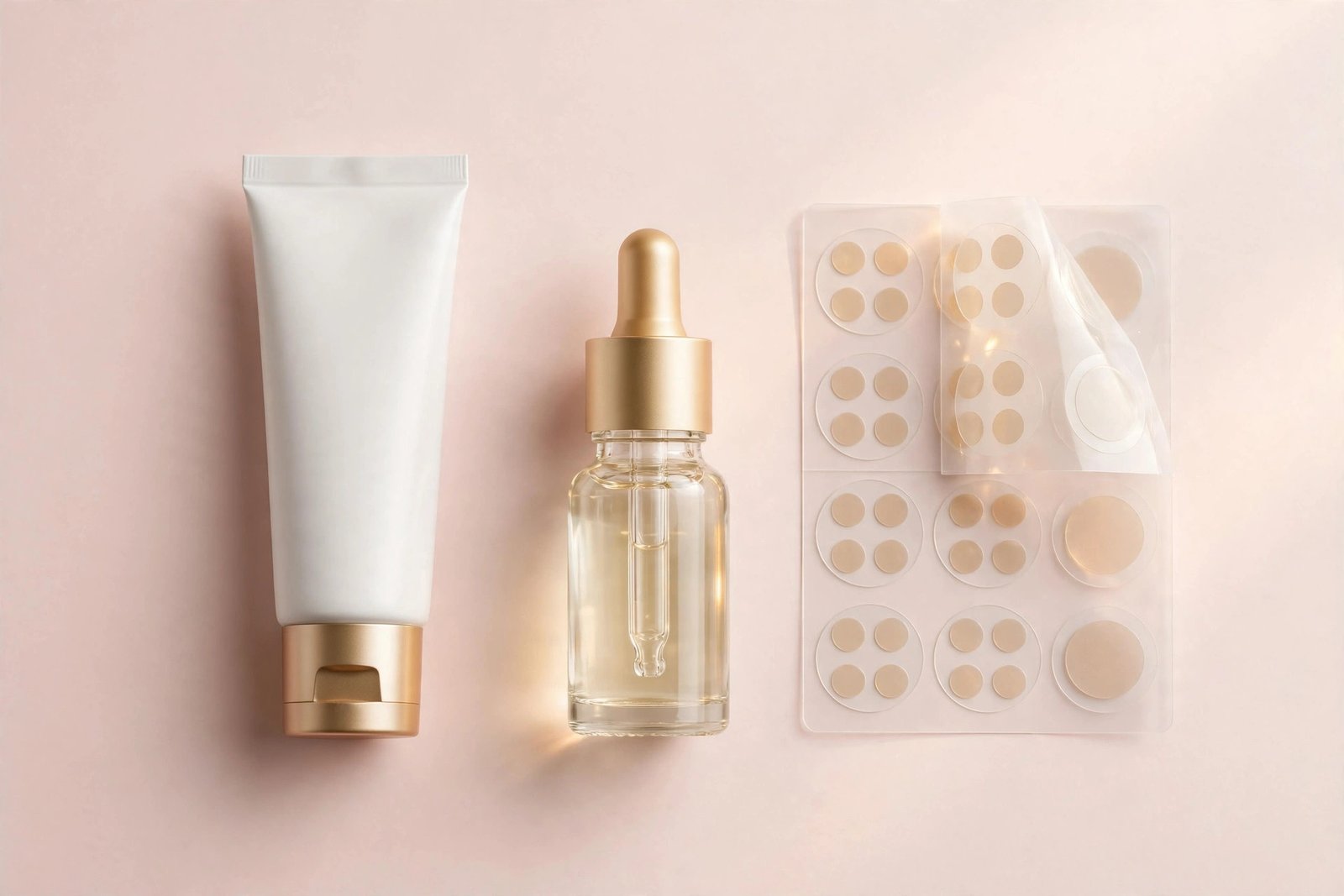
- Hydrocolloid pimple patches: The closest thing to a true overnight fix for whiteheads. Applied to clean, dry skin before bed, they absorb fluid and visibly flatten the spot by morning — without irritating surrounding skin. pimple patches guide
- Benzoyl peroxide (2.5–5%): Dabbed on an inflamed pimple overnight, it kills acne bacteria and reduces swelling. Far more effective than toothpaste at addressing what’s actually inside the pimple.
- Salicylic acid spot treatment: Helps dissolve the clog in surface-level pimples and blackheads.
- Ice: Not a treatment, but 5–10 minutes of icing reduces swelling and redness fast — useful before events.
- Sulfur spot treatments: An underrated classic that dries out pimples more gently than toothpaste ever could, with actual anti-inflammatory properties.
All of these cost about the same as a tube of toothpaste and none of them risk chemical burns. For a full treatment strategy beyond single spots, see our complete guide to getting rid of acne.
Other DIY Acne “Hacks” Dermatologists Warn Against
Toothpaste isn’t the only well-meaning DIY remedy that backfires. Dermatologists also advise against:
- Rubbing alcohol or hand sanitizer on pimples: Extremely drying, destroys the skin barrier, and worsens inflammation.
- Lemon juice: Highly acidic and phototoxic — it can cause severe burns when skin is exposed to sunlight afterward, plus lasting dark marks.
- Baking soda scrubs: The same pH problem as toothpaste, applied to the whole face.
- Undiluted essential oils (especially tea tree): Tea tree oil has modest antibacterial evidence, but undiluted it’s a potent irritant. Even diluted, the evidence is weak compared to proven treatments.
- Crushed aspirin masks: The salicylic acid connection is real but the DIY delivery is unreliable and irritating; use a formulated salicylic acid product instead. salicylic acid vs glycolic acid
The pattern: household products aren’t formulated, pH-balanced, or tested for facial skin. “Natural” or “already in your bathroom” doesn’t mean safe or effective.
What to Do If Toothpaste Already Irritated Your Skin
If you’ve already tried the toothpaste trick and your skin is red, peeling, or burning:
- Stop immediately and rinse the area gently with lukewarm water.
- Simplify everything. Pause all actives (acids, retinoids, benzoyl peroxide) until the irritation resolves.
- Moisturize generously with a bland, fragrance-free moisturizer to support barrier repair.
- Don’t pick at peeling skin — let it shed naturally to avoid marks.
- Use sunscreen if the area will see daylight; damaged skin darkens easily.
- See a dermatologist if you have blistering, severe swelling, or irritation that doesn’t improve within a few days.
Most toothpaste irritation resolves within a few days to a week with gentle care. Our guide to repairing a damaged skin barrier covers the recovery process in detail.
Why Skincare Myths Like This Spread So Fast
The toothpaste myth is a case study in how bad skincare advice goes viral. It has every ingredient of a sticky myth: it’s free, it’s already in your bathroom, it promises overnight results, and it produces a visible short-term change (drying) that’s easy to mistake for effectiveness. Add before-and-after photos taken in different lighting, and you have content engineered to spread.
The deeper problem is the desperation gap. Acne is emotionally distressing, dermatologist appointments take weeks, and proven treatments take weeks to work. A hack that promises results by morning fills that gap — even when it’s fictional. This is why myth-busting matters: every person who tries toothpaste instead of benzoyl peroxide loses weeks of progress and risks new skin damage.
A useful filter for any viral skincare hack: ask whether a dermatologist would recommend it, whether it’s formulated for facial skin, and whether the “proof” is anything more than one person’s anecdote. If it fails all three, skip it.
Frequently Asked Questions
Can toothpaste make pimples worse?
Yes. Beyond failing to treat the underlying clog and bacteria, toothpaste commonly causes redness, peeling, and chemical irritation around the pimple — making the area look worse and take longer to heal. In sensitive individuals it can trigger contact dermatitis.
What kind of toothpaste do people use on pimples?
The myth usually specifies plain white toothpaste (not gel), based on the idea that it’s the drying ingredients doing the work. Dermatologists’ answer doesn’t change by formula: no toothpaste is formulated or safe for use as an acne treatment, white paste included.
How long do you leave toothpaste on a pimple?
The myth says overnight — but the correct answer is that you shouldn’t apply it at all. Longer contact time just means more irritation. If you want a legitimate overnight treatment, use a pimple patch or benzoyl peroxide instead.
Does toothpaste help with acne scars or dark marks?
No — and it can make them worse. Irritation and inflammation from toothpaste increase the risk of post-inflammatory hyperpigmentation, meaning you’re more likely to be left with a dark mark than if you’d left the pimple alone. For fading existing marks, niacinamide, azelaic acid, and sunscreen are the evidence-backed options.
What’s the fastest legitimate way to shrink a pimple overnight?
For a whitehead: a hydrocolloid pimple patch on clean, dry skin overnight. For an inflamed bump with no head: benzoyl peroxide plus icing to reduce swelling. Neither works instantly, but both are proven, safe, and dramatically better than toothpaste.
Love this? Pin it for later!