How to Get Rid of Body Acne: The Complete Guide
If you are learning how to get rid of body acne, you are far from alone. Breakouts on the back, chest, and shoulders are incredibly common, and they can be just as stubborn and frustrating as facial acne. The good news is that body acne responds to the same proven principles as face acne: keep pores clear, calm inflammation, and stop breakouts from forming in the first place.
The skin on your body is thicker and oilier than the skin on your face, which means it needs a slightly different approach. A simple body-acne routine built around the right shower habits and two key active ingredients — salicylic acid and benzoyl peroxide — can clear up most mild to moderate breakouts within six to twelve weeks.
Key Takeaways
- Body acne is caused by clogged pores, excess oil, sweat, and friction — the same triggers as facial acne.
- Salicylic acid body wash and benzoyl peroxide are the two most effective over-the-counter treatments.
- Your shower routine matters: wash your body after conditioning your hair, and never let sweat sit on your skin.
- Loose, breathable clothing and clean sheets reduce the friction and bacteria that feed breakouts.
- Most body acne clears in 6 to 12 weeks of consistent treatment; severe or cystic breakouts warrant a dermatologist visit.
- Bumpy “chicken skin” on your arms and thighs is usually keratosis pilaris, not acne, and needs a different routine.
- For a full deep dive on back acne specifically, see [our complete back acne guide → how-to-get-rid-of-back-acne-bacne].
What Causes Body Acne?
Body acne forms the same way facial acne does: dead skin cells and excess oil plug a pore, bacteria multiply inside, and inflammation follows. The result is the full range of acne lesions — blackheads, whiteheads, red bumps, and sometimes painful cysts.
A few factors make your body more breakout-prone than your face. Your back, chest, and shoulders have some of the highest concentrations of oil glands anywhere on your body. Those areas also trap heat and sweat under clothing, which creates a warm, damp environment where acne-causing bacteria thrive. Add friction from backpacks, sports bras, tight tops, and even your own seat belt, and you have a perfect recipe for clogged pores.
Common triggers include:
- Sweat left sitting on skin. Post-workout sweat mixes with oil and dead skin and clogs pores fast. Changing out of sweaty clothes quickly is one of the easiest wins.
- Friction and pressure. Tight clothing, straps, and equipment press against the skin and irritate follicles, a form of breakout called acne mechanica.
- Heavy or comedogenic products. Hair conditioners, body butters, and sunscreen can all migrate onto the back and clog pores — especially if you rinse your conditioner after washing your body.
- Not exfoliating. The skin on your body turns over more slowly than your face, so dead cells build up and plug pores without regular help.
- Hormonal shifts. Breakouts that flare around your cycle or during stress are often driven by androgen-driven oil production.
Body Acne vs. Other Body Bumps
Not every bump on your body is acne. Tiny, rough, goosebump-like spots on the backs of your arms and thighs are usually [keratosis pilaris → how-to-treat-keratosis-pilaris], a harmless keratin buildup that needs moisturizing exfoliation rather than acne treatment. Bumps that appear only along your hairline or shave lines may be [ingrown hairs → how-to-prevent-ingrown-hairs-after-shaving] instead. Treating KP or ingrowns like acne will only irritate your skin, so it is worth telling them apart.
Your Shower Routine for Body Acne
Your shower is where most body-acne battles are won or lost. Small changes in order and technique can make a surprising difference.
Wash your body after your hair. This is the single most useful habit change. Conditioners and hair masks leave a residue that slides down your back and chest and clogs pores. Shampoo and condition first, clip your hair up, then wash your body from the neck down. Rinse thoroughly so no film is left behind.
Use lukewarm water, not hot. Scalding water strips your skin’s natural oils, which can trigger rebound oil production and irritation. Warm and comfortable is the target.
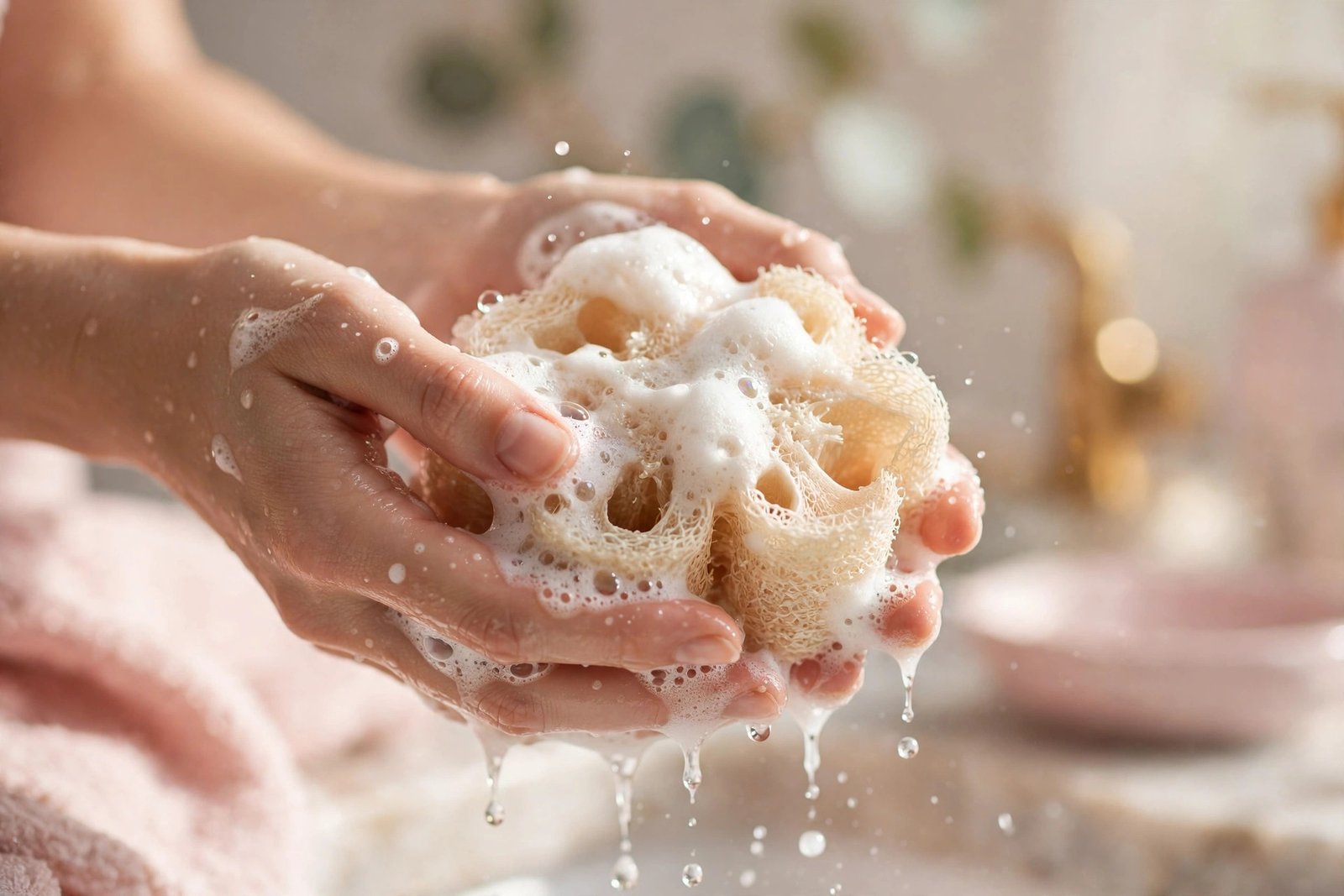
Apply your acne body wash and let it sit. Unlike a regular cleanser you rinse off immediately, an active body wash needs contact time to work. Massage it in and leave it on your skin for 30 to 60 seconds — use that time to wash your face or shave — then rinse. This “contact therapy” makes over-the-counter actives dramatically more effective.
Wash workout sweat off the same day. You do not need a full second shower every time you exercise; a quick rinse of your back and chest with your acne wash is enough on busy days. The key is not letting sweat dry on your skin for hours.
Moisturize after every shower. Skipping moisturizer leaves skin dehydrated, which can actually increase oil production and irritation. Choose a light, non-comedogenic, fragrance-free lotion. If your skin is dry and bumpy, a lotion formulated for rough texture can double as your moisturizer — see [the best body lotion for dry, bumpy skin → best-body-lotion-for-dry-bumpy-skin].
The Two Best Active Ingredients for Body Acne
You do not need a complicated routine. Two proven ingredients handle most body acne when used consistently.
Salicylic Acid (BHA)
Salicylic acid is an oil-soluble exfoliant, which means it can penetrate into pores and dissolve the dead skin and oil plugging them. It is the single best active for blackheads and clogged pores on the body. Look for it in [body washes designed for acne-prone skin → best-body-wash-for-acne-prone-skin], where it works well as a daily maintenance treatment. Concentrations around 1 to 2 percent are standard in cleansers; leave-on body treatments may go slightly higher.
If you are curious how salicylic acid compares to glycolic acid for acne in general, [this comparison → salicylic-acid-vs-glycolic-acid-acne] breaks it down.
Benzoyl Peroxide
Benzoyl peroxide kills acne-causing bacteria and reduces inflammation, making it especially effective for red, inflamed bumps and pustules. A 5 to 10 percent benzoyl peroxide wash used a few times a week is a classic dermatologist recommendation for body acne. Two practical notes: it can bleach towels, sheets, and clothing, so rinse very thoroughly and let skin dry before dressing; and it can be drying, so pair it with a good moisturizer and start with short contact time if your skin is sensitive.
How to Combine Them
A simple, effective weekly pattern:
- Daily: Salicylic acid body wash, left on for 30 to 60 seconds before rinsing.
- 2 to 3 times per week: Swap in or follow with a benzoyl peroxide wash for extra antibacterial action on inflamed areas.
- Daily: Light, non-comedogenic moisturizer while skin is still slightly damp.
Give the routine a full six to eight weeks before judging results. Body acne heals more slowly than face acne because the skin is thicker and turnover is slower.
Area-by-Area: Back, Chest, and Shoulders
Different body zones break out for slightly different reasons, so it helps to tailor your approach.
Back Acne (Bacne)
The back is the most common site for body acne thanks to its dense oil glands, constant contact with clothing, and hard-to-reach exfoliation. Everything in this guide applies to bacne, but back acne has enough of its own triggers and treatment tricks — hard-to-reach areas, post-workout routines, pillow and sheet hygiene — to deserve its own deep dive. Read the full treatment plan in [our complete guide to getting rid of back acne → how-to-get-rid-of-back-acne-bacne].
Chest Acne
Chest breakouts often come from sweat trapped under clothing and sports bras, friction from necklaces or bag straps, and heavy moisturizers or sunscreens migrating down the neck. Because the chest area is also where shaving and waxing happen, make sure bumps along the hairline of your chest are not [ingrown hairs → how-to-prevent-ingrown-hairs-after-shaving] before treating them as acne. For the full chest-specific routine — including sports-bra hygiene and friction fixes — see [how to get rid of chest acne → how-to-get-rid-of-chest-acne].
Shoulders and Upper Arms
Shoulder breakouts are frequently friction-driven: backpack straps, purse straps, and tight tops. Switching to looser necklines and wiping down straps can help noticeably. Upper arms deserve a mention too — if the bumps there are tiny, dry, and rough rather than inflamed pimples, you are likely looking at [keratosis pilaris → how-to-treat-keratosis-pilaris], which clears with urea or lactic acid moisturizers instead of acne actives.
Lifestyle Habits That Prevent Body Acne
Treatment clears existing breakouts, but prevention keeps them from coming back. These habits do the heavy lifting:
- Change out of sweaty clothes promptly. Even a quick rinse and fresh shirt beats sitting in damp gym clothes.
- Wear breathable fabrics when you can. Cotton and moisture-wicking athletic fabrics let sweat evaporate instead of trapping it against your skin.
- Wash your sheets weekly. You spend hours pressed against your pillow and sheets, and oil, sweat, and bacteria build up fast. Change pillowcases twice a week if you are actively breaking out.
- Clean what touches your skin. Backpack straps, sports bra bands, phone cases held against your chest — all of these collect oil and bacteria. Wipe them down regularly.
- Shower after the pool or beach. Chlorine, salt, and sunscreen residue can irritate breakout-prone skin if left on for hours.
Mistakes That Make Body Acne Worse
Avoid these common pitfalls that keep breakouts cycling:
- Scrubbing too hard. Rough scrubs and stiff brushes do not unclog pores; they irritate the skin barrier and make inflammation worse. Chemical exfoliants are gentler and more effective.
- Picking and squeezing. Popping body pimples drives bacteria deeper and leaves dark marks that linger for months. If a bump is painful and deep, leave it alone.
- Overdoing actives. Using salicylic acid, benzoyl peroxide, and a scrub all in one shower can destroy your skin barrier, causing redness, peeling, and — ironically — more breakouts. Introduce one active at a time.
- Skipping moisturizer. Treated skin needs moisture to heal. A light non-comedogenic lotion supports your skin barrier so actives can keep working without irritation.
- Giving up at week three. Body acne takes six to twelve weeks to respond. Switching products every two weeks never gives anything time to work.
Fading Body Acne Marks and Scars
Even after pimples clear, they often leave parting gifts: flat dark or red marks (post-inflammatory hyperpigmentation) and, less commonly, true scars. The marks are far more common on the body, and the good news is that most fade on their own — it just takes time, typically three to six months.
What helps marks fade faster:
- Sunscreen on exposed areas. UV darkens post-inflammatory marks and makes them linger. If your back or chest sees the sun, SPF 30+ is essential while marks are healing.
- Niacinamide body lotion. Niacinamide (vitamin B3) helps even out skin tone and supports the barrier. A daily niacinamide moisturizer is a gentle, effective fade-booster.
- Azelaic acid. Available over the counter in lower strengths, azelaic acid calms redness and fades dark marks. It is well tolerated on body skin.
- Keep exfoliating gently. Continued salicylic acid use gradually lifts pigmented surface cells as skin turns over.
What does not help: Picking at healing spots (the number one cause of marks that last a year instead of months), harsh bleaching products, and tanning to “even things out” — tanning darkens marks more than the surrounding skin.
True indented or raised scars are less common on the body than on the face but do happen with severe cystic breakouts. Over-the-counter products cannot fix textural scars; a dermatologist can discuss options like microneedling or laser treatments if they bother you.
Your 4-Week Body Acne Starter Plan
Starting everything at once is a recipe for irritation. Ease in over four weeks instead:
Week 1: Switch your shower order (hair first, body wash last) and swap to a gentle, fragrance-free body wash. Start moisturizing after every shower. No actives yet — just build the habits.
Week 2: Introduce your [salicylic acid body wash → best-body-wash-for-acne-prone-skin] once daily, with 30 to 60 seconds of contact time. Keep moisturizing.
Week 3: If your skin is tolerating the salicylic acid well, add benzoyl peroxide 2 times per week on your most breakout-prone areas. Watch for dryness.
Week 4: Settle into your maintenance rhythm: salicylic acid daily, benzoyl peroxide 2 to 3 times weekly, moisturizer always. Take a photo now so you can compare progress at week 8 and week 12 — gradual improvement is hard to notice day to day.
If at any point your skin becomes red, stingy, or flaky, drop back a step for a week. Slow and steady clears more acne than aggressive and irritated.
When to See a Dermatologist
Most mild to moderate body acne responds to a consistent routine with salicylic acid and benzoyl peroxide. Book a dermatologist appointment if:
- You have large, painful, deep cysts or nodules.
- Breakouts are widespread across your back, chest, and shoulders and are not improving after 12 weeks of consistent treatment.
- Acne is leaving scars or dark marks that bother you.
- You suspect hormonal acne, or breakouts appeared suddenly alongside other symptoms.
A dermatologist can prescribe stronger topicals like tretinoin, short courses of oral antibiotics for inflamed breakouts, or hormonal treatments where appropriate. There is no reason to struggle alone when prescription options exist.
Frequently Asked Questions
How long does it take to get rid of body acne?
With a consistent routine of salicylic acid or benzoyl peroxide, most people see improvement in 4 to 6 weeks and significant clearing in 8 to 12 weeks. Body skin turns over more slowly than facial skin, so patience is essential. If nothing has changed after 12 weeks, see a dermatologist.
Can I use my face acne products on my body?
Yes, with one adjustment: body skin is thicker and tolerates stronger products, so face-strength treatments may feel weak on the back but perfectly fine on the more delicate chest. Dedicated body formulations tend to come in larger, more economical sizes. Just avoid anything fragranced or comedogenic, and patch-test first.
Does showering twice a day help body acne?
Not necessarily. Over-washing strips your skin barrier and can increase oil production. One proper shower with an active cleanser and good contact time beats two rushed ones. On workout days, a quick rinse of the breakout-prone areas is enough in addition to your main shower.
Will body acne go away on its own?
Sometimes mild body acne improves with age as oil production settles, but breakouts can persist for years without treatment. Treating it now prevents the dark marks and scars that take far longer to fade than the pimples themselves.
Is body acne caused by poor hygiene?
No. Body acne is driven by oil, dead skin, hormones, sweat, and friction — not dirtiness. In fact, scrubbing harder often makes it worse. The goal is smart, consistent care, not aggressive cleaning.
Can diet cause body acne?
The evidence is mixed. Some people notice flares with high-glycemic foods or dairy, but no single food causes body acne for everyone. Focus first on the proven levers — a good shower routine, proven actives, and clean clothing — before overhauling your diet.
Clearing body acne is mostly about consistency: the right shower order, two proven active ingredients, breathable clothing, and enough patience to let the routine work. Start with the routine above, tailor it to your breakout zones — [chest → how-to-get-rid-of-chest-acne], [back → how-to-get-rid-of-back-acne-bacne], or [choosing the right body wash → best-body-wash-for-acne-prone-skin] — and remember that bumpy, non-inflamed texture on your arms and thighs is more likely [keratosis pilaris → how-to-treat-keratosis-pilaris] and needs a different approach entirely.
back acne deep dive
chest acne routine
keratosis pilaris guide
preventing ingrown hairs
best body wash for acne-prone skin
salicylic acid vs glycolic acid
best body lotion for dry, bumpy skin
Love this? Pin it for later!