Body Skincare Routine for Smooth Skin: The Complete Guide
Most people spend hundreds of dollars and countless minutes perfecting their facial skincare routine, then treat the skin on the rest of their body as an afterthought. Sound familiar? The skin on your body is just as vulnerable to dryness, rough patches, clogged pores, ingrown hairs, and premature aging as your face — yet the typical “routine” stops at whatever soap happens to be in the shower and a quick swipe of lotion on dry days.
Here is the good news: a body skincare routine for smooth skin does not need to be complicated, time-consuming, or expensive. Dermatologists consistently say that a simple, consistent routine — gentle cleansing, regular exfoliation, daily moisturizing, and a few targeted treatments for specific concerns — covers nearly everything your body skin needs to look and feel its best.
This guide walks through the complete routine step by step: what to do in the shower, what to apply after, how to address common concerns like [bumpy arms → keratosis-pilaris-treatment-arms-guide], [strawberry legs → how-to-get-rid-of-strawberry-legs], and dry rough texture, and how to adapt the routine for your skin type. Follow this guide on the topic of [body exfoliation → how-to-exfoliate-body-properly] for deeper detail on that single most transformative step.
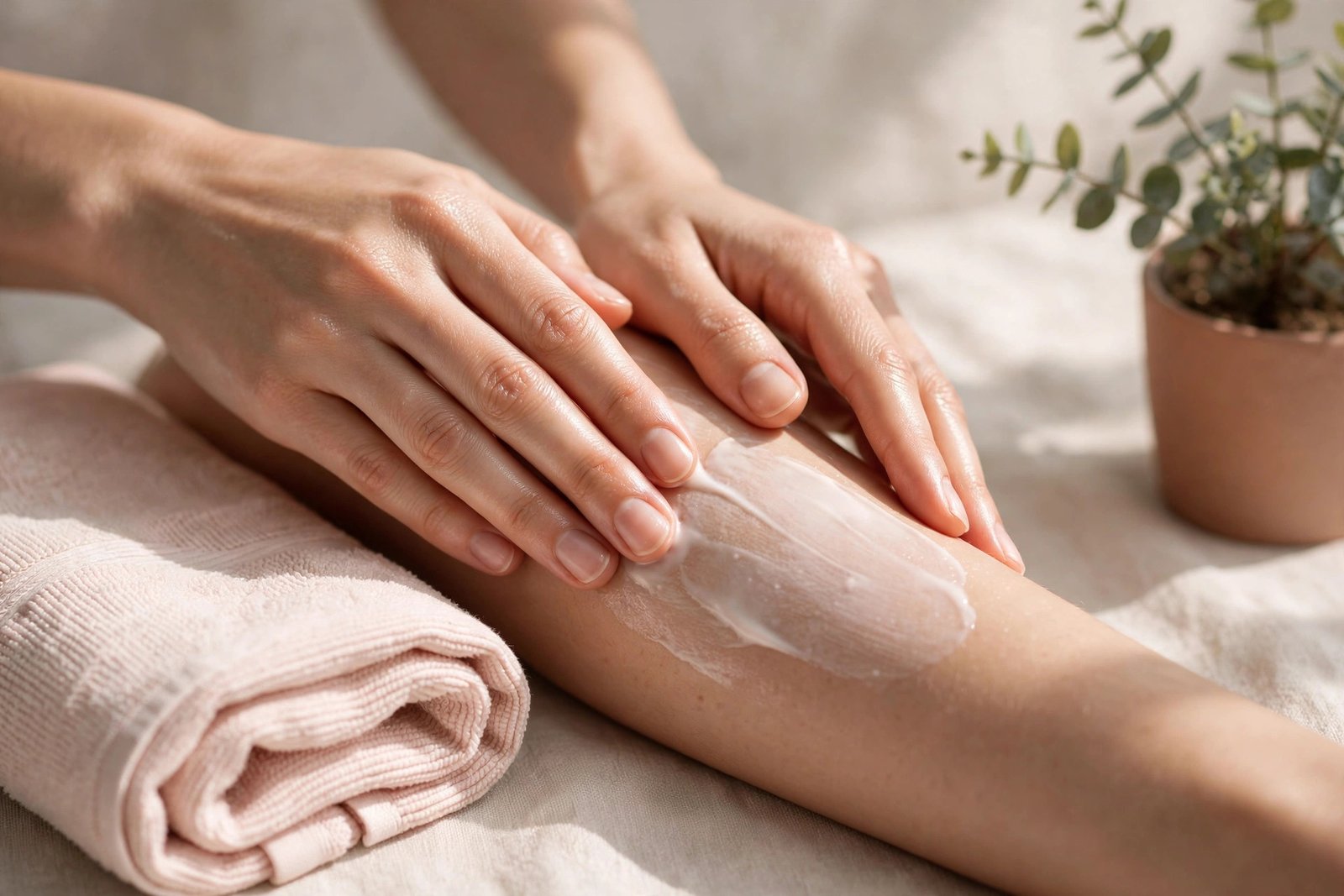
Key Takeaways
- A complete body skincare routine has four core steps: cleanse, exfoliate, moisturize, and treat — in that order.
- Exfoliate 2–3 times per week (not daily) to smooth rough texture without damaging the skin barrier.
- Moisturize within three minutes of showering, while skin is still damp, to lock in hydration.
- Harsh fragranced soaps and very hot water are the two biggest culprits behind dry, tight body skin.
- Targeted treatments (AHA lotions, urea creams, retinoids) address specific concerns like bumps, keratosis pilaris, and strawberry legs.
- Consistency beats product price: a simple routine done daily outperforms an expensive routine done occasionally.
- Protecting exposed skin with SPF 30+ prevents the rough, leathery texture of chronic sun damage.
Step 1: Cleanse Gently (Don’t Strip Your Skin)
Cleansing is the foundation of every body skincare routine, and it is also where most people go wrong. The goal is simple: remove sweat, sunscreen, pollution, and excess oil without stripping the natural lipids that keep skin smooth and resilient.
Dermatologists recommend choosing a body wash based on how your skin feels after rinsing. If your skin feels tight, squeaky, or “dry-clean” after your shower, your cleanser is too harsh. Look for formulas labeled “gentle,” “hydrating,” or “for sensitive skin,” with moisturizing ingredients like glycerin, ceramides, or hyaluronic acid. Bar soaps with a high pH (most traditional bar soaps) tend to be more drying than pH-balanced liquid cleansers, though gentle syndet bars are an exception.
Water temperature matters more than most people realize. Hot water feels great on tired muscles, but it dissolves your skin’s natural oils and leaves the barrier weakened — which is why skin often feels itchy and tight after a very hot shower. Aim for warm, comfortable water instead, and keep showers reasonably short (5–10 minutes is plenty). If you love hot baths, keep them to a couple of times a week and moisturize generously afterward.
Washcloths, loofahs, and shower poufs are optional. Hands are perfectly fine and the most hygienic option. If you enjoy the lather of a pouf, replace it every month and let it dry completely between uses, since damp sponges harbor bacteria.
Step 2: Exfoliate Regularly (The Smooth-Skin Secret)
If there is one step that transforms body skin fastest, it is exfoliation. Dead skin cells accumulate on the surface over time, making skin look dull, feel rough, and blocking moisturizers from absorbing properly. Regular exfoliation reveals the smoother, fresher skin underneath — and it is the single most important step for anyone dealing with rough patches, bumps, or a dull appearance.
You have two options: physical exfoliation (scrubs, dry brushing, exfoliating gloves) and chemical exfoliation (AHA/BHA lotions, pads, and peels). Dermatologists generally favor chemical exfoliants for body skin because they work more evenly and carry less risk of micro-tears and irritation. That said, a gentle physical scrub used correctly can be effective and enjoyable — a homemade [sugar scrub → how-to-make-sugar-scrub-at-home] used once a week is a popular, budget-friendly choice.
For the full comparison of methods, frequency by skin type, and application techniques, see our detailed guide on [how to exfoliate your body properly → how-to-exfoliate-body-properly]. The short version:
- Exfoliate 2–3 times per week, not daily.
- Start with chemical exfoliants (lactic or glycolic acid lotions at 10–15%) if you have sensitive or bumpy skin.
- Never exfoliate sunburned, broken, or freshly shaved skin.
- Always follow exfoliation with moisturizer.
Exfoliation is also the key to solving two of the most common body skin frustrations: [strawberry legs → how-to-get-rid-of-strawberry-legs] (darkened hair follicles on the legs) and the rough bumps of [keratosis pilaris on the arms → keratosis-pilaris-treatment-arms-guide]. Both improve dramatically with a consistent exfoliation routine.
Step 3: Moisturize While Skin Is Damp
Moisturizer is the step that seals in everything else. Without it, the water your skin absorbed in the shower evaporates within minutes, leaving skin drier than before — this is why “trans-epidermal water loss” spikes right after bathing.
The golden rule: apply moisturizer within three minutes of stepping out of the shower, while skin is still slightly damp. This traps the water in and dramatically improves hydration. Pat skin gently with a towel rather than rubbing — you want to leave some moisture on the surface.
Choose your moisturizer by skin type and concern:
- Normal skin: A standard body lotion with glycerin or hyaluronic acid is enough.
- Dry skin: Go for a richer cream or body butter with ceramides, shea butter, or colloidal oatmeal. Our guide to a [skincare routine for dry skin → skincare-routine-for-dry-skin-guide] covers facial dryness with principles that transfer to the body.
- Dry + bumpy skin: Choose lotions with chemical exfoliants built in — urea (10–20%), lactic acid (12–15%), or salicylic acid (2%). These exfoliate and moisturize in one step. See our roundup of the [best body lotions for dry bumpy skin → best-body-lotion-for-dry-bumpy-skin].
- Very dry or eczema-prone skin: Ointments or heavy creams applied to damp skin work best; the “soak and seal” method (soak in lukewarm water, seal with moisturizer immediately) is the dermatologist standard.
If you are short on time, body oils applied to damp skin are an efficient alternative, though they work best layered over (not instead of) a hydrating lotion, since oils seal but don’t add water-based hydration.
Step 4: Treat Specific Concerns
Once your basic routine is solid, add targeted treatments for whatever your skin is asking for. Apply treatment products after moisturizer (or before it, if they are lightweight serums — follow the thin-to-thick rule), and introduce one new product at a time so you can tell what is working.
Rough bumps on arms and thighs (keratosis pilaris): This extremely common condition — small, rough bumps that look like permanent goosebumps — responds well to daily chemical exfoliation with lactic acid, glycolic acid, or urea creams. Our full [keratosis pilaris treatment guide for arms → keratosis-pilaris-treatment-arms-guide] covers the exact routine dermatologists recommend, including what to do when bumps flare.
Darkened hair follicles on legs (strawberry legs): If your legs look dotted with dark spots even right after shaving, the issue is usually a combination of shaving technique, clogged follicles, and dead skin. Better shaving habits plus regular exfoliation clear this up for most people — see [how to get rid of strawberry legs → how-to-get-rid-of-strawberry-legs] for the complete method.
Body acne (back, chest, shoulders): Use a body wash with salicylic acid or benzoyl peroxide 2–3 times per week, shower right after workouts, and avoid heavy, pore-clogging moisturizers on breakout-prone areas.
Ingrown hairs: Regular exfoliation prevents them; never pick or dig at them. Warm compresses and a BHA product help existing ingrowns resolve faster.
Dark patches or hyperpigmentation: Ingredients like niacinamide, vitamin C, and azelaic acid can gradually even out tone. Sun protection is non-negotiable alongside any brightening treatment.
Dry, cracked feet and hands: Apply a thick urea cream (20–40% for feet), then cover with socks or gloves overnight — occlusion dramatically boosts absorption.
Step 5: Protect With Sunscreen
Here is the step everyone skips: sun protection for the body. UV damage doesn’t just cause wrinkles — chronic sun exposure makes skin thicker, rougher, and leathery, directly working against your smooth-skin goal. It also causes dark spots and uneven tone that no exfoliant can fully undo.
Apply a broad-spectrum SPF 30 or higher to all exposed skin daily — arms, legs, neck, chest, and the backs of your hands. Reapply every two hours when outdoors. If a full body application feels like too much work, SPF moisturizers and sunscreen sprays make it faster. Even your lips benefit from protection — try a nourishing [DIY honey sugar lip scrub → diy-honey-sugar-lip-scrub] for smoothness plus an SPF lip balm for protection.
Your Weekly Routine at a Glance
Here is how the routine looks across a typical week:
| Day | Shower | Exfoliate | Moisturize | Extras |
|---|---|---|---|---|
| Daily | Gentle cleanse, warm water | — | Within 3 minutes of showering | SPF on exposed skin |
| Mon / Wed / Fri (or any 2–3 days) | Gentle cleanse | AHA/BHA lotion or scrub | Moisturizer after | — |
| Sunday | Gentle cleanse | Longer session: scrub + mask if desired | Rich cream or body butter | Self-care: dry brush, bath soak |
On non-exfoliation days, your routine takes under five minutes: quick shower, moisturize damp skin, done. On exfoliation days, add two to three minutes for the exfoliating step. That’s it — sustainable routines win over ambitious ones every time.
How to Layer Body Products Correctly
When your routine includes multiple products — say an exfoliating lotion, a treatment serum, and a moisturizer — application order determines how well each one works. The rule dermatologists teach is simple: thin to thick, water-based before oil-based.
A practical example: after showering, apply a watery niacinamide or vitamin C body serum first, then your AHA treatment lotion, then a cream moisturizer, and finally a body oil on very dry areas if needed. Each layer should get 30–60 seconds to absorb before the next goes on — you don’t need to wait until skin is fully dry, just until it no longer feels wet.
Two common layering mistakes: applying body oil before lotion (oil seals the surface and blocks the lotion’s water-based hydrators from absorbing), and mixing a retinoid body product with an AHA in the same application (both are potent actives; alternate them on different nights instead). When in doubt, fewer layers done consistently beat a complicated routine you abandon after a week.
Adapting the Routine for Your Skin Type
Sensitive skin: Stick to fragrance-free products across the board. Introduce chemical exfoliants slowly — once a week at first — and prefer lactic acid over glycolic, since it’s gentler. Patch-test new products on your forearm for 48 hours.
Oily/acne-prone skin: Use gel or lightweight lotion textures. Salicylic acid body wash 2–3 times weekly helps prevent back and chest breakouts. Avoid heavy butters on breakout-prone zones.
Dry skin: Layer hydration — a humectant lotion on damp skin, sealed with a cream or oil. Reduce exfoliation to once weekly if skin feels tight or flaky, and consider a humidifier in dry climates.
Aging skin: Body skin loses collagen and elasticity just like facial skin. Retinoid body lotions (adapalene or retinol formulated for body) used 2–3 nights per week improve crepey texture over time — but always pair with daily moisturizer and SPF, since retinoids increase sun sensitivity.
Common Mistakes to Avoid
- Over-exfoliating: Daily scrubbing or combining multiple exfoliating products damages the barrier, causing redness, stinging, and paradoxically rougher skin. More is not better.
- Skipping moisturizer after exfoliation: Exfoliated skin is vulnerable skin. Always follow with hydration.
- Using facial products on the body (or vice versa): Body products are formulated for thicker skin; facial products often aren’t cost-effective for large areas. Exceptions exist, but don’t assume interchangeability.
- Shaving dry skin: Always shave after soaking in warm water, with shaving cream, in the direction of hair growth — especially if you struggle with strawberry legs or ingrowns.
- Ignoring the neck, chest, and hands: These areas show aging fastest and get the most sun. Include them in both moisturizing and SPF.
- Expecting overnight results: Skin cell turnover takes 4–6 weeks. Judge a new routine after six to eight weeks of consistency, not six days.
Frequently Asked Questions
How long does it take to see smoother body skin?
Most people notice improved texture within 2–3 weeks of consistent exfoliation and moisturizing, since surface dead cells clear quickly. Deeper changes — keratosis pilaris bumps flattening, strawberry legs fading, overall tone evening out — typically take 6–12 weeks. Skin cell turnover cycles run about 28–40 days (longer with age), so give any routine at least two full cycles before judging results.
What is the correct order for a body skincare routine?
Cleanse first (in the shower), then exfoliate (2–3 times per week), then treat specific concerns, then moisturize — always on slightly damp skin within three minutes of showering. In the morning, finish with sunscreen on exposed areas. Thin products go before thick ones.
Can I use my face products on my body?
You can, but it’s usually not practical or cost-effective given the surface area involved. Body-specific formulas are designed for thicker skin and come in larger, more affordable sizes. The one exception: prescription or active treatments (like retinoids) should only be used on the body if formulated or directed for that use, since body skin absorbs differently than facial skin.
Do I need a separate routine for summer and winter?
Not a separate routine, but seasonal adjustments help. In winter, switch to richer moisturizers, consider a humidifier, and shorten hot showers (indoor heating plus cold air is brutal on skin). In summer, lighter lotions may suffice, but exfoliation and SPF become even more important with more skin exposed.
Is dry brushing actually effective?
Dry brushing provides mild physical exfoliation and many people enjoy the ritual, which counts for something. Dermatologists consider it optional rather than essential — a washcloth, scrub, or chemical exfoliant accomplishes the same thing more evenly. If you dry brush, use gentle pressure, always brush toward the heart, and never on irritated skin.
Can body skincare fix crepey skin?
Moisturizing and exfoliation improve crepey skin’s appearance noticeably by plumping and smoothing the surface. For deeper improvement, retinoid body products and professional treatments (like radiofrequency or laser) have the strongest evidence. Daily SPF is critical — ongoing sun damage is the main driver of crepey texture.
Consistency is the entire game. A gentle cleanser, a chemical exfoliant used a few times a week, a good moisturizer applied to damp skin, and sunscreen on exposed areas will take your body skin further than any single expensive product. Start with the basics, add treatments for your specific concerns — [strawberry legs → how-to-get-rid-of-strawberry-legs], [bumpy arms → keratosis-pilaris-treatment-arms-guide], [dry rough patches → best-body-lotion-for-dry-bumpy-skin] — and give it time. Your skin didn’t get rough overnight, and it won’t smooth overnight either, but it will respond.
how to exfoliate your body
strawberry legs treatment
keratosis pilaris on arms
best lotions for dry bumpy skin
DIY sugar scrub recipe
dry skin routine guide
Love this? Pin it for later!