How Often Should You Use a Face Mask? A Simple Schedule
“How often should you use a face mask?” is one of the most searched skincare questions for a reason: the answer is genuinely “it depends,” and most of the advice out there is either vague or trying to sell you more product. The truth is that frequency depends on two things — the type of mask and your skin type — and getting it wrong in either direction causes problems. Too little and you waste the product’s potential; too much and you damage the very skin you are trying to improve.
This guide gives you a concrete schedule: frequency by mask type, adjustments by skin type, a sample weekly plan, and the warning signs that you are over-masking. If you have not chosen your mask type yet, start with the [face masks guide for beginners → face-masks-guide-for-beginners] first.
Key Takeaways
- There is no single answer: sheet masks tolerate 2–3x/week, clay masks need 1–2x/week max, sleeping masks work best 2–3 nights/week.
- Your skin type modifies everything: oily skin masks more often than dry or sensitive skin.
- Total masking across all types should stay at 1–3 sessions per week for most people.
- Over-masking signs include persistent redness, stinging, new breakouts, and a tight, shiny look.
- Space masking and strong exfoliation on different days.
- Consistency at the right frequency beats occasional marathon masking sessions.
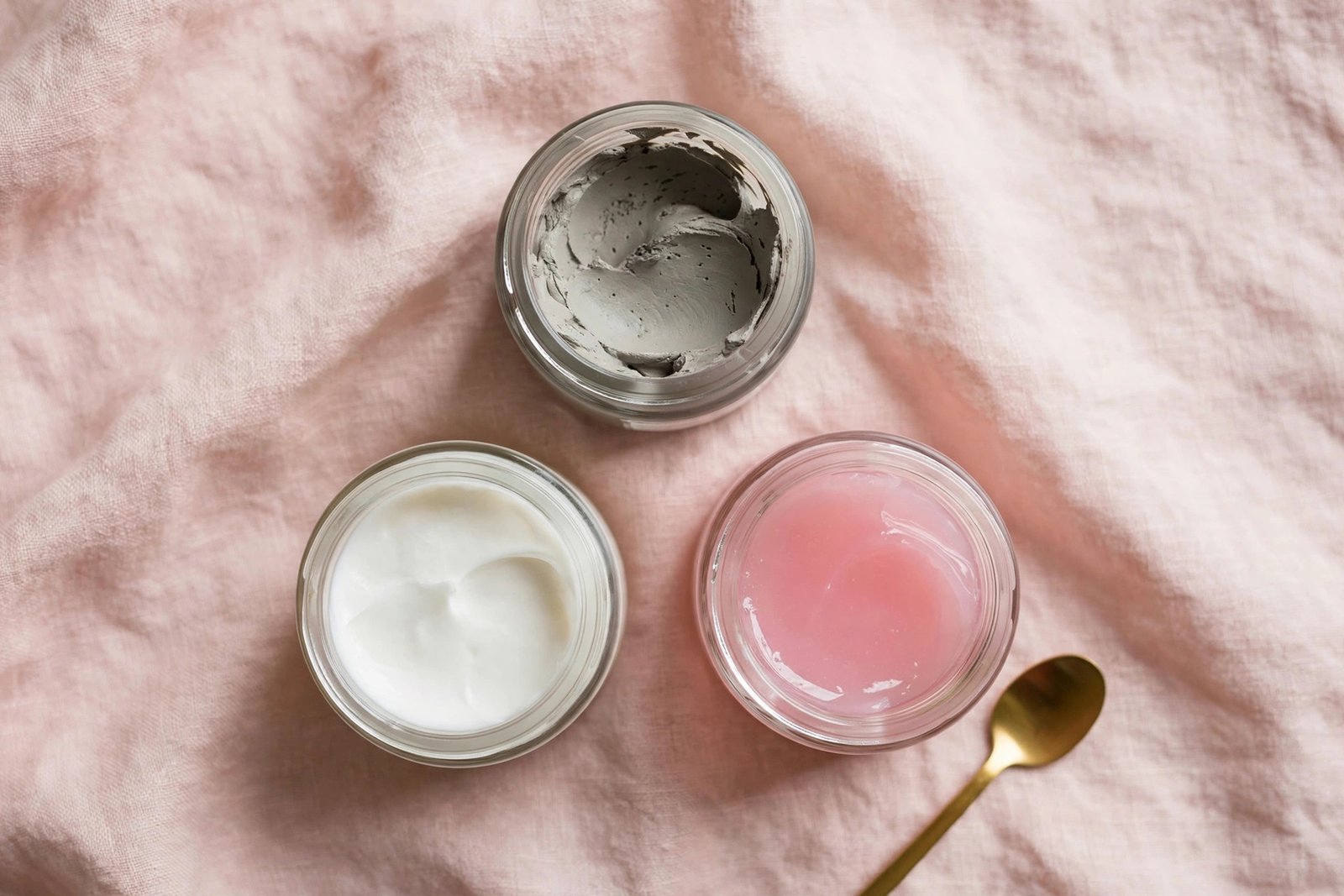
The Short Answer: Frequency by Mask Type
If you want the quick reference, here it is. Each mask type has its own safe range because each one stresses the skin differently:
| Mask type | Recommended frequency | Notes |
|---|---|---|
| Sheet mask (hydrating) | 2–3 times per week | Most forgiving; daily use okay for short stretches |
| Clay mask | 1–2 times per week (oily); 1x per 1–2 weeks (dry) | Never daily; respect the dry-time rule |
| Sleeping mask | 2–3 nights per week | Not necessarily nightly, even in winter |
| Peel-off mask | Once a week at most | The harshest type; skip if sensitive |
| Cream/gel rinse-off mask | 1–3 times per week | Depends on formula — hydrating more often, exfoliating less |
| Exfoliating mask (AHA/BHA) | Once a week | Counts as your exfoliation for that day |
The pattern: hydrating masks can be used more often because they add to the skin; absorbing and exfoliating masks must be used less often because they take away. That single principle answers most frequency questions.
For technique refreshers on the two most popular types, see [how to use sheet masks → how-to-use-sheet-masks] and [clay mask timing → how-to-use-clay-mask].
Adjusting for Your Skin Type
The chart above assumes normal-to-combination skin. Adjust up or down based on yours:
Oily skin: You can sit at the higher end of every range — clay twice a week, sheet masks three times a week. Your skin produces more oil to replace what masking removes, so it tolerates more frequent treatment. The limit is still real, though: daily clay masking will strip even oily skin and trigger rebound oiliness.
Dry skin: Stay at the lower end. Sheet and sleeping masks 2–3 times a week are your friends; clay drops to once every one to two weeks, and only a gentle kaolin formula. If your skin feels tight after masking even at low frequency, the formula is too strong, not the schedule too aggressive.
Sensitive or reactive skin: Less is more. Once a week total masking is a sensible starting point, using only fragrance-free, gentle formulas. Introduce one mask type at a time and give your skin a full week to react before adding a second session.
Combination skin: Treat zones differently rather than changing total frequency. Clay on the T-zone weekly, hydrating masks on the cheeks 2–3 times weekly. Multi-masking lets you hit the right frequency per zone in a single session.
Acne-prone skin: Moderate frequency with non-comedogenic formulas. Clay once a week can help with congestion; heavy or fragranced masks used too often can trigger new breakouts. If breakouts increase after you start masking, reduce frequency before blaming the product.
A Sample Weekly Masking Schedule
Here is what a balanced week looks like for normal-to-combination skin. Adapt the days to your life — the spacing matters more than the specific days:
- Monday: Rest day — basic routine only.
- Tuesday: Sheet mask evening (15–20 minutes, then moisturizer).
- Wednesday: Rest day.
- Thursday: Clay mask evening (10 minutes, remove while tacky, moisturize after). Keep exfoliating acids off this day.
- Friday: Rest day.
- Saturday or Sunday: Sleeping mask night (apply as final step over moisturizer).
- The other weekend day: Rest or an optional second sheet mask if skin wants it.
Total: three masking sessions across the week, each a different type, none on consecutive days. That spacing gives your skin recovery time between treatments, which is when the actual improvement happens.
For oily skin, add a second clay session mid-week (never on consecutive days). For dry skin, swap the clay session for a hydrating cream mask and keep the two overnight/sheet sessions. The framework stays the same; only the mask types change.
The Over-Masking Warning Signs
More masking is not better masking. The skin barrier — the protective outer layer that keeps moisture in and irritants out — can only handle so much treatment before it protests. Watch for these signs that you have crossed the line:
- Persistent redness that does not fade within an hour of masking. Occasional mild flushness is normal; lasting redness is a barrier complaint.
- Stinging or burning when you apply products that never bothered you before. This is the classic sign of a compromised barrier — your skin has become sensitized.
- New breakouts in areas where you do not usually break out. Over-treated skin often responds with congestion and inflammation.
- Tight, shiny, almost “plastic” looking skin. That tight-shiny combination is not glow — it is stripped skin reflecting light off a damaged surface.
- Flaking or peeling that is not part of an intentional exfoliation treatment.
- Products suddenly “not working.” When the barrier is impaired, everything feels irritating and nothing absorbs properly.
If you notice two or more of these, stop all masking (and all actives) for one to two weeks. Return to a minimal routine — gentle cleanser, basic moisturizer, sunscreen — and let the barrier rebuild. Then reintroduce masking at half your previous frequency. Most over-masking damage reverses within a couple of weeks once the cause is removed.
Masking and Exfoliation: Counting Your Actives
A common way people over-mask without realizing it: they count masks and exfoliants separately, when the skin experiences them together. Clay masks have a mild exfoliating effect. Exfoliating masks (AHA/BHA, enzyme) are exfoliants outright. Using both in the same week without planning is how irritation sneaks up.
The rule: treat exfoliating masks as your exfoliation for that day, and never stack them with chemical exfoliants, scrubs, or retinoids in the same routine. If you are still calibrating your exfoliation schedule, read [how often to exfoliate → how-often-should-you-exfoliate-face] and plan masking days around it — ideally with at least a day of rest between any two intensive treatments.
Specialty masks follow their own logic too. A [turmeric face mask → turmeric-face-mask-how-often], for example, is typically used 1–2 times weekly because of its mild exfoliating and staining properties — a good illustration of why “mask frequency” always depends on what the mask actually does.
When to Mask More (and When to Mask Less)
Frequency is not fixed for life. Adjust seasonally and situationally:
Mask more when: your skin is adjusting to a new climate (winter dryness, summer oiliness), before an event where you want your skin at its best (a sheet mask 2–3 days before works well), or when recovering from a period of neglect — a focused week of consistent masking can jump-start improvement.
Mask less when: your skin is irritated, sunburned, or recovering from a professional treatment; during periods of high stress when skin tends to be reactive; or when you have introduced any new active (retinol, strong acids) and your skin is still adjusting.
The consistency principle: three months of steady twice-weekly masking beats one intense “mask every day for two weeks” burst followed by burnout. Skin improves on rhythms, not sprints. Pick a schedule you can maintain, and let time do the compounding.
Frequently Asked Questions
Can I use a different mask every day if they are all gentle?
Even gentle masks add up. Daily masking of any kind gives your skin no recovery time and risks low-grade barrier disruption that shows up as sensitivity weeks later. Stick to 1–3 sessions per week total, even with gentle formulas.
Is it bad to skip masking for weeks?
Not at all. Masks are treatments, not essentials — your core routine (cleanser, moisturizer, sunscreen) does the daily heavy lifting. Missing weeks of masking costs you nothing; over-masking for weeks can cost you your barrier.
Should I mask in the morning or at night?
Night is better for most masks: your skin is clean of the day’s sunscreen and pollution, and you are not rushing. Morning masking works for a quick sheet mask before makeup, but clay and treatment masks belong in the evening.
Can I do two masks in one day?
Occasionally, yes — multi-masking different zones in one session is fine, and a clay mask followed much later by a sleeping mask on the same day is acceptable once in a while. But do not make it a habit, and never stack two intensive treatments (clay plus exfoliating mask) back to back.
How long before I see results from regular masking?
Hydration benefits show up immediately — plumper, dewier skin the next morning. Congestion and texture improvements from clay masking typically take 3–4 consistent weeks. If nothing has changed after 6–8 weeks at the right frequency, the mask type may not match your concern.
Do men need a different masking frequency?
No. Skin is skin — frequency depends on skin type and mask type, not gender. Thicker or oilier skin may tolerate the higher end of the ranges, but the same principles apply.
The Bottom Line
Match frequency to the mask type (hydrating more often, absorbing and exfoliating less), adjust for your skin type (oily higher, dry and sensitive lower), keep total sessions at 1–3 per week, and watch for the over-masking warning signs. Build your plan with the [face masks guide for beginners → face-masks-guide-for-beginners], nail the technique with [how to use sheet masks → how-to-use-sheet-masks] and [clay mask timing → how-to-use-clay-mask], and fit it all into a [beginner skincare routine → skincare-routine-for-beginners-step-by-step] you can actually maintain.
face masks guide for beginners
how to use sheet masks
clay mask timing
how often to exfoliate
turmeric face mask
beginner skincare routine
Love this? Pin it for later!