Winter Static Hair Fixes: Tame Flyaways in Dry Air
You take off your wool hat, and your hair stands up in every direction. You pull a sweater over your head, and suddenly you’re conducting electricity. You walk into a heated room and your carefully styled hair develops a frizz halo within minutes. Winter static is one of the most universal cold-weather beauty complaints — and one of the most fixable.
Static isn’t a styling failure; it’s physics. The fixes: add moisture, reduce friction, neutralize the charge, change the environment. This guide gives you the full toolkit — instant tricks, preventive products, and environmental changes that stop it at the source.
Static is also the enemy of holiday styling — flyaways ruin updos and frizz halos show in photos. Pair this guide with the complete holiday hair styles guide.
Key Takeaways
- Winter static happens because dry air can’t conduct away the electrical charge that friction builds up in your hair.
- Moisture is the root fix: hydrated hair conducts charge away; dry hair holds it — so winter hair care starts with conditioning.
- A dryer sheet pressed lightly over hair neutralizes static instantly through its anti-static coating (a legitimate quick fix).
- Leave-in conditioners, anti-frizz serums, and a small amount of hair oil all reduce static by adding moisture and weight.
- Humidifiers address the actual cause — dry indoor air — and help both hair and skin all winter.
- Fabric choices matter: wool, acrylic, and polyester generate far more static than cotton, silk, or satin.
- Metal combs generate less static than plastic ones; natural-bristle brushes beat plastic-bristle for the same reason.
Why Winter Causes Static: The 60-Second Physics
Static electricity is an imbalance of electric charge. When two materials rub together — your hair against a wool hat, a brush against dry strands, a sweater pulled over your head — electrons transfer from one to the other. Your hair ends up with a surplus or deficit of electrons, and since like charges repel, individual strands push away from each other. That’s the flyaway halo: your hair literally repelling itself.
Why winter? Cold air holds less moisture — and airborne moisture is what normally conducts stray charge away. In humid summer air, charge dissipates; in dry winter air, it accumulates. Plus more friction sources: wool hats, scarves, high collars, indoor heating, constant layering.
Dry hair makes it worse: hydrated hair conducts charge away, while dry and brittle hair holds it. The long-term static fix and the winter dryness fix are the same fix.
Instant Fixes: What to Do Right Now
When you’re already staticky and need it gone in sixty seconds:
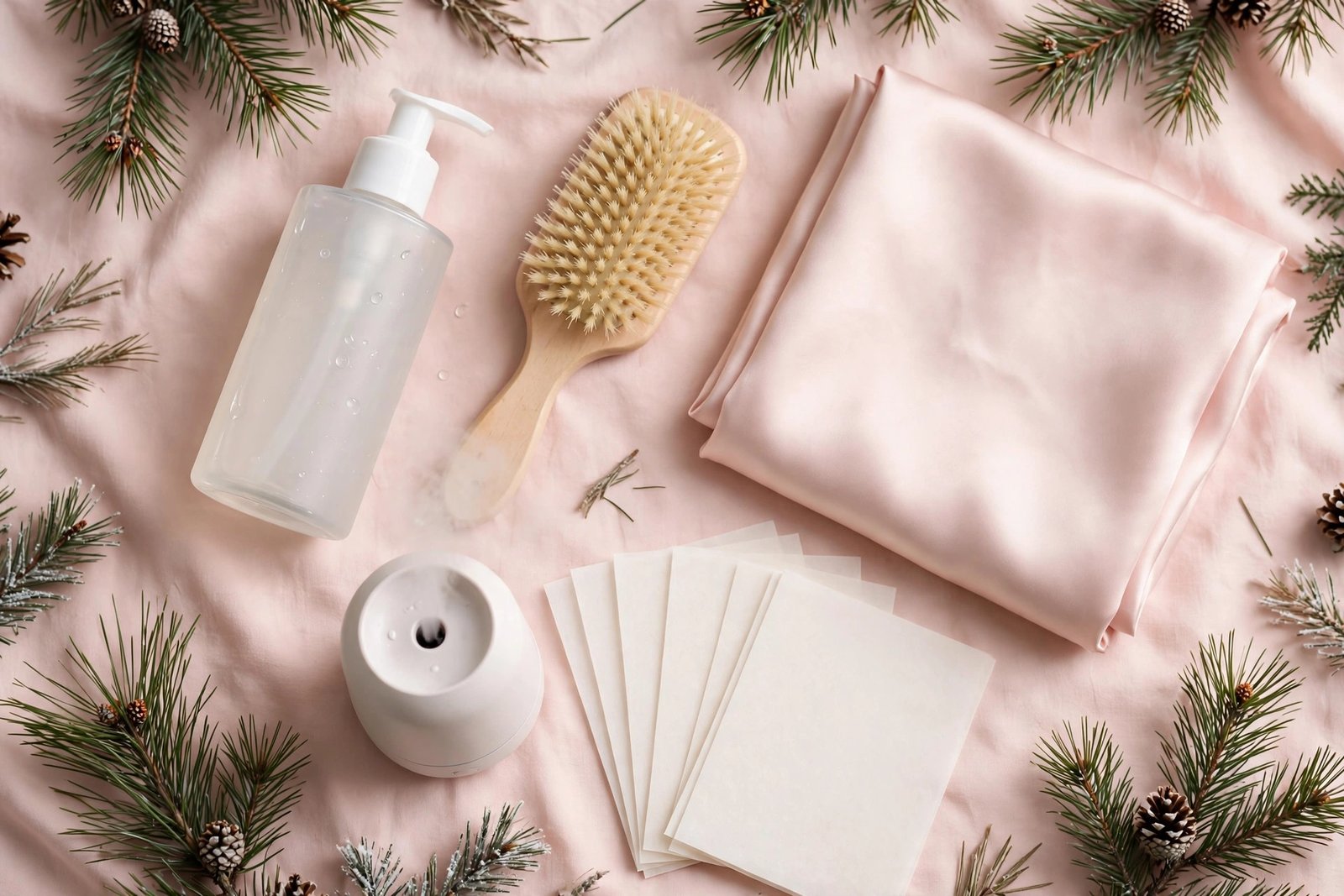
The dryer sheet trick. Press an unscented dryer sheet lightly over your hair, gliding roots to ends — don’t rub. The anti-static coating neutralizes the charge imbalance. It’s the fastest static fix there is; keep a few in your bag all winter.
Hand lotion on palms. Smooth a pea-sized amount between your palms and press lightly over flyaways — the moisture neutralizes the charge. Press, don’t rake. Use sparingly; too much looks greasy.
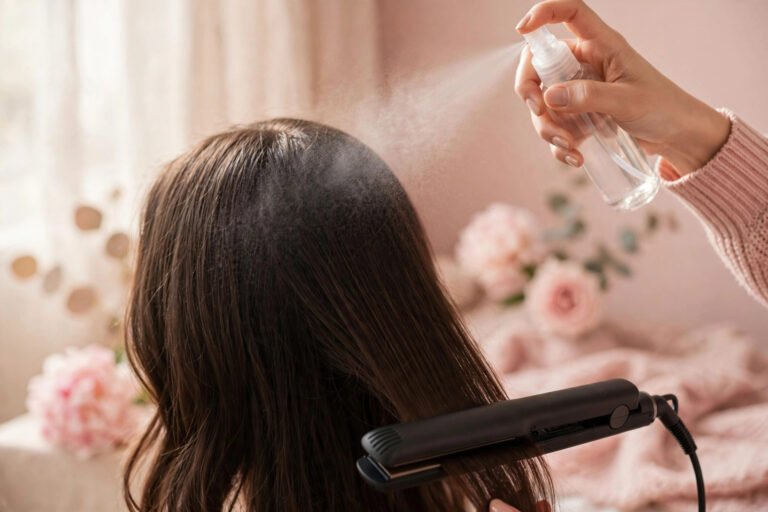
Water in a pinch. Lightly damp hands pressed over hair work the same way — water conducts the charge away. A travel-size water mist sprayed from 12+ inches away also works. The effect is temporary (until the water evaporates), but it buys you time.
Metal over plastic. If you’re carrying a plastic comb, switch to smoothing with your hands or a metal comb if one is available — plastic generates static with every stroke on dry hair, actively making the problem worse while you try to fix it.
These are triage, not treatment. They neutralize the charge that’s already there, but in dry winter air it’ll build up again within hours. For lasting results, you need the preventive measures below.
Preventive Products: Building an Anti-Static Routine
Leave-in conditioner. The single most effective anti-static product category: lasting moisture lets hair dissipate charge instead of holding it. Apply to damp mid-lengths and ends after washing — fine hair should use a lightweight spray, not a cream.
Anti-frizz serums and hair oils. Silicone-based serums coat the hair shaft, which does two things: seals in moisture and creates a smooth surface with less friction. A pea-sized amount smoothed over dry hair (palms pressed flat, not raked) tames existing flyaways and prevents new ones. Lightweight oils work similarly — oiling guidance for hair health covers which oils suit which hair types, and the same principles apply here.
Deep conditioning in winter. If static is a new winter problem rather than a year-round one, your hair is telling you it’s dehydrated. Increase deep-conditioning frequency through the cold months — weekly masks instead of monthly. a DIY mask for dry, damaged hair is a good weekly option, and a proper winter hair-care routine helps you restructure the basics for the season.
Anti-static sprays. Dedicated anti-static hair sprays work — light conditioning mists with anti-static agents. Regular light-hold hairspray helps somewhat too. In a pinch, a tiny spritz of fabric anti-static spray on your brush (not your scalp) works.
What to avoid: Frequent clarifying shampoos strip the oils that help hair conduct charge — cut back in winter. Very hot shower water strips moisture too. And protein treatments without balancing moisture worsen static — moisture first, protein second.
Environment Fixes: Humidifiers and Fabric Choices
Products treat your hair; environmental changes treat the cause. These two make the biggest difference:
Run a humidifier. Dry indoor heating is the primary static engine. A bedroom humidifier gives charge somewhere to dissipate instead of building in your hair — it also helps dry winter skin. Aim for 40-50% humidity: the closest thing to a root-cause fix.
Rethink your fabrics. Not all fabrics generate equal static. The worst offenders: wool (especially coarse wool), acrylic, polyester, and nylon — all common in winter hats, scarves, and sweaters. The best: cotton, silk, and satin generate minimal static. Practical swaps that don’t require a wardrobe overhaul:
– Line wool hats with a silk or satin scarf (or wear a silk cap underneath) so the wool never touches your hair directly
– Choose cotton or silk-blend scarves for the layer that sits against your hair
– Satin or silk pillowcases eliminate the 8-hour friction session that is sleeping on cotton in dry air
– When buying winter accessories, check the lining material — a satin-lined hat prevents more static than any product
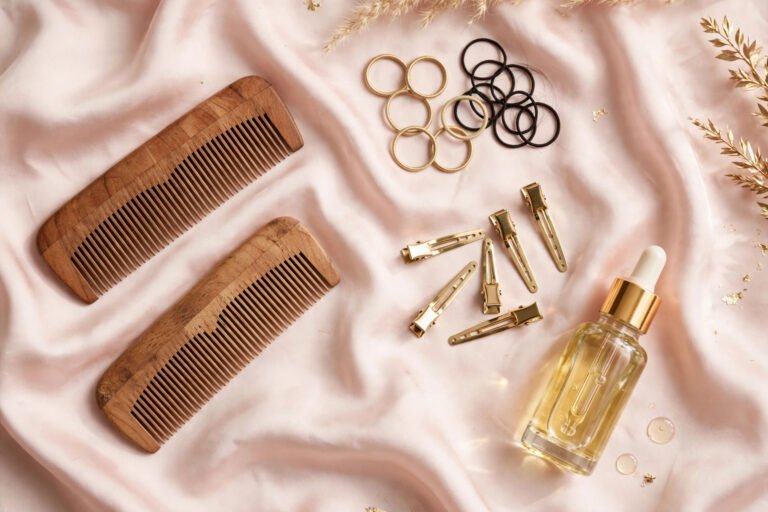
Brushes and combs. Plastic bristles generate static with every stroke; natural boar bristles generate far less and distribute oils down the shaft (which itself reduces static). A metal or wooden comb beats a plastic one. If you only change one tool, make it the brush — it’s the highest-friction item in your routine.
Static-Proofing Your Holiday Styles
Static is especially cruel to party hair — it strikes exactly when you’ve finished styling. A few event-specific defenses:
Prep with moisture. The styles in the holiday hair styles guide hold better and frizz less when hair is properly hydrated. Do your deep-conditioning treatment 2-3 days before the event (not the night before — you want the moisture benefit without slippery residue).
Finish with serum, not just spray. Hairspray holds shape but doesn’t add moisture. For winter events, finish with a light serum smoothed over the surface first (tames flyaways, adds weight against static lift), then a flexible-hold spray to lock the style. The combination handles both hold and static.
Updos are naturally static-resistant. Hair that’s pinned up has less exposed surface area and less movement, which means less friction and less charge buildup. If static is severe on event day, an updo from the holiday updos tutorial is the pragmatic choice — it’s both elegant and physically resistant to the problem.
The arrival ritual. Coats, scarves, hats, and car seats generate static en route. Build a two-minute arrival routine: dryer sheet pressed over hair, mirror check, re-pin anything the scarf disturbed.
Emergency kit addition. Winter party bags need: 2-3 dryer sheets, a travel anti-frizz serum, and a small silk scarf — wrapping hair in silk for the car ride prevents the hat-and-scarf static bomb.
Frequently Asked Questions
Why is my hair so staticky in winter but fine in summer?
Cold air holds less moisture, and dry air can’t conduct away friction’s electrical charge. In humid air the charge dissipates; in dry winter air it accumulates until strands repel each other. Indoor heating worsens it.
Does the dryer sheet trick actually work on hair?
Yes. Dryer sheets are coated with positively charged surfactants designed to neutralize static charge — the same charge imbalance causing your flyaways. Pressing one lightly over hair transfers enough of the coating to neutralize the static. Unscented sheets avoid adding fragrance to your hair.
Will cutting my hair reduce static?
Not meaningfully. Static is a function of dryness, friction, and air moisture — not length. Long hair shows it more because there’s more hair to repel, but short hair gets staticky too. Fix the moisture and environment, not the length.
Can certain shampoos cause more static?
Indirectly, yes. Harsh or clarifying shampoos used too frequently strip the natural oils that help hair dissipate charge, leaving hair drier and more static-prone. In winter, switch to a gentler shampoo and don’t clarify more than occasionally — how often to wash helps you find the right frequency.
Is static a sign my hair is damaged?
It can be. Healthy, hydrated hair conducts charge away; dry, damaged hair holds it. If static is new or dramatically worse, it’s worth assessing your hair’s condition — why hair gets dry and brittle walks through the causes. But even perfectly healthy hair gets staticky in very dry air, so some winter static is just physics.
Do humidifiers really help hair static?
Yes — they’re the closest thing to addressing the root cause. Static needs dry air to build up; raising indoor humidity to 40-50% gives the charge a path to dissipate. It’s the only fix that works while you sleep without any product on your hair.
Winter static isn’t a personal failing — it’s physics plus dry air. Add moisture to your hair, reduce friction, neutralize charge when it appears, and humidify your air. The flyaway halo becomes a minor nuisance, and your holiday photos will thank you.
Love this? Pin it for later!