DIY Hair Mask for Dry, Damaged Hair (3 Easy Recipes)
Dry, brittle hair that snaps, frizzes, or just looks dull is one of the most common hair complaints — and one of the easiest to treat at home. A good DIY hair mask for dry, damaged hair can restore moisture, smooth the cuticle, and bring back shine using ingredients you probably already have in your kitchen.
In this guide, you’ll learn why hair gets damaged in the first place, three simple and effective hair mask recipes (avocado, coconut oil, and banana), exactly how to apply them, and how often to use them for the best results. If you’re new to homemade beauty treatments, start with our beginner’s guide to DIY beauty recipes for safety basics like patch testing.
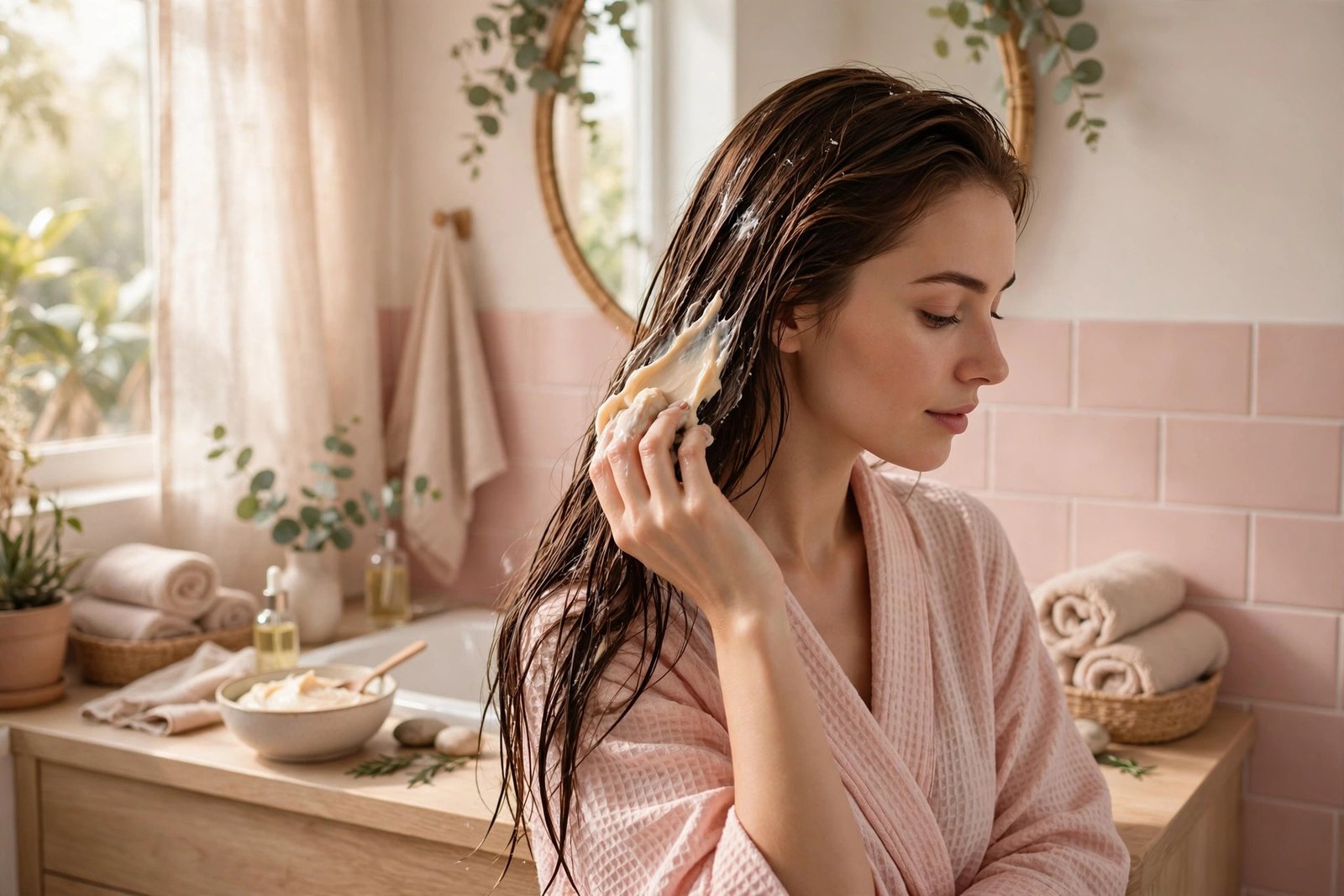
Why Hair Gets Dry and Damaged
Before reaching for a mask, it helps to understand what’s actually happening to your hair. Each strand is covered in overlapping cuticle scales, like shingles on a roof. When the cuticle lies flat, hair looks smooth and shiny. When it’s raised or chipped away, moisture escapes — and that’s when hair turns dry, frizzy, and fragile.
The most common causes of damage include:
- Heat styling — Flat irons, curling wands, and blow dryers on high heat break down the keratin proteins in hair. Even occasional heat use adds up over time. If your hair smells burnt after straightening, that’s a sign of real heat damage — here’s what’s happening and how to fix it.
- Chemical treatments — Bleach, permanent color, perms, and relaxers all alter the hair’s internal structure. Bleached hair is especially porous and thirsty.
- Sun and environment — UV rays, chlorine, salt water, and even wind dry out the hair shaft, particularly in summer.
- Over-washing — Shampooing too often strips the natural oils (sebum) that protect the hair. Dry hair types often do better washing just 1–3 times per week.
- Rough handling — Brushing wet hair aggressively, tight hairstyles, and coarse towels all cause mechanical breakage.
A hair mask works by delivering concentrated moisture and conditioning agents deep into the hair shaft, temporarily smoothing the cuticle and filling in porous gaps. It won’t permanently “repair” split ends (nothing can fuse those back together — only a trim does that), but it dramatically improves how damaged hair looks and feels.
Recipe 1: Avocado Deep-Moisture Mask
Best for: Very dry, coarse, or thick hair that drinks up moisture.
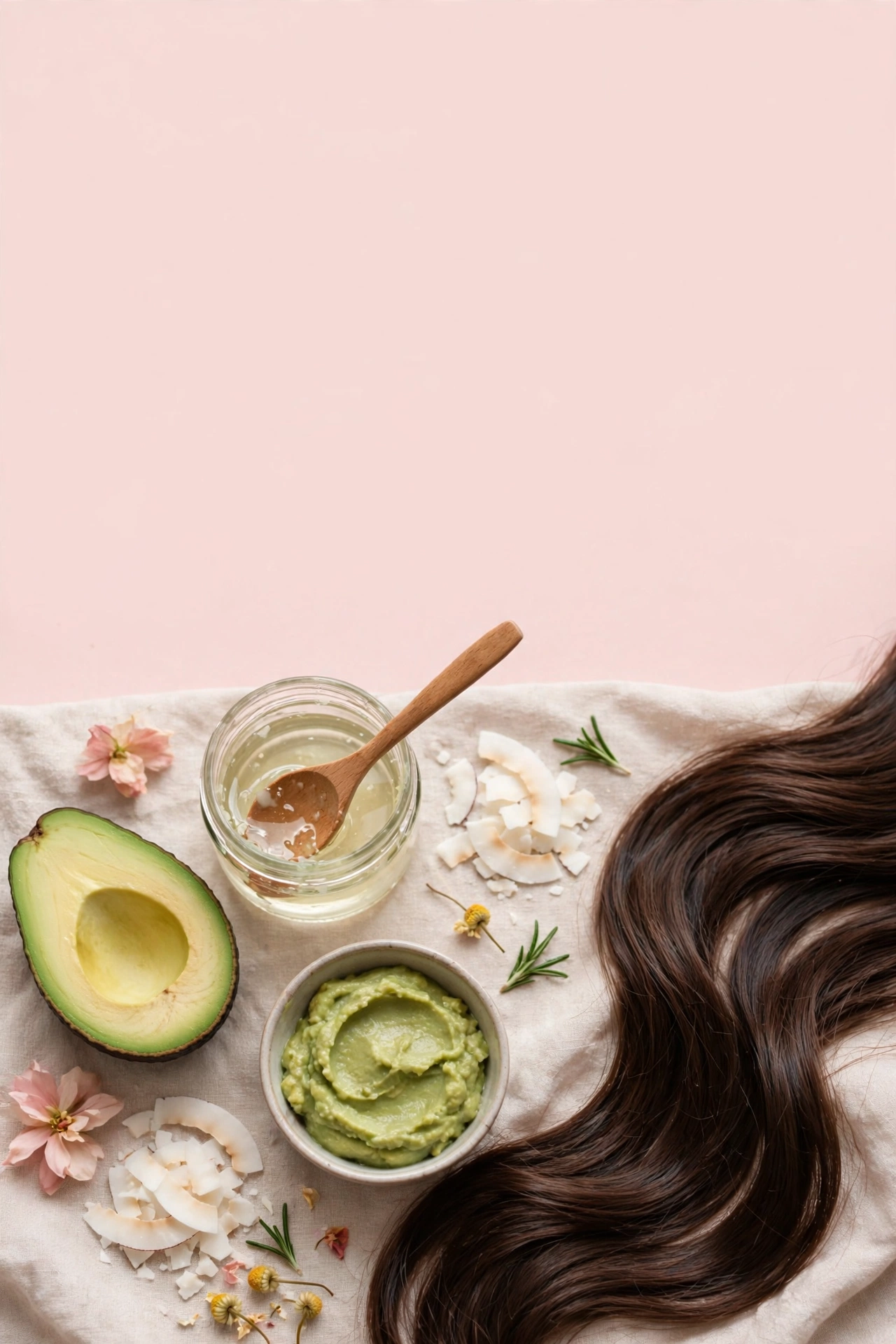
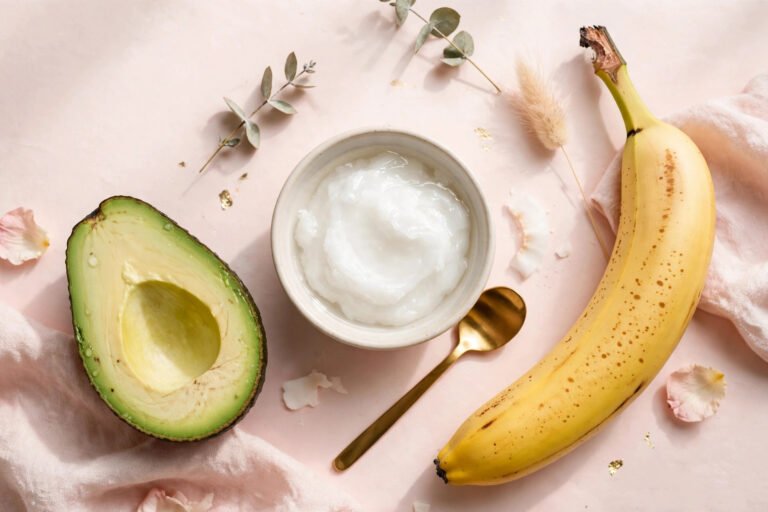
Avocado is rich in monounsaturated fats and vitamins E and B, which help soften the hair shaft and add slip. Olive oil adds extra emollience, and honey is a natural humectant that draws moisture in.
Ingredients
- 1 ripe avocado
- 2 tablespoons olive oil
- 1 tablespoon honey
Instructions
- Scoop the avocado flesh into a bowl and mash it thoroughly with a fork until completely smooth. Lumps are the enemy here — they get stuck in hair and are miserable to rinse out. For extra-smooth results, blend it.
- Stir in the olive oil and honey until you have a creamy, even paste.
- Apply to damp (not soaking wet) hair, working from mid-lengths to ends. If your scalp is oily, keep the mask off the roots.
- Pile your hair up, cover with a shower cap or warm towel, and leave on for 20–30 minutes. Gentle heat helps the mask penetrate.
- Rinse thoroughly with lukewarm water, then shampoo lightly and condition as normal.
Safety note
Avocado is generally safe for topical use, but do a patch test on your inner forearm first if you have plant or latex allergies (avocado can cross-react with latex allergy in rare cases). Never microwave the mixture — apply at room temperature.
Recipe 2: Coconut Oil Hot Oil Treatment
Best for: Damaged, porous, or chemically treated hair that needs deep conditioning.
Coconut oil is one of the few oils scientifically shown to penetrate the hair shaft rather than just sitting on top, thanks to its small molecular structure (lauric acid). It reduces protein loss during washing, which is exactly what damaged hair needs.
Ingredients
- 3–4 tablespoons virgin coconut oil (more for long or thick hair)
- Optional: 5 drops of rosemary or lavender essential oil for scent
Instructions
- Warm the coconut oil until just melted and comfortably warm — never hot. You can place the jar in warm water for a few minutes.
- If using essential oil, stir it in after warming. (Skip essential oils entirely if you’re pregnant, have a sensitive scalp, or prefer to keep it simple.)
- Apply generously to dry hair, from roots to ends. Massage into the scalp for a minute or two to boost circulation.
- Cover with a shower cap and leave on for 30 minutes to 2 hours. Some people leave it overnight, but start with a shorter session to see how your hair responds.
- Shampoo twice to fully remove the oil — the first wash moves the oil around, the second actually cleans. Follow with your regular conditioner.
Safety note
Coconut oil is comedogenic and can be heavy. If you have very fine or low-porosity hair, it may feel weighed down or look greasy even after washing — use less, apply only to ends, or try the avocado mask instead. Always patch test essential oils (diluted) before putting them near your scalp.
Recipe 3: Banana Shine-Boosting Mask
Best for: Dull, lackluster hair that needs softness and shine.
Bananas contain silica (a mineral associated with shinier hair), potassium, and natural oils. Combined with yogurt’s lactic acid (a gentle exfoliant for the scalp) and honey’s humectant properties, this mask leaves hair noticeably softer and glossier.
Ingredients
- 1 very ripe banana (the spottier, the better — riper means softer and easier to blend)
- 2 tablespoons plain yogurt (full-fat works best)
- 1 tablespoon honey
Instructions
- This step is critical: blend the banana completely smooth in a blender. Mashing with a fork is not enough — banana chunks cling to hair and are extremely difficult to rinse out. Blend until it’s a thin, lump-free puree.
- Whisk in the yogurt and honey.
- Apply to damp hair from roots to ends.
- Cover and leave on for 20–30 minutes.
- Rinse very thoroughly with lukewarm water, then shampoo and condition.
Safety note
Use a truly ripe banana and blend it smooth — this is the number one complaint with banana masks, and it’s entirely avoidable. If you have a dairy sensitivity, swap the yogurt for 2 tablespoons of aloe vera gel.
How to Apply a Hair Mask (Step by Step)
Technique matters as much as ingredients. Follow these steps for any of the three recipes:
- Start with damp hair. Lightly mist or towel-dry after washing — or apply before your shower on dry hair for the coconut oil treatment. Damp hair absorbs product better than dripping wet hair (water fills the shaft and blocks the mask).
- Section your hair. Divide into 4–6 sections with clips. This ensures even coverage, especially on thick hair.
- Apply mid-lengths to ends first. The ends are the oldest and most damaged part of your hair. Work the mask upward, but go easy on the roots unless your scalp is dry.
- Add gentle heat. A shower cap traps body heat; wrapping a warm towel over it boosts penetration. Ten extra minutes under warmth beats thirty without it.
- Time it right. 20–30 minutes is the sweet spot for most masks. Longer isn’t always better — leaving protein-heavy treatments on for hours can make hair feel stiff.
- Rinse with lukewarm water. Hot water strips moisture right back out. Rinse until the water runs clear, then shampoo (if needed) and condition.
How Often Should You Use a Hair Mask?
It depends on your hair’s condition and type:
- Very dry or damaged hair: Once a week. This is the most common recommendation from stylists for hair that’s been bleached, heat-damaged, or chemically treated.
- Normal hair: Every 1–2 weeks for maintenance and extra softness.
- Fine or oily hair: Every 2 weeks, applied only from mid-lengths to ends. Over-masking fine hair leads to limp, greasy-feeling strands.
- Curly or coily hair: Weekly is usually ideal, since natural oils have a harder time traveling down the curl pattern.
Pay attention to how your hair feels. If it starts feeling mushy, overly soft, or limp, you’re over-moisturizing — cut back to every two weeks. If it still feels dry and rough, you can increase to twice weekly for a short intensive period.
For an in-between treatment, a rice water rinse is a lighter option that adds protein and shine without the heaviness of a full mask.
Frequently Asked Questions
Can a DIY hair mask actually repair damaged hair?
It can dramatically improve how damaged hair looks and feels by smoothing the cuticle and restoring moisture — but it can’t permanently fuse split ends or reverse chemical damage at a structural level. Think of masks as intensive conditioning, not reconstruction. Regular trims are still the only fix for split ends.
Should I apply a hair mask before or after shampooing?
It depends on the mask. Oil-based treatments (like the coconut oil recipe) work well on dry hair before shampooing, since you’ll wash the oil out. Creamy masks (avocado, banana) are usually best on damp, freshly washed hair, applied in place of or before your regular conditioner.
Can I leave a hair mask on overnight?
For the coconut oil treatment, yes — many people do this with good results, though you should protect your pillowcase. For the avocado and banana masks, it’s not recommended: food-based masks can spoil, irritate the scalp, or dry into a difficult-to-remove crust. Stick to 20–30 minutes for those.
Why does my hair feel worse after a hair mask?
Usually one of three reasons: (1) residue wasn’t fully rinsed out — shampoo again; (2) the mask was too heavy for your hair type — use less product or apply only to ends; (3) banana or avocado chunks got stuck — blend smoother next time and rinse more thoroughly.
Are DIY hair masks safe for color-treated hair?
Generally yes, but with caveats. Coconut oil and avocado are color-safe. Avoid anything acidic (like lemon juice or vinegar in large amounts) on fresh color, as acids can strip or shift dye. Always wait at least 48–72 hours after coloring before doing any intensive treatment.
Key Takeaways
- Damaged hair has a raised, porous cuticle that loses moisture — masks work by smoothing it and delivering deep hydration.
- Avocado mask is best for very dry, thick hair; coconut oil penetrates the shaft and reduces protein loss; banana mask adds softness and shine.
- Blend food-based masks completely smooth, apply to damp hair, add gentle heat, and rinse with lukewarm water.
- Use a mask weekly for damaged hair, every 1–2 weeks for maintenance, and less often for fine hair.
- Always patch test new ingredients, and remember: masks condition beautifully, but only trims fix split ends.
Love this? Pin it for later!