What Is a Sleeping Mask? Benefits & How to Use It Overnight
A sleeping mask is a leave-on gel or cream treatment applied as the final step of your nighttime routine and worn while you sleep. The concept comes from Korean skincare, and the logic is simple: your skin loses moisture overnight, and an occlusive layer on top of your routine seals everything in while you get hours of uninterrupted treatment time.
But the name confuses a lot of beginners. Is it a mask? A moisturizer? Do you wash it off in the morning? Do you need one if you already use night cream? This guide answers all of it: what sleeping masks are, how they differ from night creams, the correct layering order, who benefits most, and exactly how to use one.
For context on how sleeping masks compare with the other mask families, see the [face masks guide for beginners → face-masks-guide-for-beginners].
Key Takeaways
- A sleeping mask is a leave-on overnight treatment applied as the last step of your night routine — you do not rinse it off before bed.
- It works by sealing in the layers beneath it, reducing overnight moisture loss while hydrating ingredients work for hours.
- Sleeping masks are generally lighter than night creams and designed to layer over moisturizer, not replace it.
- Correct order: cleanser, then toner, then serum, then moisturizer, then sleeping mask (last).
- Best for dry, dehydrated, or dull skin; oily skin types should choose lightweight gel formulas and use less frequently.
- Use 2–3 nights per week; rinse off in the morning with your normal cleanser.
What Exactly Is a Sleeping Mask?
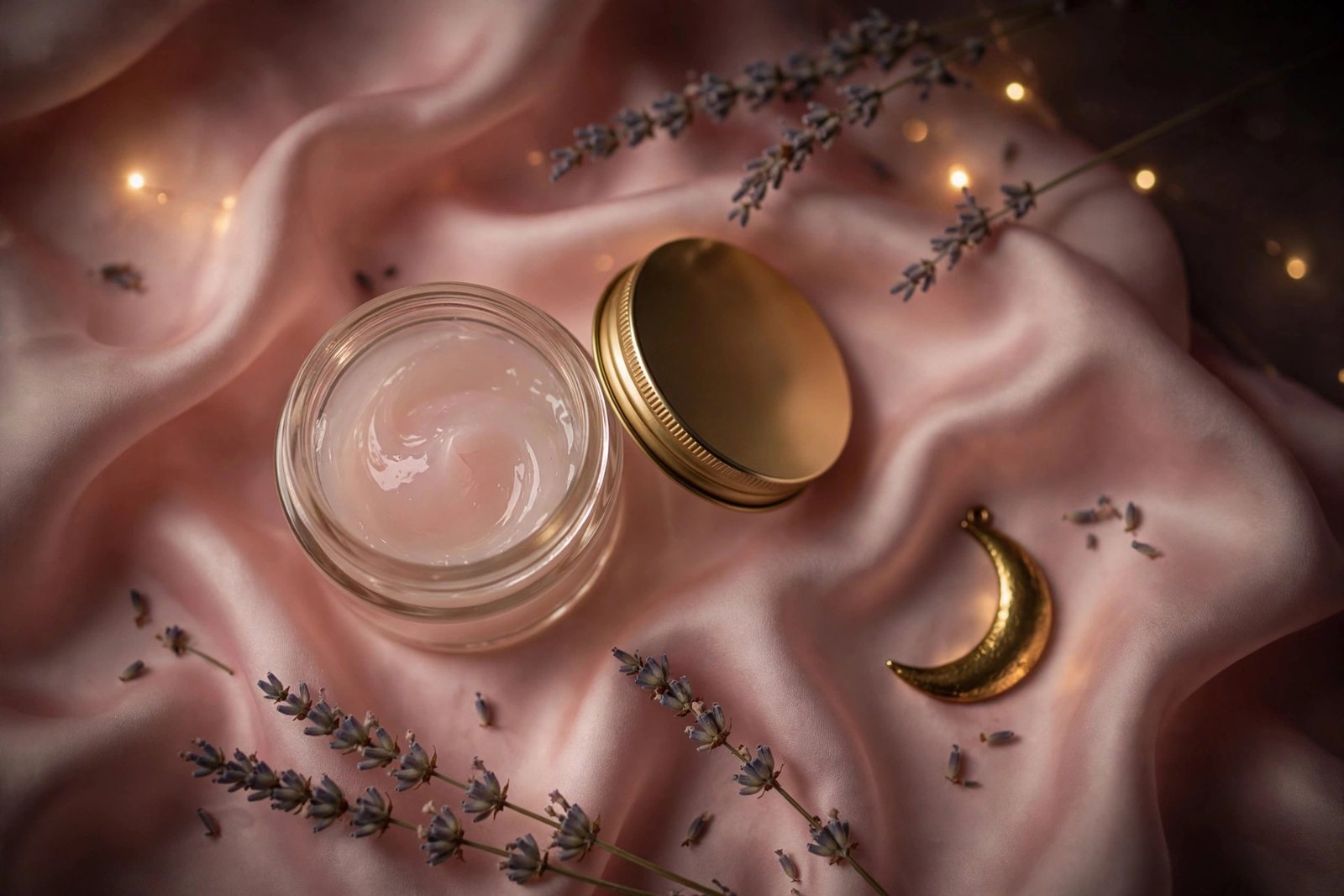
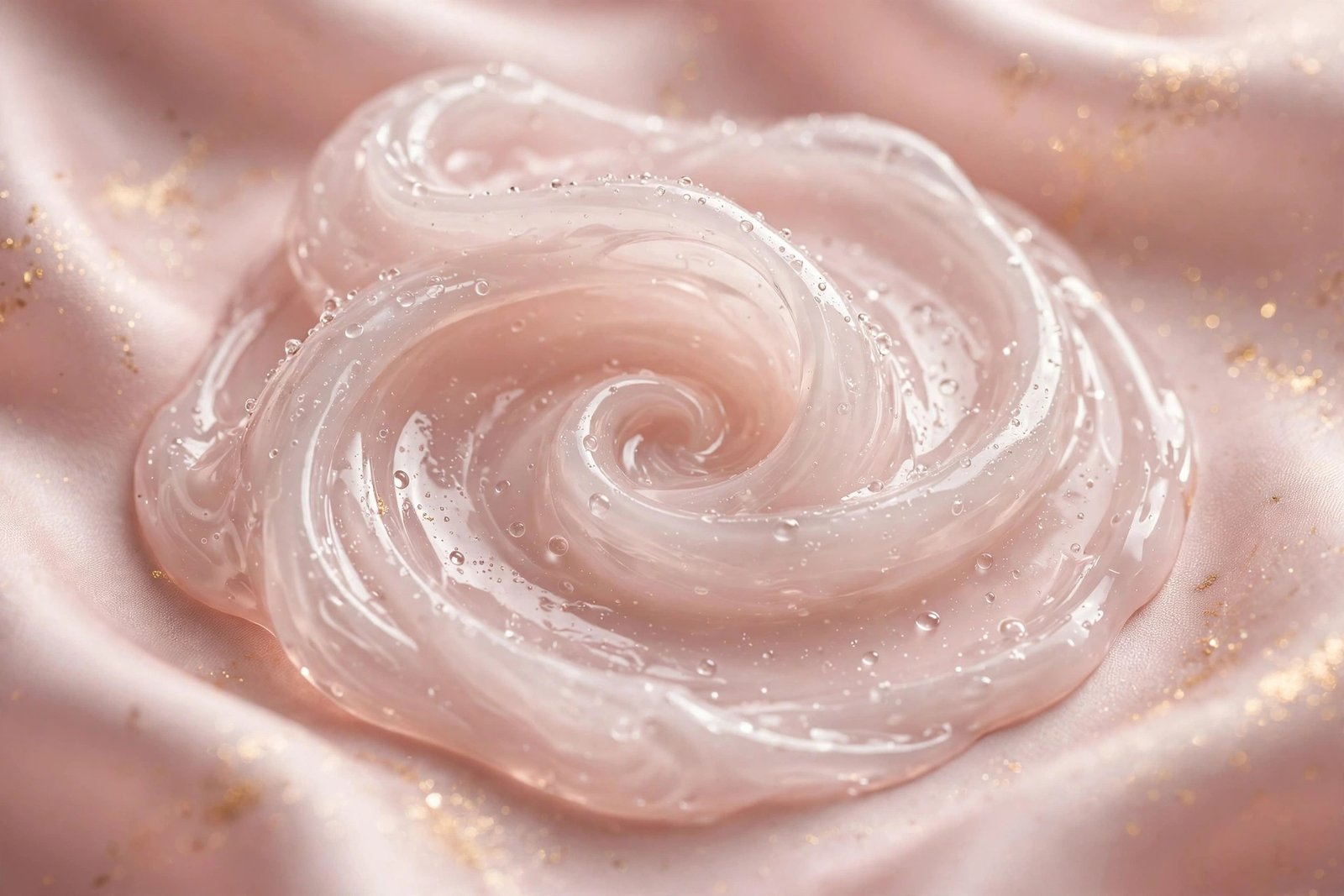
A sleeping mask is a mask in function but a final-step product in form. Unlike rinse-off masks that you wash away after 15 minutes, a sleeping mask stays on your face all night. Its job is twofold: deliver hydrating and nourishing ingredients over an extended period, and form a breathable barrier that prevents the moisture in your underlying layers from evaporating while you sleep.
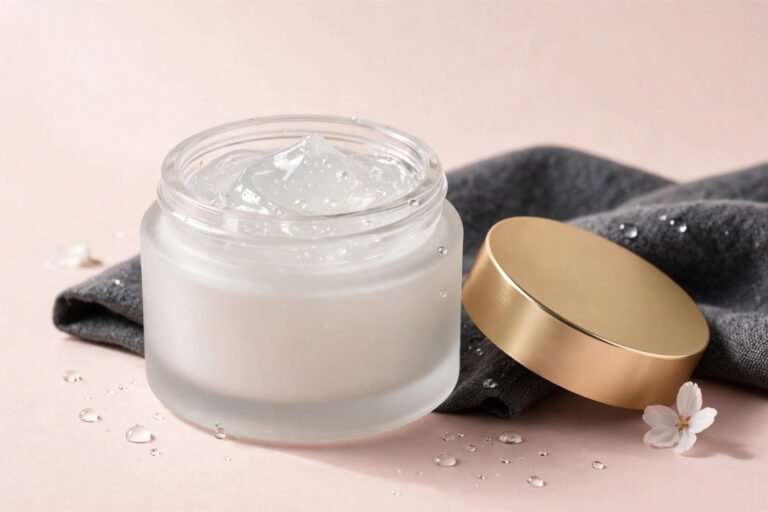
Most sleeping masks have a gel, gel-cream, or light cream texture. They are designed to absorb enough that you are not sliding around on your pillow, while leaving a thin protective veil on the skin’s surface. In the morning, you simply cleanse as usual — the mask has done its work overnight.
The extended contact time is the key advantage. A daytime moisturizer fights a losing battle against air-conditioning, sun, and pollution. A sleeping mask works during the one part of the day when your skin is undisturbed for 7 to 8 hours straight. That is also when skin’s natural repair processes are most active, which is why nighttime is considered the most productive window for treatment products.
Sleeping Mask vs. Night Cream: What’s the Difference?
This is the most common point of confusion, and the answer is about texture, layering, and purpose:
Texture: Sleeping masks are typically lighter — gels or gel-creams that feel fresh going on. Night creams are usually richer and more emollient, with a heavier, more nourishing feel.
Layering position: A sleeping mask is designed to go over your moisturizer as the final seal. A night cream usually is the moisturizer step — it replaces your evening moisturizer rather than layering on top of it.
Purpose: Night creams focus on nourishing the skin itself. Sleeping masks focus on locking in everything underneath while adding a final boost of hydration. Many sleeping masks contain humectants (like hyaluronic acid and glycerin) plus light occlusives that trap moisture.
Do you need both? Not necessarily. If your night cream is rich enough and your skin wakes up comfortable, you may not need a sleeping mask. But they can be combined: on nights when your skin feels extra dry, layer a sleeping mask over your night cream for an intensive treatment. In humid summers, some people skip night cream entirely and use a lightweight sleeping mask as their final step instead.
The honest answer for beginners: if you already own a good night cream and your skin is happy, a sleeping mask is optional. If your skin still feels tight or looks dull in the morning despite moisturizing, a sleeping mask is worth trying before buying anything else.
Who Benefits Most From a Sleeping Mask?
Sleeping masks are not for everyone, and knowing whether you are in the target group saves you a purchase:
Dry or dehydrated skin: The primary audience. If your skin feels tight by morning or makeup looks flaky, overnight sealing directly addresses the problem.
Dull, tired-looking skin: The extended hydration time plumps the skin’s surface, which softens the look of fine dehydration lines and gives a fresher morning appearance.
Seasonal dryness: Many people only need a sleeping mask in winter or in dry climates, when overnight moisture loss spikes. It is a legitimate seasonal product, not necessarily a year-round one.
Post-treatment recovery: After using exfoliating acids or a [clay mask → how-to-use-clay-mask] (on a different night), a sleeping mask helps restore the moisture balance.
Oily skin: Proceed with selectivity. Heavy sleeping masks can feel suffocating and may contribute to clogged pores on oily skin. If you want to try one, choose a lightweight gel formula, use a thin layer, and limit it to 1–2 nights per week. Many oily skin types do better skipping this category.
Acne-prone or very sensitive skin: Patch test and introduce slowly. Occlusive overnight layers can trap irritants against reactive skin, so start with once a week and watch for congestion or redness.
How to Use a Sleeping Mask: The Correct Layering Order
Order matters because each layer needs to reach the skin in sequence, thinnest to thickest, with the sleeping mask sealing everything beneath it.
Your nighttime routine with a sleeping mask:
- Cleanse. Remove the day completely. If you wore sunscreen or makeup, a thorough cleanse is essential — the sleeping mask seals in whatever is on your skin, so make sure it is clean skin.
- Toner or essence (optional). A hydrating toner on damp skin gives the layers that follow something to hold onto.
- Serum. Apply your treatment serum — this is where ingredients like [hyaluronic acid serum → how-to-use-hyaluronic-acid-serum] do their best work, layered under the overnight seal.
- Moisturizer. Your regular night cream or moisturizer. This is the nourishment layer.
- Sleeping mask — last. A thin, even layer over your entire face, avoiding the immediate eye area. This is the seal that locks steps 2–4 in for the night.
How much to use: A pea-to-dime-sized amount is enough for most formulas. More is not better — a thick layer does not absorb, transfers to your pillow, and can feel uncomfortable. The layer should feel like a light veil, not a heavy coating.
When to apply: As the last step before bed, ideally 20–30 minutes before you actually lie down, so the product has time to settle and absorb rather than transferring straight to your pillowcase.
In the morning: Cleanse as usual. There is no special removal process — your regular morning cleanser handles the residual layer easily.
If you are still building your basic routine, this [beginner skincare routine → skincare-routine-for-beginners-step-by-step] shows where each step belongs, with or without a sleeping mask.
How Often Should You Use a Sleeping Mask?
Two to three nights per week is the standard recommendation, and it is the right starting point for most skin types. That frequency gives you the overnight hydration boost without over-occluding the skin.
Some people use one nightly through winter and drop to weekly in summer — that seasonal adjustment is sensible. What you should avoid is layering a sleeping mask over an already-heavy routine every single night indefinitely, especially if your skin is oily or congestion-prone. More occlusion is not always more hydration; at a certain point it is just buildup.
A practical weekly rhythm: sleeping mask on 2–3 non-consecutive nights, ideally not on the same night as strong exfoliating acids or retinoids (those nights, keep the routine simple and let the active do its work without interference).
Common Sleeping Mask Mistakes
- Using it as a substitute for moisturizer every night. Most sleeping masks are designed to seal, not to nourish on their own. Skipping moisturizer underneath shortchanges the treatment.
- Applying too much. A thick layer will not absorb and ends up on your pillow instead of your skin. Thin and even wins.
- Layering it under other products. The sleeping mask goes last, always. Anything applied on top of it cannot penetrate the seal — which is the entire point of the seal.
- Using it on the same night as strong actives. Retinoids and strong exfoliating acids deserve a simple routine around them. Give your sleeping mask its own nights.
- Expecting morning miracles from one use. A single night gives a nice hydration boost, but the real benefit builds over consistent weekly use across several weeks.
- Choosing a formula that is too heavy for your skin type. Oily skin plus a rich sleeping mask is a common recipe for morning congestion. Match the texture to your skin: gel for oily, gel-cream for combination, cream for dry.
Choosing the Right Sleeping Mask
Look for proven hydrating ingredients rather than exotic marketing claims:
- Humectants (draw water in): hyaluronic acid, glycerin, honey, aloe.
- Barrier supporters (keep water in): ceramides, squalane, niacinamide.
- Soothers (calm overnight): centella asiatica (cica), panthenol, oatmeal.
Avoid heavy fragrance if your skin is sensitive, and be wary of formulas loaded with essential oils marketed as “natural” — natural does not automatically mean gentle. If dryness is a persistent issue, pairing your sleeping mask routine with a [ceramide moisturizer for dry skin → best-moisturizer-for-dry-skin-ceramides] underneath gives you barrier repair plus overnight sealing in one routine.
Frequently Asked Questions
Do I wash off a sleeping mask in the morning?
You do not need a special removal step — just cleanse your face as you normally would in the morning. The residual product comes off easily with your regular cleanser.
Can I use a sleeping mask every night?
You can, especially in dry winter months, but 2–3 nights per week is enough for most people. Nightly use of a heavy formula on oily or acne-prone skin can lead to congestion, so adjust to your skin’s response.
Will a sleeping mask stain my pillowcase?
It should not, if you apply a thin layer and give it 20–30 minutes to settle before bed. If transfer is a concern, a satin or silk pillowcase wipes clean more easily than cotton.
Can I use a sleeping mask if I have oily skin?
Yes, with the right formula: choose a lightweight gel texture, apply a thin layer, and limit use to 1–2 nights per week. If you notice new congestion, cut back or discontinue.
Is a sleeping mask better than just using more moisturizer?
They do different jobs. More moisturizer adds nourishment; a sleeping mask adds an occlusive seal that prevents moisture loss. For very dry skin, the combination (moisturizer plus sleeping mask on top) outperforms either one alone.
At what age should I start using a sleeping mask?
There is no specific age — it is about skin need, not age. If your skin feels dehydrated or looks dull in the morning despite a good moisturizer, you are a candidate regardless of age.
The Bottom Line
A sleeping mask is the final seal on your nighttime routine: a light, leave-on layer that locks in everything beneath it and lets hydrating ingredients work undisturbed for hours. Use it 2–3 nights a week as your absolute last step, choose a texture that matches your skin type, and give it a few weeks of consistent use to judge the results. To see how it fits alongside the other mask types, revisit the [face masks guide for beginners → face-masks-guide-for-beginners].
face masks guide for beginners
clay mask
hyaluronic acid serum
beginner skincare routine
ceramide moisturizer for dry skin
Love this? Pin it for later!