Is Toner Necessary? What Toner Actually Does for Your Skin
Toner is one of the most confusing steps in skincare. Some routines treat it as essential — right after cleansing, before everything else. Others skip it entirely and the skin looks perfectly fine. So which is it?
The honest answer: toner is not necessary for everyone, but it can be genuinely useful depending on the type you’re using and what your skin needs. The confusion comes from the fact that the word “toner” covers very different products — from hydrating mists to acid-based exfoliators — and they do completely different things.
To understand where toner fits, it helps to see the bigger picture. Our skincare ingredients guide for beginners explains how each product category in a routine has a specific job — and toner’s job is delivering water-based ingredients right after cleansing, so the rest of your routine works better.
This guide breaks down what toner actually does, the pH-balance myth, the three toner types, who benefits, who can skip it, and how to apply it correctly.
What Toner Actually Does
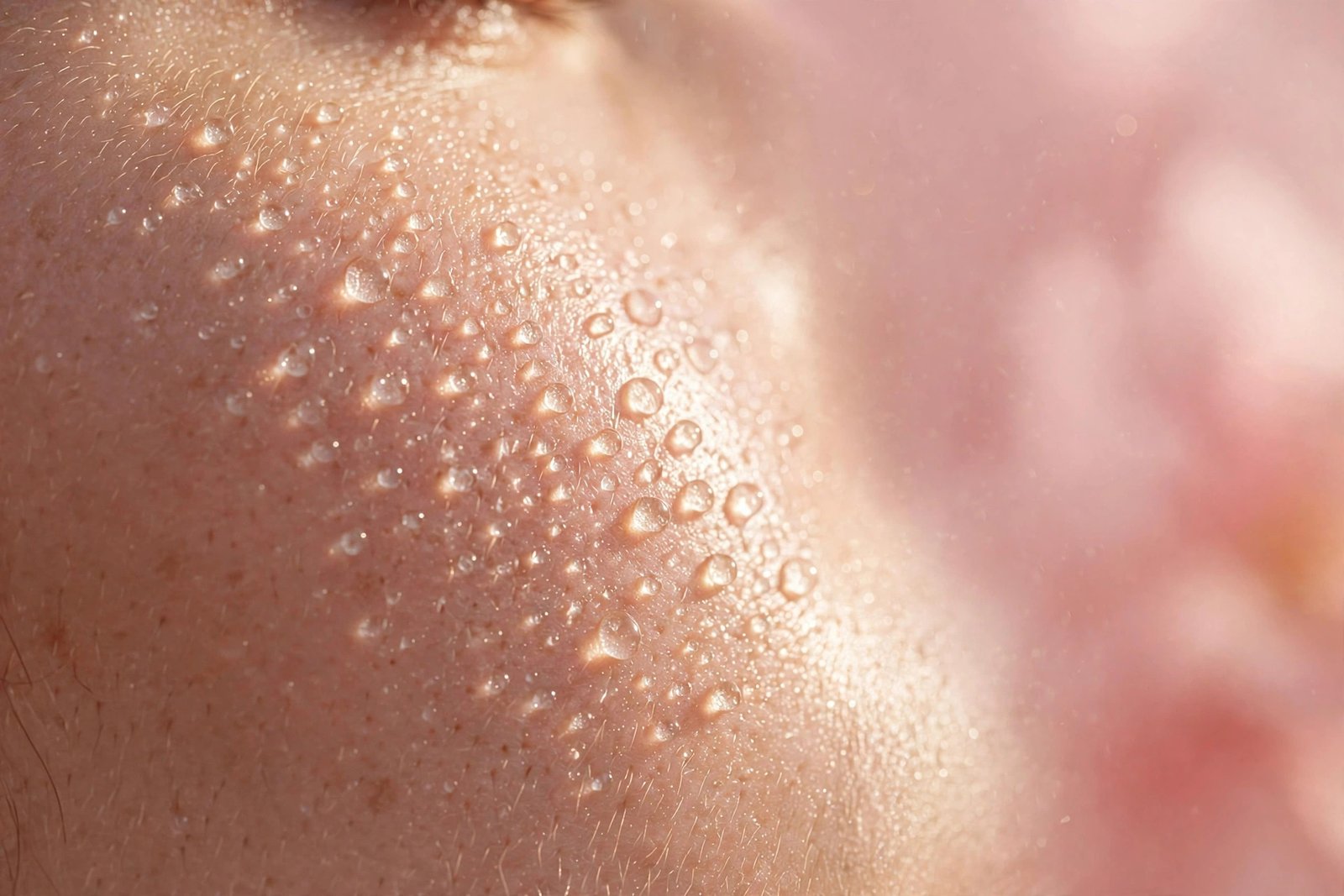
Strip away the marketing, and toner has one core function: it applies a thin layer of water-based ingredients to freshly cleansed skin.
Think of it as a prep step. Right after cleansing, your skin is clean but bare — slightly damp and receptive. Toner takes advantage of that window by delivering ingredients (hydrators, mild acids, or calming botanicals) in a lightweight liquid that sinks in fast and preps the surface for serums and moisturizer.
Specifically, depending on the formula, a toner can:
- Add hydration. Hydrating toners contain humectants like glycerin, hyaluronic acid, or beta-glucan that pull water into the skin. Applying them to slightly damp skin right after cleansing boosts absorption — a principle sometimes called the “damp skin method” in Korean skincare.
- Gently exfoliate. Exfoliating toners contain low concentrations of acids (AHAs like glycolic or lactic acid, or BHAs like salicylic acid) that dissolve dead skin cells and unclog pores over time.
- Calm and soothe. Some toners contain niacinamide, centella asiatica, green tea, or chamomile to reduce redness and irritation, especially useful for sensitive skin types.
- Refine the skin’s surface. Regular, gentle exfoliating toners can improve texture, even out tone, and help subsequent products absorb more evenly.
- Remove last traces of residue. This was the original job of toners decades ago — wiping away what harsh cleansers left behind. Modern gentle cleansers mostly make this redundant, but some people still like the extra-clean feeling.
Notice what’s not on the list: toner doesn’t “close pores” (pores don’t open and close), it doesn’t tighten skin in any lasting way, and it isn’t doing something no other product can do. A hydrating toner and a hydrating serum overlap heavily. Toner is about format and timing — a lightweight first layer — more than a unique function.
The pH Balance Myth (and the Reality)
One of the most repeated claims about toner is that it “restores your skin’s pH after cleansing.” Here’s the truth about that:
The myth’s origin: Decades ago, most cleansers were true soaps with a high (alkaline) pH of 9–10. They disrupted the skin’s naturally slightly acidic pH (~4.5–5.5). Toners back then were acidic, designed to bring the pH back down.
The reality today: Modern cleansers are formulated with a pH much closer to the skin’s natural level — usually between 5 and 7. If you’re using a gentle, pH-balanced cleanser, there’s no dramatic pH swing to correct. Your skin also rebalances its own pH within about 30–60 minutes regardless.
The verdict: The “pH balancing” selling point is mostly outdated marketing. The hydration, exfoliation, and calming benefits of toner are real — but you don’t need toner to fix your pH. If a brand leans hard on the pH claim without naming its actual active ingredients, look more carefully at the ingredient list.
For a deeper look at how humectants and acids actually work on the skin, see our beginner’s guide to skincare ingredients.
The 3 Main Types of Toners
Not all toners are interchangeable. Knowing which type you’re holding is the difference between a useful step and a pointless (or irritating) one.
1. Hydrating Toners
The most beginner-friendly type. These are water-based liquids — sometimes called “lotions” in Japanese skincare or “skins” in Korean skincare — packed with humectants that draw moisture into the skin.
Key ingredients to look for: glycerin, hyaluronic acid, beta-glucan, panthenol (pro-vitamin B5), aloe vera, ceramides.
Best for: dry or dehydrated skin, and anyone whose skin feels tight after cleansing. Well-hydrated skin also holds makeup better.
Watch out for: formulas heavy in denatured alcohol or strong fragrance, which cancel out the hydration benefit by irritating the skin.
2. Exfoliating Toners
These contain chemical exfoliants — acids that dissolve the bonds between dead skin cells. The most well-known example is glycolic acid toner, typically at 5–10% concentration for daily use.
Key ingredients to look for: glycolic acid (AHA, for texture and brightness), lactic acid (AHA, gentler, for sensitive skin), salicylic acid (BHA, for oily and acne-prone skin), PHA like gluconolactone (gentlest option).
Best for: dull skin, rough texture, clogged pores, mild hyperpigmentation, and oily skin that tolerates acids well.
Watch out for: overuse. Daily exfoliating toners stacked with other exfoliating products (scrubs, retinol, strong serums) can over-exfoliate, causing redness, sensitivity, and barrier damage. Start 2–3 times per week and build up.
Important distinction: an exfoliating toner is not the same as a weekly chemical peel. Daily-use glycolic toners sit around 5–8% acid; intensive treatments like The Ordinary’s AHA 30% + BHA 2% Peeling Solution are far stronger and used much less often. Don’t treat them as interchangeable.
3. Astringent Toners
The old-school category. Astringent toners are designed to remove excess oil and create a temporary “tightening” sensation, usually with alcohol, witch hazel, or menthol as the active base.
Key ingredients: denatured alcohol, witch hazel, menthol, camphor.
Best for: honestly, very few people. They can feel satisfying for extremely oily skin in the short term, but the drying effect often triggers rebound oil production and barrier disruption.
Watch out for: regular use. Alcohol-based astringents strip the skin’s natural lipids, increase water loss, and can worsen both oiliness and sensitivity over time. Most dermatologists advise against them. If oil control is the goal, niacinamide or a gentle BHA toner is the smarter route.
Quick comparison:
| Toner type | Main job | Best for | Use frequency |
|---|---|---|---|
| Hydrating | Adds moisture to damp skin | Dry, dehydrated, sensitive | Daily, AM + PM |
| Exfoliating | Dissolves dead cells, unclogs pores | Dull, textured, oily | 2–3x/week to daily |
| Astringent | Removes oil, tight “clean” feel | Very oily (short-term) | Rarely recommended |
Who Actually Needs Toner?
Toner isn’t a universal requirement, but it genuinely earns its place for certain skin types and concerns:
- Dry or dehydrated skin. A hydrating toner applied to damp skin after cleansing is one of the simplest ways to boost moisture before your serum and moisturizer. If your skin drinks up moisturizer and still feels tight, a hydrating toner layer underneath can make a noticeable difference.
- Dull or rough-textured skin. A gentle exfoliating toner used a few times a week smooths texture and brightens tone more gradually and gently than a weekly peel.
- Oily or congested skin. A BHA (salicylic acid) toner helps keep pores clear between deeper exfoliation sessions, without the heaviness of a cream-based treatment.
- Sensitive or redness-prone skin. Calming toners with centella, green tea, or niacinamide add a soothing buffer layer that reduces the sting some people feel when applying serums to bare skin.
- Anyone layering multiple actives. Toner creates a light, even base layer that helps serums spread and absorb more uniformly.
Who Can Skip Toner (Guilt-Free)
Here’s the other side — and it’s a long list. You can safely skip toner if:
- Your routine is already minimal and working. If your skin is healthy with just cleanser, moisturizer, and sunscreen, adding toner is optional, not corrective. Don’t fix what isn’t broken.
- You’re on a budget. Toner is one of the easiest steps to cut. A good moisturizer on slightly damp skin delivers much of the same hydration benefit at no extra cost.
- Your skin is very sensitive or currently irritated. Fewer products means fewer potential irritants. If your barrier is compromised, skip the toner and focus on gentle cleansing and repair.
- You already use hydrating or exfoliating serums. A hyaluronic acid serum and a hydrating toner overlap heavily. A glycolic serum and an exfoliating toner overlap heavily. You don’t need both doing the same job — pick the format you prefer.
- You hate extra steps. Skincare consistency beats skincare complexity. A 3-step routine you actually do every day outperforms a 7-step routine you abandon in two weeks. If toner is the step that makes your routine feel like a chore, drop it.
There’s no prize for the longest routine. Toner is a tool, not a requirement.
How to Choose the Right Toner
If you’ve decided toner deserves a spot in your routine, here’s how to pick one that actually helps:
- Match the type to your concern. Dry or tight? Hydrating toner. Dull or bumpy? Exfoliating toner (start slow). Redness-prone? Calming formula with centella or niacinamide. Don’t buy an exfoliating toner when you need hydration.
- Read the first five ingredients. They make up most of the formula. For hydrating toners, look for glycerin, hyaluronic acid, or beta-glucan up top. For exfoliating toners, check the acid type and its position (higher = stronger). Be cautious if denatured alcohol appears in the first few ingredients of any toner.
- Avoid fragrance if you’re sensitive. “Fragrance” or “parfum” high on the list is a common irritant. Fragrance-free options exist in every toner category.
- Don’t double up on actives. If you already use a vitamin C serum, a retinol, or a strong exfoliant, adding an exfoliating toner on top can push you into over-exfoliation. Choose a hydrating or calming toner instead — or skip toner on active nights.
- Patch test new formulas. Apply a small amount behind your ear or on your jawline for 24 hours before full-face use, especially with exfoliating toners.
- Ignore the “7-skin method” pressure. Layering toner seven times is a trend, not a requirement. One or two layers is plenty for most people.
And remember where toner sits in the overall order: cleanser → toner → serums → moisturizer → sunscreen (morning). If you’re still building your routine from scratch, our step-by-step skincare routine for beginners walks through the full order and why each step goes where it does.
How to Apply Toner Correctly
Technique matters — especially for hydrating toners, where the whole point is catching the skin while it’s receptive.
- Apply within 60 seconds of cleansing. Pat your face lightly so it’s damp, not dripping. Humectants need water to grab onto, which is why damp skin absorbs hydrating toner better.
- Hands vs. cotton pad — it depends on the type. For hydrating toners, use clean hands: pour a coin-sized amount into your palms and press it into the skin (cotton pads just waste product). For exfoliating toners, a cotton pad gives more even application — use gentle pressure, no scrubbing.
- Press, don’t rub. Press the toner into your forehead, cheeks, nose, and chin with open palms. Let it absorb for 20–30 seconds before the next step.
- One layer is enough; two is the max. If your skin is very dehydrated, you can press on a second thin layer once the first absorbs. More than that gives diminishing returns.
- Follow with serums while skin is still slightly damp. Your vitamin C, niacinamide, or hyaluronic acid serum goes on next, then moisturizer to seal everything in.
- Morning and night? Hydrating toners can be used twice daily. Exfoliating toners are usually better at night (acids increase sun sensitivity), starting at 2–3 times per week.
Common application mistakes: applying hydrating toner to completely dry skin, using an exfoliating toner every night from day one, rubbing aggressively with a cotton pad, and layering an exfoliating toner directly under retinol (alternate nights instead).
Frequently Asked Questions
Is toner really necessary in a skincare routine?
No — toner is not a mandatory step. A complete basic routine is cleanser, moisturizer, and sunscreen. Toner is an optional enhancement: hydrating toners add moisture, exfoliating toners smooth texture, and calming toners soothe irritation. If your skin is happy without one, you don’t need to add it.
Can I use toner instead of moisturizer?
No. Toner and moisturizer do different jobs. Toner delivers a thin layer of water-based ingredients; moisturizer seals moisture in with occlusives and emollients. Skipping moisturizer after a hydrating toner can leave skin drier, because humectants without a seal can pull water back out of the skin in dry environments.
Should I use toner in the morning, at night, or both?
Hydrating and calming toners are fine twice daily. Exfoliating toners are best used at night, since acids make skin more sun-sensitive — and always follow with sunscreen in the morning. If you’re new to an exfoliating toner, start with 2–3 nights per week.
Do I need toner if I have oily skin?
Not necessarily, but oily and congested skin can benefit from a BHA (salicylic acid) toner that helps keep pores clear. Skip alcohol-based astringent toners, though: they strip the skin and often cause rebound oiliness that makes the problem worse.
What’s the difference between toner and essence?
The line is blurry and mostly comes down to marketing. Generally, toners are thinner and applied first; essences are slightly thicker and more concentrated. In practice, a hydrating toner and a lightweight essence do nearly the same job — you don’t need both. Pick whichever texture you prefer.
Key Takeaways
- Toner is not a required step — cleanser, moisturizer, and sunscreen form the complete core routine. Toner is an optional layer that can add hydration, gentle exfoliation, or calming benefits.
- The “restores pH” claim is mostly outdated: modern cleansers are already pH-balanced, and your skin rebalances itself anyway.
- There are three main types — hydrating, exfoliating, and astringent — and they do completely different things. Match the type to your skin concern.
- Dry, dull, congested, or redness-prone skin benefits most from toner; minimal routines, tight budgets, irritated skin, and anyone already using similar serums can skip it without missing out.
- Apply hydrating toner with hands to damp skin within a minute of cleansing; use exfoliating toners at night, starting 2–3 times per week.
- Avoid alcohol-heavy astringent toners and don’t stack an exfoliating toner with other strong actives on the same night.
Love this? Pin it for later!