Press-On Nails vs Gel Polish: Which Lasts Longer?
Standing in the nail aisle, it usually comes down to two choices: a box of press-on nails promising a salon look in minutes, or a bottle of gel polish plus a UV lamp for a manicure that cures hard in seconds. Both promise beautiful nails at home — but they work in completely different ways, and one clearly wins on longevity.
The short answer: gel polish lasts longer — typically two to three weeks, while press-on nails last anywhere from a few days to about two weeks depending on how they’re applied. But “longer” isn’t the whole story. Press-ons win on speed, cost, and damage risk, while gel wins on durability and a thinner, more natural feel.
If you’re leaning toward gel, our complete beginner’s guide to doing gel nails at home walks you through the full process, from prep to curing. This article breaks down every factor side by side so you can pick the right option for your lifestyle, budget, and nails.
How They Work: The Basics
Before comparing, it helps to understand what each one actually is.
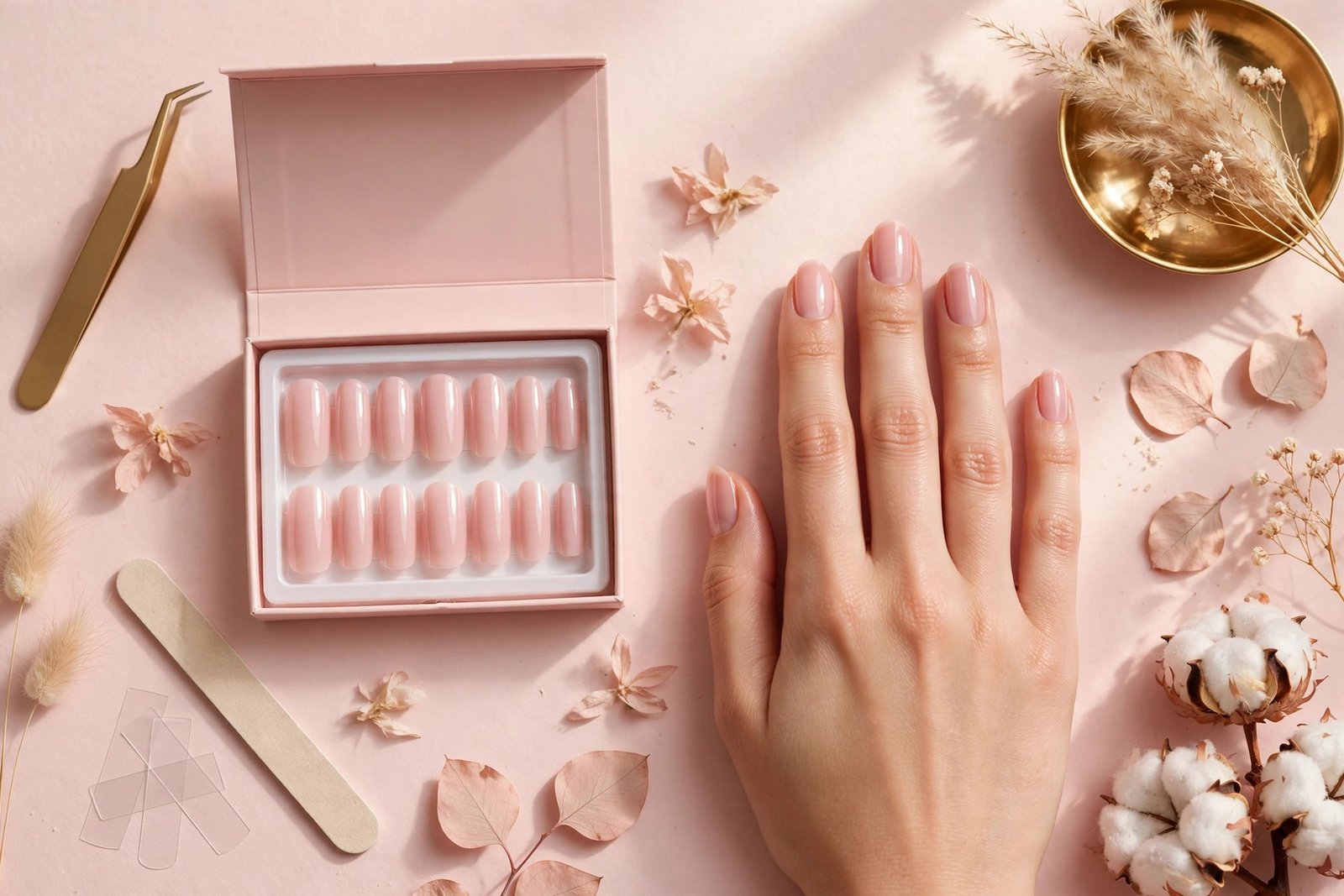
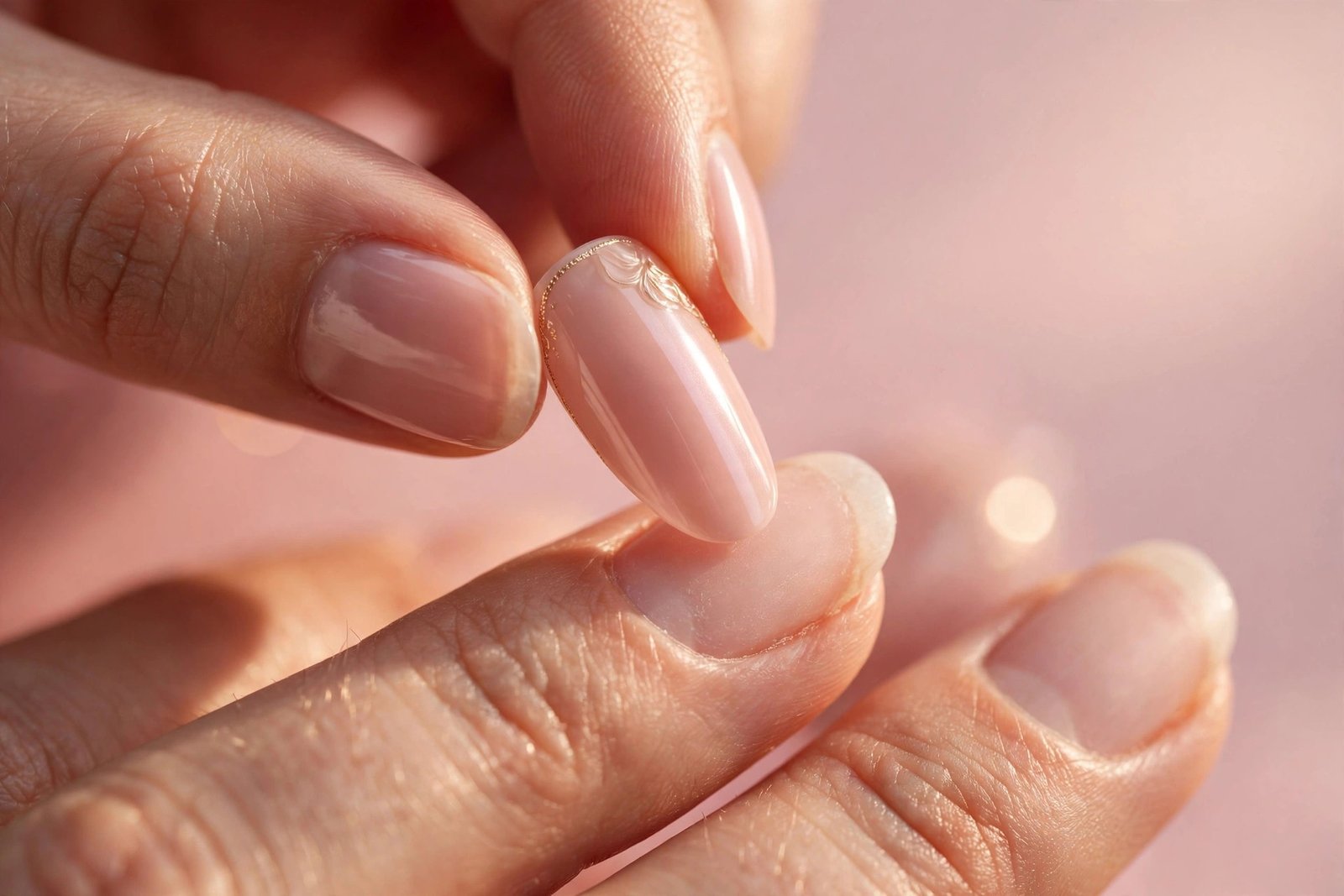
Press-on nails are pre-shaped artificial nails — usually made of ABS plastic — that attach to your natural nail with adhesive. That adhesive can be nail glue (stronger hold, longer wear) or adhesive tabs (weaker hold, easier removal). You simply size each nail, apply the adhesive, and press them on. No curing, no drying time, no special equipment.
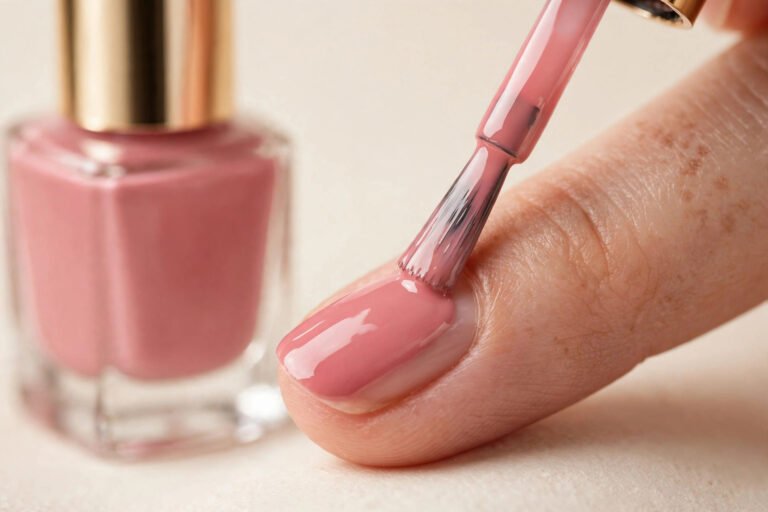
Gel polish is a liquid polish that hardens under a UV or LED lamp. It’s applied in thin layers — base coat, two to three color coats, top coat — with each layer cured under the lamp for 30 to 60 seconds. The curing process creates a hard, glossy finish that bonds to your natural nail. It requires a lamp, but the polish is essentially dry and chip-proof the moment curing finishes.
One is an artificial nail you stick on; the other is a polish you paint and cure. That fundamental difference drives everything else.
Press-On Nails vs Gel Polish: Full Comparison
| Factor | Press-On Nails | Gel Polish |
|---|---|---|
| Longevity | 3–14 days (glue: 7–14 days; tabs: 3–5 days) | 14–21 days |
| Cost per manicure | $5–$15 per set (reusable sets cost less per wear) | $3–$5 in product after initial $30–$60 lamp + polish kit investment |
| Damage risk | Low to moderate (glue can pull up nail layers if pried off; tabs are very gentle) | Low to moderate (damage usually comes from improper removal — peeling or scraping) |
| Application time | 10–20 minutes | 45–75 minutes for beginners (faster with practice) |
| Skill needed | Very low — sizing and pressing is the whole technique | Moderate — requires nail prep, thin even coats, cuticle avoidance, and lamp curing |
| Equipment needed | None beyond the box (file and cuticle stick usually included) | UV/LED lamp, base coat, color, top coat, nail file, cuticle pusher, alcohol wipes, remover supplies |
| Finish and feel | Can look slightly thick or plasticky up close; limited shape control | Thin, glossy, and natural-feeling; full control over length and shape |
| Removal | Soak off in warm soapy water (glue) or peel off (tabs) | Soak in acetone with foil wraps, 10–20 minutes; must not be peeled |
| Reusability | Yes — quality sets can be reused multiple times if removed gently | No — each application is single-use |
| Design variety | Huge pre-made designs (patterns, French tips, 3D art) with zero skill | Unlimited color mixing and nail art, but designs require technique |
Longevity: The Decisive Round
This is the question behind the keyword, so let’s be precise.
Gel polish consistently lasts two to three weeks. The cured layers bond directly to the nail plate, so they resist chipping, peeling, and tip wear through normal daily activity. When gel does fail, it’s usually lifting at the cuticle or a small chip at the tip — both typically appearing in week two or three. Proper prep (dehydrating the nail, avoiding cuticle flooding, capping the free edge) is what separates a one-week gel manicure from a three-week one — which is why learning correct gel application technique matters so much for wear time.
Press-on nails are far more variable. With adhesive tabs, expect 3 to 5 days of solid wear — the tabs simply aren’t strong enough for much beyond a weekend. With nail glue and careful application (dehydrated nail surface, right size for each nail, pressed firmly for 30 seconds each), most people get 7 to 10 days, and up to two weeks with gentle handling. The failure mode is different from gel: instead of chipping, a whole nail pops off — often at the worst possible moment.
The verdict on longevity: gel polish wins, and it’s not close. Gel’s two-to-three-week wear is the standard, while two weeks is press-ons’ absolute best case. If maximum wear time is your priority, gel is the answer.
Cost Breakdown: Which Is Cheaper?
The math depends on how often you do your nails.
Press-on nails cost $5–$15 per set, with premium or designer-style sets reaching $20. A single set worn once makes this the more expensive per-manicure option over time — roughly $15–$60 per month if you wear them continuously. But quality press-on sets are reusable: if you remove them gently (soaking rather than prying), one $12 set can last three to four applications, dropping the per-wear cost to $3–$4.
Gel polish has a higher upfront cost: a starter kit with a UV/LED lamp, base coat, top coat, and a few colors runs $30–$60. After that, each manicure costs only $3–$5 in product. If you do gel nails regularly for six months, the per-manicure cost drops well below press-ons — often under $5.
The verdict on cost: press-ons are cheaper to start (no equipment), but gel is cheaper per manicure over time if you do your nails regularly. If you only want nice nails occasionally — a wedding, a trip, a weekend event — press-ons are the economical choice.
Damage Risk: What’s Safer for Your Nails?
Neither option is inherently damaging when used correctly — but both can cause problems when misused.
Press-on nails are gentle on the nail surface itself since the adhesive sits on top of the nail plate. Adhesive tabs are the safest option of all — they peel off with minimal stress. Nail glue is stronger and holds longer, but ripping glued press-ons off can pull up layers of your natural nail, leaving them thin and flaky. The rule is simple: never pry them off. Soak glued press-ons in warm, soapy water until the adhesive softens and they slide off.
Gel polish bonds more aggressively to the nail. When removed correctly — soaking in acetone with foil wraps for 10 to 20 minutes, then gently pushing off the softened gel — damage is minimal. But gel’s reputation for ruining nails comes from one habit: peeling it off. Peeling cured gel rips up the top layers of the natural nail underneath, and that damage takes months to grow out. Over-filing the nail surface during prep has a similar effect.
The verdict on damage: it’s a draw, with a slight edge to press-ons with tabs. Both are safe with correct removal; both cause damage when peeled or pried. The deciding factor isn’t the product — it’s whether you remove it patiently.
Application Time and Skill Level
Press-ons take 10 to 20 minutes, start to finish. The hardest part is sizing — matching each press-on to the right nail — and beginners usually figure that out within one or two applications. There’s no drying time, no curing, and mistakes are fixable: a crooked nail can be repositioned before the glue sets.
Gel polish takes 45 to 75 minutes for a beginner’s first few attempts: nail prep, dehydrating, base coat, two to three thin color coats, top coat, with curing between every layer. The learning curve is real — flooding the cuticles with gel causes lifting, coats that are too thick wrinkle during curing, and touching the skin with uncured gel can cause irritation or sensitivity. With practice, the process drops to 30 to 40 minutes.
The verdict: press-ons win on both speed and ease. Gel requires a genuine time and learning investment; press-ons are close to foolproof.
When Press-On Nails Win
Press-ons are the better choice when:
- You need nails tonight. An event, photos, a last-minute plan — press-ons deliver a finished manicure in 15 minutes with zero equipment.
- You like changing your look often. New shape, new design, new length every few days is easy and cheap with press-ons.
- You want zero commitment. Adhesive tabs let you wear nails for a weekend and take them off Monday with no soaking and no damage.
- You’re a complete beginner. No lamp, no technique, no curing mistakes — just size, glue, and press.
- You want elaborate designs without skill. Pre-made 3D art, chrome finishes, and intricate patterns come ready to wear.
- Your natural nails are very short or damaged. Press-ons add instant length and cover imperfections while your nails recover underneath.
When Gel Polish Wins
Gel polish is the better choice when:
- You want maximum wear time. Two to three weeks of chip-resistant color is gel’s defining advantage.
- You prefer a thin, natural feel. Cured gel adds almost no thickness, while press-ons can feel bulky — especially noticeable when typing.
- You do your nails regularly. The per-manicure cost of gel drops well below press-ons within a few months.
- You want full customization. Any color, any nail art, any shape — you’re not limited to what comes in a box.
- Your hands take a beating. If you type all day, do housework without gloves, or work with your hands, gel’s bonded finish survives far better than glued plastic.
- You’re deciding between salon services too. If you’re also weighing professional options, our gel vs acrylic comparison breaks down the two main salon enhancements.
Can You Combine Them? Yes — Here’s How
This is the option most comparisons skip: press-ons and gel polish aren’t mutually exclusive, and combining them solves several problems at once.
- Gel polish over press-ons. Apply press-ons for instant length and shape, then paint them with gel polish and cure. You get the durability and glossy finish of gel on top of the convenience of press-ons. This is a popular approach for special events where you want both length and long wear.
- Press-ons as a break from gel. If your nails feel thin after months of gel, a few weeks of press-ons with adhesive tabs gives them a rest — no filing, no acetone soaking, no UV exposure — while still looking polished.
- Press-ons for trying a shape before committing. Want to see if you like long almond nails before growing them out or committing to a gel extension? A $10 press-on set is a cheap experiment.
- Gel on natural nails, press-ons for accent nails. Some people wear gel on most nails and add a press-on accent nail for a design they’d struggle to paint by hand.
The combination approach works because the two products fail in different ways — layering them covers each other’s weaknesses.
7 Tips for Making Press-On Nails Last Longer
Press-ons’ biggest weakness is longevity, but good technique closes the gap significantly. Most of these tips come down to prep — the same principle that makes or breaks gel wear.
- Dehydrate your nail plate first. Wipe each nail with rubbing alcohol or a nail dehydrator before applying. Oils on the nail surface are the number one cause of early pop-offs.
- Size down, not up. A press-on that’s slightly too small looks better and holds longer than one that overlaps your skin. Glue on skin creates a gap where water seeps in and loosens the bond.
- Buff lightly before gluing. A gentle buff with a fine-grit file gives the adhesive more surface to grip. Don’t over-file — you just want to remove the shine.
- Use enough glue — on the press-on, not your nail. Apply a thin, even layer to the back of the press-on, then press and hold for a full 30 seconds per nail. Rushing this step is the most common beginner mistake.
- Apply at night. Gluing press-ons before bed gives the adhesive hours to fully cure without water exposure. Avoid hot water, dishwashing, and long showers for the first few hours.
- File the underside of the tip. If press-ons feel thick, gently file the underside near the tip before applying. This reduces the bulky look and helps them sit flatter.
- Carry backup glue. Even with perfect application, one nail may pop off during the week. A small tube of nail glue in your bag turns a crisis into a 30-second fix.
Frequently Asked Questions
Do press-on nails ruin your natural nails?
Not when applied and removed correctly. Adhesive tabs are the gentlest option and cause virtually no damage. Nail glue is safe too, as long as you soak press-ons off in warm, soapy water instead of prying them off — prying can pull up layers of your natural nail. Damage from press-ons almost always comes from impatient removal, not the product itself.
How long do press-on nails last with glue vs sticky tabs?
With nail glue and good prep, press-ons typically last 7 to 14 days. With adhesive tabs, expect 3 to 5 days. Glue creates a much stronger bond but requires soaking for removal; tabs are weaker but peel off easily with minimal residue. Choose based on how long you need them to last.
Is gel polish bad for your nails?
Gel polish itself isn’t inherently damaging — most damage comes from improper removal. Peeling off cured gel rips up the top layers of your natural nail, and aggressive filing during prep thins the nail plate. When gel is applied with gentle prep and removed by proper acetone soaking, nails stay healthy. Giving nails an occasional break between sets also helps.
Can you put gel polish on press-on nails?
Yes. Apply the press-ons first, then paint them with gel base coat, color, and top coat, curing each layer under a UV/LED lamp as usual. This combines the instant length of press-ons with the durability and finish of gel. Use the same gel application steps you’d follow for natural nails.
Which looks more natural: press-ons or gel polish?
Gel polish generally looks more natural because it adds almost no thickness to your nail — it’s just cured layers of polish on your real nail. Press-ons add a layer of plastic, which can look slightly thick or artificial up close, especially at the cuticle line. That said, well-fitted, high-quality press-ons in a short, natural shape can look very convincing at normal viewing distance.
Can I do a French manicure with press-ons or gel?
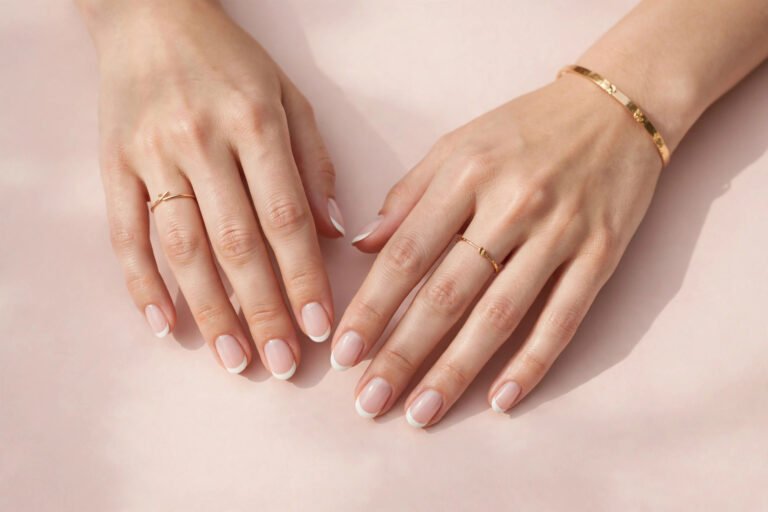
Both work well. Pre-made French press-on sets give you a perfect smile line with zero painting skill — just size and stick. With gel, you paint the French tips yourself, which takes practice but gives you full control over the shape and thickness of the white tip. For a full walkthrough of the DIY approach, see our step-by-step French manicure guide.
Key Takeaways
- Gel polish lasts longer — two to three weeks vs. 3 to 14 days for press-ons, making gel the clear winner on longevity.
- Press-ons win on speed, ease, and upfront cost — 15 minutes, no equipment, no learning curve, perfect for events or frequent style changes.
- Gel wins on long-term cost, natural feel, and durability — cheaper per manicure over time, thinner finish, and survives daily wear better.
- Damage risk is similar for both and comes down to removal: soak gel off with acetone, soak glued press-ons off with warm water, and never peel or pry either one.
- You can combine them — gel polish over press-ons gives you instant length with gel’s durability, and press-ons make a great low-damage break between gel sets.
- Prep determines wear time for both — dehydrated, lightly buffed nails with careful application are what separate a 3-day manicure from a 2-week one.
Love this? Pin it for later!