Why Does Nail Polish Bubble on Nails? Causes and How to Prevent It
Direct answer: Nail polish bubbles when air gets trapped in the layers — usually from applying coats too thick, shaking the bottle (which whips air in), painting in heat or humidity, or using old, gloopy polish. The fix: thin coats, roll the bottle instead of shaking, let each layer dry fully, and work in a cool room. Bubbles are 100% preventable with technique.
You know the heartbreak: a manicure that looks perfect wet, then dries into a texture like orange peel. I ran a proper little experiment — same polish, five different application methods, one hand each… well, across a few days — to find out which variable actually causes bubbles. Here’s everything I learned.
Good prep makes every manicure better — see related guide for the full prep routine. More troubleshooting in Nails.
My application variable test
I tested five variables, changing one at a time with the same polish:
| Test | What I changed | Bubbles? |
|---|---|---|
| 1 | Thick coats, 1 minute between layers | Yes — heavy bubbling |
| 2 | Thin coats, 1 minute between layers | A few tiny bubbles |
| 3 | Thin coats, 3 full minutes between layers | None |
| 4 | Shook bottle vigorously before test 1 | Worst of all |
| 5 | Rolled bottle gently before test 3 | None |
The pattern was unmistakable: thickness + trapped air + impatience = bubbles. Test 3’s method is now my permanent routine.
Cause 1: Coats are too thick
The problem: Thick polish can’t release solvents evenly as it dries — the surface skins over while the underside is still wet, trapping air as bubbles.
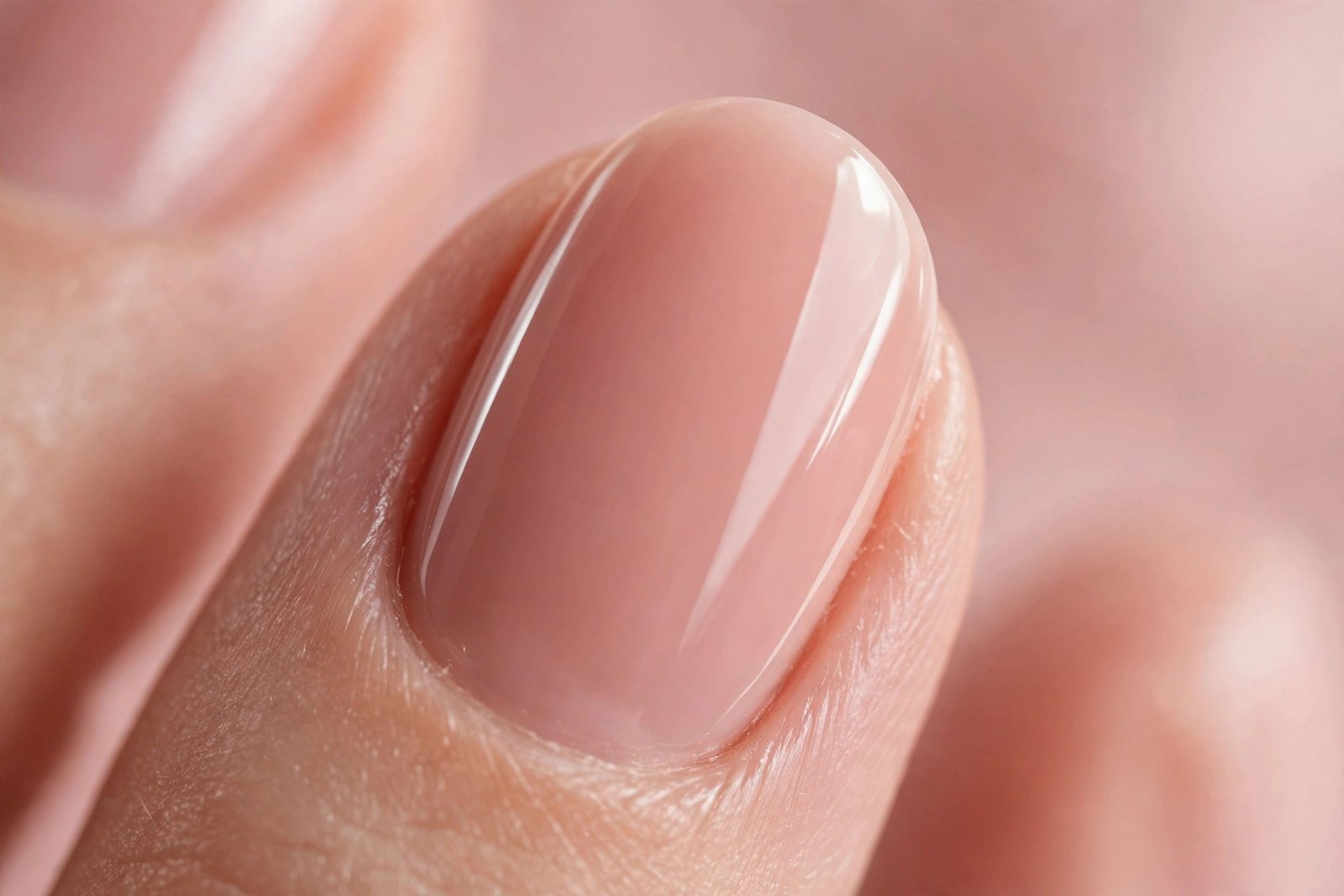
The fix: Wipe excess polish off the brush on the bottle neck until the brush holds a thin, even load. Two thin coats always beat one thick one. If your polish is naturally gloopy, add a drop or two of nail polish thinner — never remover, which ruins the formula.
Cause 2: Shaking the bottle
The problem: Shaking whips microscopic air bubbles into the polish, which then transfer straight onto your nail. It’s the single most common cause and the easiest to fix.
The fix: Roll the bottle slowly between your palms for 20–30 seconds instead. It mixes the pigment without introducing air. If you’ve already shaken it, let the bottle sit undisturbed for 10 minutes before painting.
Cause 3: Not letting layers dry
The problem: Painting a second coat over a still-tacky first coat traps the lower layer’s evaporating solvents — they push up through the wet top coat as bubbles.
The fix: Wait until each coat is dry to the touch before the next — about 2–3 minutes for thin coats. Use the time productively: do all ten nails’ first coat, then by the time you finish, the first nails are ready for coat two. A quick-dry top coat as the final layer also helps.
Cause 4: Heat and humidity
The problem: Painting nails right after a hot shower, in a steamy bathroom, or in direct sun makes polish dry too fast on the surface while staying wet underneath — the classic bubble recipe. Warm hands also thin the polish unpredictably.
The fix: Do your nails in a cool, dry room. Wait at least 20 minutes after a hot shower. If your hands run warm, rinse them in cool water and dry thoroughly before starting. Never paint nails in a car or outdoors on a hot day.
Cause 5: Old or contaminated polish
The problem: Polish older than about two years thickens as solvents evaporate, and every thickened polish bubbles more. Polish contaminated with cuticle oil or lotion (from dipping an oily brush back in) also misbehaves.
The fix: If a polish needs thinner every single time you use it, it’s done — replace it. Keep bottles tightly closed, stored upright in a cool dark place. And always wipe nails clean of oil before you start (a quick alcohol wipe works).
The bubble-free routine (my permanent method)
- Prep nails (push cuticles, light buff, dehydrate) — see related guide.
- Roll — don’t shake — the bottle for 30 seconds.
- Base coat, thin. Wait 2 minutes.
- Color coat one, thin, even strokes. Wait 3 minutes.
- Color coat two, thin. Wait 3 minutes.
- Quick-dry top coat, cap the free edge.
- Hands still for 10 minutes. No phone, no keys, no “just one quick thing.”
Frequently asked questions
Can you fix bubbles after the polish dries?
Small bubbles: sometimes. Lightly buff the bubbled area with a fine buffer once fully dry, then apply one thin fresh coat of color and top coat. Deep or widespread bubbling — remove and restart; patching rarely looks clean.
Does expensive polish bubble less?
Not necessarily. Technique matters far more than price — I’ve had drugstore polish go on glass-smooth and luxury polish bubble, purely based on application. That said, very old polish of any price will bubble.
Why does my top coat bubble when the color didn’t?
Top coats are often applied too thickly in the rush to finish. Apply it as thin as the color coats, and make sure the color is fully dry first — a tacky base under top coat is a top bubbling trigger.
Do nail dryers or fans cause bubbles?
A gentle cool fan is fine and helps. Hot air (hair dryer on warm) is not — it skins the surface too fast, exactly like painting in heat. Cool setting only, or just wait.
How do I know if my polish is too old?
The string test: lift the brush — if the polish falls in a thick, slow string instead of a smooth drop, it’s too thick. One round of thinner can save it; if it needs thinner every time, replace the bottle.
Love this? Pin it for later!