Why Do My Nails Peel in Layers? Causes and How to Stop It
Direct answer: Nails peel in layers when the nail plate gets dried out and the keratin layers separate — most often from repeated water exposure, harsh removers, peeling off old polish, or using your nails as tools. The fix is a moisture barrier routine: oil daily, gloves for wet work, gentle removal, and no picking. Most people see real improvement in 3–4 weeks of consistent care.
A quick, gentle note before we start: this is general nail-care guidance, not medical advice — if your nails are severely damaged, discolored, or painful, see a dermatologist to be sure.
Peeling nails are rarely just “your nail type” — they’re usually your habits. Change the habits and the flaking usually stops. Here’s the full breakdown, plus a 4-week routine plan that works for most people.
Start with our prep fundamentals in related guide — a peeling nail plate won’t hold polish well either. For more fixes, see all our Nails guides.
What peeling actually is
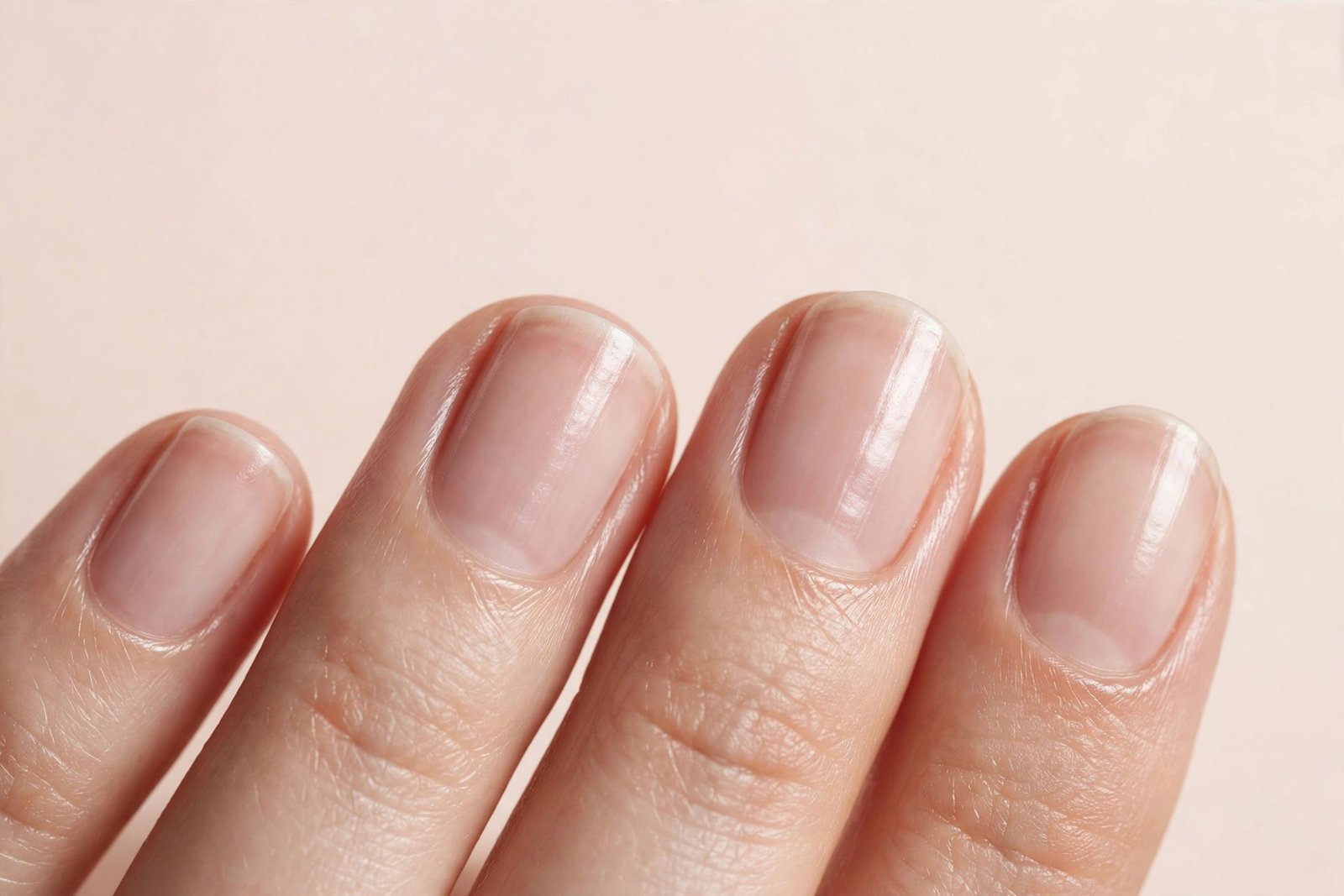
Your nail is made of stacked layers of keratin. When those layers dry out or get pried apart, the top layers flake and peel away like pastry — usually starting at the free edge and tips. It’s cosmetic in most cases, but it makes nails weak, bendy, and impossible to grow long.
The cause checklist (find yours)
Run through these honestly — most peeling comes from two or three stacking up:
- [ ] Constant water exposure. Long dishwashing sessions, hot showers, swimming — water swells the nail plate, then it contracts as it dries. Repeat daily and the layers delaminate. (This is the most common culprit.)
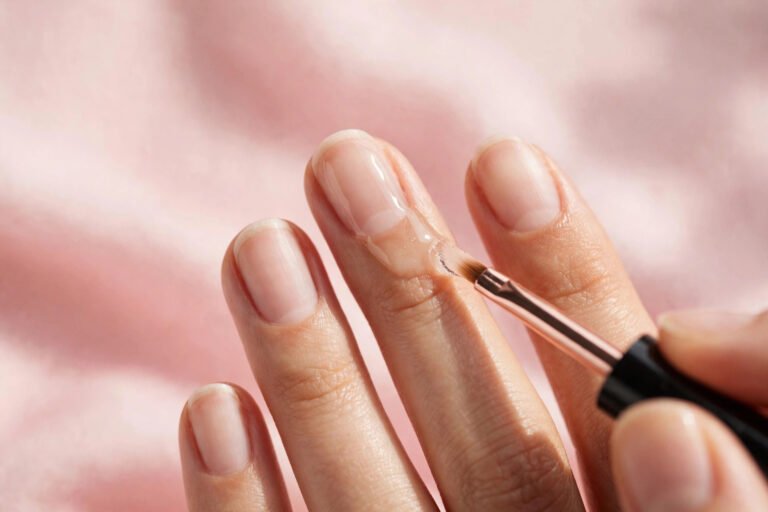
- [ ] Peeling off old polish or gel. Pulling polish off lifts the top keratin layer with it. Every. Single. Time.
- [ ] Harsh acetone soaking. Occasional use is fine, but frequent long soaks strip oils from the plate.
- [ ] Using nails as tools. Scraping stickers, opening cans, prying things — each flex stresses the layers.
- [ ] Aggressive filing. Sawing back and forth with a coarse file frays the free edge, giving peeling a starting point.
- [ ] Skipping moisture. Nails need oil like skin needs moisturizer. Bare, unoiled nails in dry air peel faster.
- [ ] Very dry climate or winter heating. Low humidity pulls moisture from everything, nails included.
The 4-Week Strengthening Routine
Commit to four weeks of boring consistency. Here’s the routine and what to expect along the way:
The routine (daily):
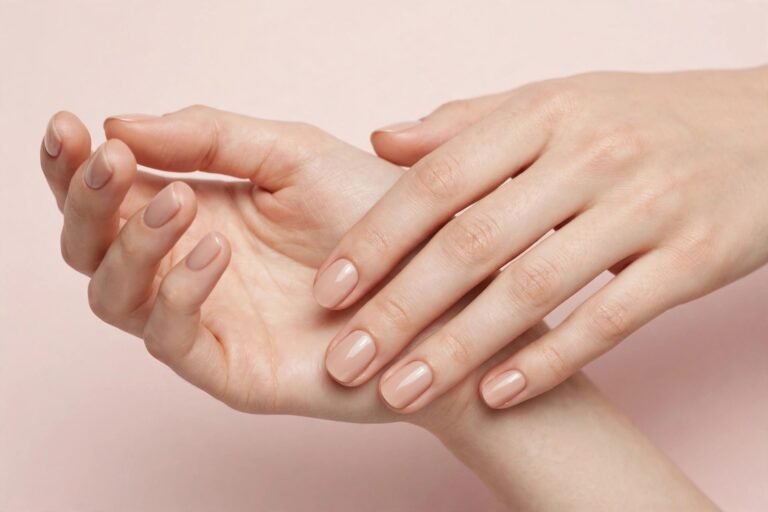
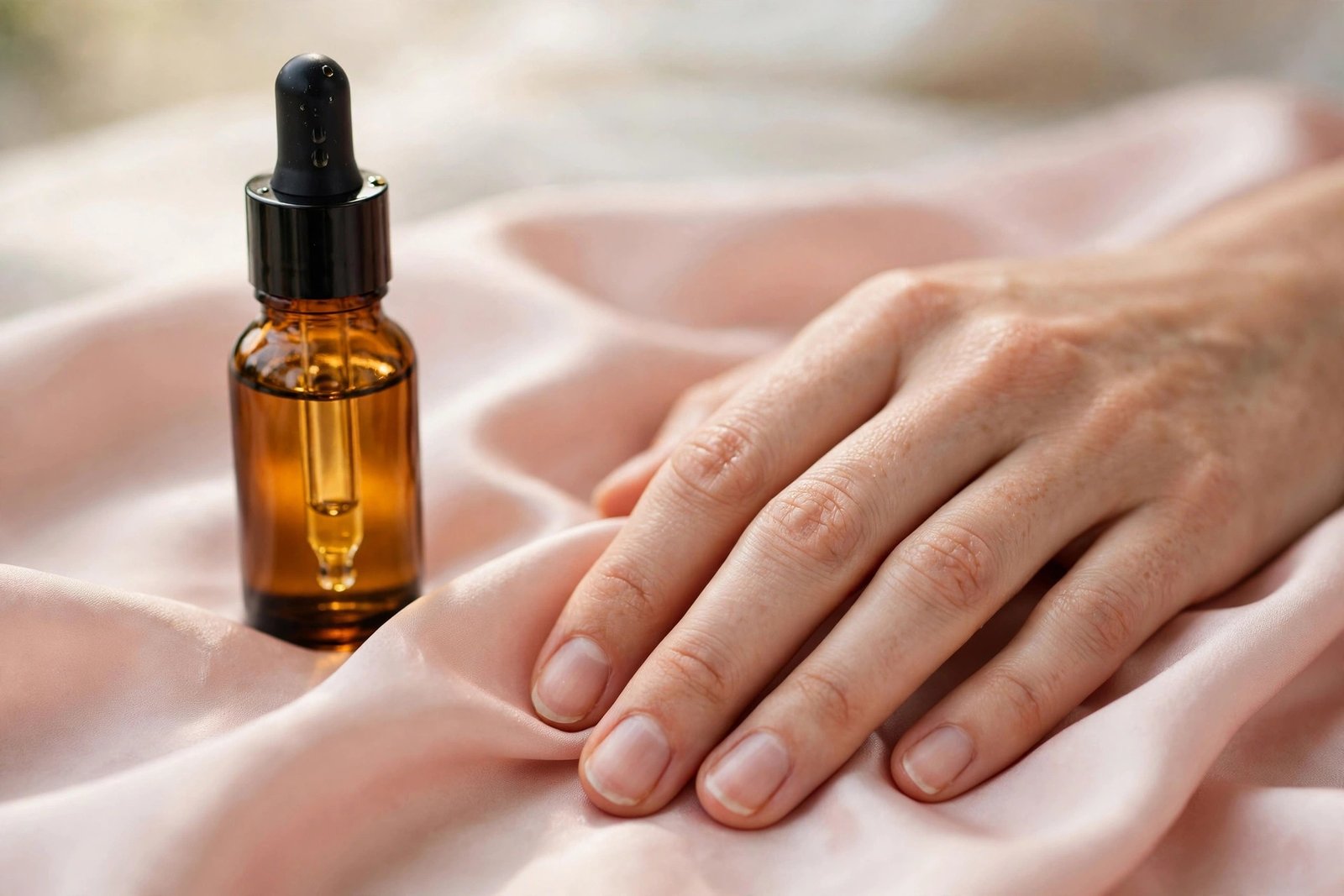
– Morning: jojoba or vitamin E oil massaged into every nail and cuticle. 60 seconds, that’s it.
– Wet work: rubber gloves for dishes and cleaning. Non-negotiable.
– Filing: glass file, one direction only, when shaping.
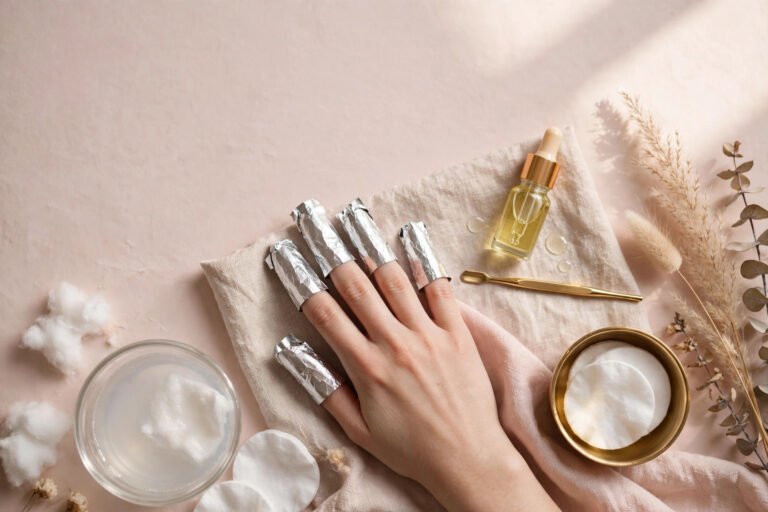
– Polish changes: gentle non-acetone remover, never peel, always re-oil after.
– Nails-are-not-tools rule: keep a coin-opener or similar tool on your keychain instead.
Week 1: Peeling may not stop yet, but the free edge should feel less “catchy” on fabric. Small win.
Week 2: New growth at the base looks smoother and less flaky. Existing peeling tips may still peel — damaged length can’t heal, it has to grow out.
Week 3: File off the last of the damaged tips. The new length usually feels noticeably thicker and flexes less.
Week 4: Most people see zero new peeling by now, with nails smooth enough to wear bare.
The honest truth: the routine is unglamorous, but it works — consistency is the whole secret.
What helps vs. what’s hype
Genuinely helps: daily cuticle oil, gloves for water exposure, gentle removal, glass files, keeping nails at a practical length while they recover, a nail hardener used sparingly as a base coat (not daily layers — too much makes nails brittle).
Mostly hype: “miracle” nail growth vitamins (unless you’re actually deficient — that’s a doctor conversation), painting endless layers of hardener, and expensive salon “nail repair” treatments that are just oil and a buff.
Frequently asked questions
How long does it take to stop nails from peeling?
With consistent care, most people see new, non-peeling growth in 3–4 weeks. Remember: already-damaged length can’t repair itself — you’re growing it out, not fixing it.
Should I cut my nails short while they recover?
Yes, if they’re peeling badly. Shorter nails flex less and catch less, which stops the cycle. Grow them back once the new growth is solid.
Does biotin help peeling nails?
There’s some evidence for biotin in brittle nails, but it’s not a quick fix and isn’t right for everyone. For most people, the topical habits above do the heavy lifting. Talk to a doctor before starting any supplement.
Can I still wear polish while fixing peeling nails?
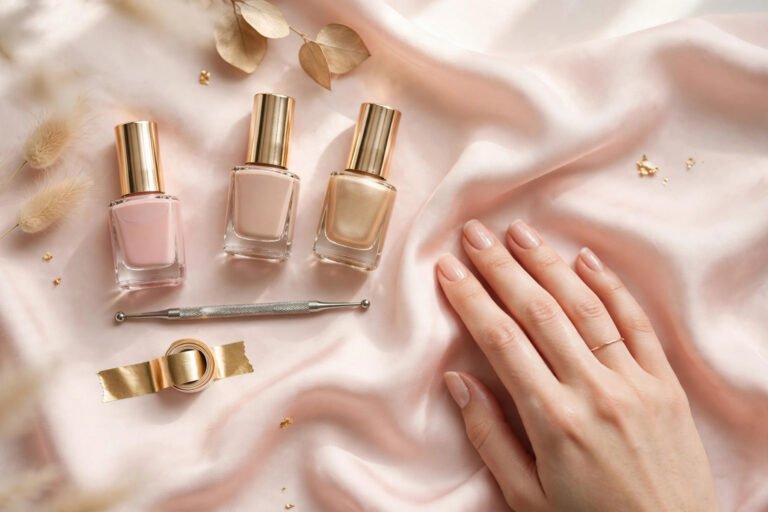
Yes — polish actually protects nails from water. Just remove gently (no peeling, no aggressive scraping), always use a base coat, and re-oil after every removal.
When should I see a doctor about peeling nails?
If peeling comes with discoloration, pitting, pain, swelling, or affects all nails suddenly and severely, get it checked. Cosmetic flaking from dryness is common; dramatic changes deserve a professional look.
Love this? Pin it for later!