How to Use Purple Shampoo Correctly for Bright, Brass-Free Hair
If you’ve ever lightened your hair — whether at the salon or with an [at-home dye session → how-to-dye-hair-at-home-for-beginners] — you know the slow creep of brassiness. One week your blonde is bright and cool; a few weeks later it’s leaning yellow, dull, and warm in all the wrong ways. Purple shampoo is the maintenance product that fights this fade, and learning how to use purple shampoo correctly is the difference between icy, bright blonde and an over-toned lavender mishap.
This guide explains exactly who needs purple shampoo (and who doesn’t), the color theory behind why it works, how long to leave it on, how often to use it, what to do if you overdo it, and how to choose between the different formula types on the shelf — sulfate-free, moisturizing, and high-pigment options included.
Key Takeaways
- Purple shampoo is for blonde, silver, gray, and lightened hair — it neutralizes yellow and brassy tones using color theory (purple cancels yellow).
- Use it 1–2 times per week, alternating with your regular color-safe shampoo — not every wash.
- Leave it on for 2–5 minutes; longer isn’t better and risks a lilac tint.
- Over-toning (a purple-gray cast) is fixable — clarify and wait it out, don’t panic.
- Choose sulfate-free purple shampoo if your hair is dry, damaged, or color-treated and fragile.
- Brunettes with orange brassiness need blue shampoo instead — purple won’t cut it on orange tones.
What Purple Shampoo Actually Does
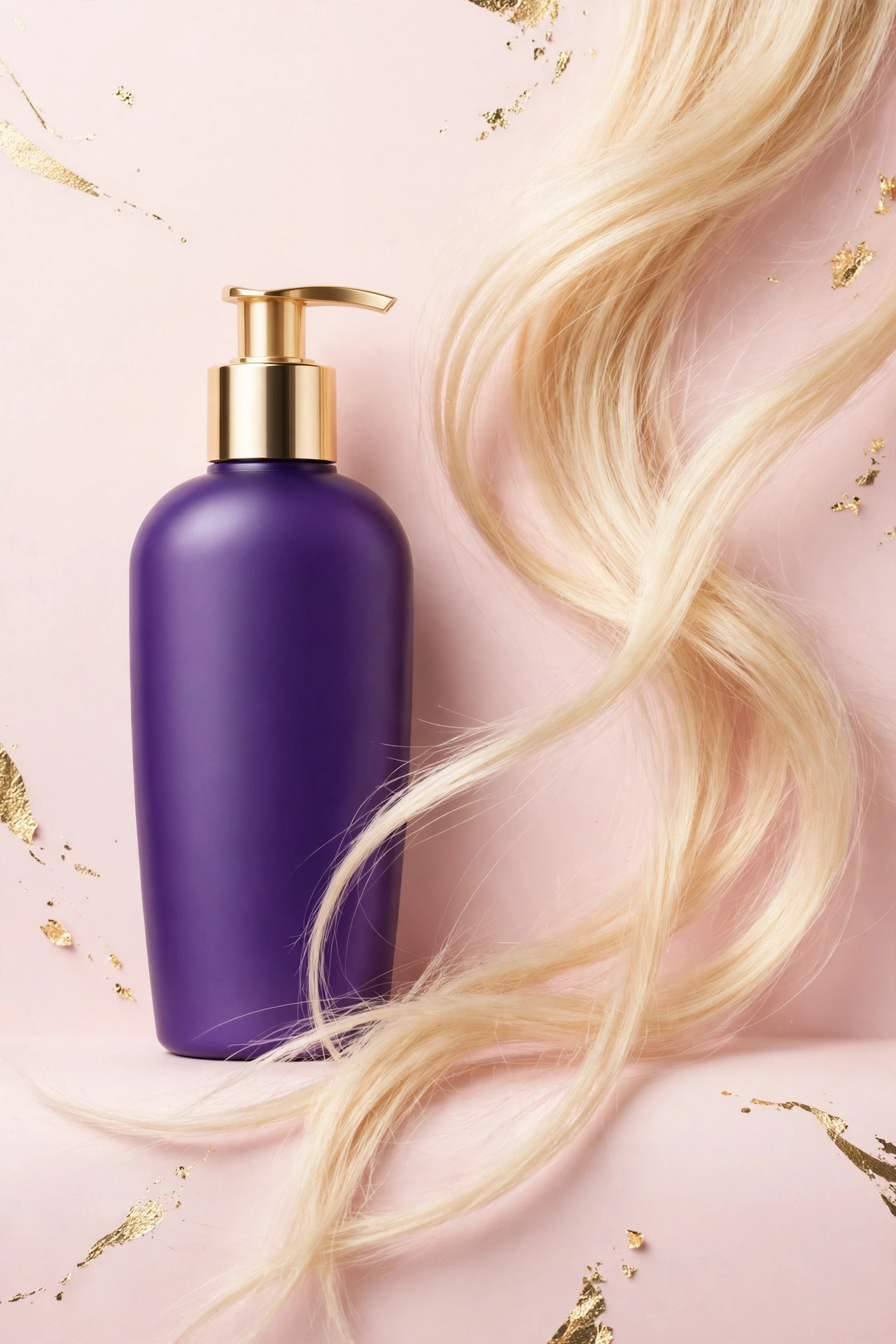
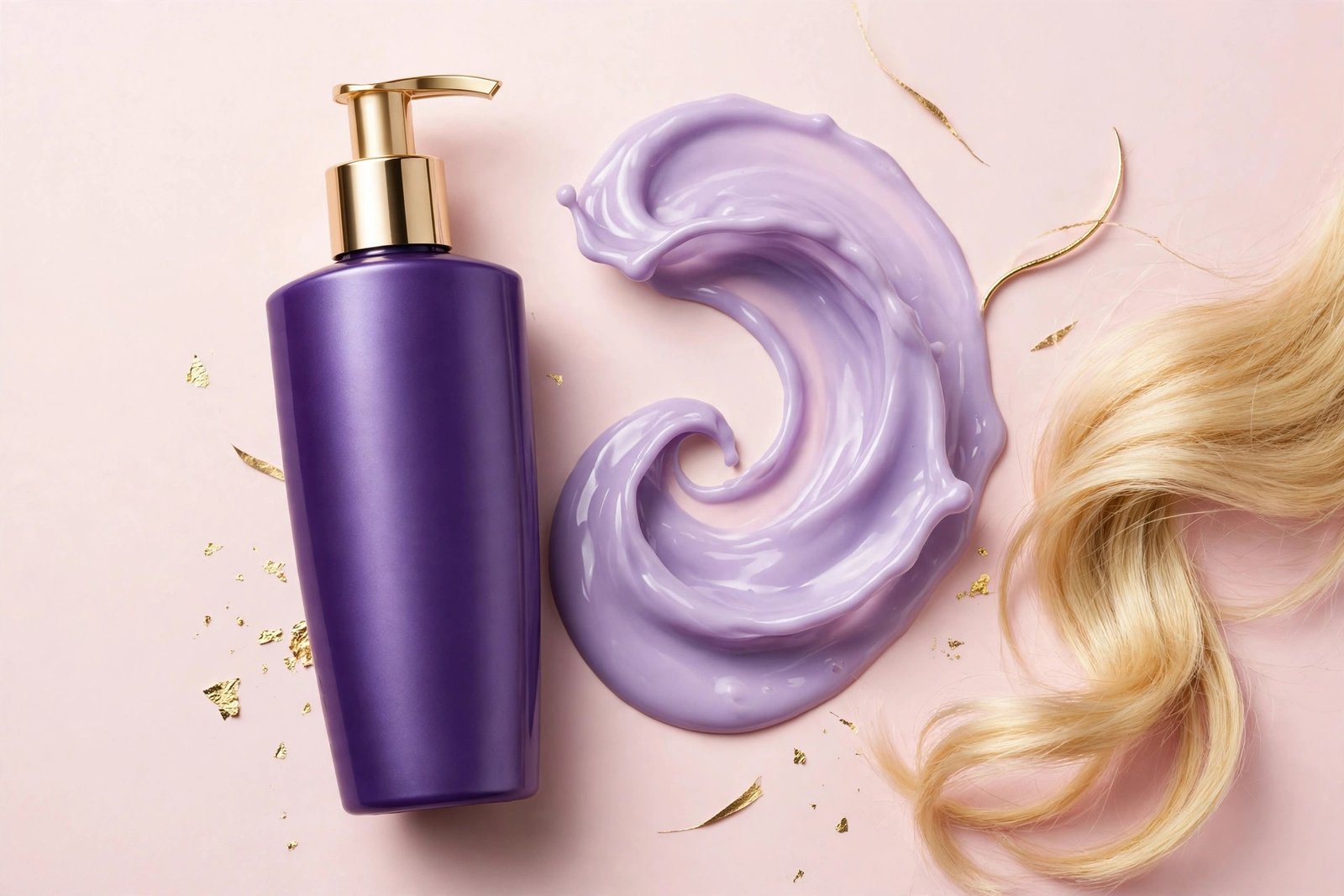
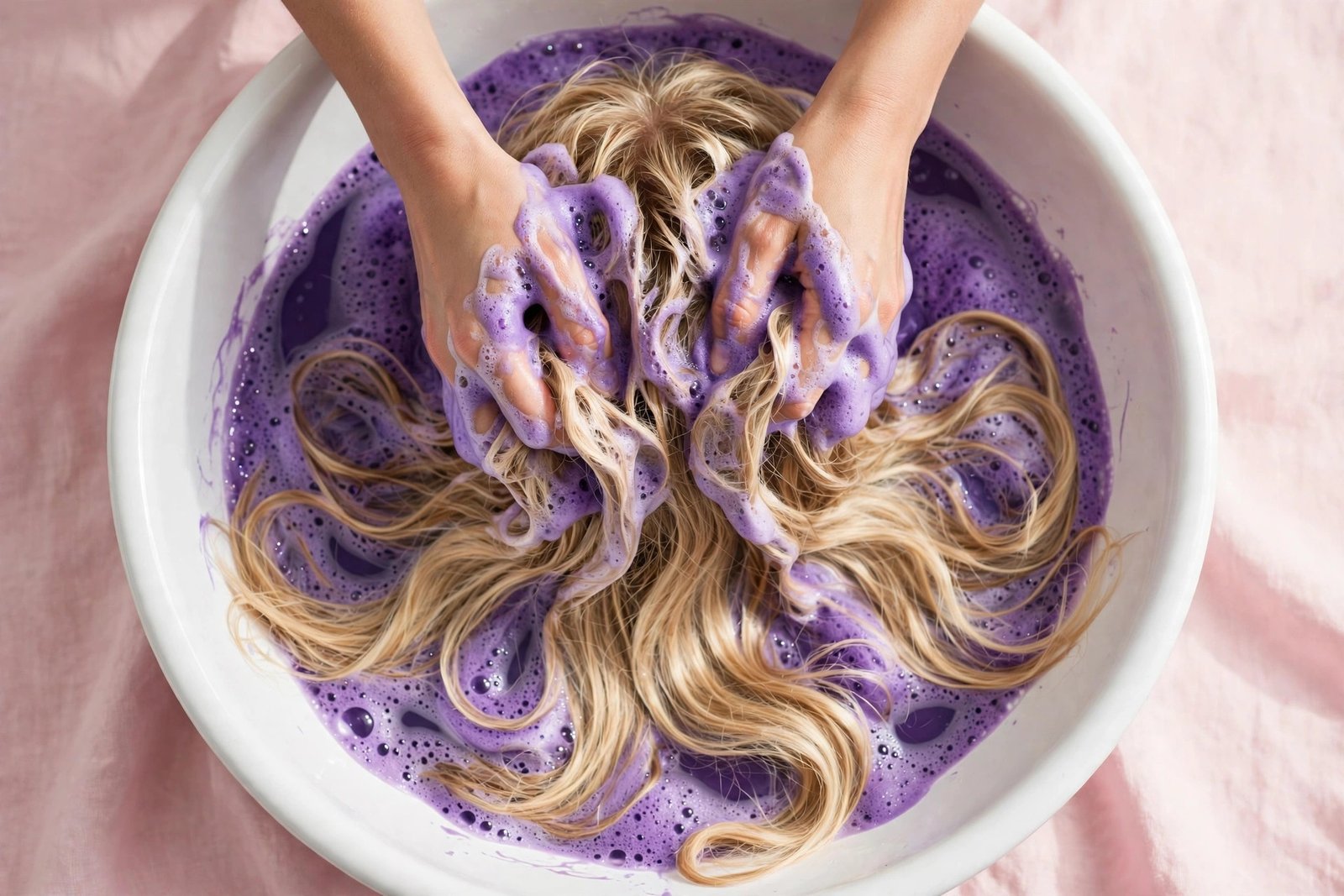
Purple shampoo is a toning shampoo: a regular cleanser with added purple pigment. It works on simple color theory — purple sits opposite yellow on the color wheel, so the violet pigment deposited during washing neutralizes yellow and warm tones in the hair. It doesn’t lighten hair, doesn’t add moisture, and doesn’t replace conditioner. It does one job: keeping lightened hair looking cool and bright between salon visits.
Who needs it: anyone with blonde (natural or dyed), silver, gray, white, or lightened/highlighted hair that’s prone to yellowing. If your [fresh at-home color → how-to-dye-hair-at-home-for-beginners] was a cool blonde, purple shampoo is how you keep it that way.
Who doesn’t: brunettes dealing with orange or red brassiness (purple can’t neutralize orange — that’s [blue shampoo’s job → how-to-fix-brassy-hair-at-home]), and anyone with virgin dark hair, which has no yellow tones to correct. Using purple shampoo on dark hair is harmless but pointless.
How to Use Purple Shampoo: Step by Step
Step 1: Start with the right frequency
For most people, once or twice a week is the sweet spot. Alternate purple shampoo with your regular [sulfate-free color-safe shampoo → sulfate-free-shampoo-vs-regular-shampoo]. Using purple shampoo at every wash is the fastest route to over-toning and dryness — the pigments and the typically stronger cleansing base add up.
New to it? Start with once a week and adjust based on what you see. Very porous, heavily lightened hair grabs pigment fast and may only need it every 10 days; resistant, healthy blonde may need twice weekly.
Step 2: Apply to wet hair, roots to ends
Wet your hair thoroughly, then apply a generous amount of purple shampoo — more than you’d use of regular shampoo, because you want even pigment distribution. Work it from roots to ends and lather well. Patchy application is how you get uneven toning, so take the extra 30 seconds to distribute it fully. A wide-tooth comb can help on long hair.
Step 3: Leave it on for 2–5 minutes
This is the critical variable. Two to three minutes is right for maintenance on most blondes. Up to five minutes if brassiness is strong. Set a timer — “a few minutes” in the shower has a way of becoming ten, and that’s when the lilac cast appears. First-time users should start at two minutes to see how their hair responds before going longer.
Step 4: Rinse thoroughly and condition well
Rinse with cool to lukewarm water until the water runs clear. Purple shampoo can be drying — the formulas prioritize pigment over moisture — so always follow with a good conditioner or mask, focusing on mid-lengths and ends. This isn’t the wash to skip conditioning.
How Long to Leave Purple Shampoo On: A Quick Reference
| Hair situation | Leave-on time | Frequency |
|---|---|---|
| Maintenance, mildly warm blonde | 2–3 min | 1x/week |
| Noticeable brassiness | 3–5 min | 1–2x/week |
| Very porous / platinum hair | 1–2 min | Every 10–14 days |
| Silver / gray hair maintenance | 2–4 min | 1x/week |
Platinum and very porous hair grabs purple pigment aggressively — when in doubt, go shorter. You can always do another round next wash; you can’t easily undo over-toning in one go.
Choosing a Purple Shampoo: Formula Types Explained
Not all purple shampoos are the same. Here’s how to read the shelf without brand hype:
Standard purple shampoos — the classic violet-pigmented cleansers. Effective toning, moderate cleansing. Fine for healthy, normal blonde hair used at the recommended frequency.
Sulfate-free purple shampoos — toning pigment in a gentler, sulfate-free base. The right choice if your hair is dry, damaged from lightening, or if you’re committed to a [sulfate-free routine for color longevity → sulfate-free-shampoo-vs-regular-shampoo]. They tend to be less stripping, which matters because lightened hair is already fragile.
Moisturizing / nourishing purple shampoos — formulated with added conditioning agents for dry or coarse blonde hair. If regular purple shampoo leaves your hair feeling like straw, this category exists for you.
High-pigment / intense purple shampoos and masks — deeper violet pigment for strong brassiness or for silver/gray hair that yellows. These are closer to a toner treatment; use sparingly (every 2 weeks or as needed) and watch the clock carefully.
Purple conditioners and masks — lighter pigment in a conditioning base, good for maintaining tone while adding moisture. A nice pairing: purple shampoo one wash, purple conditioner the next.
What to look for regardless of type: a true violet pigment (the formula should look deeply purple, not pale lavender — pale usually means weak toning), and no misleading “for all hair types” claims if your hair is heavily lightened and fragile.
Over-Toning: How to Fix Purple or Gray Cast
It happens to almost everyone once: you left it on too long or used it three washes in a row, and now your blonde has a lilac or dull gray cast. Don’t panic — it’s temporary.
- Stop using the purple shampoo immediately — switch back to your regular shampoo for the next 2–3 washes.
- Wash with a clarifying shampoo once. This strips the excess surface pigment faster than regular shampoo will.
- Wash with slightly warmer water than usual for a wash or two — warmth opens the cuticle and releases pigment faster (the opposite of your normal color-preserving routine).
- Wait it out. Surface pigment fades with each wash; most over-toning resolves within 3–5 shampoos.
Prevention beats correction: start with short leave-on times, keep to 1–2 uses per week, and if your hair is very porous, consider diluting — mix a pump of purple shampoo with your regular shampoo in your palm for a gentler toning wash.
Purple Shampoo Mistakes to Avoid
- Using it every single wash. This is the number-one cause of both over-toning and dryness.
- Expecting it to fix orange brassiness. Purple neutralizes yellow. Orange needs blue pigment — see the [full brassiness guide → how-to-fix-brassy-hair-at-home] for the breakdown.
- Skipping conditioner afterward. Purple shampoo is not a moisturizing product; always condition.
- Applying it to dry hair for “extra toning.” Some people do this intentionally, but on porous hair it’s a fast track to uneven lavender patches. Stick to wet-hair application unless you really know your hair’s porosity.
- Using it on non-lightened hair expecting a change. It won’t tone what isn’t there.
Frequently Asked Questions
Can brunettes use purple shampoo?
It won’t hurt, but it won’t do much either. Purple pigment neutralizes yellow tones, and brunette brassiness is usually orange — which needs blue shampoo. If you’re a brunette with unwanted warmth, the [brassiness fix guide → how-to-fix-brassy-hair-at-home] covers your actual options.
Does purple shampoo lighten hair?
No. It deposits purple pigment to neutralize yellow — an optical correction, not lightening. It cannot lift your color or make highlights brighter than they were when fresh; it just removes the yellow cast that makes them look dull.
Can I use purple shampoo right after dyeing my hair?
Wait at least a week after a fresh color before introducing purple shampoo. Fresh dye needs time to settle, and the stronger cleansing base of most purple shampoos can fade new color prematurely. When you do start, keep to the 1–2x per week rhythm.
Why did purple shampoo turn my hair purple?
Too much pigment for your hair’s porosity — usually from leaving it on too long, using it too often, or both. Very porous or platinum hair is most susceptible. Follow the over-toning fix above: clarify, wash warm, and give it a few shampoos.
Is purple shampoo safe for daily use?
Not recommended. The pigment builds up (hello, lilac cast) and most formulas are more stripping than daily shampoos. Alternate with a gentle [sulfate-free shampoo → sulfate-free-shampoo-vs-regular-shampoo] for your non-toning washes.
Can I use purple shampoo on gray or silver hair?
Yes — it’s one of the best uses for it. Gray and silver hair yellows from sun, heat styling, and product buildup, and regular purple shampoo maintenance keeps it bright and icy instead of dingy. This is also key if you’re [transitioning to gray → how-to-transition-to-gray-hair] and want the new growth to look intentional and luminous.
Used correctly — the right frequency, the right timing, the right formula for your hair — purple shampoo is the easiest high-impact step in a blonde maintenance routine. Pair it with [color-safe washing habits → sulfate-free-shampoo-vs-regular-shampoo] and a plan for when [brassiness needs stronger intervention → how-to-fix-brassy-hair-at-home], and your color will stay bright for weeks longer between appointments.
how to dye hair at home for beginners
fix brassy hair at home
sulfate-free vs regular shampoo
transition to gray hair
Love this? Pin it for later!