Lip Liner vs Lipstick: What’s the Difference and When to Use Each
Lip liner vs lipstick confuses almost every beginner, and it’s easy to see why: they both add color to your lips, they sit next to each other on the shelf, and half the tutorials out there use the words interchangeably. But they are fundamentally different products with different jobs — and understanding the difference is what separates lip color that looks intentional from lip color that looks accidental.
Here’s the short version: lip liner defines and anchors; lipstick colors and finishes. Liner is the outline and the primer; lipstick is the paint. Most polished lip looks use both, but there are absolutely times when one alone is the better choice. This guide — part of the [lip makeup guide for beginners → lip-makeup-guide-for-beginners] — breaks down exactly what each product does, when to use each one, the correct layering order, and the honest answer to whether lip liner can replace lipstick.
Key Takeaways
- Lip liner’s job is definition, feathering prevention, and wear extension; lipstick’s job is color payoff and finish.
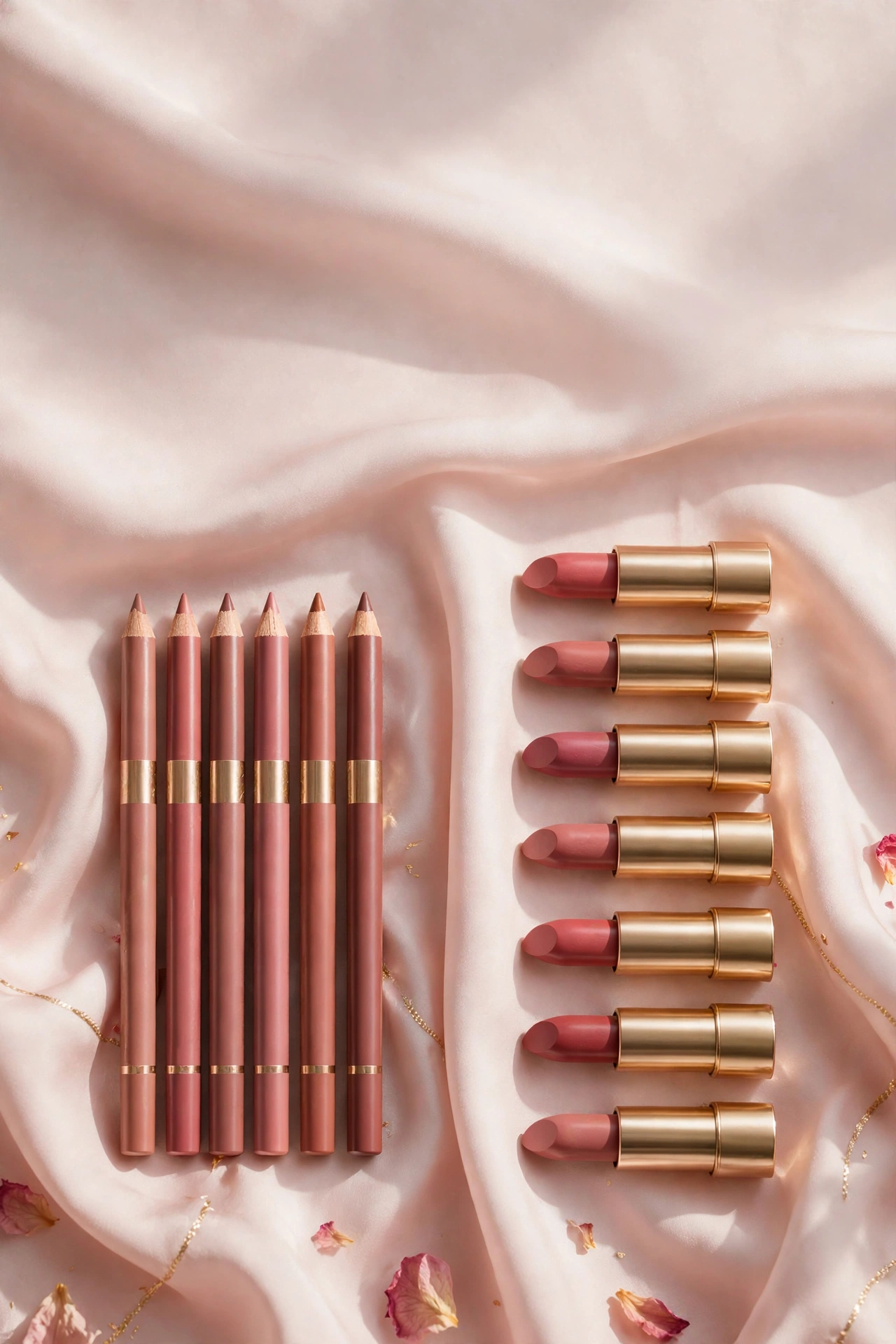
- Liners have a firmer, waxier formula that grips the lip edge; lipsticks are creamier and designed for full-lip color.
- The correct order is always liner first, lipstick second — liner creates the shape and base, lipstick fills it.
- Use liner alone (filled in fully) for natural, long-wearing everyday color; use lipstick alone for sheer, quick application.
- Lip liner can replace lipstick for nude and natural looks, but not for bold, opaque, or glossy finishes.
- Matching liner to your lipstick (or your natural lip color) is more important than any technique.
- When choosing between stain and lipstick formulas, the [lip stain vs lipstick guide → lip-stain-vs-lipstick-guide] covers that separate decision.
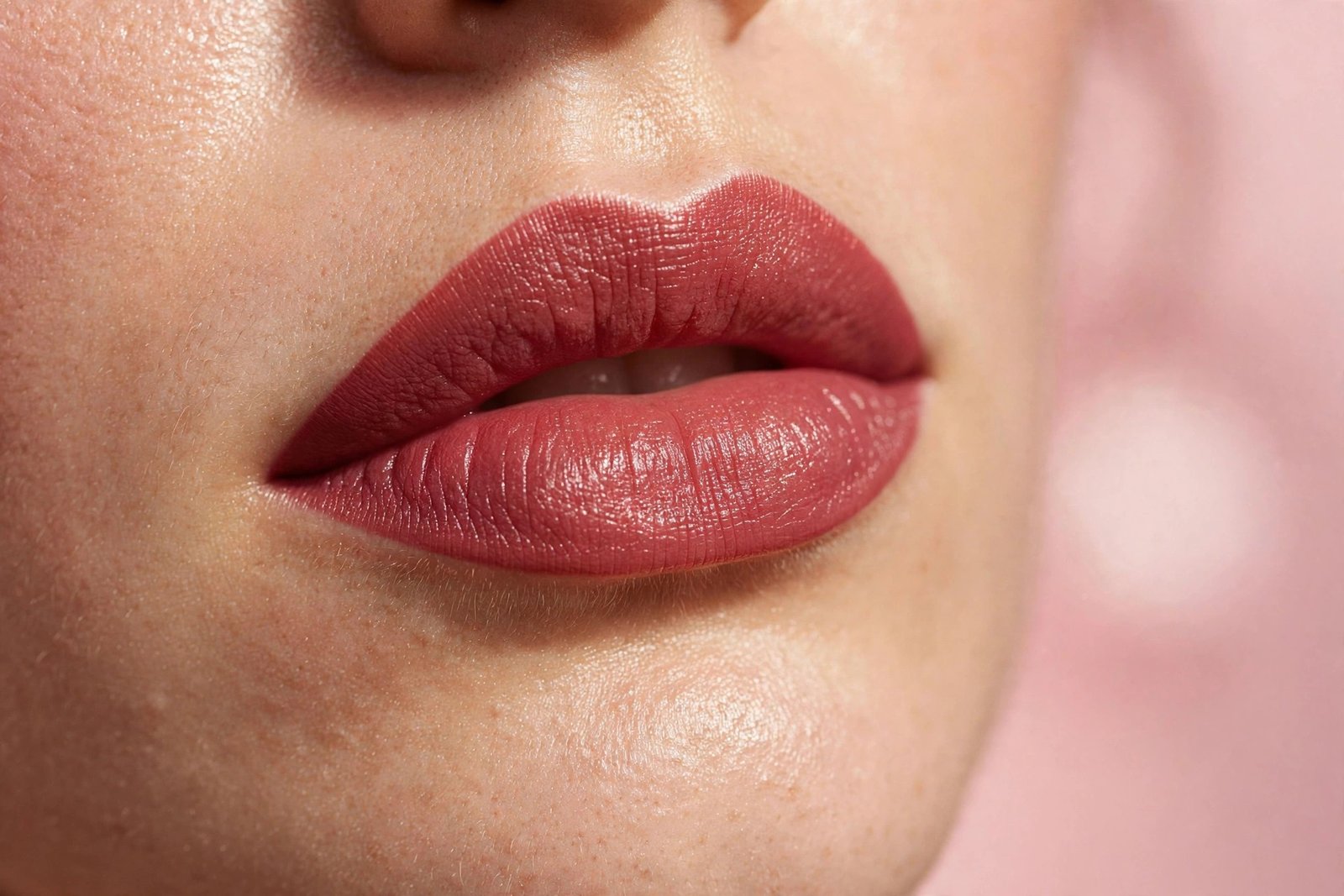
The Core Difference: What Each Product Actually Does
Think of it like painting a room: lip liner is the painter’s tape and the primer, lipstick is the paint. You can paint without tape, but the edges won’t be as clean and the job won’t last as well.
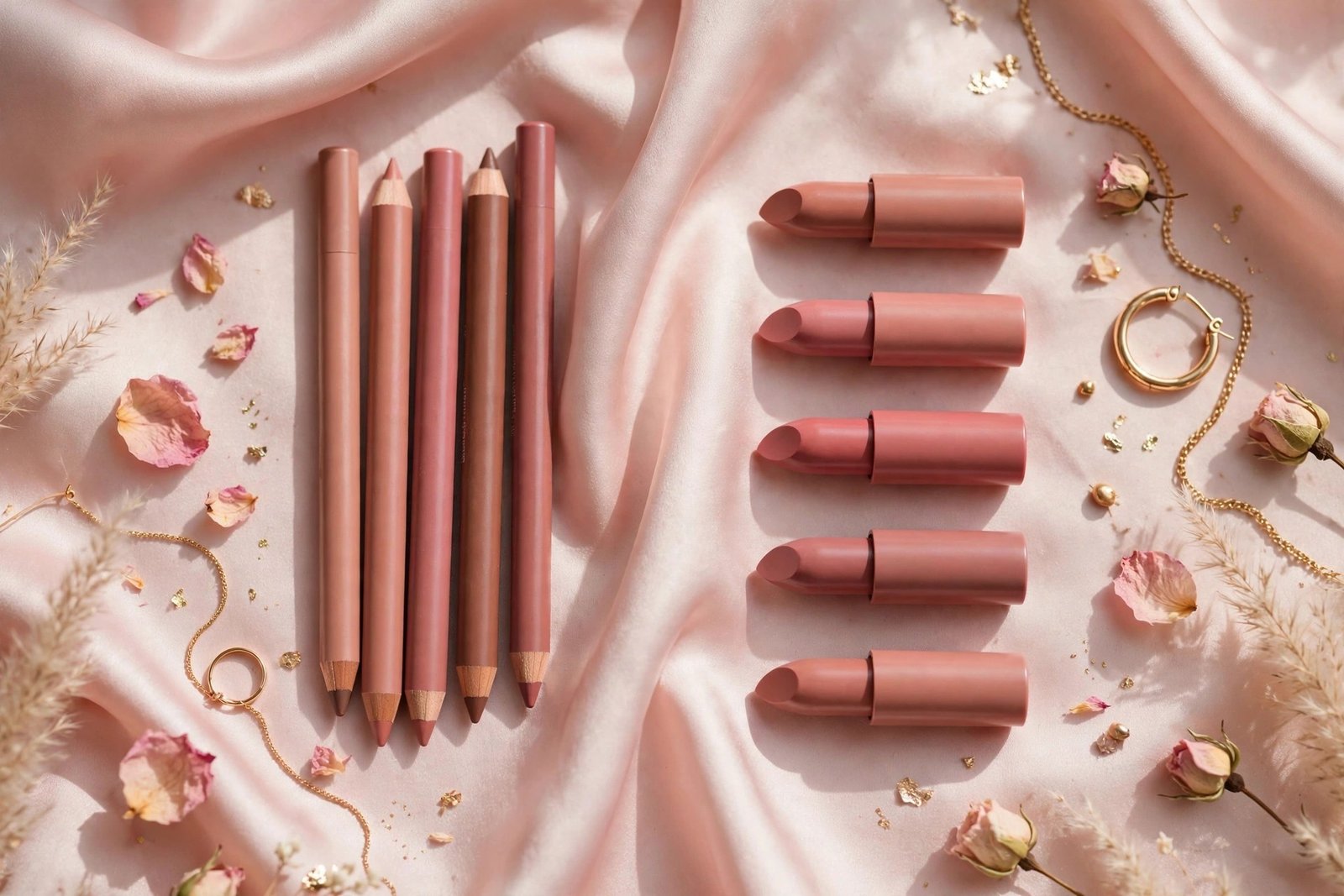
Lip liner is a firm, waxy pencil (or gel) designed for precision. Its formula contains more wax and less oil than lipstick, which is why it grips the skin at the lip’s edge instead of sliding around. Its three jobs: draw the shape of the lips, create a barrier that stops color from feathering into surrounding skin, and lay down a sticky base layer that lipstick adheres to. The detailed technique is covered step by step in [how to apply lip liner → how-to-apply-lip-liner].
Lipstick is a creamier bullet (or liquid) designed for color payoff across the full lip. Its formula prioritizes pigment, glide, and finish — cream, satin, matte — over grip and precision. It delivers the visible color and texture of your lip look, but on its own it’s more vulnerable to feathering, fading in the center, and transferring onto cups.
Neither is “better.” They’re designed as a system, and most of the frustration beginners feel with lipstick (“it never stays,” “it bleeds everywhere”) comes from using lipstick without its partner.
Side-by-Side Comparison
| Lip Liner | Lipstick | |
|---|---|---|
| Primary job | Define shape, prevent feathering, extend wear | Deliver color and finish |
| Formula | Firm, waxy, high-grip | Creamy, pigmented, glide-focused |
| Coverage | Sheer to medium (even when filled in) | Medium to full opacity |
| Finishes | Mostly matte/natural | Cream, satin, matte, sheer, metallic |
| Precision | High — fine tip for edges | Low — broad bullet for filling |
| Wear time alone | 4–6 hours (filled in) | 2–4 hours (cream), 6–8 (matte/liquid) |
| Best for | Definition, base, natural looks | Color impact, finish variety |
| Beginner difficulty | Medium (technique matters) | Easy (forgiving application) |
When to Use Lip Liner
Reach for liner — with or without lipstick over it — in these situations:
- Any bold or dark lipstick. Reds, berries, and deep plums show every imperfection. Liner’s crisp edge is what makes them look expensive instead of messy. The [bold red lip holiday guide → bold-red-lip-holiday-guide] demonstrates this specifically for red.
- When feathering is a problem. If lipstick migrates into the lines around your mouth, liner’s waxy barrier is the fix — more effective than any lipstick formula change.
- When you need lipstick to last. An event, a workday, a wedding: fill the lips with liner first and your lipstick wear time roughly doubles.
- When your lips are asymmetrical. Liner lets you subtly correct an uneven cupid’s bow or uneven fullness so lipstick sits on a balanced shape.
- For overlining or reshaping. Only liner can adjust the perceived shape and fullness of the lips — lipstick alone just colors the shape you have.
- As a standalone natural lip. A nude liner filled across the whole lip, topped with balm, is one of the longest-wearing natural looks with the least product.
When to Use Lipstick Alone
There are plenty of times lipstick solo is the right call:
- Sheer and quick everyday color. A sheer or cream lipstick applied straight from the bullet takes ten seconds and needs no precision — perfect for low-effort days.
- Glossy and juicy finishes. Liner’s matte, defined edge fights against the soft, blurred aesthetic of a glossy lip. For that finish, lipstick or gloss alone looks better.
- When you’re still learning. If liner technique feels stressful, there’s no shame in wearing lipstick alone while you practice liner separately. A sheer lipstick is very forgiving.
- Blotted-down “just bitten” looks. Pressing lipstick in with your finger for a soft stain effect works best without a crisp liner edge competing with it.
The Correct Layering Order (and Why It Matters)
Liner first, lipstick second. Always. This isn’t a preference — it’s structural:
- Prep and blot — exfoliated, hydrated lips with excess balm removed.
- Line and define — shape the lip line, working from the cupid’s bow and lower-lip center outward.
- Fill with liner — lightly cover the whole lip to create the gripping base.
- Apply lipstick over it — the color goes on top of the liner base, not beside it.
- Optional: sharpen — if edges need crisping after lipstick, a light re-line over the top cleans them up.
Reversing the order — lipstick first, liner after — gives you a visible dark outline sitting on top of color, which is the harsh ring that makes lip liner look dated. The liner needs to be under the lipstick to disappear into it.
Can Lip Liner Replace Lipstick?
The honest answer: sometimes, depending on the look you want.
Yes, liner can replace lipstick when:
– You want a natural, “my lips but better” look — a nude or rose liner filled in fully gives defined, even color that lasts for hours.
– You want maximum wear with minimum product — liner worn alone outlasts most cream lipsticks.
– You prefer a soft matte finish — filled-in liner has a naturally velvety matte look.
No, liner can’t replace lipstick when:
– You want bold, opaque color — liner formulas are sheerer and can’t build to the intensity of a true lipstick.
– You want shine, gloss, or a satin finish — liner is inherently matte and dry; it can’t produce those textures.
– You want a specific trendy shade — liner shade ranges are much smaller than lipstick ranges.
The practical middle ground most makeup artists use: liner as the base plus lipstick on top gives you the best of both — the wear and definition of liner with the color and finish of lipstick. That’s the combination the long-wear system in [how to make lipstick last longer → how-to-make-lipstick-last-longer] is built around.
Common Mistakes When Using Both Together
- Liner darker than the lipstick. The number-one mistake. The liner should match the lipstick or your natural lip color — a visible dark outline ages the look instantly.
- Lining after lipstick. Creates the harsh ring effect described above. Liner goes under.
- Skipping the fill. Lining just the edge without filling the lip wastes liner’s biggest benefit — the gripping base that extends wear.
- Overlining with dark shades. Subtle overlining works with nudes; with dark lipstick it looks obvious. Keep dark liner right on the natural line.
- Not blending the inner edge. If you can see where liner stops and bare lip begins in the center, blend with a fingertip before lipstick goes on.
Which Should a Beginner Buy First?
If your budget covers one product: a nude-rose lip liner that matches your natural lip color. It’s the most versatile single lip product — wear it alone for natural definition, under any lipstick to extend wear, or to practice technique without the pressure of bold color. Add a cream lipstick in a wearable shade second, and you have the complete core system. From there, the full routine in the [lip makeup guide for beginners → lip-makeup-guide-for-beginners] shows you how gloss and stain fit in as you expand.
Frequently Asked Questions
Is lip liner necessary, or can I just wear lipstick?
You can absolutely wear lipstick alone — millions of people do daily. Liner isn’t mandatory; it’s an upgrade. It becomes close to necessary only for dark/bold shades (where edges show) and for maximum wear time. For sheer everyday lipstick, skipping liner is completely fine.
Should lip liner be darker or lighter than lipstick?
Neither — it should match. Match the liner to the lipstick shade for bold looks, or to your natural lip color for everyday wear. Darker-than-lipstick liner is the dated look everyone wants to avoid; lighter liner can make lips look smaller and the edge look chalky.
Can you use lip liner as lipstick every day?
Yes — filled-in liner is a legitimate everyday lip. It’s long-wearing, natural-looking, and simple. Just keep lips hydrated underneath, since liner formulas are drier than lipsticks, and top with balm if your lips feel tight by afternoon.
Why does my lip liner look harsh?
Usually one of three things: the shade is too dark for the lipstick (or bare lips), the line was drawn with too much pressure, or the inner edge wasn’t blended. Fix it by choosing a closer shade match, using lighter strokes, and blending the inner edge with your fingertip.
Do I need liner with lip stain?
Generally no. Stains soak into the lip rather than sitting on top, so they don’t feather the way lipstick does — which removes liner’s main job. Liner under a stain can actually look odd since the stain’s soft edge clashes with a crisp line. For the full stain breakdown, see [lip stain vs lipstick → lip-stain-vs-lipstick-guide].
What’s the difference between lip liner and a lip pencil?
Nothing — they’re the same product. “Lip pencil” is just another name for lip liner, usually referring to the wooden pencil format specifically.
Lip liner and lipstick aren’t competitors — they’re partners, each covering the other’s weaknesses. Liner brings precision, grip, and staying power; lipstick brings color, finish, and impact. Learn to use them as a system — liner under, lipstick over, shades matched — and you’ve learned the core skill behind every polished lip look, from the everyday nude in the [beginner’s lip routine → lip-makeup-guide-for-beginners] to the statement red. Master the liner technique itself with [how to apply lip liner → how-to-apply-lip-liner], then lock the whole thing in place with the [long-wear tricks → how-to-make-lipstick-last-longer].
lip makeup guide for beginners
lip stain vs lipstick guide
how to apply lip liner
make lipstick last longer
bold red lip holiday guide
Love this? Pin it for later!