Christmas Party Long-Wear Makeup: 12-Hour Holiday Looks
A Christmas party is a marathon, not a sprint. Cocktails, warm crowded rooms, dancing, hugging every relative, and maybe an after-party — your makeup needs to survive six to twelve hours without a full reapplication. The difference between makeup that lasts and makeup that melts isn’t price or brand loyalty. It’s prep, layering, and setting.
This guide breaks down the complete long-wear system: how to prep skin so makeup has something to grip, the exact layering order that locks products down, when to use setting spray versus setting powder, and what to pack in your clutch so you can touch up in ninety seconds flat. For the full party plan including looks, hair, and nails, start with the [Christmas party beauty guide → christmas-party-beauty-guide].
Key Takeaways
- Long wear starts with skincare: hydrated, prepped skin holds makeup far better than dry or oily skin
- Apply products in thin layers — one thick layer separates, two thin layers last
- Use primer matched to your skin type and to your foundation’s base (water with water, silicone with silicone)
- Setting powder controls shine; setting spray locks everything down — use both for maximum wear
- Blot with papers before adding powder at touch-up time to avoid cakiness
- Pack a clutch kit: blotting papers, pressed powder, lipstick, mini setting spray
Why Party Makeup Fails
Makeup breaks down for predictable reasons, and warm holiday parties hit every single one of them. Heat and humidity from a crowded room melt cream products. Facial oil production increases in warm environments, which is why the T-zone is always the first casualty. Touching your face, hugging people, and leaning your chin on your hand all transfer product off the skin. And cocktails dehydrate you, which paradoxically makes skin produce more oil later.
The other major culprit is application: thick layers of foundation over unprepped skin. A heavy single layer never fully sets, so it slides around on its own weight. If your foundation tends to [look cakey → why-does-my-foundation-look-cakey-and-how-to-fix-it] or [separate around the nose → why-makeup-separates-around-nose] by hour three, layering is almost always the problem.
Step 1: Prep Skin for Grip
Long wear begins before any makeup touches your face. The goal is a smooth, balanced canvas — not too dry (foundation clings to dry patches) and not too slick (everything slides).
Cleanse gently. Start with a clean face so you’re not layering over the day’s oil and sunscreen. A gentle cleanser is enough; aggressive scrubbing irritates skin and increases oil production.
Hydrate, then wait. Apply moisturizer suited to your skin type — a lightweight [oil-free moisturizer → best-moisturizer-for-oily-skin-oil-free] for oily skin, a [ceramide-rich cream → best-moisturizer-for-dry-skin-ceramides] for dry skin. Then wait five full minutes. Skincare needs to absorb before makeup goes on, or you’ll get [pilling → why-niacinamide-pills-under-makeup] and sliding.
Prime strategically. This is where most people either skip or over-apply. A pea-sized amount is plenty. Choose by concern: mattifying primers for oily T-zones, hydrating or gripping primers for dry skin, blurring primers for enlarged pores. If you’re unsure [what primer does → what-does-makeup-primer-do], the short version is that it creates a barrier between skin’s oil and your makeup. For eyes, use a dedicated [eyeshadow primer → eyeshadow-primer-do-you-need-it] — face primer doesn’t grip shadow the same way. This step matters most for oily lids; these tips for [making eyeshadow last on oily lids → how-to-make-eyeshadow-last-oily-lids] go deeper.
Step 2: The Layering Order
Order matters as much as product choice. Creams before powders, always — powder on top of cream melts the cream; cream on top of powder cakes.
- Foundation in thin layers. Apply one thin layer with a brush, sponge, or fingers, then add a second thin layer only where you need coverage. Damp sponges sheer out foundation; brushes build coverage. Either works as long as the layers stay thin. If you use a full-coverage foundation, check that it’s actually suited to [oily skin → best-foundation-for-oily-skin-long-wear] if that’s your type.
- Concealer only where needed. Under-eyes, around the nose, spots. Keep it thin — thick concealer [creases → why-does-concealer-crease-under-eyes], and creased concealer at midnight is worse than none.
- Cream blush and bronzer. Apply now, while everything is still blendable. Cream products meld with foundation and last longer than powder alone.
- Setting powder on the T-zone. Forehead, nose, chin — anywhere you get shiny. Use a fluffy brush and a light hand. [Baking → what-is-baking-in-makeup] is the heavy-duty version: pack powder under the eyes and let it sit, then dust off. It’s effective but can look dry on mature or dry skin, so it’s optional.
- Powder blush/bronzer on top (optional). Layering powder over the cream versions of the same products doubles wear time — a trick straight from professional makeup artists.
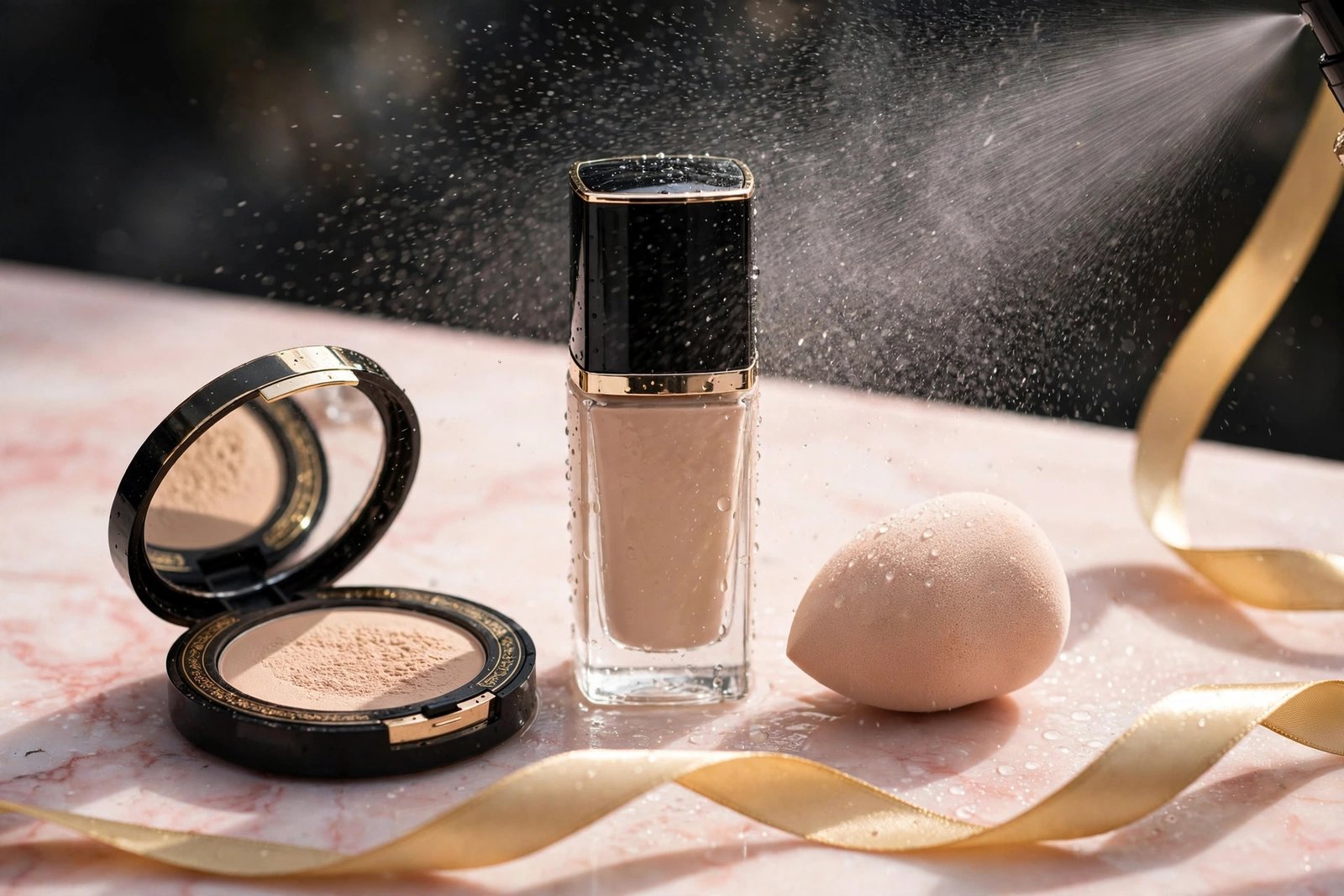
- Setting spray to finish. Hold the bottle 8-10 inches away and mist in an X and T motion. This melts the powder layer into the skin so everything looks like one seamless finish, and it adds hours of wear.
Setting Spray vs. Setting Powder: When to Use Which
This is the most misunderstood pair in makeup, and the [full comparison → setting-spray-vs-setting-powder] is worth reading — but the party-night summary is:
Setting powder absorbs oil and reduces shine. It’s best for oily skin, warm rooms, and anyone whose makeup slides by hour four. Apply it before setting spray, targeted at oily zones.
Setting spray locks layers together and extends total wear time. It’s best as the final step for everyone, and it’s essential for dry skin types who can’t use much powder without looking cakey.
For a Christmas party, use both. Powder where you’re oily, spray everywhere. The combination routinely outlasts either one alone — which is exactly what you want when the evening stretches past midnight. This approach is also the backbone of the [Thanksgiving long-wear routine → long-wear-thanksgiving-makeup], which faces the same warm-room, long-day challenge.
Step 3: Make Eyes and Lips Last
Eyes. Shadow primer, then shadow in thin layers, then a waterproof or tubing mascara if tears (happy or otherwise) are likely. If your [mascara smudges → how-to-stop-mascara-smudging-under-eyes], the under-eye area needs a touch of setting powder before mascara goes on. For eyeliner, set pencil liner by pressing a matching eyeshadow over it — it roughly doubles its lifespan.
Lips. The party-night lip routine: exfoliate (a quick [honey sugar scrub → diy-honey-sugar-lip-scrub] works), apply a thin layer of lip balm and blot off the excess, fill lips completely with lip liner, apply lipstick, blot with a tissue, apply a second thin layer, and blot again. This layered lip survives drinks and dinner far better than one thick swipe. Bring the lipstick with you — lips always need one refresh regardless of technique.
Step 4: The Clutch Touch-Up Kit
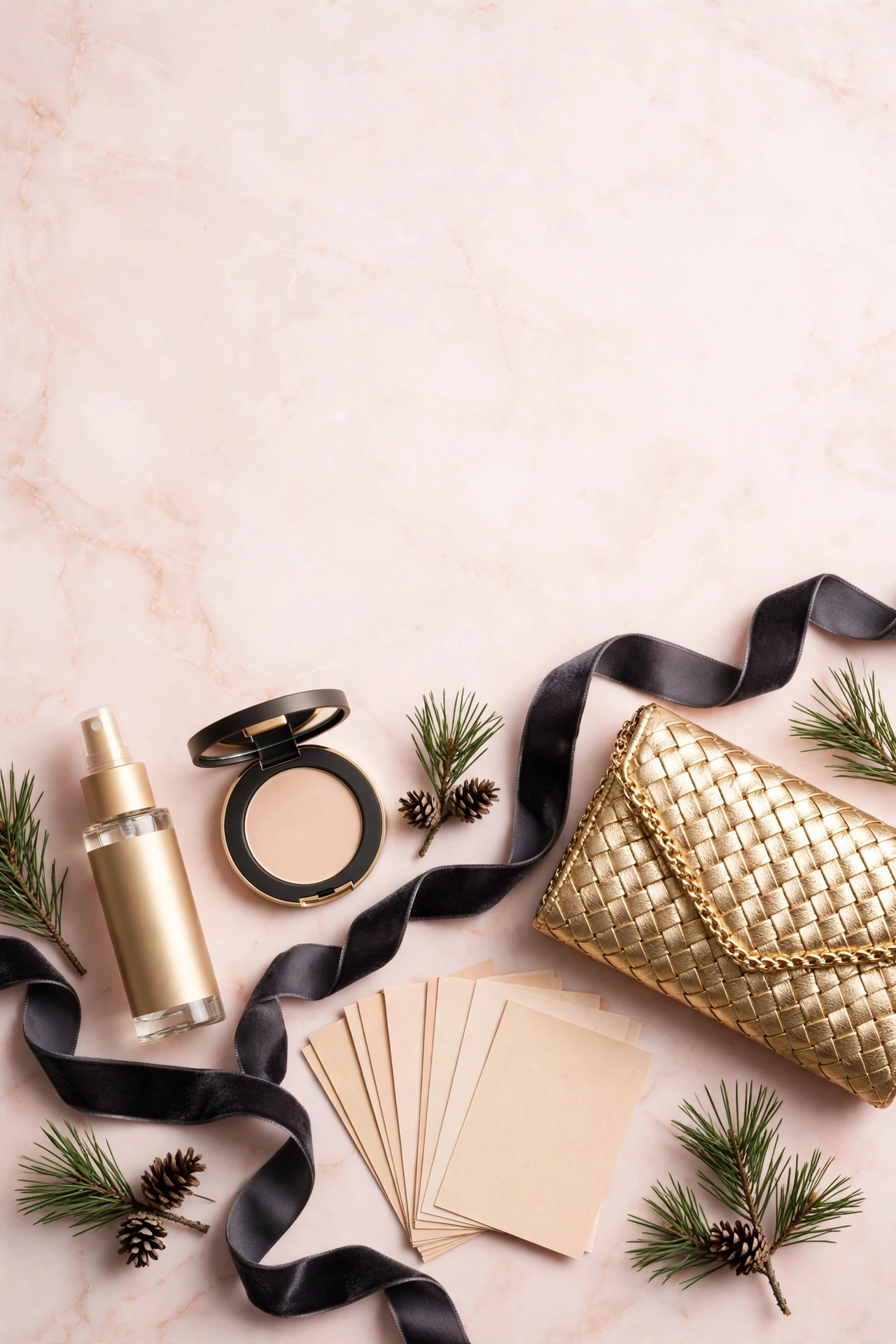
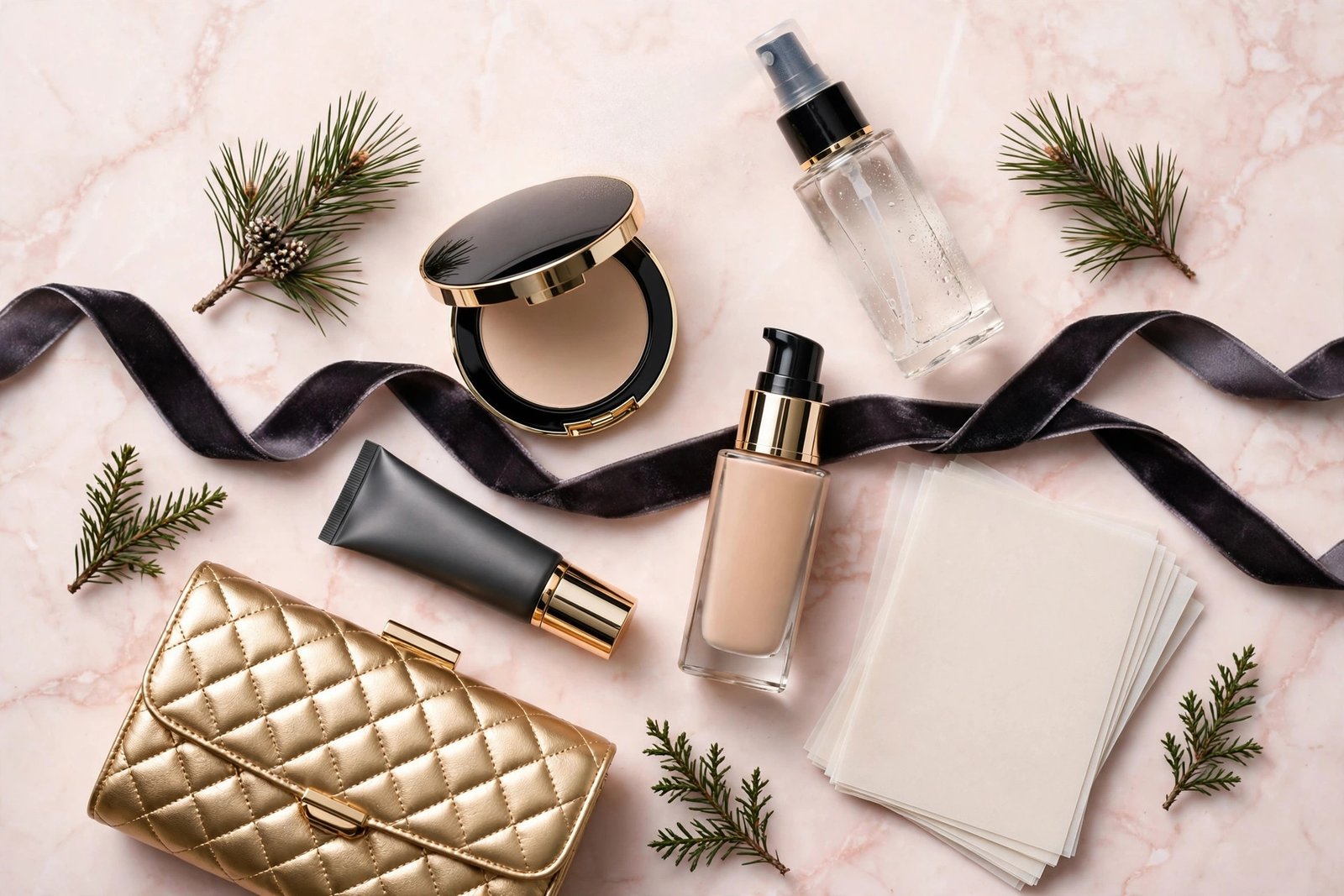
You can’t reapply your whole face at a party, and you shouldn’t need to. This kit fits in any clutch and handles everything that actually goes wrong:
- Blotting papers. Press (don’t rub) on shiny spots. Always blot before adding any powder — adding powder over oil creates paste.
- Pressed powder compact. For the T-zone after blotting. One thin press, not a full re-powder.
- Your lipstick or lip liner. The one product that always needs refreshing.
- Mini setting spray. A quick mist after touch-ups re-melts everything together.
- Cotton swabs. Fix eyeliner wings, mascara smudges, and lipstick edges without touching the rest of your face.
- Bobby pins. Because hair eventually needs them.
What to Do When Things Go Wrong Mid-Party
Shiny forehead: blot, then a light press of powder. Don’t pile on powder without blotting first.
Foundation separating around the nose: gently press (don’t rub) with a fingertip or a damp sponge to re-meld it, then a whisper of powder. Rubbing makes it worse.
Smudged eyeliner: clean the edge with a cotton swab, then press a little shadow over the line to reset it.
Faded lipstick: blot lips, reapply liner to the edges, then lipstick. Never layer fresh lipstick over a full old layer — it pills.
Creased under-eye concealer: smooth it out with a fingertip (body heat re-blends), then set with the tiniest amount of powder.
Frequently Asked Questions
How long should party makeup realistically last?
With proper prep, primer, thin layers, and both powder and spray, 8-12 hours is realistic for most skin types. Very oily skin may need one mid-evening blot and powder refresh around hour six, which takes under two minutes with the clutch kit.
Is setting spray or setting powder better for long wear?
Both together beat either alone. Powder controls oil; spray locks layers and extends wear. If you must choose one: powder for oily skin and warm rooms, spray for dry skin and a natural finish. The detailed comparison covers the trade-offs.
Why does my foundation break apart around my nose?
The nose area produces more oil and gets more friction (glasses, tissues, touching). Fix it with primer on the nose, thinner foundation layers there, a light press of setting powder, and setting spray. Mismatched primer/foundation bases (silicone vs. water) also cause separation.
Should I use a full-coverage foundation for parties?
Not necessarily. Medium coverage in thin layers looks better and lasts longer than full coverage applied thickly. You can always add a second thin layer where needed. Full-coverage formulas are fine as long as they’re sheered out and well-set.
Can I reapply setting spray over finished makeup later in the night?
Yes — that’s exactly what it’s for. After blotting and any powder touch-ups, a light mist re-melts the layers together and refreshes the finish. Hold it farther away (10-12 inches) for touch-ups than for the initial set.
How do I keep my lipstick from transferring onto glasses?
The blot-and-layer technique (lipstick, blot, lipstick) dramatically reduces transfer. Matte and long-wear liquid formulas transfer least. Drinking through a straw helps too — and keep that lipstick in your clutch regardless.
Long-wear makeup is a system, not a product: prep, prime, thin layers, powder where oily, spray everywhere, and a ninety-second touch-up kit. Get the system right and you can stop thinking about your face and enjoy the party. Pair it with the [full party beauty plan → christmas-party-beauty-guide] for looks, hair, and nails, and check the [setting spray vs. powder breakdown → setting-spray-vs-setting-powder] if you want the science behind the final two steps.
christmas party beauty guide
setting spray vs powder
long-wear thanksgiving makeup
eyeshadow primer guide
oily lids eyeshadow tips
Love this? Pin it for later!