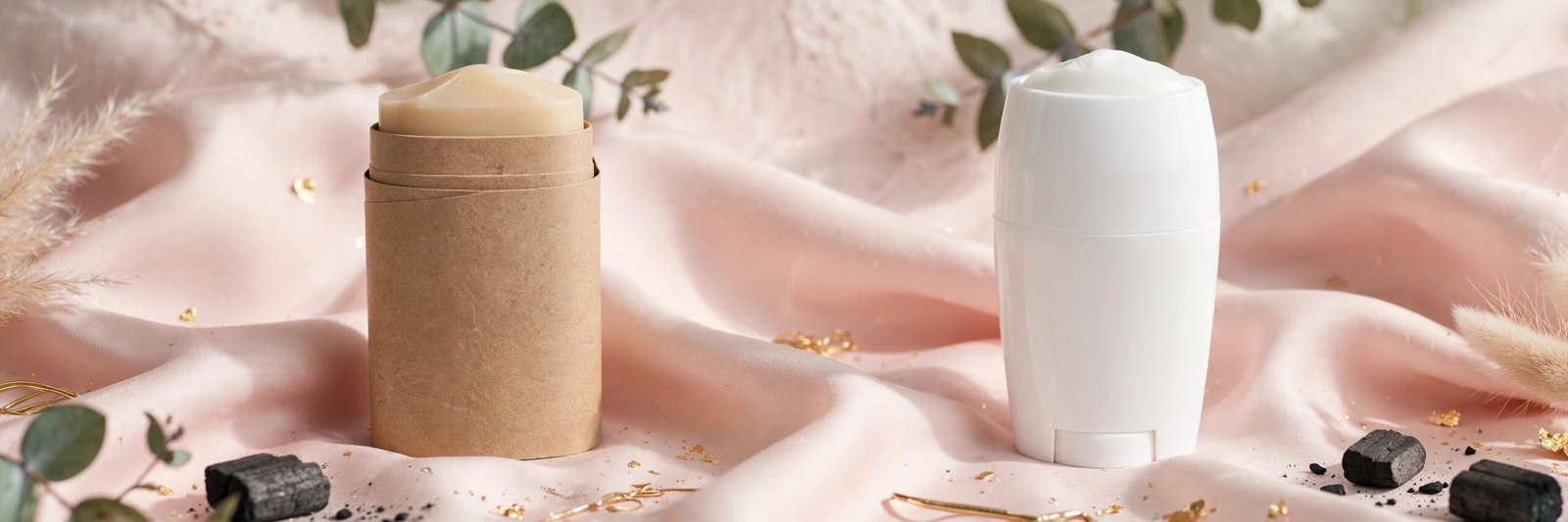
Natural Deodorant vs Antiperspirant: Which One Should You Use?
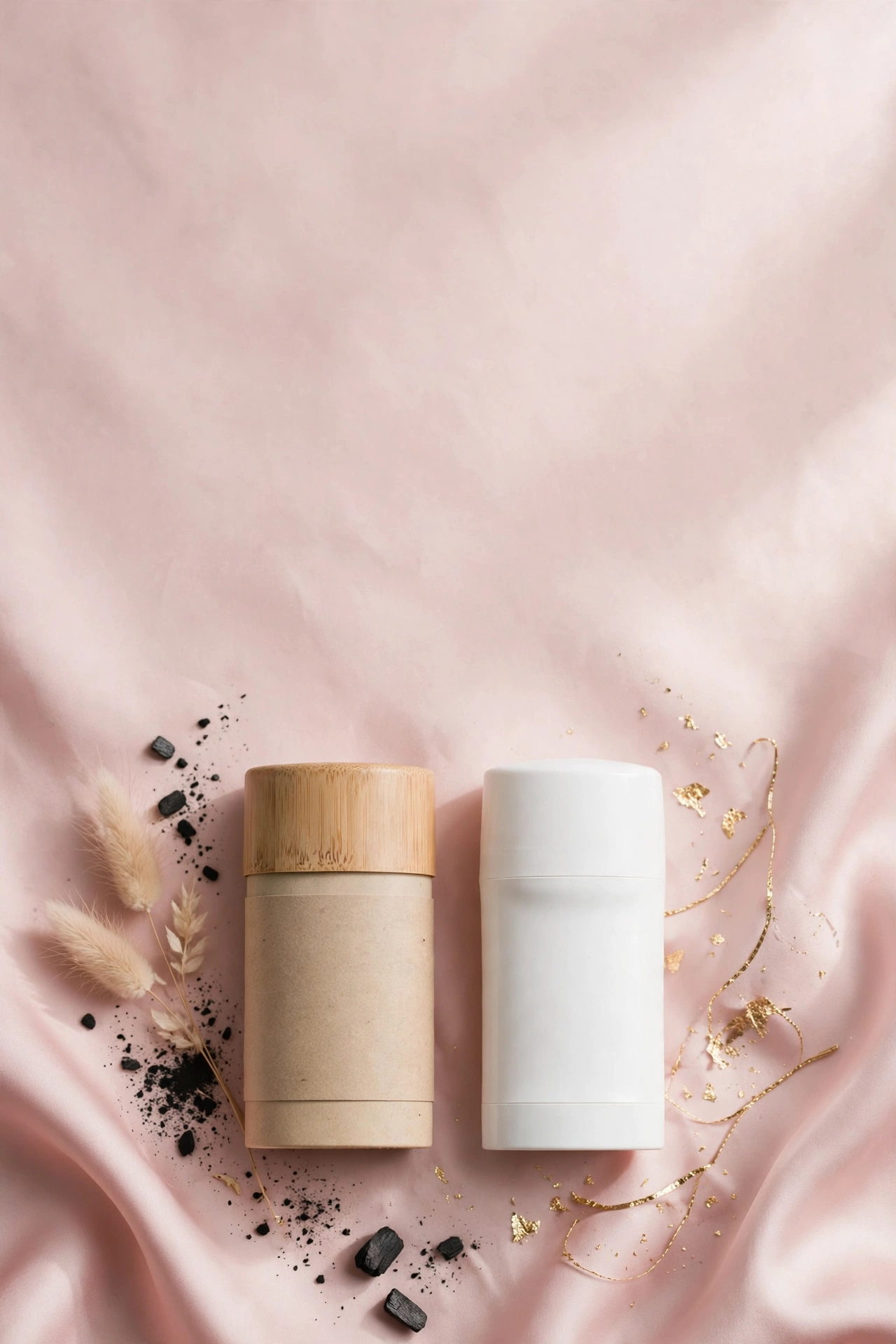
Walk down any personal-care aisle and you’ll see the choice framed as a lifestyle statement: clinical-strength antiperspirant on one side, crystal-and-botanical natural deodorant on the other. But the difference between them isn’t philosophy — it’s chemistry. They do fundamentally different things, and picking the wrong one for your needs is why so many people bounce between products, frustrated.
This guide explains exactly how each works, who each one suits, the honest trade-offs, and how to switch from one to the other without a miserable transition. If underarm irritation or darkening is part of your concern, also see our how to lighten dark underarms — your deodorant choice directly affects both.
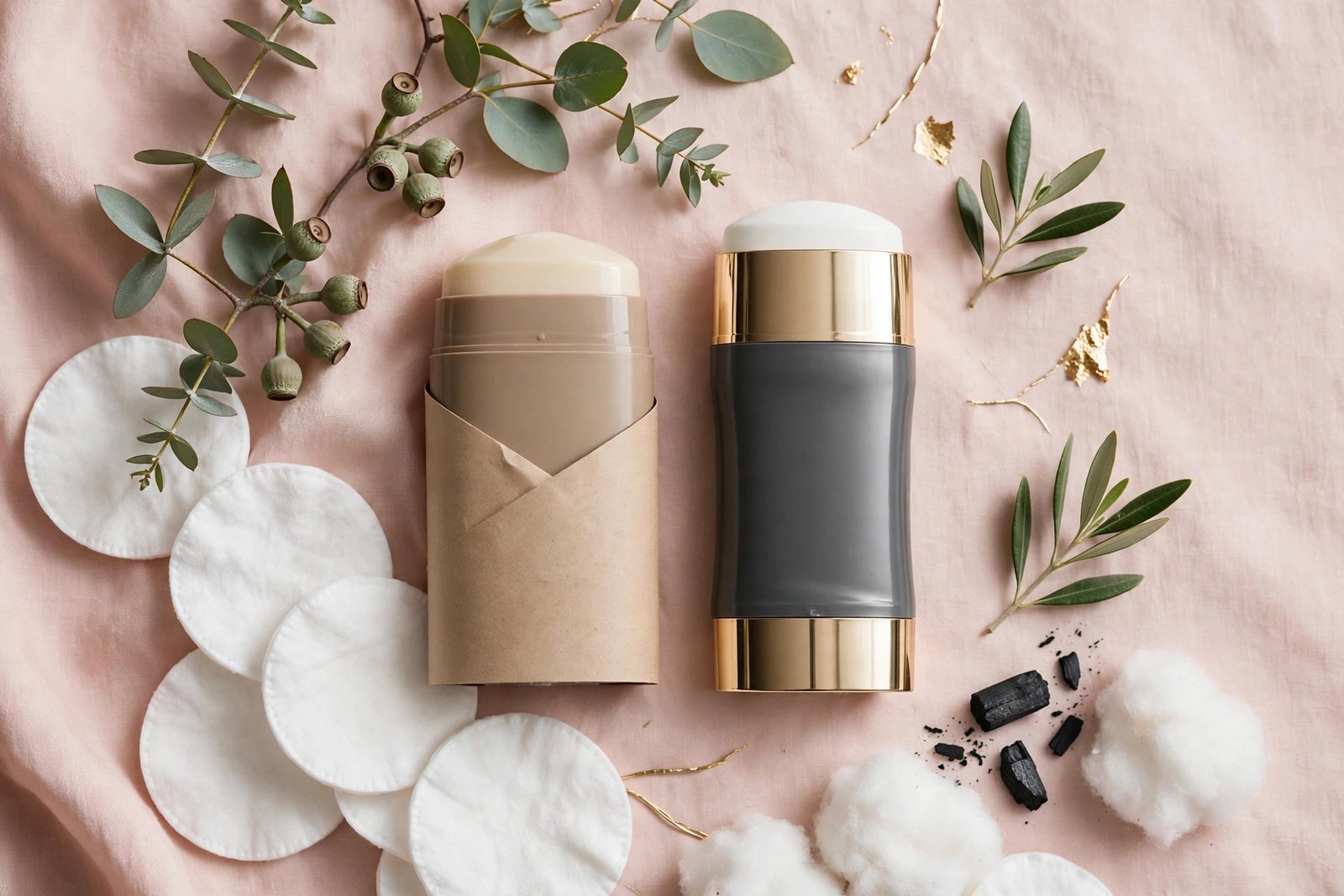
How Antiperspirant Works
Antiperspirants stop or reduce sweating. Their active ingredients are aluminum-based compounds (like aluminum chlorohydrate or aluminum zirconium). When applied, these compounds dissolve in sweat and form a temporary gel-like plug in the sweat ducts, physically blocking sweat from reaching the skin’s surface.
This is why antiperspirant is the only over-the-counter option that actually keeps you drier. Clinical-strength versions simply contain a higher concentration of aluminum compounds (up to 20%, vs. ~10–15% in regular formulas) and are widely recommended by dermatologists as the first-line treatment for bothersome sweating.
Key facts:
– Regulated as a drug (not a cosmetic) in the US, because it changes a bodily function.
– Works best applied at night to dry skin, when sweat glands are least active — this gives the plugs time to form. Morning application still works, but less effectively.
– The effect is temporary. Plugs wash out and reform with each application cycle, which is why daily use is needed.
How Natural Deodorant Works
Natural deodorant does not stop sweating. It manages odor. Since sweat itself is odorless — the smell comes from bacteria breaking sweat down — natural deodorants work by creating conditions bacteria dislike: antibacterial ingredients (like tea tree oil or coconut oil), odor absorbers (baking soda, magnesium, arrowroot powder, or activated charcoal), and pleasant scents from essential oils.
You will still sweat. That’s the entire point and the entire trade-off: natural deodorant lets your body do what it does while keeping the smell in check.
Key facts:
– Not regulated as a drug. Ingredients vary wildly between brands — “natural” has no legal definition.
– Common bases: coconut oil or shea butter (glide), baking soda or magnesium hydroxide (odor neutralization), arrowroot or cornstarch (moisture absorption), essential oils (scent + antibacterial action).
– Baking soda is the most common irritant in natural formulas — many people who “can’t use natural deodorant” are actually reacting to baking soda specifically. Baking-soda-free formulas exist and are worth trying before giving up.
Side-by-Side Comparison
| Antiperspirant | Natural deodorant | |
|---|---|---|
| Stops sweat? | Yes — blocks sweat ducts | No — you sweat normally |
| Controls odor? | Yes, mostly by reducing sweat | Yes, via antibacterial + absorbing ingredients |
| Active ingredient | Aluminum compounds | Varies: baking soda, magnesium, charcoal, essential oils |
| Best for | Heavy sweaters, high-stakes days, hyperhidrosis | Light–moderate sweaters, sensitive skin, ingredient-conscious users |
| Irritation risk | Moderate (aluminum + fragrance can irritate) | Moderate (baking soda + essential oils can irritate) |
| Underarm darkening link | Possible with irritating formulas | Lower with gentle formulas |
| Transition period | None | 2–4 weeks of adjustment |
| Cost | $ — widely available, cheap | $$ — typically pricier |
The Aluminum Question: What the Science Says
The most common reason people consider switching is concern about aluminum. Here’s the honest state of the evidence:
- Breast cancer: Multiple large studies have found no consistent link between antiperspirant use and breast cancer risk. The concern originated from aluminum being found in breast tissue samples, but presence doesn’t equal causation, and major cancer organizations do not list antiperspirant as a risk factor.
- Alzheimer’s: Early theories linking aluminum to Alzheimer’s have not held up in larger studies. Dietary aluminum exposure dwarfs what little is absorbed through skin.
- Kidney disease: People with impaired kidney function can’t clear aluminum efficiently, and their doctors may advise avoiding aluminum-containing products. This is a real, specific medical consideration — not a general-population concern.
The evidence-based summary: for healthy adults, aluminum in antiperspirant is considered safe by regulatory bodies worldwide. Switching to natural deodorant because you prefer the ingredients or your skin is happier without it is a perfectly good reason; switching out of cancer fear is not supported by the research.
Who Should Use Which
Choose antiperspirant if you:
– Sweat heavily enough that it affects your daily life, clothing, or confidence
– Have important events (weddings, presentations, interviews) where staying dry matters
– Have tried natural deodorant and the odor control wasn’t enough
– Want the simplest, cheapest effective option
Choose natural deodorant if you:
– Sweat lightly to moderately and odor — not wetness — is your main concern
– Have sensitive underarms that react to conventional formulas
– Prefer to avoid aluminum for personal reasons
– Are working on underarm darkening and want the gentlest daily formula (see our brightening guide)
Consider using both strategically: Many people use antiperspirant on high-stakes days or in summer and natural deodorant the rest of the time. There’s no rule against it.
If heavy sweating is your main problem regardless of product type, read our guide to stopping excessive underarm sweating — product choice is only one piece of sweat management.
How to Switch to Natural Deodorant (Without the Stink)
The transition has a reputation for being awful. It’s manageable if you know what’s happening: after years of antiperspirant, your sweat glands have been partially blocked. When you stop, they rebound — sweating and odor temporarily increase for 2–4 weeks while your body recalibrates and your underarm microbiome shifts.
The transition plan:
1. Time it well. Start on a long weekend or a low-stakes week — not before a wedding or big presentation.
2. Do an armpit mask first. A clay/charcoal mask clears years of antiperspirant residue and gives the natural deodorant a clean slate. Our armpit detox mask guide has the full method.
3. Apply natural deodorant generously — most people under-apply at first. Two to three swipes per underarm.
4. Reapply midday during the first two weeks. This is normal, not failure.
5. Wear breathable fabrics (cotton, moisture-wicking) during the transition.
6. Give it a full month before judging. Most people who quit do so in week two — right before it gets better.
If odor is still unmanageable after a month of proper use, that particular formula isn’t right for you — try a different base (magnesium-based if baking soda irritated you, for example) before concluding natural deodorant doesn’t work at all.
What to Look for When Shopping (Either Type)
For antiperspirant:
– Clinical-strength if regular isn’t cutting it
– Fragrance-free if your underarms get irritated, red, or bumpy
– Apply at night for best results — this single habit change improves effectiveness more than upgrading products
For natural deodorant:
– Baking-soda-free if you’ve reacted to natural formulas before (look for magnesium hydroxide or arrowroot-based instead)
– Minimal essential oils if your skin is sensitive — “natural fragrance” can irritate as much as synthetic
– Stick vs. cream vs. spray is personal preference; creams in jars tend to have the gentlest ingredient lists
Red flags in any deodorant: undisclosed “fragrance” high on the ingredient list when you have sensitive skin, and any product promising to “detox” your body — deodorant doesn’t detox anything.
Key Takeaways
- Antiperspirant stops sweat (aluminum plugs in sweat ducts); natural deodorant manages odor only — you still sweat.
- Large studies show no consistent link between antiperspirant aluminum and breast cancer or Alzheimer’s in healthy adults.
- Choose antiperspirant for heavy sweating and high-stakes dryness; choose natural deodorant for light–moderate sweating, sensitive skin, or ingredient preference.
- Baking soda — not “natural deodorant” generally — is the most common irritant in natural formulas; baking-soda-free options exist.
- The natural deodorant transition takes 2–4 weeks; an armpit mask beforehand and midday reapplication make it manageable.
- Using both strategically (antiperspirant for big days, natural for daily) is a legitimate approach.
FAQ
Does natural deodorant actually work?
For odor control in light-to-moderate sweaters, yes — good formulas work well. It does not stop sweating, so if wetness is your problem, it won’t solve it. Effectiveness varies hugely by formula; baking-soda-free magnesium-based options suit the most people.
Why do I smell worse after switching to natural deodorant?
Your sweat glands rebound after years of being partially blocked by antiperspirant, and your underarm bacterial balance shifts. This transition odor typically peaks in week 1–2 and settles by week 3–4. Weekly clay masks and midday reapplication help.
Is antiperspirant bad for you?
For healthy adults, no — regulatory bodies worldwide consider aluminum-based antiperspirants safe, and large studies haven’t established links to breast cancer or Alzheimer’s. People with kidney disease should consult their doctor, as they clear aluminum less efficiently.
Can I use deodorant and antiperspirant together?
You can layer them (antiperspirant at night, deodorant for scent in the morning), but most antiperspirants already contain fragrance. Using both types strategically on different days is simpler and more common.
Which is better for dark underarms?
Gentle, non-irritating formulas of either type. Irritation drives darkening, so fragrance-free and alcohol-free matters more than the natural-vs-antiperspirant label. See our dark underarm brightening guide for the full routine.
Love this? Pin it for later!