LED Light Therapy at Home: The Complete Beginner’s Guide
LED light therapy has moved from the dermatologist’s office to the bathroom counter. Glowing masks, sleek handheld wands, and flexible panels promise clearer, firmer, calmer skin — all from the couch, no appointment needed. But the marketing runs far ahead of the evidence on some claims, and the devices vary enormously in quality, price, and power.
This guide covers what LED light therapy actually is, what each color of light does (and doesn’t do) according to current research, how at-home devices compare to professional treatments, the safety facts worth knowing before you buy, and how to build a realistic routine. No hype, no miracle claims — just what’s known.
Key Takeaways
- LED light therapy uses specific wavelengths of visible light (red, blue, amber, near-infrared) to trigger biological responses in skin — no UV, no heat damage, no “lasers.”
- Red light (around 630–660 nm) has the most research behind it for skin: it may support collagen production and calm inflammation. Blue light (around 415 nm) targets acne-causing bacteria.
- At-home devices are far less powerful than professional ones — results are subtler, slower, and require consistent use over weeks.
- LED therapy is generally considered safe for most people, but it’s not for everyone: certain medications, eye conditions, and pregnancy warrant caution and a doctor’s input.
- Device quality matters enormously: wavelength accuracy, irradiance (power output), and treatment area coverage separate effective devices from expensive placebos.
This article is for informational purposes only and is not medical advice. Skin conditions vary — see a dermatologist for diagnosis and treatment.
What Is LED Light Therapy?
LED stands for light-emitting diode. In skincare, LED therapy (also called photobiomodulation) exposes the skin to specific wavelengths of light — most commonly red, blue, amber, and near-infrared — at low, non-thermal intensities. The light doesn’t burn, ablate, or damage the skin. Instead, specific wavelengths are absorbed by structures in skin cells (chromophores) and trigger biochemical responses.
The most-studied mechanism involves red and near-infrared light being absorbed by cytochrome c oxidase in mitochondria — essentially nudging cellular energy production, which is thought to support repair processes, collagen synthesis, and reduced inflammation. Blue light works differently: it’s absorbed by porphyrins produced by Cutibacterium acnes (the bacteria implicated in acne), generating reactive oxygen species that damage the bacteria.
This is not the same as laser treatment. Lasers use coherent, high-intensity light that can cut or resurface tissue. LED therapy is non-coherent, low-intensity light — no heat injury, no downtime, no wounding. It’s also not UV tanning or UV phototherapy; LED skincare devices don’t emit the ultraviolet wavelengths associated with skin damage.
The technology isn’t new — NASA researched red light for wound healing in the 1990s, and dermatologists have used professional LED panels for years. What’s new is the flood of consumer devices, and with them, a flood of uneven quality.
The Colors of Light: What Each One Does
Red light (630–660 nm)
Red light is the workhorse of LED skincare and has the strongest evidence base. Research suggests it can:
- Stimulate fibroblasts to produce more collagen and elastin over time
- Reduce inflammatory markers in the skin
- Support wound healing and recovery after procedures
- Improve the appearance of fine lines with consistent long-term use
The evidence is real but modest — think gradual improvement over 8–12 weeks, not transformation. Most positive studies used professional-grade devices with verified wavelengths and adequate power, which matters when evaluating at-home claims.
Near-infrared light (800–880 nm)
Near-infrared (NIR) penetrates deeper than red light — past the dermis into subcutaneous tissue. It’s often paired with red in devices marketed for firmness, muscle recovery, and deeper inflammation. The research base is thinner than red light’s but growing. Many quality masks and panels include NIR diodes alongside red ones, which is reasonable — but treat dramatic “deep tissue rejuvenation” claims with skepticism.
Blue light (around 415 nm)
Blue light’s main job is acne: it targets C. acnes bacteria on and in the skin. Clinical studies support blue light for mild-to-moderate inflammatory acne, particularly when combined with red light (blue kills bacteria, red calms the resulting inflammation). It’s less useful for non-inflammatory concerns like clogged pores or blackheads, and it does nothing for wrinkles.
One caution: blue light sits close to the wavelengths implicated in digital eye strain discussions, and some people find it irritating to the eyes. Quality devices include eye protection or built-in shields — use them.
Amber/yellow light (around 590 nm)
Amber light is marketed for redness, flushing, and lymphatic drainage. The evidence here is the thinnest of all the colors — some small studies suggest modest benefits for redness, but it’s largely extrapolated from red light’s anti-inflammatory effects. Devices that charge a premium specifically for amber mode are selling more hope than data.
Green light (around 525 nm)
Green is sometimes included for hyperpigmentation and “brightening.” The evidence is minimal — far less than established pigment treatments. Don’t buy a device for its green mode.
What the Research Actually Says (Honest Version)
Here’s the honest summary of where the science stands:
Reasonably supported: Red light for mild improvement in fine lines and skin texture with consistent use; blue (+red) light for mild-to-moderate inflammatory acne; red light for calming inflammation and supporting post-procedure recovery. Multiple peer-reviewed studies and reviews support these uses, though effect sizes are modest and study quality varies.
Promising but limited: Near-infrared for deeper inflammation and recovery; red light for hair thinning (some positive trials, mostly with dedicated scalp devices — more on this in our red light therapy for hair growth article).
Weak or overstated: Amber for redness, green for pigmentation, “lifting” or “sculpting” claims, dramatic wrinkle reversal, cellulite reduction, and anything promising results in days.
The power gap matters: Most impressive study results come from professional devices delivering high irradiance (measured in mW/cm²) with precise wavelengths. Consumer devices range from legitimately decent to essentially decorative. A 10-minute session with a weak device delivers a fraction of the light energy used in clinical studies — which is why at-home results are slower and subtler, and why some devices produce no measurable effect at all.
Bottom line: LED therapy is a legitimate, low-risk skincare tool with real but modest benefits — not a miracle, not a scam. Set expectations accordingly.
At-Home vs Professional Treatments
Professional LED treatments (in dermatology clinics and medical spas) use large panels or beds with high power output, calibrated wavelengths, and sessions typically lasting 15–30 minutes. A course of professional treatments can cost hundreds to thousands of dollars.
At-home devices trade power for convenience and cost. The math that matters:
- Irradiance (power density, mW/cm²): professional devices often deliver 30–100+ mW/cm²; consumer masks typically claim 5–30 mW/cm², and cheap ones far less. Lower irradiance means you need longer sessions to deliver the same total light dose (fluence).
- Wavelength accuracy: quality devices emit tightly around the target wavelength (e.g., 633 nm ± a few nm). Cheap devices may use broad-spectrum LEDs that peak nowhere near the claimed wavelength.
- Consistency: the biggest advantage of at-home devices is that you’ll actually use them. A modest device used 4–5 times weekly for three months may outperform a powerful device you visit twice.
For a detailed breakdown of the two main at-home form factors, see our comparison: LED face masks vs handheld devices.
Types of At-Home LED Devices
LED face masks
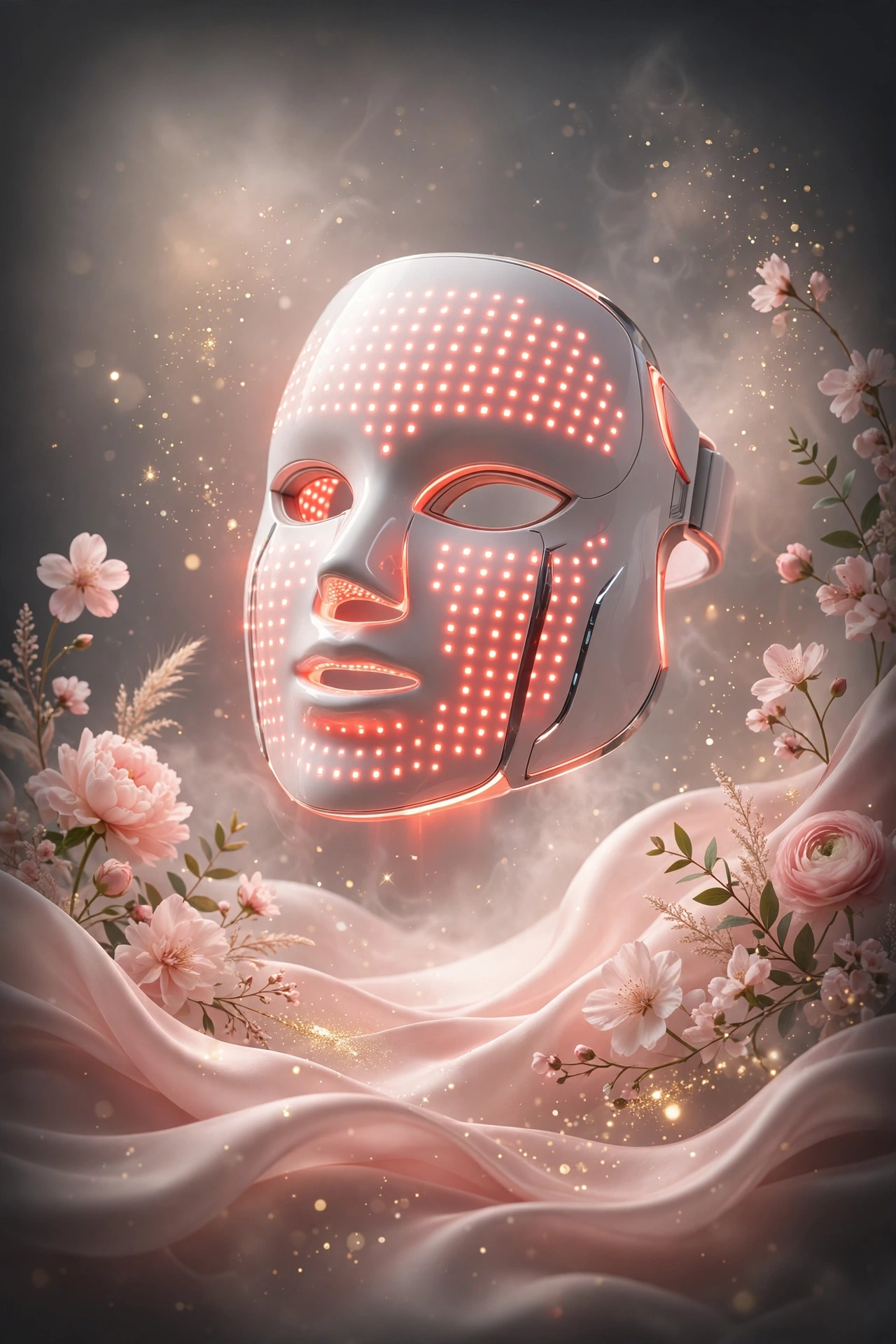
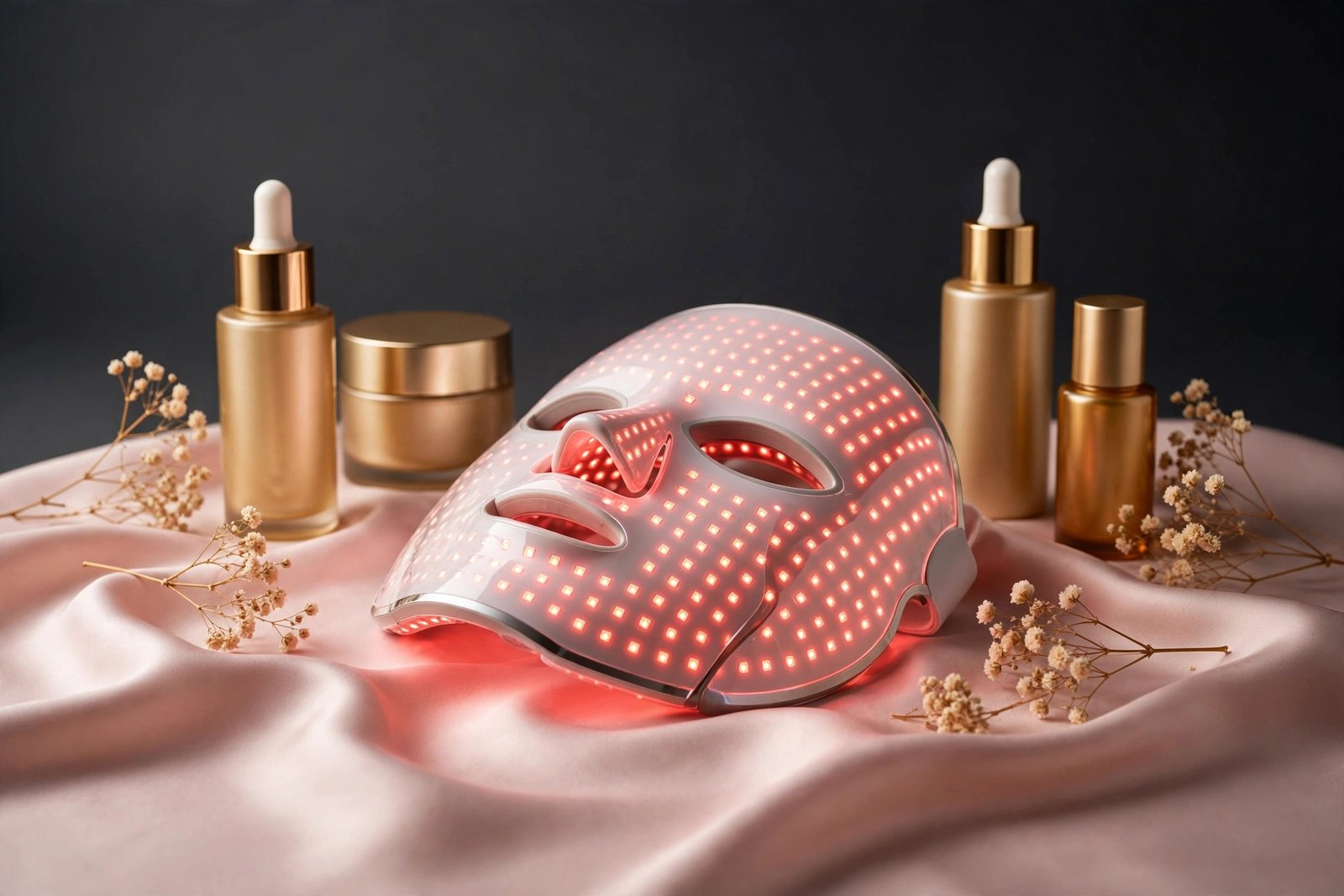
Full-face masks are the most popular format. They deliver hands-free, even coverage across the entire face in one session — typically 10 minutes. Good ones use medical-grade silicone, offer multiple modes (red, blue, red+NIR), and include eye protection. Downsides: price ($150–$500+ for quality), fit issues for different face shapes, and you look like a sci-fi villain (a feature or a bug, depending on your household).
Handheld devices and wands
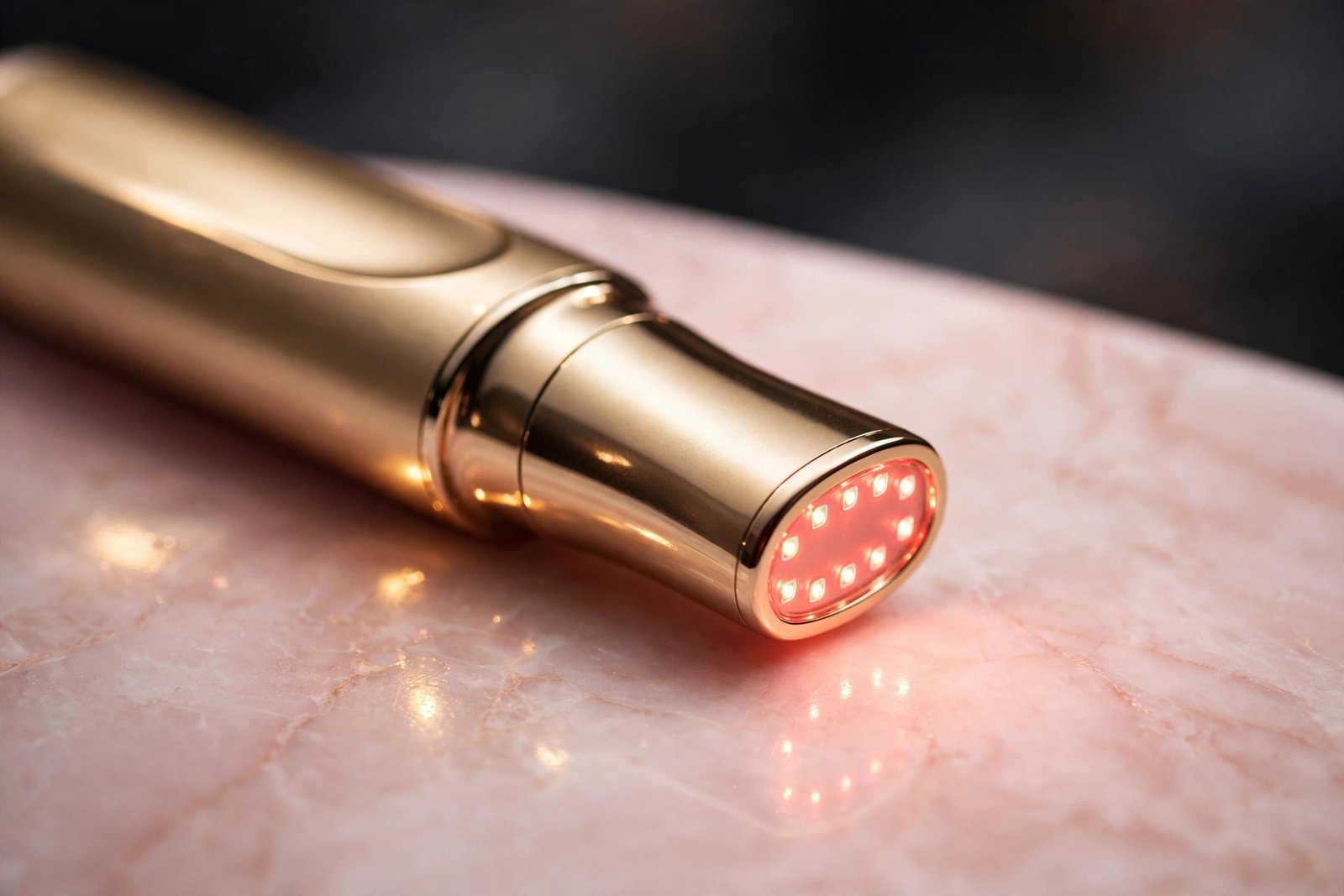
Handhelds target specific areas — a spot treatment approach. They’re cheaper ($50–$200), portable, and good for targeting individual breakouts or small areas. The tradeoff: treating a whole face takes much longer, and it’s easy to under-dose areas through inconsistent movement. Best for spot concerns rather than full-face anti-aging routines.
Flexible panels and pads
Larger panels treat face, neck, chest, or body areas. They offer the highest power among consumer formats and good coverage, but they’re bulkier and pricier ($200–$600+). Some people use them for neck and décolletage — areas masks don’t reach.
Light therapy “gadgets” to be skeptical of
Tiny USB-powered wands, LED-infused sheet masks with no power source to speak of, phone attachments, and jewelry claiming light-therapy benefits generally can’t deliver meaningful light doses. If a device can’t tell you its wavelengths and irradiance, that’s your answer about its effectiveness.
How to Choose a Device (What Actually Matters)
Forget marketing claims and celebrity endorsements. Evaluate devices on:
- Published wavelengths — specific numbers (e.g., 633 nm red, 415 nm blue), not just “red light mode.” Vague specs are a red flag.
- Irradiance — stated in mW/cm². Higher isn’t automatically better (there are diminishing returns and comfort limits), but a device that won’t disclose it probably has nothing to disclose.
- Third-party testing or FDA clearance — FDA clearance (note: clearance, not approval) means the device was reviewed for safety and its marketing claims for a specific indication. It’s a meaningful quality signal, not a guarantee of dramatic results.
- Treatment area and session design — full-face coverage in 10 minutes beats spot-treating for an hour if your goal is overall skin quality.
- Eye safety — built-in eye protection, auto-shutoff, and clear guidance. Blue-light devices especially should address eye safety explicitly.
- Return policy and warranty — you’re committing to 8–12 weeks before judging results. A 30-day return window won’t let you evaluate fairly; look for 60–100+ days or accept the gamble.
Price correlates with quality up to a point — the $30 mask is almost certainly underpowered — but the $500 mask isn’t automatically twice as good as the $250 one. Mid-range devices from established skincare-tech brands with published specs are usually the sweet spot.
If your main goal is acne specifically, read our focused guide first: red light therapy for acne. If you’re also considering other at-home tools, compare with microcurrent devices for beginners and our gua sha guide for beginners — different tools, different evidence, different costs.
Safety: What You Need to Know
LED therapy has a strong safety profile — no UV, no heat injury, no downtime. But “generally safe” isn’t “safe for everyone in every situation”:
- Eyes: Don’t stare into the diodes. Use provided eye protection, especially with blue light. People with retinal conditions or light sensitivity should check with an ophthalmologist first.
- Photosensitizing medications: Some drugs (certain antibiotics, retinoids, St. John’s wort, some diuretics) increase light sensitivity. If you take any, ask your doctor or pharmacist before starting LED therapy.
- Pregnancy and breastfeeding: There’s no evidence of harm, but there’s also very little research — most manufacturers advise against use during pregnancy out of caution. Discuss with your doctor.
- Active skin cancer or suspicious lesions: Don’t use LED devices over undiagnosed or suspicious spots. Get them checked first.
- Epilepsy/photosensitivity disorders: Rare, but flashing or intense light can be a trigger for some people. Consult a doctor.
- Melasma: Blue light may worsen melasma in some people; red light is generally considered safer for pigment-prone skin, but go gently and watch for changes.
A sensible rule: if you have any diagnosed skin condition, are on prescription medication, or are pregnant, a quick check with your dermatologist or doctor comes before the device — not after a problem.
How to Use It: Building a Realistic Routine
The basic protocol
- Cleanse first. LED light penetrates better on clean, product-free skin. Remove makeup and sunscreen.
- No actives beforehand. Skip retinoids, AHAs/BHAs, and vitamin C immediately before a session — apply treatments after, when the light session is done.
- Session length: Follow the manufacturer’s guidance, typically 10–20 minutes. More is not better — overexposure wastes time without adding benefit, and some research suggests diminishing returns beyond optimal doses.
- Frequency: Most protocols suggest 3–5 sessions per week for the first 8–12 weeks, then maintenance at 1–3 times weekly. Consistency beats intensity.
- Afterward: Apply your normal serums and moisturizer. Some people find skin absorbs products well post-session.
- Sunscreen still mandatory: LED therapy doesn’t replace sun protection. Red light won’t undo UV damage as fast as the sun causes it.
Setting expectations by goal
- Fine lines and firmness: 8–12 weeks of consistent use before judging. Expect subtle softening, not erasure. Photos in consistent lighting help you assess honestly.
- Acne and inflammation: Often the fastest visible change — some people notice calmer breakouts within 2–4 weeks. Our acne light therapy guide covers the specifics.
- Redness and sensitivity: Gradual; pair with a gentle routine rather than expecting the device to do it alone.
- Hair thinning: 3–6 months minimum, and scalp devices differ from face devices — see red light for hair growth.
Common mistakes
- Inconsistent use. Three sessions, a two-week gap, then disappointment. The dose-response relationship demands regularity.
- Layering too many actives. LED therapy plus aggressive retinoids plus daily exfoliation is a recipe for irritation — introduce one variable at a time.
- Judging too early. Anything under 6–8 weeks is premature for collagen-related goals.
- Buying on wavelength claims alone. A device emitting “630 nm” at negligible power is a nightlight with marketing.
LED Therapy and Your Existing Routine
LED therapy plays well with most routines because it’s non-invasive and non-chemical. A sensible order:
Evening: Cleanse → LED session (10–20 min) → hydrating serum → treatment serum (retinoid/peptide/vitamin C) → moisturizer.
Morning: Cleanse → antioxidant serum → moisturizer → sunscreen. (You can do LED in the morning instead — timing doesn’t matter much; consistency does.)
Avoid using LED immediately after in-office procedures (peels, lasers, microneedling) until your provider clears it — typically a few days to a week depending on the procedure. And don’t combine LED sessions with tanning beds or intentional sun exposure; the goal is controlled light, not more UV.
Cost vs. Value: Is It Worth It?
A quality at-home device costs $150–$500. Used 4x weekly for a year, that’s roughly $1–$3 per session — far cheaper than professional treatments or many in-office procedures. Whether it’s “worth it” depends on your goal and your consistency:
- Worth considering if: you have mild-to-moderate inflammatory acne and want a drug-free adjunct; you’re patient and consistent; you’ve already nailed the basics (sunscreen, retinoid, moisturizer) and want an add-on.
- Probably skip if: you expect dramatic wrinkle reversal; you won’t use it regularly; you haven’t yet built a solid basic routine (LED is a supplement, not a foundation); your budget is tight (the basics give more per dollar).
Think of LED therapy as a supporting actor, not the lead. Sunscreen, retinoids, and moisturization remain the highest-evidence, lowest-cost interventions in skincare.
Frequently Asked Questions
Does LED light therapy really work?
For specific uses — red light for mild anti-aging effects and inflammation, blue light for mild-to-moderate acne — there’s genuine supporting research, though effects are modest. For many other marketed claims (lifting, sculpting, dramatic wrinkle removal), the evidence is weak. It works as a gentle adjunct, not a transformation tool.
How long until I see results?
For acne and inflammation: often 2–4 weeks. For fine lines, texture, and firmness: 8–12 weeks of consistent use. For hair: 3–6 months. Anyone promising faster dramatic results is selling, not informing.
Is it safe to use every day?
Most manufacturers recommend 3–5 times per week rather than daily, partly to avoid diminishing returns and partly because the studied protocols used those frequencies. Daily use of a low-power device is unlikely to harm skin, but there’s no evidence it helps more. Follow your device’s guidance.
Can LED therapy damage your eyes?
Staring directly into bright LEDs isn’t wise for anyone. Quality devices include eye protection or shields — use them. People with retinal disease, those on photosensitizing drugs, or anyone with unusual light sensitivity should get medical advice first.
Red light vs. blue light — which do I need?
Different jobs: red (and near-infrared) for aging-related concerns, inflammation, and recovery; blue for acne-causing bacteria. Many devices offer both — a sensible choice if you have both concerns. If you only have one concern, don’t pay extra for modes you won’t use.
Do I need to wear goggles?
For masks with built-in eye guards, the built-in protection is usually sufficient — but don’t override it by peeking. For panels and handhelds without shields, opaque eye protection is wise, especially with blue light. When in doubt, protect.
Can I use it with retinol or vitamin C?
Yes — just not at the same moment. Do the light session on clean skin, then apply actives afterward. There’s no known negative interaction; some people even feel post-LED skin absorbs products well. Introduce the combination gradually if your skin is sensitive.
Conclusion
LED light therapy at home is a legitimate tool with real but modest benefits: red light for gradual skin-quality improvement, blue light for mild-to-moderate acne, and a strong safety profile for most people. It’s not a miracle, and device quality varies wildly — published wavelengths, stated irradiance, and honest marketing separate the useful from the decorative. If you buy in, commit to 8–12 weeks of consistent use, keep your expectations grounded, and let sunscreen and the basics do the heavy lifting. Used that way, an LED device can earn its place on the shelf — quietly, over time, without drama.
Love this? Pin it for later!