Red Light Therapy for Acne: Does It Work?
Red light therapy for acne sits in an interesting spot: it’s one of the better-supported uses of at-home LED devices, yet the marketing around it still overpromises. Breakouts calm, inflammation settles, healing seems to speed up — but it won’t replace your core acne routine, and it doesn’t work the same way for every type of acne.
This guide gives you the honest version: how red (and blue) light actually works on acne, what the research shows, who benefits most, how to use a device at home without wasting your money, and what results are genuinely realistic.
Key Takeaways
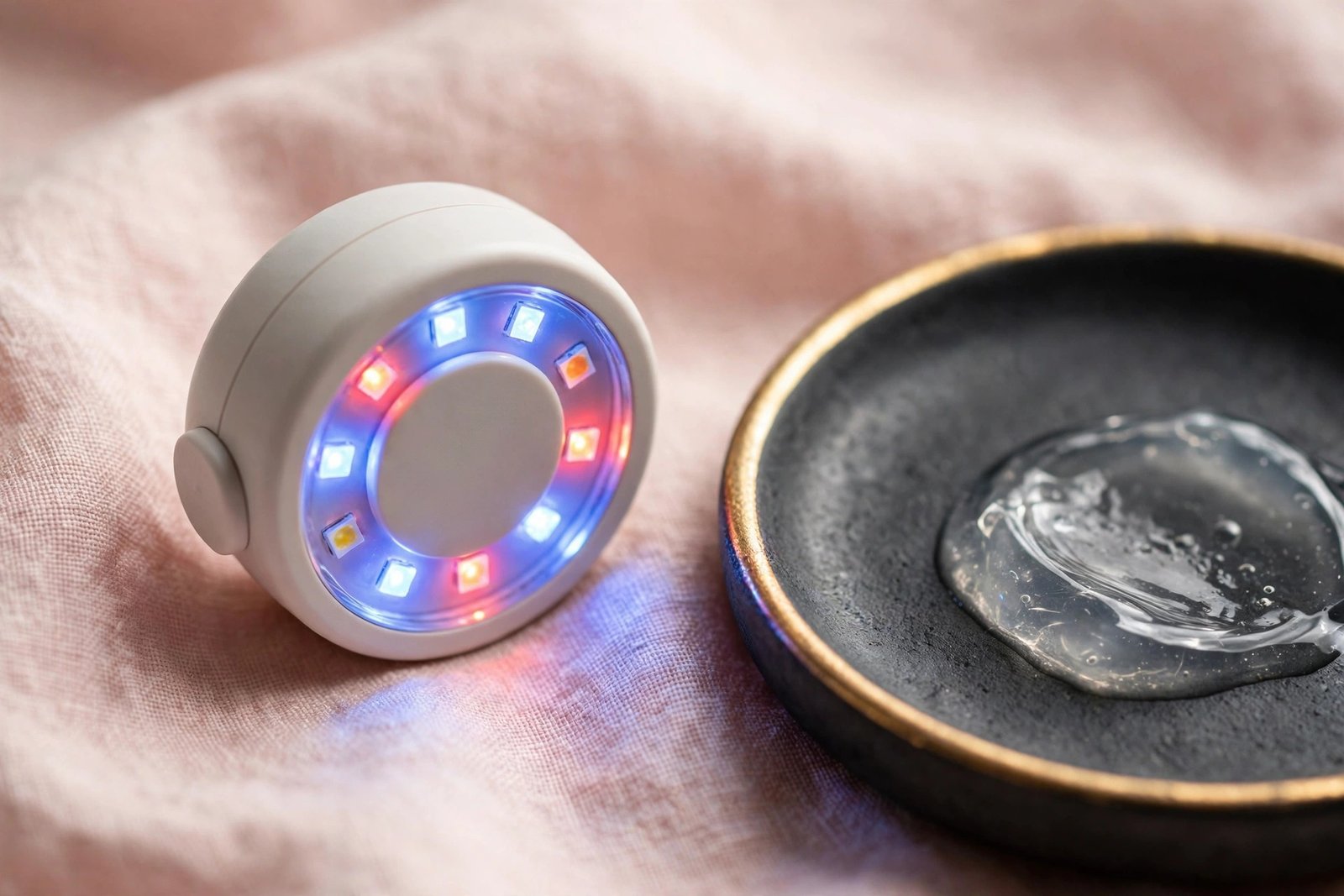
- Blue light (around 415 nm) targets acne-causing bacteria; red light (around 630–660 nm) calms inflammation and may support healing — most acne devices combine both.
- Clinical evidence supports LED light for mild-to-moderate inflammatory acne; it’s less useful for blackheads, whiteheads, and deep cystic acne alone.
- Results are gradual: expect 4–8 weeks of consistent use before judging, and think “calmer breakouts,” not “perfect skin.”
- At-home devices are weaker than professional ones — consistency (3–5x/week) matters more than device price.
- Light therapy works best as an add-on to proven acne care (gentle cleansing, retinoids, sunscreen), not a replacement.
This article is for informational purposes only and is not medical advice. Skin conditions vary — see a dermatologist for diagnosis and treatment.
How Light Therapy Works on Acne
Acne involves several factors: excess oil, clogged pores, the bacterium Cutibacterium acnes, and inflammation. LED light addresses two of these directly:
Blue light vs. bacteria. C. acnes produces compounds called porphyrins. When blue light (around 415 nm) hits these porphyrins, it triggers a reaction that produces reactive oxygen species — essentially damaging the bacteria from the inside. Fewer bacteria means less of the inflammatory cascade that creates red, painful pimples.
Red light vs. inflammation. Red light (630–660 nm) is absorbed by cellular structures and appears to dial down inflammatory signaling while supporting tissue repair. For acne, that translates to less redness, less swelling around breakouts, and potentially faster healing of the spots you have. It may also modestly influence sebaceous gland activity, though this effect is less established.
Why the combination works best. Blue light handles the bacterial trigger; red light handles the inflammatory aftermath. Studies testing blue alone, red alone, and the combination generally find the combination most effective for inflammatory acne. That’s why most acne-focused devices offer a blue+red mode — and why a red-only device is a weaker choice if acne is your primary goal.
For the full background on how these wavelengths work across all skin concerns, see our complete LED light therapy guide.
What the Research Actually Says
The evidence for LED light in acne is genuinely encouraging — with caveats:
- Mild-to-moderate inflammatory acne (red pimples, pustules) responds best. Multiple clinical trials show meaningful reductions in inflammatory lesion counts with blue, red, or combined light over 4–12 weeks.
- Comedonal acne (blackheads, whiteheads — clogged pores without much inflammation) responds poorly. Light doesn’t unclog pores; retinoids and exfoliants do that job.
- Severe or cystic acne usually needs prescription treatment. Light therapy can be a helpful adjunct, but relying on it alone for severe acne wastes time that effective treatment could be using.
- Most strong studies used professional-grade devices. At-home results are real but milder and slower — a consistent finding across reviews of consumer devices.
- Relapse is common after stopping. Like most acne treatments, benefits fade if you stop entirely; many people settle into a maintenance schedule.
An honest framing: LED light therapy is a solid B+ acne tool — helpful, low-risk, and drug-free, but not the star of the show. The stars remain retinoids, benzoyl peroxide, and (when needed) prescription care.
Who Benefits Most (and Who Should Skip It)
Good candidates:
– People with mild-to-moderate inflammatory breakouts who want a non-drug addition to their routine
– Those who can’t tolerate benzoyl peroxide or retinoids well and need gentler options
– Anyone dealing with post-breakout redness and slow-healing spots — red light’s anti-inflammatory effect helps here
– People already using the basics consistently who want an evidence-backed extra
Should think twice or skip:
– Severe, cystic, or scarring acne — see a dermatologist first; don’t delay effective treatment experimenting with a device. If scarring is already a concern, our preventing acne scars explains what actually stops scars from forming.
– People on photosensitizing medications (some antibiotics, isotretinoin) — check with your doctor
– Anyone pregnant — manufacturers generally advise against use; discuss with your doctor
– Those expecting it to clear blackheads or unclog pores — it won’t; that’s a different job
Red vs. Blue vs. Combination: Which Mode for Acne?
| Mode | Best for | Limitations |
|---|---|---|
| Blue alone | Killing acne bacteria, new inflammatory breakouts | Doesn’t calm existing inflammation much; eye safety matters more |
| Red alone | Redness, swelling, healing of existing spots | Weaker effect on the bacterial trigger |
| Blue + red | Most inflammatory acne — addresses both cause and aftermath | Slightly longer sessions on some devices |
If you’re buying one device for acne, get one with both. If you already own a red-only device, it’s still useful for calming inflammation and redness — just don’t expect it to prevent new bacterial breakouts the way blue light does.
How to Use It at Home: The Practical Protocol
- Cleanse thoroughly. Light penetrates clean skin better. Remove all makeup and sunscreen.
- Start with bare skin. No serums or actives before the session — apply them after.
- Use the acne mode (blue+red if available) for the manufacturer’s recommended time — usually 10 minutes for masks, or the indicated duration per area for handhelds.
- Frequency: 3–5 times per week for the first 6–8 weeks. Consistency is the entire game.
- Protect your eyes. Don’t stare into the device; use included eye protection, especially with blue light.
- After the session: Apply your normal acne treatments — this is when they go on, not before.
- Keep everything else stable. Don’t overhaul your whole routine the same week you start LED therapy, or you’ll never know what’s working.
Where it fits in a routine: LED therapy is an add-on, not a foundation. The foundation stays the same: gentle cleanser, proven acne treatment (retinoid, benzoyl peroxide, or azelaic acid as appropriate), lightweight moisturizer, sunscreen. Light therapy sits between cleansing and treatments, a few evenings a week.
If you’re also exploring other at-home tools for skin, compare the evidence and costs with microcurrent devices and our gua sha beginner guide — though neither targets acne the way LED does. For a different device-based acne approach, see high frequency wands for acne.
Setting Realistic Expectations
Here’s what realistic looks like, based on the research and how at-home devices actually perform:
- Weeks 1–2: Probably nothing visible. Don’t judge yet.
- Weeks 3–4: Some people notice breakouts looking less angry — less redness, spots healing a bit faster.
- Weeks 6–8: This is the fair evaluation point. Fewer new inflammatory breakouts, calmer skin overall — if your device and consistency are adequate.
- Beyond: Maintenance (2–3x/week) to hold gains. Stopping entirely often means gradual return of breakouts.
What it won’t do: clear blackheads, shrink pores permanently, fix hormonal acne alone, replace prescription treatment for severe acne, or give you filtered-skin results. Anyone’s before-and-after photos promising that are showing you marketing, not the average outcome.
Track honestly: take a photo in the same lighting every two weeks. Memory is unreliable; photos aren’t.
Safety Notes
LED therapy’s safety profile is strong, but acne-specific notes apply:
- Blue light and eyes: Blue wavelengths deserve more eye caution than red. Use eye protection and don’t look directly at the diodes.
- Don’t use over broken or infected skin that’s showing signs of spreading infection (increasing pain, warmth, swelling, fever) — see a doctor instead.
- Melasma caution: If you’re prone to melasma, blue light may aggravate it in some people; red light is generally the safer choice for pigment-prone skin.
- Photosensitizing acne treatments: If you’re on isotretinoin or certain antibiotics, check with your dermatologist before adding light therapy.
- It shouldn’t hurt. Warmth is normal; pain, stinging, or new rashes mean stop and reassess.
Frequently Asked Questions
Does red light therapy actually clear acne?
It helps with mild-to-moderate inflammatory acne — studies show real reductions in breakouts — but “clear” overstates it. Think improvement, not elimination, and it works best alongside proven acne treatments rather than replacing them.
Is blue light or red light better for acne?
They do different jobs: blue targets the bacteria that trigger breakouts; red calms inflammation and supports healing. The combination beats either alone for most inflammatory acne. A blue+red device is the best single purchase for acne.
How often should I use LED for acne?
Most protocols suggest 3–5 sessions per week for the first 6–8 weeks, then 2–3 times weekly for maintenance. Daily use of a low-power device isn’t harmful, but there’s no evidence it works better than the standard frequency.
Can it make acne worse?
A temporary “purging” isn’t a recognized LED side effect the way it is with retinoids. If breakouts clearly worsen after starting, consider whether something else changed (new products, stress, cycle) — or whether the device is simply ineffective for your acne type rather than harmful.
How long do results last?
Benefits typically persist with maintenance use (a few sessions weekly). Stopping entirely usually means a gradual return toward baseline over weeks to months — similar to most ongoing acne treatments.
Can I use it with benzoyl peroxide or retinol?
Yes — just sequence correctly. LED session on clean, bare skin first; apply your topical treatments after. There’s no known negative interaction, and many people combine them. Introduce the combination gradually if your skin barrier is sensitive.
Conclusion
Red light therapy for acne — really, red plus blue light therapy — is one of the more honest corners of the at-home device world: real evidence, modest effects, low risk. It calms inflammatory breakouts, supports healing, and gives you a drug-free tool that complements the proven core of acne care. It won’t unclog pores, fix severe acne alone, or replace your retinoid. But used consistently for 6–8 weeks with grounded expectations, it’s a reasonable addition to the routine — especially if you choose a device with published wavelengths, both red and blue modes, and eye protection included. For the bigger picture on choosing and using these devices, start with our LED light therapy beginner’s guide.
Love this? Pin it for later!