High Frequency Wand for Acne: Does It Work?
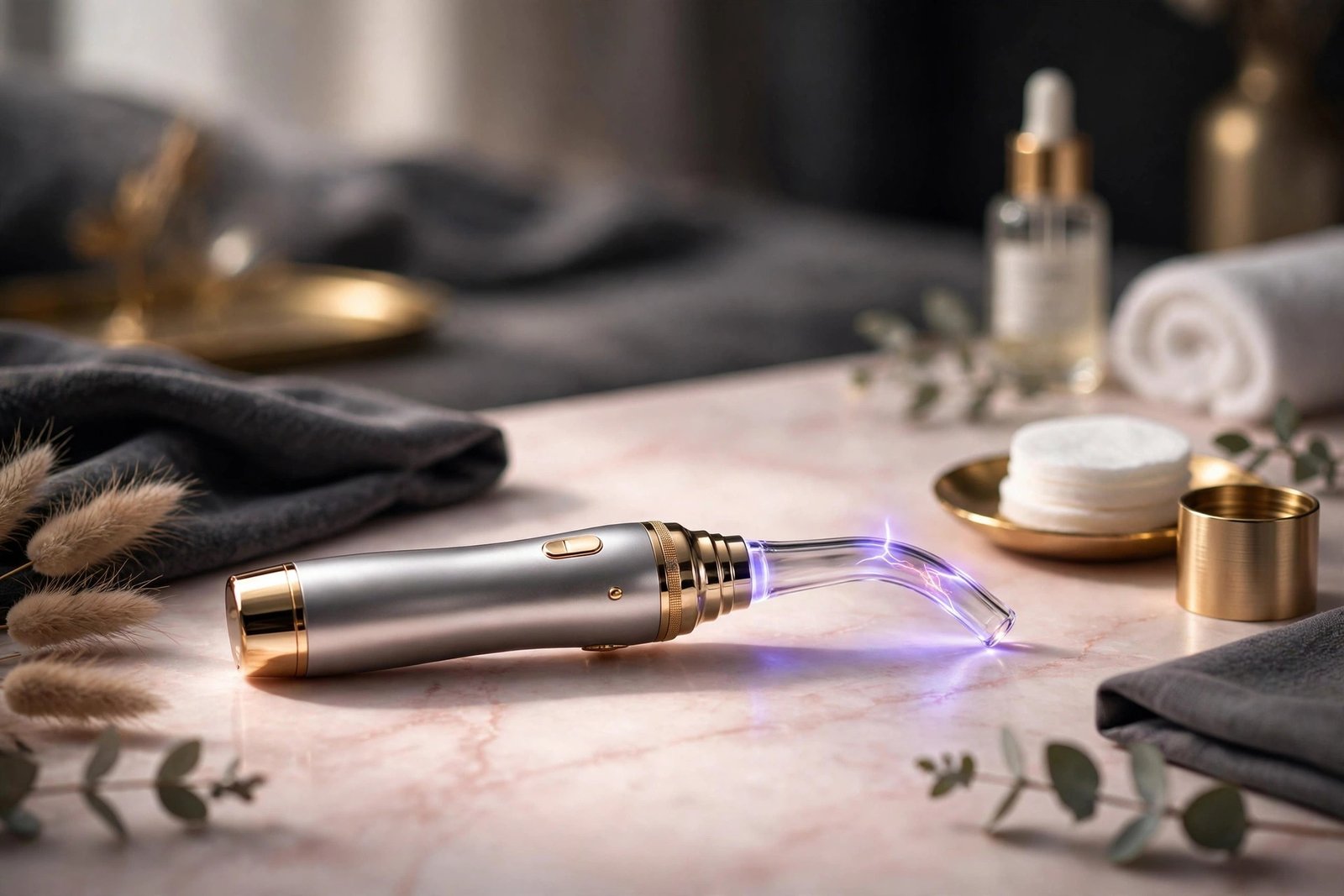
Somewhere between vintage spa gadget and TikTok skincare darling sits the high frequency wand — a handheld device that passes a mild electrical current through a glass electrode to create a faint buzzing, a soft violet glow, and a whiff of ozone. Enthusiasts claim it zaps pimples overnight, shrinks pores, and speeds healing. Skeptics call it an expensive placebo with a light show.
The truth sits somewhere in between. High frequency wands do have a real mechanism of action, and many dermatologists acknowledge they can help certain types of breakouts. But the clinical evidence is thin, the marketing is wildly overblown, and the device is useless — or even harmful — for some skin concerns. This guide gives you the honest picture: how the wand works, which breakouts it can actually help, how to use it safely, and who should skip it entirely. If you’re exploring at-home skin tech more broadly, our complete safety-first microneedling guide covers another popular device category with the same honest lens.
Key Takeaways
- High frequency wands pass a mild alternating current through a gas-filled glass electrode, producing ozone with mild antibacterial effects
- They work best as a spot treatment for surface-level pimples and may speed healing — they are not a cure for moderate or severe acne
- Clinical evidence is limited; most support comes from small studies and long clinical use in professional facials
- Sessions are short (2–5 minutes per area) and generally safe, but the device is off-limits during pregnancy, with pacemakers, and on broken or irritated skin
- Consistent use matters more than intensity — and it works best alongside a solid routine, not as a replacement for one
This article is for informational purposes only and is not medical advice. Skin conditions vary — see a dermatologist for diagnosis and treatment.
What Is a High Frequency Wand and How Does It Work?
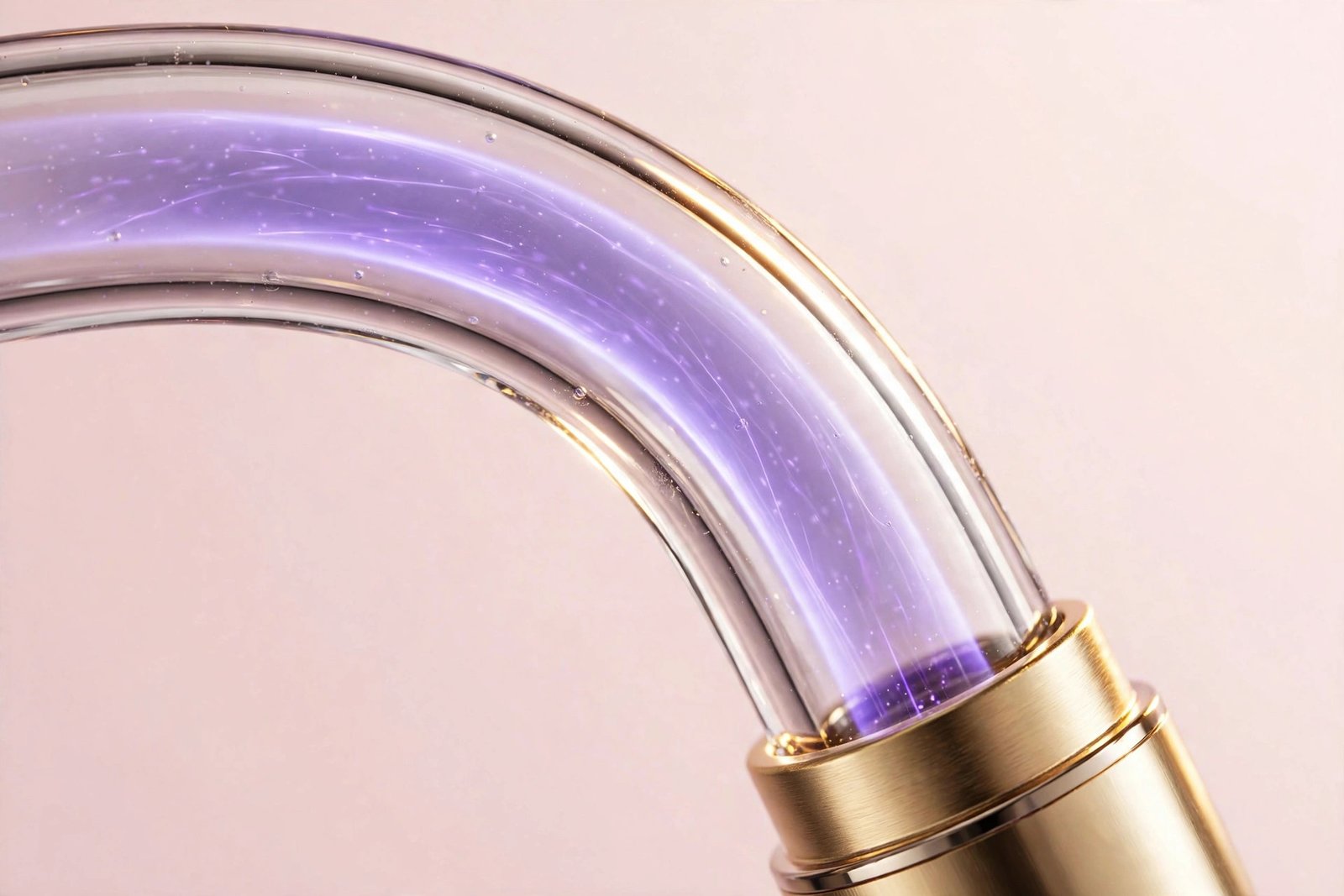
High frequency devices have been used in professional facials for decades — this is old technology, not a new breakthrough. The wand itself is a handle that plugs into the wall (or charges via USB in newer models) and accepts interchangeable glass electrodes filled with either argon gas (which glows violet/purple) or neon gas (which glows orange/red).
When switched on, the wand sends a high-frequency alternating current through the electrode. Where the glass touches or hovers near skin, the current ionizes the air and produces a small amount of ozone — that faint metallic smell you notice during use. The proposed benefits flow from three effects:
-
Mild antibacterial action. Ozone is antimicrobial, and acne is partly a bacterial story (Cutibacterium acnes thriving in clogged pores). Reducing surface bacteria may help individual pimples resolve faster.
-
Increased circulation. The gentle stimulation brings blood flow to the treated area, which supports the skin’s natural healing processes — similar in principle to why massage helps recovery.
-
Drying and calming effect. The treatment has a mild astringent quality that can help surface blemishes dry out and flatten more quickly.
None of this is magic, and none of it reaches deep into the skin. The current stays at the surface — which is exactly why the device helps some breakouts and does nothing for others.
Does It Actually Work for Acne? An Honest Answer
Here’s the evidence situation, stated plainly: there are no large, rigorous clinical trials proving high frequency wands clear acne. What exists is a long history of use in professional facials, small practitioner reports, and a great deal of enthusiastic anecdotal feedback. Dermatologists tend to land in the same place — cautiously optimistic about mild benefits, firm that it’s not a primary acne treatment.
What the device can realistically do:
- Speed up healing of individual surface pimples. Many users report that whiteheads and small inflamed spots flatten faster with a few minutes of treatment. This is the wand’s strongest use case.
- Reduce the lifespan of emerging spots. Catching a forming pimple early with the wand may help it resolve before fully developing — though results vary widely.
- Complement an existing routine. Used alongside a proper cleanser, treatment actives, and moisturizer, the wand can be a helpful supporting player.
What it cannot do:
- Clear moderate to severe, cystic, or hormonal acne. Deep, painful nodules live far below where the current reaches. Anyone promising otherwise is selling something.
- Replace proven acne treatments. Benzoyl peroxide, retinoids, salicylic acid, and prescription options have vastly more evidence behind them. The wand is an adjunct, never the main event.
- Prevent breakouts on its own. It treats spots that exist; it doesn’t meaningfully change the oil production, clogged pores, or hormones that cause new ones.
The fairest summary: a high frequency wand is a legitimate spot-treatment tool with modest, plausible benefits and a good safety profile — not the acne cure social media makes it out to be.
Which Breakouts Respond Best (and Which Don’t)
Match the tool to the right target and you’ll be far happier with your purchase:
Best candidates:
– Small whiteheads and surface pustules
– Emerging pimples caught in the first day or two
– Minor congestion along the chin and jawline
– Occasional hormonal spots (as a healing aid, not a prevention strategy)
Poor candidates — skip the wand and see a dermatologist instead:
– Cystic or nodular acne (deep, painful, no head)
– Widespread inflammatory acne across large areas
– Acne that scars — early professional treatment prevents permanent marks far better than any device. Learn the fundamentals of preventing acne scars and dark marks while you treat active breakouts.
– Any breakout accompanied by significant pain, swelling, or spreading redness
One more honest note: if your acne is persistent or worsening, a device won’t fix what’s driving it. A dermatologist can identify whether the cause is hormonal, bacterial, or something else entirely — and prescribe treatments with actual clinical data behind them.
How to Use a High Frequency Wand Safely: Step by Step
Using the wand correctly is simple, but the details matter. Follow this sequence:
1. Start with clean, dry skin
Remove all makeup and cleanse thoroughly, then pat skin completely dry. The current conducts unpredictably on wet or product-covered skin, and you want a clean surface anyway when treating blemishes.
2. Choose your electrode
Most kits include several glass attachments:
– Mushroom (large): broad areas like cheeks and forehead
– Spoon/pointed: spot-treating individual pimples — the acne workhorse
– Comb: scalp use (a separate topic entirely)
– Curved/angled: under-eye area and nose contours — use the lowest setting here
Inspect the glass before each use. A cracked electrode can expose you to the current directly — discard and replace it.
3. Set the intensity low and work upward
Turn the wand on at its lowest setting. You’ll hear a buzzing and may feel mild tingling or warmth — that is normal. Increase only until you feel a gentle, comfortable sensation. Pain, sharp zapping, or strong heat means the setting is too high.
4. Use the right technique: direct vs. indirect
- Direct (spot treatment): Place the electrode directly on the pimple and hold for 2–3 minutes, or move it in small circles over the area. This is the standard method for acne.
- Indirect (sparking): Hold the electrode slightly above the skin so tiny sparks jump the gap. Some estheticians prefer this for a stronger antibacterial effect, but it can feel sharp — keep sessions brief.
Treat each area for no more than 3–5 minutes total, and limit full-face sessions to about 10 minutes. More time does not mean more benefit.
5. Finish with your normal routine
After treatment, apply your usual serums and moisturizer. The wand is a treatment step, not a replacement for skincare — think of it like an add-on between cleansing and moisturizing.
Frequency: For active breakouts, most estheticians suggest 2–3 sessions per week on affected areas. Daily use on the same spot is unnecessary and can dry or irritate skin. If you’re also exploring other at-home tools, compare notes with whether a derma roller helps acne scars — but never use multiple aggressive treatments on the same day.
Safety Rules and Who Should Skip This Device
High frequency wands are low-risk for most people, but “low-risk” is not “no-risk.” Respect these rules:
Do not use a high frequency wand if you:
– Are pregnant (effects on pregnancy haven’t been studied — this is a standard precaution for electrical devices)
– Have a pacemaker or other implanted electronic device
– Have epilepsy or a seizure disorder
– Have rosacea with visible broken capillaries the wand could aggravate — discuss with your dermatologist first
– Have metal implants, braces with metal, or recent facial fillers in the treatment area
During every session:
– Never use the wand on broken, cut, or freshly wounded skin
– Avoid the thyroid area (front of the neck) — estheticians routinely skip this zone
– Keep it away from the eyes; don’t treat eyelids or the immediate eye area
– Remove metal jewelry near the treatment area
– Don’t use alcohol-based products immediately before (flammable + current = bad combination); let them dry fully or skip them
– Stop immediately if you feel pain, burning, or anything beyond mild tingling
After treatment: Mild redness for 15–30 minutes is normal. Prolonged redness, new sensitivity, or dryness means you’re overdoing the duration or frequency — scale back. As with any device that stresses skin, proper recovery habits matter; the principles in our microneedling aftercare guide (gentle products, no harsh actives immediately after, diligent sunscreen) apply to device-treated skin generally.
How to Choose a High Frequency Device
The market is flooded with options from under $30 to over $200. Here’s what actually differentiates them:
- Power and adjustability. Look for multiple intensity settings — a single-setting wand gives you no room to find your comfort level. This is the single most important feature.
- Electrode variety. At minimum you want a mushroom head for broad areas and a pointed or spoon head for spot treatment. Extra attachments are nice but not essential.
- Build quality. The handle should feel solid, the dial or buttons should adjust smoothly, and replacement electrodes should be available from the manufacturer. Glass electrodes break — plan for it.
- Corded vs. rechargeable. Corded wands typically deliver more consistent power; rechargeable models are more convenient but can weaken as the battery drains. Either works for acne spot treatment.
- Price realism. You don’t need the most expensive model. Mid-range wands from established beauty-device brands perform comparably to premium ones for basic acne use. Be wary of no-name devices with no safety certifications.
Skip anything marketed with medical-sounding cure claims (“eliminates acne permanently,” “dermatologist-grade results at home”). Reputable devices describe themselves as cosmetic tools — because that’s what they are.
High Frequency vs. Other At-Home Acne Tools
How does the wand stack up against the alternatives?
- Vs. LED light therapy masks: Blue-light LED has somewhat better clinical evidence for acne bacteria, and masks treat the whole face hands-free. Wands are cheaper and better for targeted spot treatment. Some people use both — they’re compatible.
- Vs. pimple patches: Hydrocolloid patches are cheaper, simpler, and surprisingly effective for whiteheads. The wand’s advantage is reusability and treating spots patches can’t cover well.
- Vs. benzoyl peroxide / salicylic acid: Topical actives have far stronger evidence and should be your foundation. The wand is a complement, not a competitor.
- Vs. microneedling devices: Different jobs entirely — microneedling targets texture and scarring over time, while the wand targets active surface blemishes. Never use them on the same day; irritated, freshly needled skin and electrical current are a bad combination. If scarring is your concern, start with the complete at-home microneedling guide instead.
Frequently Asked Questions
How long does it take to see results from a high frequency wand?
For individual pimples, many users notice faster flattening within 24–48 hours of a spot treatment. For overall skin improvement, give it 3–4 weeks of consistent 2–3x weekly use before judging. If nothing has changed after a month of correct use, the device probably isn’t going to work for your skin — and that’s useful information, not a failure.
Can I use a high frequency wand every day?
You can, but you shouldn’t need to. Two to three sessions per week on active breakouts is the standard recommendation. Daily use on the same area risks dryness and irritation without added benefit. If a spot needs daily attention, a pimple patch is the gentler choice.
Does a high frequency wand help with acne scars?
Not meaningfully. The wand works at the skin’s surface on active blemishes; indented scars involve deeper structural changes that surface current can’t remodel. For scars, look into treatments designed for them — microneedling, chemical exfoliation, or professional procedures — rather than hoping the wand pulls double duty.
Is the ozone from a high frequency wand dangerous?
In the tiny amounts produced during a few minutes of facial use in a ventilated room, no — it’s comparable to what professional facials have used for decades. Don’t deliberately inhale near the electrode, and don’t use the device for extended periods in a small unventilated space. Normal home use is not a concern.
Can I use a high frequency wand with retinol or acids?
Yes, but separate them. Use the wand on clean skin, then wait a few minutes before applying actives — or use the wand in the morning and actives at night. Using strong exfoliants immediately before the wand on sensitized skin increases irritation risk. When in doubt, keep device days and strong-active days separate.
Why does my skin feel dry after using the wand?
The treatment has a mild astringent, drying effect — that’s part of how it helps oily, blemish-prone spots. Follow every session with moisturizer, and if dryness persists, reduce session length or frequency. Dryness that doesn’t resolve with moisturizer is a sign to take a break.
The Bottom Line
So — does a high frequency wand for acne actually work? For surface pimples and spot treatment, yes, modestly and plausibly: it can help individual breakouts heal faster as part of a solid routine. As an acne cure, or a treatment for cystic and severe breakouts, no — and anyone claiming otherwise is overselling.
Buy one if you get frequent surface blemishes, enjoy skincare tech, and have realistic expectations. Skip it if you’re dealing with deep, painful, or widespread acne — that budget is better spent on a dermatologist visit. And whatever you choose, keep the foundation strong: gentle cleansing, proven actives, moisturizer, and sunscreen will always outperform any gadget alone. For persistent breakouts that resist every at-home approach, professional guidance beats another device purchase every time.
Love this? Pin it for later!