How to Choose Perfume for Beginners: Find Your Signature Scent
Walking up to a fragrance counter for the first time can feel like being handed a menu in a language you don’t speak. Hundreds of bottles, dozens of unfamiliar words like “oud,” “chypre,” and “gourmand,” and sales assistants spritzing things at you before you’ve even decided what you like. Most beginners either grab whatever smells good in the first ten seconds or leave empty-handed and overwhelmed.
Here’s the good news: learning how to choose perfume is a skill, not a talent. You don’t need a refined nose or years of experience — you just need a simple framework for figuring out what you like, how fragrances are structured, and how to test them properly. This guide walks you through everything from fragrance families to concentrations to the right way to sample, so you can shop with confidence instead of guesswork.
By the end, you’ll know how to narrow hundreds of options down to a shortlist, how to test a scent so you’re evaluating the real fragrance (not just the first spritz), and how to decide whether a perfume deserves a place in your collection. Whether you’re shopping for your very first bottle or your fifth, the process is the same — and it starts with understanding yourself, not the bottles.
Key Takeaways
- Identify your scent preferences first by noticing which everyday smells (coffee, fresh laundry, rain, vanilla) you love — that reveals your fragrance family.
- Fragrance families — floral, fresh, woody, amber, and gourmand — give you a map for exploring without getting lost.
- Fragrance concentration (parfum, eau de parfum, eau de toilette) affects longevity, intensity, and price, not quality.
- Always test perfume on skin, never rely on the paper blotter or the opening spritz alone — wait at least 30 minutes to judge the dry-down.
- Sample no more than 3–4 scents per shopping trip to avoid nose fatigue and muddy impressions.
- Season, occasion, and setting matter: heavier scents suit evenings and winter; lighter ones suit daytime and summer.
- Build slowly — a discovery set of samples is the smartest first purchase, not a blind full bottle.
Start With What You Already Love: Find Your Scent Profile
Before you smell a single perfume, take inventory of the scents you already gravitate toward in daily life. This is the fastest shortcut to finding your fragrance family, because perfume preferences almost always mirror everyday taste.
Do you reach for vanilla-scented candles and warm baked-goods smells? You probably lean toward gourmand and amber fragrances. Love the smell of fresh-cut grass, ocean air, or citrus cleaners? Fresh and citrus families are likely your territory. If you can’t resist burying your face in a bouquet or a garden rose, florals are calling. And if sandalwood incense, cedar, or a leather jacket feels like home, woody and spicy scents will probably suit you.
Think about products you’ve repurchased for their scent alone — a body wash, a hand cream, a room spray. What did they have in common? Also consider what you dislike, since elimination is powerful: if every “ocean breeze” candle gives you a headache, skip fresh/aquatic perfumes. If powdery scents feel too old-fashioned to you, steer clear of heavy musks and iris.
Once you have two or three “I love this smell” data points, you can walk into a store and tell an assistant something concrete: “I love vanilla and warm scents” or “I like fresh, clean fragrances.” That single sentence transforms your shopping experience, because it gives any knowledgeable assistant a real starting point. For a deeper breakdown of how fragrance structure works, read this guide on understanding fragrance notes.
Learn the Main Fragrance Families
Fragrance families are the organizing system the entire perfume world uses. Every perfume belongs to a family (or blends two), and once you know the families, you can describe what you like with precision instead of waving vaguely at “something nice.”
Floral
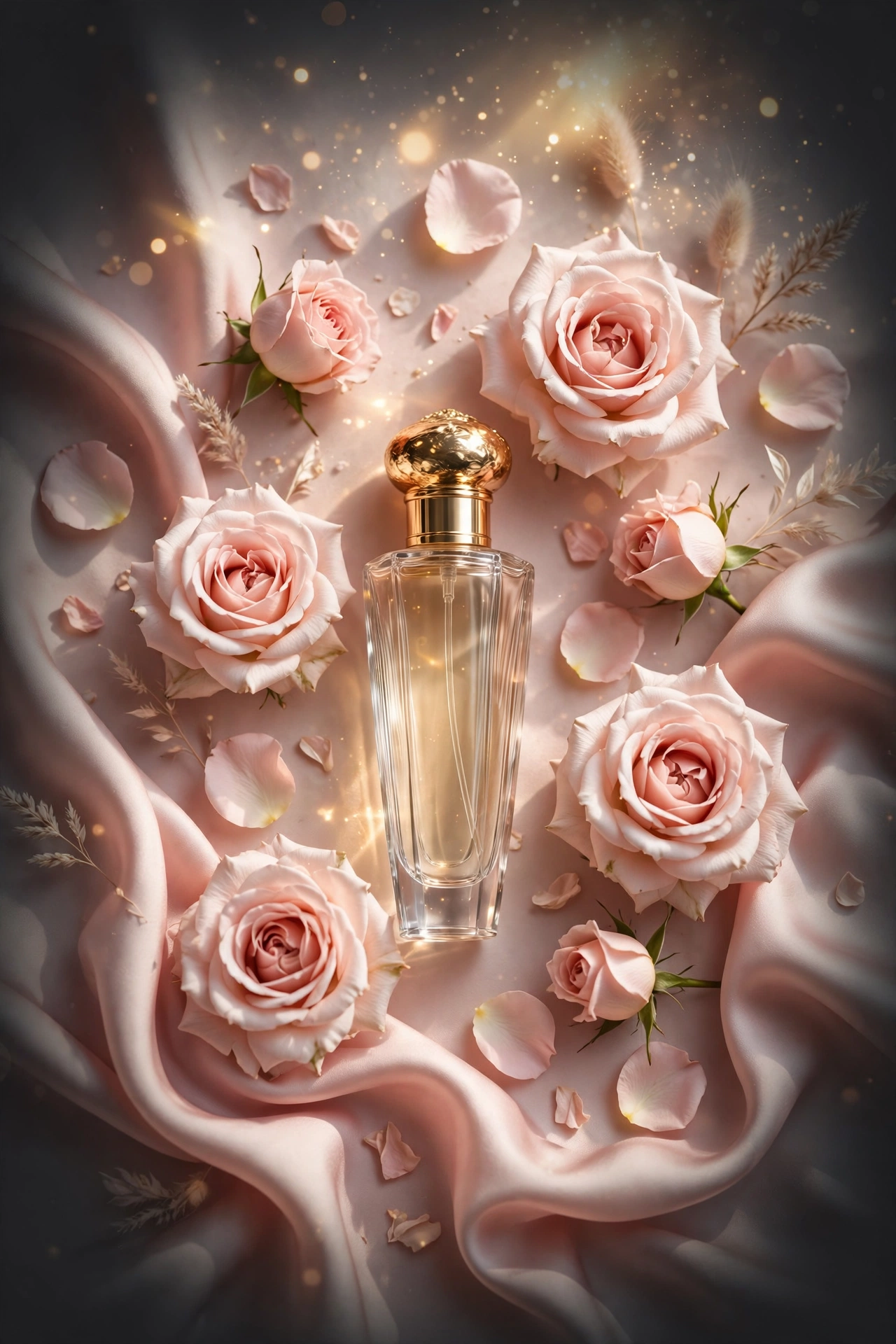
The largest and most classic family. Floral perfumes center on flower notes — rose, jasmine, peony, lily, tuberose. They range from soft and dewy (a single fresh rose) to rich and opulent (a heady bouquet of white flowers at night). Beginners who love feminine, romantic, versatile scents usually start here. Florals work for almost any occasion, which makes them a safe first purchase.
Fresh
This family includes citrus (lemon, bergamot, orange), green (cut grass, green tea, leaves), aquatic/marine (ocean, sea salt), and aromatic herbal notes (lavender, sage, rosemary). Fresh fragrances feel clean, energetic, and uplifting — the perfume equivalent of a crisp white shirt. They’re ideal for daytime, hot weather, and office settings, and they’re often the easiest family for beginners to wear without second-guessing.
Woody
Built around woods and resins: sandalwood, cedar, vetiver, pine, patchouli. Woody fragrances feel warm, grounded, and sophisticated. Many lean unisex, and they tend to last well on skin. If you find florals too sweet or fresh scents too light, woods offer depth without heaviness. Sandalwood and cedar are gentle entry points; patchouli and vetiver are bolder.
Amber (Oriental)
Warm, rich, and often spicy — think amber, vanilla, cinnamon, tonka bean, incense, and exotic resins. These are the cozy, evening, cold-weather fragrances that wrap around you like a cashmere blanket. They’re typically stronger and longer-lasting than fresh or floral scents, so they reward a light hand. Beginners who love vanilla candles, chai lattes, and warm baked smells usually land here.
Gourmand
The “edible” family: chocolate, caramel, coffee, honey, almond, cotton candy. Gourmands are playful, sweet, and comforting — and they can be surprisingly sophisticated when balanced with woods or musks. If your sweet tooth extends to your scent preferences, start here. A word of caution: very sweet gourmands can feel cloying in heat, so they’re best for cooler months or evenings.
How to use families in practice
Most people love one family, like two, and dislike one or two. Your job is to figure out your pattern. Ask for samples across three families in one trip, compare them on skin, and notice which one you keep reaching for. Also pay attention to family blends — “floral woody musk” or “citrus gourmand” descriptions tell you a fragrance bridges two worlds, which can be perfect if you like elements of both. Keep notes on your phone: family names, specific perfumes you tried, and a one-line verdict. After five or six samples, your pattern will be obvious.
Understand Fragrance Concentrations
One of the most confusing things for beginners is the alphabet soup on bottles: parfum, eau de parfum, eau de toilette, eau de cologne. These terms describe concentration — the percentage of fragrance oils in the bottle — and they directly affect how strong a scent is, how long it lasts, and how much it costs.
Parfum (extrait de parfum): 20–30% fragrance oils. The richest, longest-lasting concentration, typically worn 8+ hours with just one or two sprays. Also the most expensive per milliliter, though you use less. The scent tends to be deeper and smoother, with the base notes more prominent.
Eau de parfum (EDP): 15–20% fragrance oils. The most popular concentration and the best starting point for most beginners. Lasts 4–6 hours, projects well without overwhelming, and offers the best balance of longevity and price. When a fragrance comes in multiple concentrations, the EDP is usually the safest blind buy.
Eau de toilette (EDT): 5–15% fragrance oils. Lighter, fresher, and more affordable. Lasts 2–4 hours and sits closer to the skin. Great for daytime, offices, and hot weather when you don’t want to project heavily. The trade-off is you’ll need to reapply.
Eau de cologne (EDC) and body mists: 2–5% fragrance oils. Very light, lasting 1–2 hours. Perfect for post-shower freshness or layering, but not for all-day wear.
Important: a higher concentration isn’t “better” — it’s stronger and longer. The same fragrance can smell noticeably different across concentrations because the balance of notes shifts. An EDT of a scent might sparkle with citrus while the parfum version feels deep and resinous. If you love a fragrance’s EDP, don’t assume you’ll love its EDT; test each version separately. This comparison breaks down the two most common concentrations in detail: eau de parfum vs eau de toilette explained.
Price-wise, concentration explains why two bottles of the “same” perfume cost different amounts — you’re paying for more fragrance oil and longer wear. Beginners on a budget often get the best value from an EDT of a beloved scent or a smaller bottle of EDP, rather than stretching for a parfum they haven’t fully tested.
How to Read Perfume Notes Like a Pro
Every perfume description lists “notes” — the individual scent ingredients you’ll perceive as the fragrance develops. Notes unfold in three stages: top notes (the first impression, lasting 15–30 minutes), heart notes (the core character, lasting 2–4 hours), and base notes (the long-lasting foundation, 4+ hours). Understanding this timeline is the key to not judging a perfume by its opening alone.
When you read a note list, look for patterns rather than individual ingredients. Multiple vanilla, tonka, and caramel notes? That’s a gourmand, even if the marketing calls it something else. Bergamot, neroli, and green tea up top with cedar and musk at the base? A fresh woody scent. The base notes matter most for longevity — fragrances anchored in woods, ambers, musks, and resins will outlast ones built on citrus and light florals, which evaporate quickly by nature.
Also learn to spot your personal “deal-breaker” notes. Many people discover they dislike a specific ingredient — powdery iris, sharp aldehydes, heavy patchouli, or cloying white musk — that ruins otherwise lovely perfumes for them. Once you identify yours, you can scan note lists and rule out bottles before ever spraying them, which saves enormous time. Keep a running list in your phone notes: “love: vanilla, bergamot, sandalwood / dislike: heavy patchouli, powdery musk.”
Don’t be intimidated by exotic-sounding notes like “ambroxan,” “iso e super,” or “hedione.” These are common modern aroma chemicals that add radiance, warmth, or lift — perfumers use them in everything from designer bestsellers to niche creations. You don’t need to memorize them; you just need to notice whether the overall effect pleases you. For a full walkthrough of how notes develop on skin, see a beginner’s guide to fragrance notes.
How to Test Perfume the Right Way
This is where most beginners go wrong — and where you’ll gain the biggest advantage. Proper testing takes a little patience, but it’s the difference between a bottle you love for years and one that sits untouched after a month.
Step 1: Start with the blotter, but don’t stop there. Spray once on a paper strip and wave it gently (never rub — rubbing crushes the top notes). The blotter tells you the opening and the general family. If you dislike it on paper, move on. If you like it, proceed to skin.
Step 2: Test on skin — one scent per wrist, maximum two per visit. Spray once on the inside of your wrist or the back of your hand. Skin chemistry changes everything: the same perfume can smell warm and sweet on one person and sharp and green on another, because your skin’s pH, temperature, and natural oils interact with the fragrance. Paper can’t replicate this, which is why a skin test is non-negotiable before buying.
Step 3: Wait. Seriously, wait. The first 15 minutes are the top notes — bright, volatile, and misleading. The real character emerges after 30–60 minutes as the heart notes develop, and the dry-down (base notes) shows up after 2–4 hours. Many beginners fall in love with a sparkling citrus opening and feel betrayed when it fades to a musky base they dislike. Judge a perfume by its dry-down, because that’s what you’ll be wearing most of the day.
Step 4: Limit yourself to 3–4 scents per trip. Your nose fatigues quickly — after about four fragrances, everything starts smelling the same. Sniffing coffee beans between scents is a myth that doesn’t actually reset your nose; stepping outside for fresh air for a few minutes works better. Plan short, focused sampling trips rather than marathon sessions.
Step 5: Take samples home. Most department stores and perfume shops will make you a small sample vial if you ask, and many brands sell affordable discovery sets. Living with a scent for a full day — through your commute, your lunch, your evening — reveals how it performs in real life, how it layers with your body chemistry over hours, and whether you still like it at 8pm. Never buy a full bottle based on a 10-minute counter test; a week of sample wear is the gold standard.
Step 6: Test in context. Wear the sample to the office, on a date, on a weekend errand run. Notice when you catch whiffs of it and whether they make you happy. Notice if anyone compliments it (a good sign) or if you get a headache by hour six (a deal-breaker). A perfume has to work in your actual life, not just in a store.
Match Your Scent to the Occasion and Season
You don’t need a different perfume for every day of the week, but having a rough sense of when to wear what prevents the two classic beginner mistakes: wearing something overpowering to the office, or wearing something so light it vanishes by noon on a winter evening.
Daytime and office: Lighter concentrations (EDT), fresh, citrus, soft floral, and clean musk scents. You want to smell pleasant up close, not fill the elevator. One or two sprays is plenty.
Evenings and special occasions: This is where richer ambers, orientals, and deeper florals shine. EDP or parfum concentrations, 2–3 sprays. Evening scents can be bolder because you’re typically in larger spaces and closer company welcomes a bit more presence.
Summer: Heat amplifies fragrance and makes heavy scents cloying. Reach for citrus, aquatic, green, and light floral scents in EDT concentrations. Apply less than you think you need — heat will do the projecting for you.
Winter: Cold air mutes fragrance, so this is the season for ambers, gourmands, woods, and spices that can cut through the chill. EDPs and parfums earn their keep here.
Dates and close encounters: Warm, skin-like scents — soft musks, vanilla, sandalwood — tend to be the most universally appealing at close range. Avoid anything aggressively sharp or overly sweet.
Building a small rotation of two or three scents (a fresh daytime, a warm evening, maybe a fun weekend option) covers nearly every situation and is far more practical than owning one “signature” you wear everywhere. If you want to get creative with combining scents for different moods, explore beginner perfume layering techniques.
Common Beginner Mistakes to Avoid
Buying blind based on hype. A fragrance with a thousand five-star reviews can still be wrong for your skin and taste. Reviews tell you a perfume is well-made and widely liked, not that you’ll like it. Always sample before committing to a full bottle — no exceptions for hyped launches.
Judging by the first spray. As covered above, top notes are a 15-minute preview, not the movie. More beginners’ remorse comes from this single mistake than any other. Wait for the dry-down before deciding.
Testing too many at once. Nose fatigue is real and it makes everything smell like generic “perfume.” Three to four per trip, with fresh-air breaks, gives you clean data.
Spraying on clothes instead of skin. Fabric holds the top notes longer and never shows you the true dry-down, because there’s no skin chemistry interaction. Clothes-testing is fine for checking longevity, but never for choosing.
Ignoring the setting. Testing a heavy amber in a warm, crowded store and loving it, then wearing it to a summer office and regretting it — context matters. Sample with your real life in mind, and consider seasonal timing when you shop.
Equating price with quality. There are outstanding affordable fragrances and mediocre expensive ones. Price often reflects marketing, packaging, and brand positioning more than the juice itself. Judge what’s in the air, not what’s on the price tag.
Building Your Fragrance Wardrobe on a Budget
You don’t need a big budget to build a thoughtful little collection. Here’s a practical roadmap:
Phase 1: The discovery set. Many brands sell sample sets ($20–40) containing 5–8 vials. One set teaches you more about your taste than any article can. Wear each sample for a full day before moving to the next.
Phase 2: Your first full bottle. Choose the sample you reached for most — the one you were sad to finish. Buy the smallest available bottle (30ml or 50ml), not the 100ml “value” size. A smaller bottle you’ll actually finish beats a big bottle that goes stale.
Phase 3: The two-scent rotation. Add one scent from a different family or for a different season than your first. A fresh daytime scent plus a warm evening scent covers 90% of life. This is also where holiday fragrance layering ideas can stretch your wardrobe — layering two scents you own creates a third “new” fragrance for free.
Phase 4: Expand slowly. Add one bottle at a time, only when you’ve fully explored samples and know exactly what gap you’re filling. A curated shelf of five perfumes you love beats twenty you feel lukewarm about.
Money-saving tips: buy during seasonal sales, consider reputable decant sellers for expensive scents you only want occasionally, and remember that EDT concentrations and smaller bottles deliver the same enjoyment at lower cost. Your nose can’t tell what you paid — only whether you love what’s in the air.
Frequently Asked Questions
How many perfumes should a beginner own?
Start with one that you love and wear confidently. Once you understand your taste, a rotation of two to three — a fresh daytime scent, a warmer evening scent, and optionally a fun or seasonal one — covers nearly every situation. There’s no correct number; a small collection you actually wear beats a large one you don’t. For broader starter guidance across all beauty categories, see these beauty tips for beginners.
Should I buy perfume online without smelling it first?
It’s risky, but manageable: order a sample or decant first, wear it for several days, and only then buy the full bottle. Many retailers sell affordable sample vials precisely for this. Blind-buying full bottles based on reviews or note lists is the fastest way to end up with an expensive bottle you never touch.
Why does perfume smell different on me than on my friend?
Skin chemistry — your pH, body temperature, natural oils, diet, and even medications — interacts with fragrance molecules and changes how they develop. The same perfume can project warm and sweet on one person and sharp and green on another. This is why testing on your own skin, not on paper or on someone else, is essential.
How do I know if I’m wearing too much perfume?
The classic rule: fragrance should be discovered, not announced. If people can smell you from several feet away in normal conversation, scale back. Start with one or two sprays on pulse points (wrists, neck), and ask a trusted friend for honest feedback. Remember that you go “nose-blind” to your own scent within an hour — the fact that you can’t smell it anymore doesn’t mean it’s gone.
Do perfumes expire?
Yes, though slowly. Most perfumes last 3–5 years if stored properly — away from heat, light, and humidity (so not the bathroom). Signs a perfume has turned: a sharp, sour, or “off” smell, especially in the top notes, or a noticeably darker color. Citrus-heavy fragrances fade fastest; deep ambers and woods are the most stable.
What’s the difference between a signature scent and a fragrance wardrobe?
A signature scent is the one fragrance people associate with you — your olfactory calling card. A fragrance wardrobe is a small rotation you choose from based on mood, season, and occasion. Beginners often start hunting for “the one” signature, but most fragrance lovers end up with a wardrobe because different moments call for different moods. Both approaches are valid; start with one you love and let the collection grow naturally.
Conclusion
Choosing perfume as a beginner comes down to a simple, repeatable process: notice what you already love, learn the fragrance families so you can navigate with a map, understand concentrations so you buy the right strength, and test patiently on skin — including the all-important dry-down. Sample before you buy, build slowly, and let your taste develop one bottle at a time.
Your signature scent is out there, but it doesn’t have to be found in a single shopping trip. Treat the search as enjoyable exploration rather than a test to pass. Start with a discovery set, keep notes on what you try, and trust the pattern that emerges. And when you’re ready to go deeper into how fragrances are built, this guide to perfume notes will help you read any fragrance like a pro. Happy sniffing — your perfect scent is waiting.
Love this? Pin it for later!