Best Root Touch-Up Products for Gray Hair
Gray roots have a way of announcing themselves at the worst possible moment — right before a big meeting, a wedding, or a photo you know will live on social media forever. Permanent dye is a commitment, and salon visits cost time and money. That’s exactly where root touch-up products earn their place: they camouflage gray regrowth in minutes, wash out easily, and buy you weeks between coloring sessions. Whether you’re spacing out salon appointments, growing out color, or simply not ready for a full dye job, the right touch-up product can make your hair look freshly colored with almost no effort. For a broader look at every way to handle regrowth, see this complete guide to how to cover gray hair at home.
Key Takeaways
- Root touch-up products are temporary — they wash out with shampoo and don’t replace permanent dye.
- Powders offer the most precise, natural-looking coverage for small areas like the part line and temples.
- Sprays cover larger areas fastest but need practice to avoid overspray and a painted-on look.
- Sticks and hair mascaras are best for spot-fixing scattered grays and precise touch-ups.
- Shade matching matters more than formula: go slightly lighter than your dyed color for the most natural blend.
- Apply to dry, styled hair and set with a light mist of hairspray to extend wear.
What Are Root Touch-Up Products, Exactly?
Root touch-up products are temporary color cosmetics designed to disguise new growth — including gray roots — between coloring sessions. Unlike permanent hair dye, they don’t open the hair cuticle or deposit long-lasting pigment inside the hair shaft. Instead, they coat the surface of the hair with cosmetic color that rinses away with your next shampoo (or sometimes two).
Most formulations use mineral-based pigments, similar in concept to makeup, suspended in a powder, liquid, or wax base. Because they sit on top of the hair rather than chemically altering it, they cause zero damage — a major reason they’re popular with people who want to reduce how often they dye. If you’re avoiding traditional dye altogether, these products are also a core part of how to cover gray hair without dye, alongside styling tricks and temporary rinses.
It’s worth setting expectations honestly: touch-up products camouflage regrowth; they don’t color it. They won’t survive a heavy rainstorm or a vigorous workout, and they’ll transfer to pillowcases if you sleep in them. But for daytime confidence between color appointments, they’re one of the simplest tools in hair care.
Root Touch-Up Powders: Precision and the Most Natural Finish
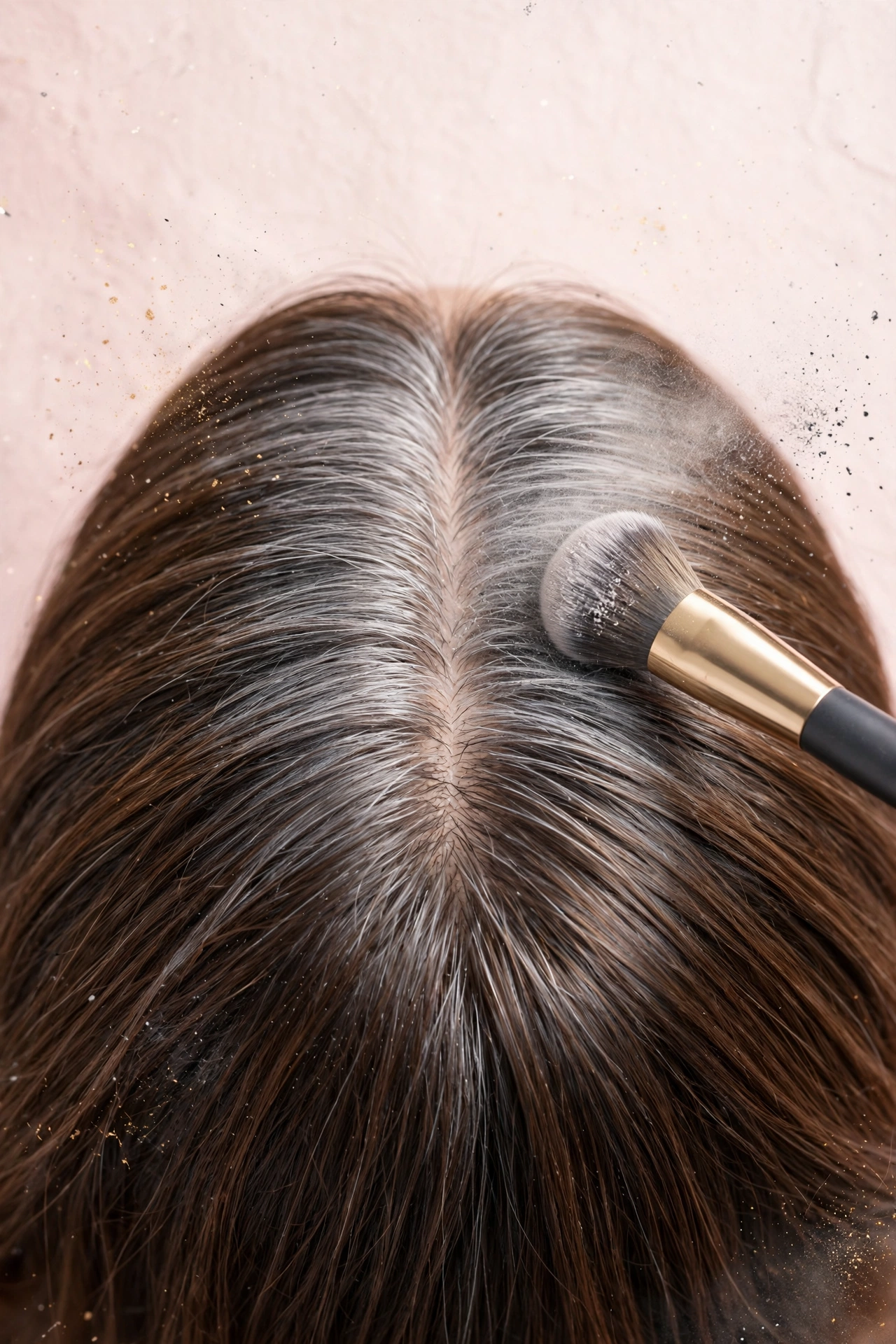
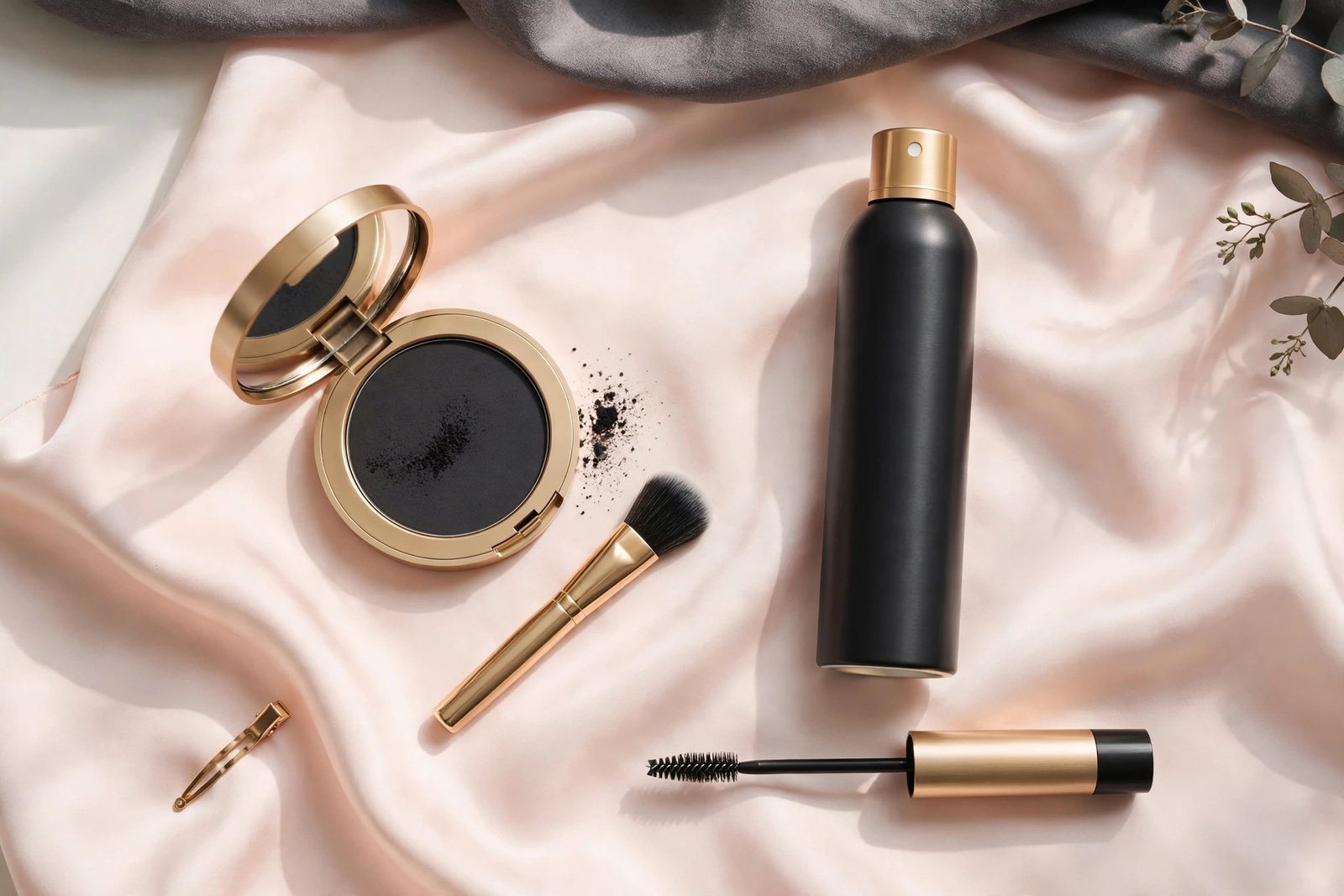
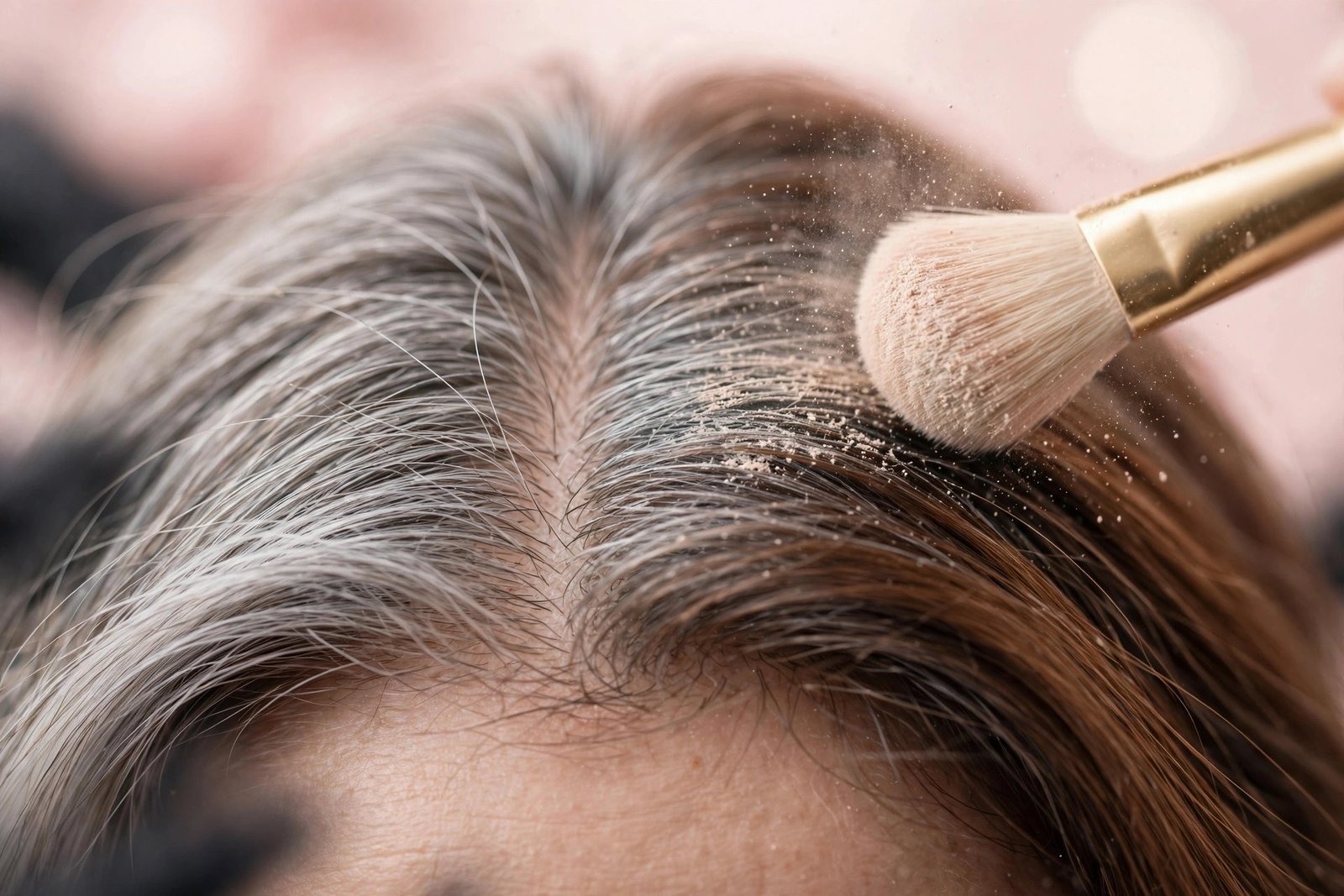
Pressed-powder compacts with a small applicator brush are the workhorse of the root touch-up category. They work much like eyeshadow for your hairline: you sweep the pigment onto gray areas, and it clings to the hair fibers to neutralize the silver.
Why they work well for gray hair: Powders give you the most control of any format. You can target the part line, the temples, and the hairline — the exact spots where gray regrowth shows first — without touching the rest of your hair. Because the pigment is buildable, you can layer a little for light scattering or more for dense regrowth, and the matte finish mimics the look of natural, freshly dyed hair better than sprays.
Best for: People with scattered or moderate gray (roughly 10–40% gray at the roots), anyone who wears a defined part, and those who want the most natural result. Powders also tend to be the most forgiving for beginners since you can blend and adjust as you go.
Limitations: Powders cover best where hair is relatively flat against the scalp. On very curly or textured hair, pigment may sit on top of curls rather than reaching the roots evenly, requiring more product and careful application. They also wear off fastest if you touch your hair frequently during the day.
Root Touch-Up Sprays: Fastest Coverage for Larger Areas
Aerosol or pump sprays deliver pigmented color in a fine mist, covering large areas of regrowth in seconds. Think of them as the airbrush option: quick, broad, and impressively effective when used with a light hand.
Why they work well for gray hair: Speed. If your roots are showing across your whole crown — say you’re three or four weeks past your last color — a spray can refresh the entire area in under a minute. Many formulas are also tinted to match common salon shades, and some include a slight dry-shampoo effect that absorbs oil at the roots while coloring them.
Best for: Heavier regrowth, people in a hurry, and anyone whose gray shows across a wide area rather than just the part line. Sprays are also popular before events and photos where you need full-coverage confidence fast.
Limitations: The main complaint about sprays is overspray — color landing on the forehead, ears, or bathroom surfaces. They also tend to look less natural than powders if over-applied, since the color can read flat and painted-on. Colorists generally recommend choosing a spray one shade lighter than you think you need, because the pigment concentrates as it dries. A light hand and a protective barrier (a tissue or your hand along the hairline) solve most of these problems.
Touch-Up Sticks and Hair Mascaras: Spot-Fix Precision
Wand applicators that look like oversized mascaras — often called hair mascaras or touch-up sticks — dispense a creamy, pigmented liquid through a small brush. They’re the precision instrument of the category.
Why they work well for gray hair: They excel at camouflaging individual gray strands and small patches that powders and sprays would over-cover. Around the temples, baby hairs, and a widow’s peak, a touch-up stick lets you paint color onto exactly the hairs that need it. They’re also the most travel-friendly format — small enough for a purse, no mirror-spraying acrobatics required.
Best for: Scattered grays (under ~15% gray), touch-ups on the go, and anyone with short hair or precise areas like sideburns and the hairline. They’re also a good companion product: use a powder or spray for the main regrowth, then a stick for stubborn sparkles that peek through.
Limitations: Sticks are slow for large areas — painting an entire part line strand by strand gets tedious. The creamy formula can also feel slightly stiff or sticky on the hair until it fully dries, and on very fine hair it may clump strands together if over-applied.
How to Choose the Right Product for You
With three formats to choose from, the decision comes down to four factors:
1. How much gray are you covering?
Light scattering along the part? A powder or stick gives natural, targeted coverage. A solid band of regrowth across the crown? A spray handles it faster. Most people with 25–50% gray find a combination works best — powder for daily precision, spray for event-day speed.
2. Your hair’s texture and density
Fine, straight hair takes all three formats well, though sprays need a light hand to avoid a helmet-like look. Curly and coily hair often does better with powders worked into the roots with a dense brush, since sprays can leave a halo of color on the curl surface. Very thick, dense hair may need a spray’s reach to penetrate to the scalp.
3. Your shade situation
This is where many people go wrong. Match the touch-up to your dyed hair color, not your natural gray. If your lengths are a medium brown from box dye, buy the medium-brown touch-up — the goal is to make the roots disappear into the colored hair. When in doubt, choose one shade lighter than your dyed color; slightly-too-light blends in, while slightly-too-dark creates an obvious line. Gray roots also tend to look cooler than dyed lengths, so if your dye is warm-toned, a neutral or slightly cool touch-up shade often blends better than an exact warm match.
4. Your routine and lifestyle
If you wash your hair daily, any format works since everything rinses out. If you stretch washes to twice a week, powders and sprays hold up reasonably for 1–2 days with a hairspray seal, but expect fading. Active lifestyles with heavy sweating will shorten wear time across all formats — plan to reapply after workouts.
For people still deciding between temporary camouflage and committing to color, it helps to understand the full picture of dyeing hair at home for beginners before choosing a routine.
How to Apply Each Type: Step-by-Step
Application technique matters more than brand. Here’s how to get a natural result with each format:
Applying root touch-up powder
- Start with dry, fully styled hair. Touch-ups go on last, after heat styling.
- Load the small applicator brush lightly — tap off excess before touching your hair.
- Work in thin layers along the part line, pressing the powder into the roots with short strokes rather than sweeping across.
- Blend outward about half an inch into the colored lengths so there’s no hard line where the touch-up stops.
- At the temples and hairline, use the very tip of the brush and a feathering motion.
- Finish with a light mist of flexible-hold hairspray from 8–10 inches away to set the pigment.
Applying root touch-up spray
- Protect your skin and surfaces: pull a headband or tissue along your hairline, and drape a towel over your shoulders.
- Shake the can well, hold it 4–6 inches from the roots (closer than you think — distance creates overspray mist).
- Spray in short bursts, moving along the part rather than holding the nozzle in one spot.
- Wait 60 seconds, then check in natural light. It’s easier to add a second light pass than to fix over-application.
- Blend with fingertips or a clean spoolie brush while the product is still slightly tacky.
- Let it dry completely before touching your hair or laying it against clothing.
Applying touch-up sticks and hair mascaras
- Make sure the hair is dry and the product is shaken or twisted up per its instructions.
- Working strand by strand, stroke the wand from root toward tip on gray hairs only — don’t coat surrounding colored hair.
- Use the edge of the brush for precision around the hairline and baby hairs.
- Allow 1–2 minutes of drying time; avoid touching until it’s fully set to prevent transfer.
Shade Matching: The Tricky Part With Gray Roots
Gray hair complicates shade matching because you’re matching to colored hair while the gray itself is a cool silver-white. A few principles colorists consistently recommend:
- Match the mids, not the roots. Hold the product shade guide against the colored lengths of your hair, not the regrowth.
- Account for fade. If your dye job is six weeks old and has faded lighter, match the touch-up to the faded tone, not the original box color.
- Blonde grays are the hardest. Platinum and light blonde shades vary wildly between brands. When covering gray on blonde hair, look for touch-ups specifically labeled “blonde” rather than generic light brown, and test in natural light before an event.
- Red and copper hair needs warm-toned touch-ups; a neutral brown will look muddy against copper lengths.
- Black hair is actually easier — most “black” touch-ups are forgiving, but avoid blue-black formulas if your dye is a soft natural black.
One more tip: bathroom lighting lies. Always do your final check near a window or in daylight before heading out. What looks seamless under warm bulbs can show a line in sunlight.
How Long They Last and How to Remove Them
All root touch-up products are temporary, but wear time varies:
- Powders typically last until your next shampoo, sometimes surviving a second day with a hairspray seal. They fade gradually rather than flaking.
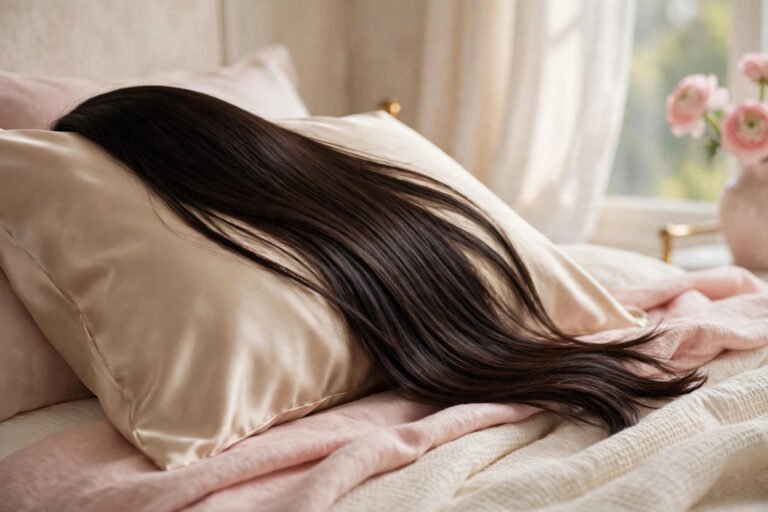
- Sprays are the longest-wearing of the three — most survive one full day and sometimes a second, resisting light moisture. They can transfer to pillowcases, so wash them out before bed.
- Sticks and mascaras last until shampooed but are the most vulnerable to sweat and rain since the formula sits on individual strands.
Removal is simple: your regular shampoo takes them all off. If you’ve layered product for several days, do a double shampoo or use a clarifying shampoo once to make sure no residue builds up on the scalp. There’s no damage risk from the products themselves, though — unlike permanent dye, they never process or lift your natural pigment.
Common Mistakes to Avoid
- Going too dark. The single most common error. A touch-up darker than your lengths creates a visible band that looks worse than the gray did.
- Applying to wet or damp hair. Pigment clumps on wet hair and distributes unevenly. Always apply to dry, styled hair.
- Skipping the blend. A hard stop where the touch-up ends is a giveaway. Always feather the product half an inch into the colored hair.
- Spraying too far away. Distance creates a wide mist that lands everywhere except where you want it. Keep the nozzle close and use short bursts.
- Touching your hair all day. Hands transfer pigment to fingers and fade the coverage. Once it’s set, leave it alone.
- Using them as a dye substitute indefinitely. Touch-ups buy time between color sessions — they don’t stop regrowth. If you’re coloring every 4–6 weeks anyway, they’re perfect; if you’re avoiding dye for months, you may want to explore going gray gracefully guide instead.
Frequently Asked Questions
Do root touch-up products damage hair?
No. Unlike permanent dye, touch-up powders, sprays, and sticks only coat the outside of the hair shaft with cosmetic pigment. They don’t contain ammonia or peroxide and don’t lift or process your natural color. They wash out completely with shampoo.
Can I use root touch-up products on the same day I dye my hair?
Yes, though you usually won’t need to — freshly dyed hair has no visible regrowth. If you missed a spot during your dye job, a touch-up product can fix it temporarily, but re-dyeing the missed section properly is the better long-term solution.
Will root touch-up spray stain my clothes or pillowcase?
It can transfer, especially before it’s fully dry or if you sleep in it. Let spray set for several minutes after application, avoid laying freshly touched-up hair against light-colored fabrics, and wash it out before bed to protect your pillowcase.
How do I choose between powder and spray?
Choose powder for precision and the most natural finish on the part line and temples. Choose spray when you need to cover a large area of regrowth quickly. Many people keep both: powder for everyday maintenance and spray for event days or weeks when regrowth is heavy.
Are root touch-up products safe for sensitive scalps?
Most are gentle since they sit on the hair rather than processing the scalp, but aerosol sprays contain propellants and fragrances that can irritate sensitive skin. If your scalp is reactive, powders and sticks tend to be better tolerated — and always do a patch test behind the ear when trying a new product.
Conclusion
Root touch-up products are one of the simplest upgrades you can make to a gray-hair routine. Powders deliver precision and the most natural finish, sprays conquer large regrowth areas in seconds, and sticks handle spot fixes with surgical accuracy. The secret isn’t the brand — it’s the shade match and the application technique. Go slightly lighter than your dyed color, apply to dry hair, blend past the regrowth line, and check in daylight. Master those basics and your roots will look salon-fresh for weeks longer. And if you’re curious about a lower-maintenance long-term strategy, learn blending gray with highlights — a salon technique that softens regrowth lines so touch-ups become optional rather than essential.
Love this? Pin it for later!