LED Face Masks vs Handheld Devices: Which Should You Buy?
If you’ve decided to try LED light therapy at home, the next question is always the same: should you buy a full-face LED mask or a handheld device? Both deliver the same basic technology — low-level light at specific wavelengths that may improve skin — but they differ enormously in coverage, convenience, power, and price. Pick the wrong format and you’ll end up with a device that sits unused in a drawer. Pick the right one and light therapy can slot painlessly into your routine.
This guide compares the two formats head to head: how each works, what each costs, how long treatments take, and which skin goals each suits best — so you buy once and buy right.
Key Takeaways
- LED masks treat the whole face hands-free in 10–20 minutes, but they typically cost more and offer less targeting.
- Handheld devices are cheaper and let you target specific spots (chin breakouts, forehead lines), but treating the full face takes longer and requires effort.
- Power output (irradiance) matters more than format — a well-powered handheld can outperform a weak mask. Look for devices with published irradiance data.
- Masks suit: full-face concerns like overall redness, fine lines everywhere, or acne across multiple zones. Handhelds suit: spot treatment, small budgets, or travel.
- Neither works overnight — most research shows visible changes only after 8–12 weeks of consistent use.
This article is for informational purposes only and is not medical advice. Skin conditions vary — see a dermatologist for diagnosis and treatment. At-home light therapy devices are cosmetic tools; they are not substitutes for professional treatment of serious skin conditions.
A Quick Primer: What Both Devices Actually Do
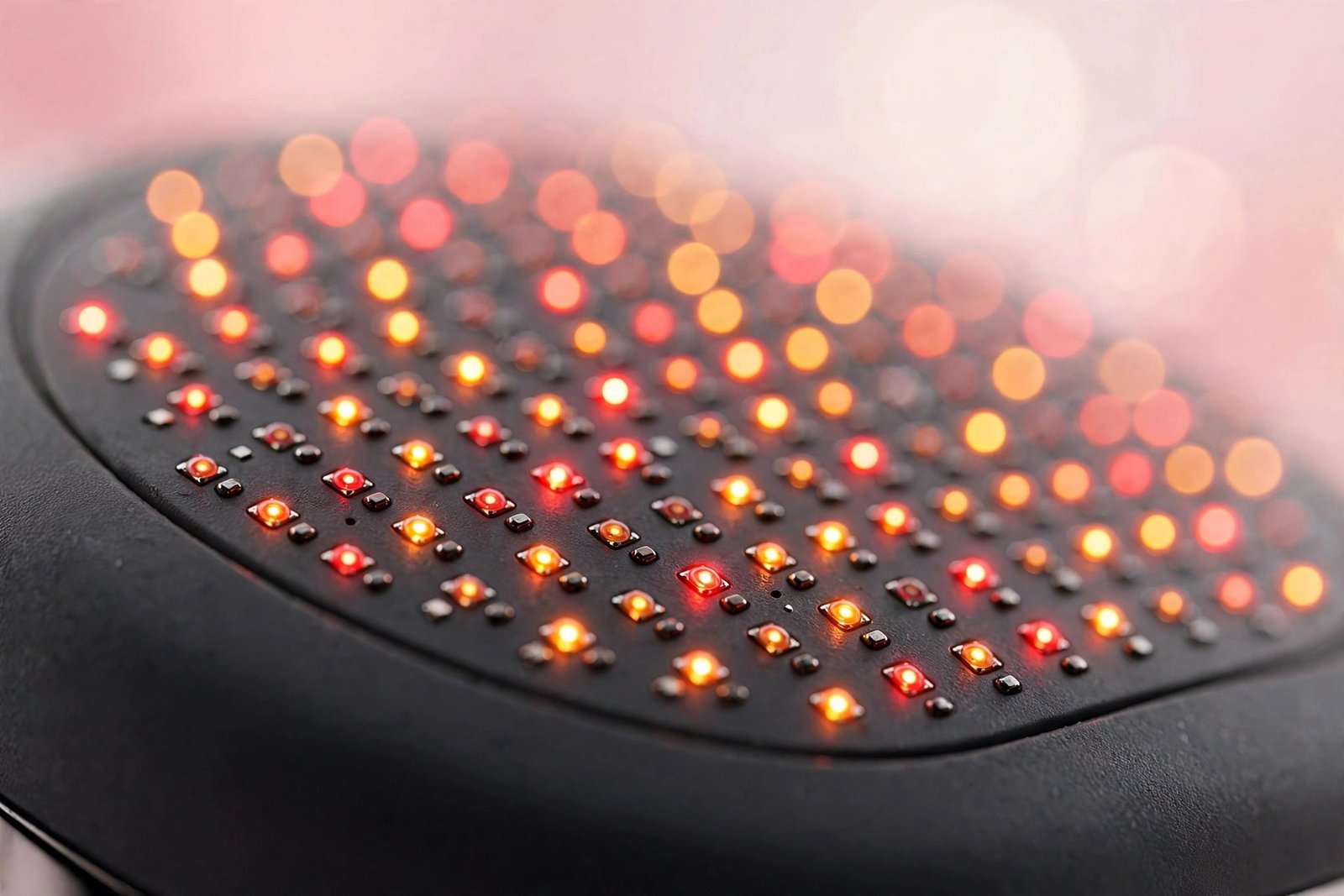
Before comparing formats, it helps to understand what the technology itself does, because masks and handhelds share the same underlying science. LED light therapy uses light-emitting diodes to deliver specific wavelengths of light to the skin — most commonly red light (around 630–660 nm) for collagen support and inflammation, blue light (around 415 nm) for acne-causing bacteria, and near-infrared (around 830 nm) which penetrates deeper and is often included in “anti-aging” modes.
The key dose metric is irradiance — the light’s power density, measured in milliwatts per square centimeter (mW/cm²). Higher irradiance means you can deliver the target energy dose (joules per cm²) in less time. This matters because a mask that blankets your face with low-power LEDs may deliver a weaker dose per minute than a handheld you hold close to one cheek. For a deeper dive into how the wavelengths differ, see the complete beginner’s guide to LED light therapy at home.
LED Face Masks: Pros and Cons
What they are
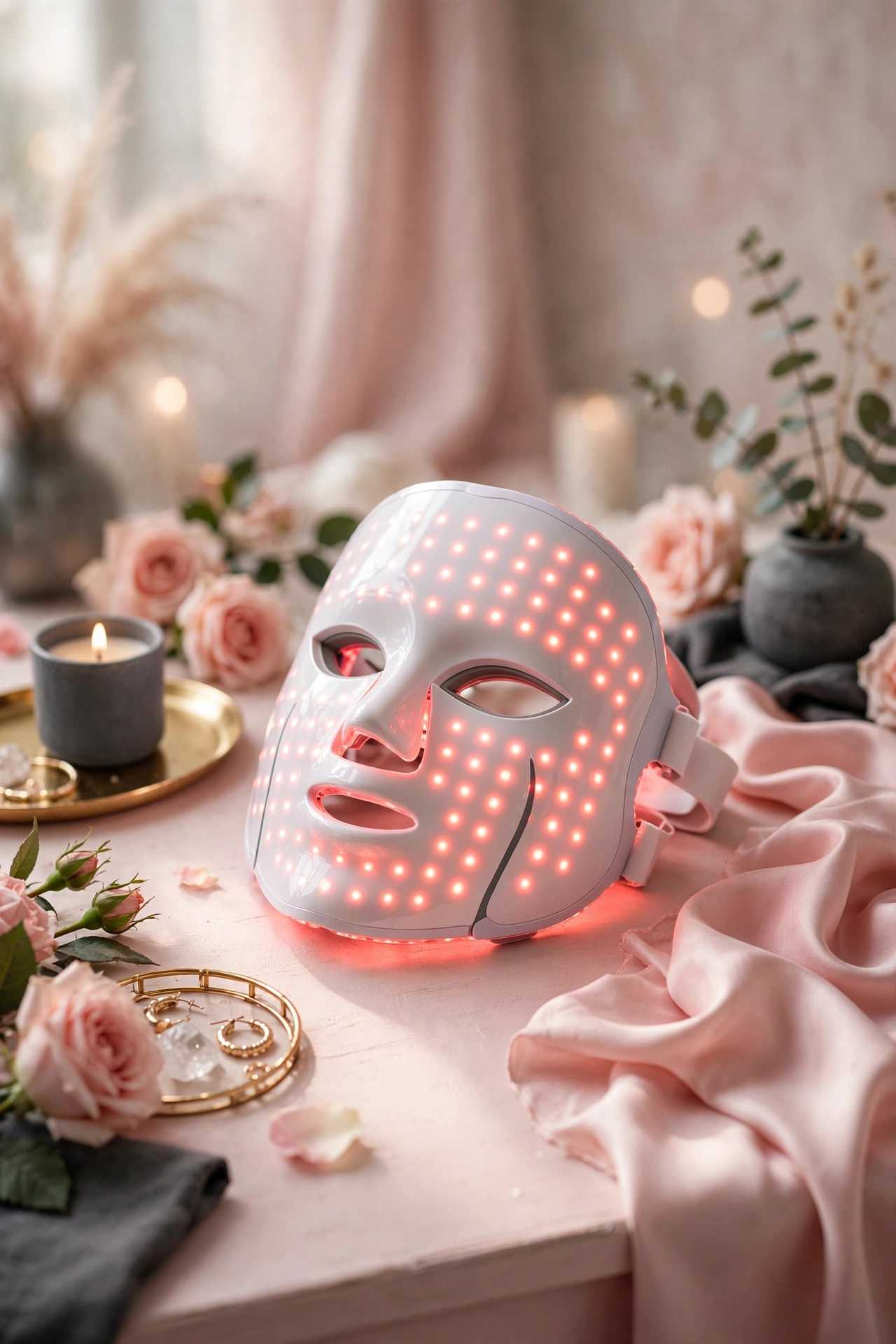
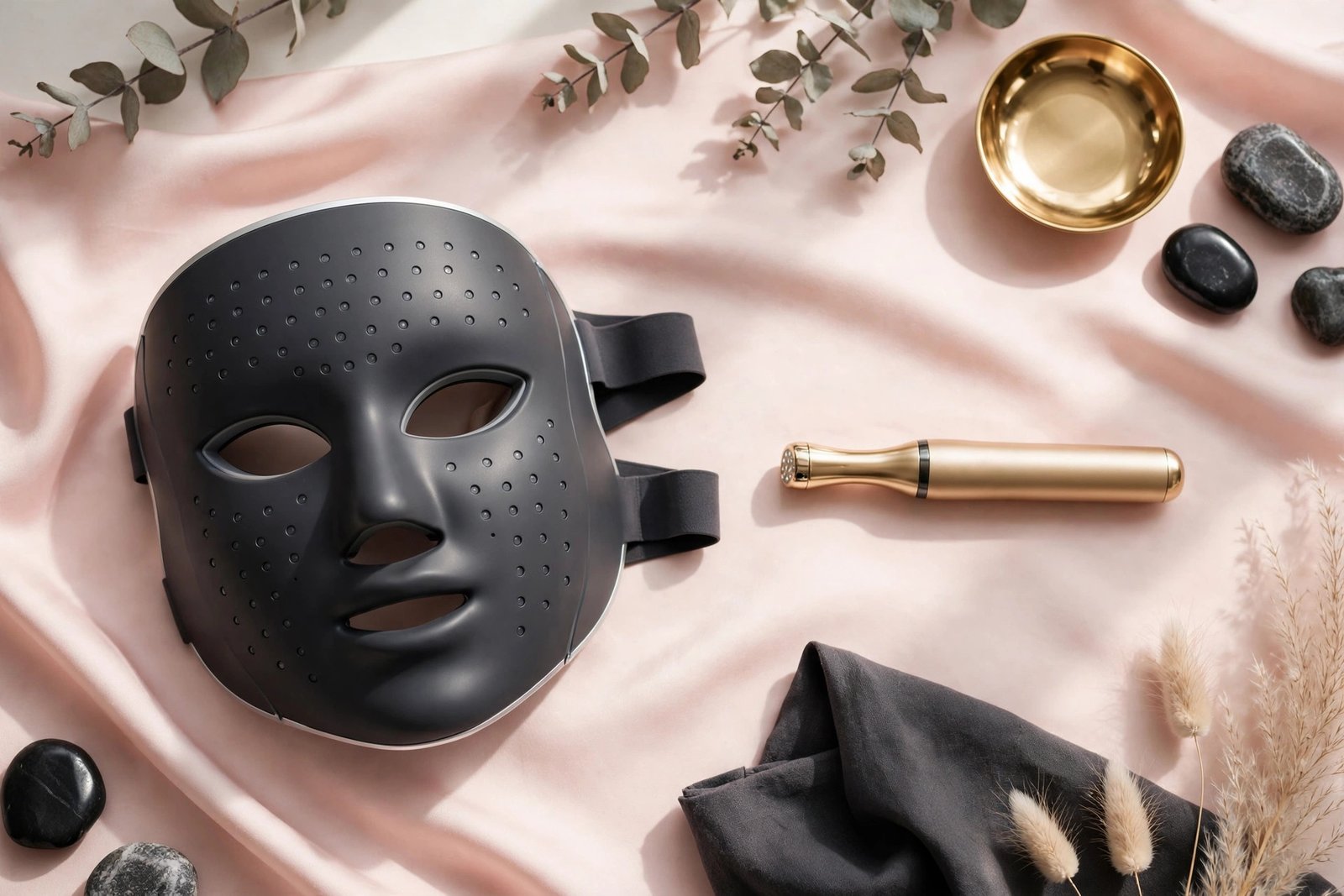
LED masks are rigid or flexible panels shaped like a face mask, studded with dozens to hundreds of LEDs. You strap or place one over your face, switch it on, and the lights bathe the entire treatment area at once. They come in corded versions (plug into the wall) and wireless versions with a rechargeable battery pack.
The advantages
Hands-free treatment. This is the single biggest reason masks win for most people. You strap the mask on and go about your evening — answer emails, watch TV, tidy up. Treatment sessions of 10–20 minutes feel like nothing because your hands are free.
Even, full-face coverage. A well-designed mask delivers light to your forehead, cheeks, nose, and chin simultaneously. If your concerns are spread across the whole face — general redness, fine lines everywhere, breakouts in multiple zones — a mask treats everything in one session.
Consistency. Because treatment is effortless, people actually stick with it. Dermatologists often note that the best at-home device is the one you’ll use consistently, and masks have a real compliance advantage.
Contoured fit options. Many newer masks use flexible silicone or segmented rigid panels that sit closer to the skin’s contours, reducing light leakage and keeping more energy on the face rather than escaping around the edges.
The downsides
Higher cost. Quality LED masks typically run from $150 to $500+, with premium models (FDA-cleared, flexible silicone, near-infrared modes) reaching even higher. Entry-level masks under $100 often have lower LED counts and weaker output.
Less targeting. A mask treats your whole face whether you need it or not. If your only concern is hormonal chin breakouts or a few forehead lines, you’re paying for coverage you don’t need — and some people prefer not to expose areas with no concerns to light at all.
Bulk and comfort. Masks can feel heavy or warm on the face, and the eye cutouts on cheap models may leak light uncomfortably. If you’re claustrophobic or sensitive around the eyes, test comfort before committing (check return policies).
Eye safety needs attention. Bright LEDs inches from your eyes mean you should use the included eye protection (goggles or inserts) and avoid staring into the lights. Most quality masks include this, but budget models sometimes skip it.
Handheld Devices: Pros and Cons
What they are
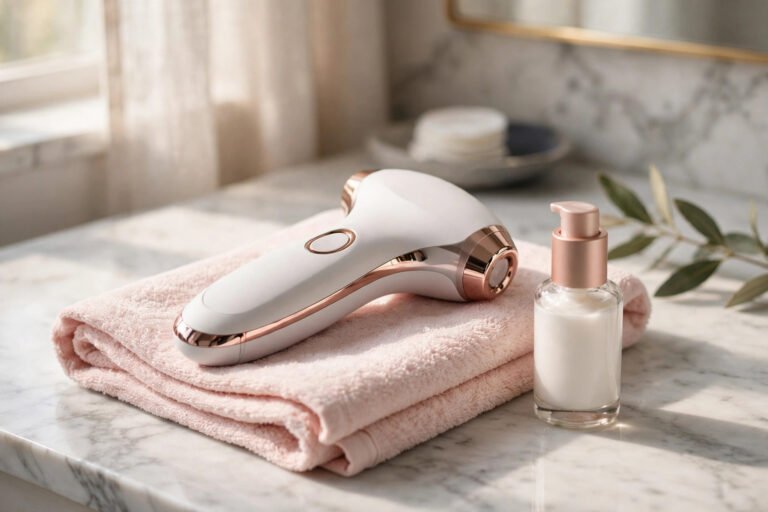
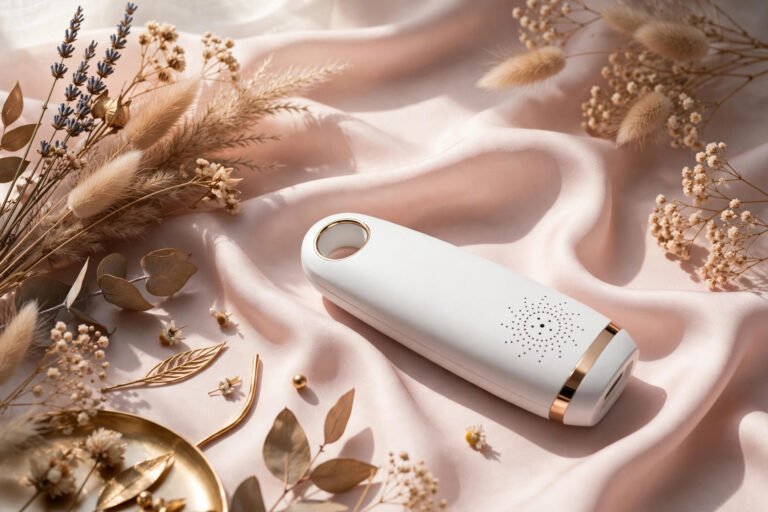
Handheld LED devices range from wand-shaped tools to small panels you hold a few centimeters from the skin. You sweep or hold them over the treatment area for a few minutes per zone. Many are dual-purpose: red + blue light modes in one small tool.
The advantages
Lower entry price. Decent handheld LED devices start around $40–$120, making them the cheapest way to try light therapy at home. If you’re unsure you’ll stick with the routine, the financial risk is much smaller.
Precise targeting. Dealing with breakouts only along the jawline? Fine lines just on the forehead? A handheld lets you concentrate the full treatment on exactly the area that needs it — and skip the rest. This precision is genuinely useful for spot concerns.
Travel-friendly. Most handhelds are pocket-sized and recharge via USB, so your routine doesn’t pause when you travel. A mask, by contrast, is one more bulky thing to pack.
Often higher intensity per spot. Because the LEDs sit close to a small area, a good handheld can deliver a strong dose quickly. Some handhelds publish irradiance figures that beat many masks — format doesn’t determine power; engineering does.
The downsides
Slow for full-face treatment. This is the main trade-off. Treating your whole face with a wand means 3–5 minutes per zone times four to six zones — suddenly a “quick” session is 20–30 minutes of active work. Most people find this tedious and give up.
Requires effort and technique. You have to hold the device steady at the right distance, move it evenly, and time each zone. Uneven technique means uneven results — some areas get the full dose, others barely any.
Fatigue factor. Holding a device to your face for twenty minutes gets old fast. This is why compliance with handhelds is lower than with masks for full-face goals.
Small spot size limits coverage. Most handhelds treat an area roughly the size of a large coin per placement. For widespread concerns, that’s a lot of placements.
Head-to-Head Comparison
| Factor | LED Face Mask | Handheld Device |
|---|---|---|
| Coverage | Whole face at once | One small spot at a time |
| Typical session | 10–20 min, hands-free | 3–5 min per zone (hands-on) |
| Best for | Full-face goals: redness, lines, acne | Targeted spots: chin breakouts, forehead lines |
| Typical price | $150–$500+ | $40–$120 |
| Power per area | Moderate, spread wide | Can be high, concentrated |
| Convenience | Excellent — wear and forget | Poor for full face, fine for spots |
| Travel | Bulky | Pocket-sized |
| Compliance | Higher (effortless) | Lower (tedious for full face) |
Which Should You Buy? Decide by Your Skin Goal
If you want: overall anti-aging (fine lines across the face)
Choose a mask. Red and near-infrared light’s collagen-supporting effects work best with consistent, full-face coverage over months. A mask makes that consistency realistic. Look for one that includes near-infrared (830 nm) LEDs, since these penetrate deeper and are the most studied for wrinkle-related outcomes. Keep expectations honest: light therapy may soften the look of fine lines, but it won’t replicate the results of in-office laser treatments.
If you want: acne treatment
Choose a mask if breakouts are widespread (forehead, cheeks, chin) — blue light needs to reach all the breakout zones regularly. Choose a handheld if breakouts are confined to one area, like the jawline, where you can do focused blue-light sessions. For acne specifically, check the device’s blue light wavelength (around 415 nm is the most studied) and remember that LED therapy works best as part of a broader routine — see our guide on how to prevent acne scars and dark marks for the full picture, since preventing scars matters as much as treating active spots.
If you want: redness or uneven tone across the face
Choose a mask. Diffuse redness responds best to even, full-face red light, and masks deliver exactly that. If redness is your main concern, you may also want to read the complete beginner’s guide to LED light therapy at home for wavelength guidance before you shop.
If you want: try light therapy on a budget
Choose a handheld. Spending under $100 on a decent handheld is a sensible low-risk experiment. If you love the routine and want to upgrade to a mask later, nothing is wasted — the handheld stays useful for spot treatments and travel.
If you want: a travel routine
Choose a handheld. No contest. Some people own both: a mask for home and a handheld for trips.
If you have: limited time or low motivation
Choose a mask. The compliance advantage is real and decisive. A device you use five times a week beats a theoretically better device you use twice a month.
What to Look For When Shopping (Either Format)
Regardless of format, these are the specs that actually matter:
- Published irradiance (mW/cm²). Reputable brands publish this. If a brand won’t tell you the power output, that’s a red flag.
- Wavelengths listed in nanometers. You want specific numbers (e.g., 630 nm red, 415 nm blue, 830 nm near-infrared), not vague claims like “red light therapy.”
- FDA clearance (or your country’s equivalent). This indicates the device passed safety review — it doesn’t guarantee results, but it’s a meaningful safety floor.
- Session timer with auto shut-off. Prevents over-treatment and makes sessions foolproof.
- Eye protection included. Non-negotiable, especially for masks.
- Return policy and warranty. You’ll want at least 30 days to test whether you can stick with the routine, and a warranty of a year or more since LEDs should last.
Also be skeptical of marketing claims. No at-home device “erases wrinkles in 2 weeks” — devices that make extreme claims tend to be the ones hiding their specs. Honest brands show their data.
How to Use Your Device Correctly
- Start with clean, dry skin. Remove makeup and sunscreen so light reaches the skin directly.
- Skip heavy topicals before treatment. Thick creams can block light. Use your serums and moisturizer after the session.
- Follow the device’s timing exactly. More is not better with light therapy — exceeding the recommended dose can irritate skin without adding benefit.
- Use it consistently. Three to five sessions per week for at least 8–12 weeks is the pattern most research supports. Set a schedule you can maintain.
- Protect your eyes. Use the included goggles or inserts every session, with either format.
- Track changes with photos. Take monthly photos in the same lighting. Subtle improvements are easy to miss in the mirror.
And remember that light therapy is one tool among many. Devices like high frequency wands for acne work through a different mechanism (electrical current rather than light), and manual techniques like gua sha for beginners address circulation and tension rather than cellular energy. The right combination depends on your goals.
Safety Notes
LED light therapy is generally considered safe for home use, with the most common side effects being temporary redness or mild warmth. That said, a few precautions apply: don’t use these devices over open wounds or active rashes; people with photosensitivity conditions or who take photosensitizing medications should check with a doctor first; and blue light modes are generally not recommended for melasma-prone skin without professional guidance. If anything about your skin changes unexpectedly during use, stop and consult a dermatologist.
Frequently Asked Questions
Can I use both a mask and a handheld device?
Yes — many people do. A common setup is a mask for the regular full-face routine and a handheld for extra spot treatment (like a stubborn breakout zone) or travel. There’s no evidence of harm from using both, as long as you don’t exceed recommended exposure times on any single area.
Do expensive LED masks work better than cheap ones?
Price correlates with build quality, LED count, and extras (near-infrared modes, wireless design, FDA clearance), but it doesn’t automatically mean a higher dose of light. A mid-range mask with published irradiance can outperform a luxury mask that hides its specs. Compare numbers, not price tags.
How long before I see results?
Most published research on at-home LED devices reports noticeable changes after 8–12 weeks of consistent use (3–5 sessions per week). If a brand promises visible transformation in days, treat that as marketing, not science.
Are LED masks safe for the eyes?
Masks should always be used with the included eye protection. The light is bright and sits very close to your eyes. If your mask didn’t include goggles or protective inserts, buy them before using it — or choose a different device.
Can handheld devices treat wrinkles, or just acne?
They can do both — it depends on the wavelengths the device offers. Red and near-infrared modes are the ones associated with skin-firmness research; blue light is for acne. A handheld with only blue light won’t do anything for lines, so check the wavelength list before buying for anti-aging goals.
The Bottom Line
For most people treating the whole face, a mask is the better buy — not because the technology is different, but because hands-free sessions are the ones you’ll actually do consistently. For targeted concerns, tight budgets, or travel, a handheld is the smarter, cheaper choice. Either way, let the published specs (irradiance, wavelengths, clearance) guide you rather than marketing claims, and give the routine a full three months before judging results.
If you’re still deciding whether LED therapy is right for you at all, start with the complete beginner’s guide to LED light therapy at home — it covers the science, safety, and realistic expectations in full before you spend anything.
Love this? Pin it for later!