
Waxing vs Shaving: Honest Pros and Cons for Every Skin Type
Shaving and waxing are the two most common hair removal methods, and the internet is full of strong opinions about both — usually from people selling one of them. The truth is less dramatic: neither is universally better. They’re different tools with different trade-offs, and the right choice depends on your pain tolerance, budget, skin type, schedule, and how you feel about regrowth.
This is an honest comparison — the real advantages and the real downsides of each, plus guidance on which suits different skin types and lifestyles. No method wins on every axis.
If you’re currently a shaver wanting to perfect your routine first, start with the complete shaving guide for women.
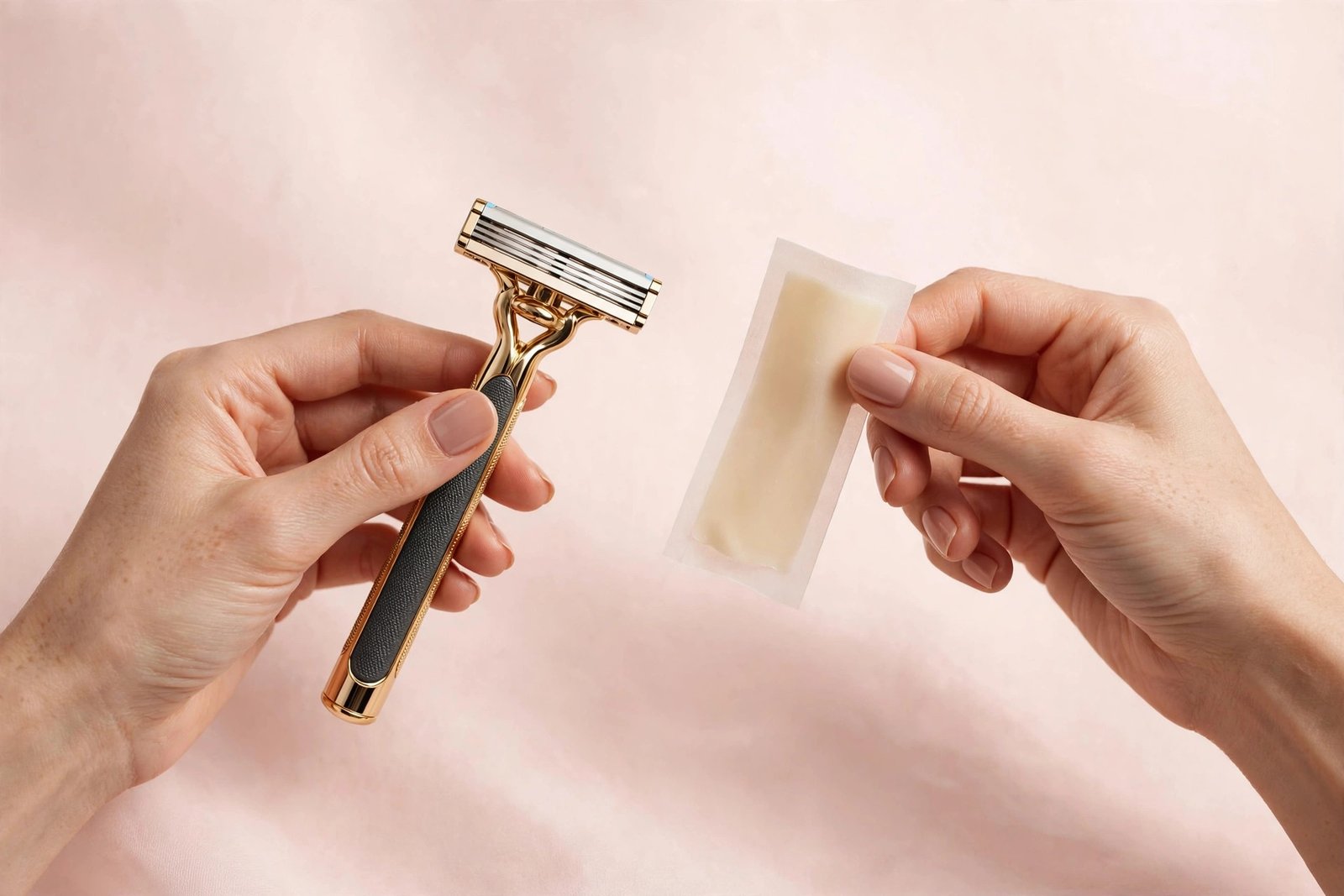
How Each Method Works (The 30-Second Version)
Shaving cuts hair at the skin’s surface with a blade. The follicle is untouched, so regrowth begins immediately — stubble typically appears within 1–3 days.
Waxing pulls hair out from the root using warm wax (or cold wax strips) adhered to the hair. Because the whole hair including the root is removed, regrowth takes 3–6 weeks, and the new hair grows in with a fine tapered tip rather than a blunt cut end.
Everything below follows from this mechanical difference.
Shaving: Pros
- Painless. Done correctly, shaving doesn’t hurt. This alone makes it the choice for anyone with low pain tolerance.
- Fast. Legs take 5–10 minutes in the shower. No appointment, no heating wax, no cleanup beyond rinsing the razor.
- Cheap. A good razor handle is a one-time purchase; ongoing costs are replacement blades and shave gel — a few dollars a month. Even premium cartridges cost far less than salon waxing.
- Convenient. You can shave anytime, anywhere — at home, traveling, in the shower. No scheduling, no salon visits, no growing hair out to a minimum length first.
- Safe for most skin. Shaving doesn’t involve heat, harsh chemicals, or pulling, so it’s generally well-tolerated — including during pregnancy, on sensitive skin, and for women who can’t wax for medical reasons (more below).
- Full control. You decide exactly which areas to do, how often, and how close — no explaining yourself to an esthetician.
Shaving: Cons
- Short-lived results. Stubble returns in 1–3 days for most women. Maintaining smoothness means shaving every few days, indefinitely.
- Stubble texture. Because the blade cuts hair bluntly at the surface, regrowth feels prickly and looks darker until it grows out. (It isn’t actually thicker — that’s a myth — but it feels that way.)
- Razor burn, nicks, and ingrowns. Poor technique, dull blades, or sensitive skin lead to irritation. Shaving is only “easy” when the technique is right — see how to shave legs without razor bumps.
- Ongoing effort. The convenience cuts both ways: you’re never “done.” It’s a permanent routine.
- Environmental cost. Disposable razors and plastic cartridges generate ongoing waste (though safety razors largely solve this).
Waxing: Pros
- Long-lasting smoothness. 3–6 weeks of smooth skin from a single session is the headline advantage. For vacations, events, or just low-maintenance life, nothing topical beats it.
- Finer regrowth over time. Repeated waxing can weaken follicles, so regrowth often comes in finer and sparser over months and years. (It doesn’t permanently remove hair, but many long-term waxers notice a real difference.)
- No stubble. Hair regrows from the root with a natural tapered tip, so it feels soft coming in — none of the prickly blunt-cut stubble of shaving.
- Exfoliation bonus. Waxing removes dead skin cells along with hair, leaving skin noticeably smooth immediately after.
- Less frequent maintenance. Even with the appointment overhead, total time spent on hair removal is often less than shaving every few days year-round.
Waxing: Cons
- Pain. Let’s be honest: waxing hurts. Pain tolerance varies enormously, and it does decrease with regular waxing as hair thins — but the first few sessions, especially Brazilian/bikini waxing, are genuinely painful for most women.
- Cost. Salon waxing is expensive: a full leg wax typically runs $50–$100+, bikini/Brazilian $50–$80+, and you need it every 4–6 weeks. That’s hundreds to over a thousand dollars a year. At-home waxing is cheaper but has a learning curve and mess factor.
- Regrowth requirement. You must let hair grow to about a quarter inch (roughly 2–3 weeks of growth) before waxing, or the wax can’t grip it. That in-between phase bothers a lot of women.
- Ingrown hairs. Waxing doesn’t eliminate ingrowns — broken hairs and new growth can still become trapped, especially in the bikini area. Exfoliation between sessions is essential.
- Skin risks. Hot wax can burn; waxing can bruise, tear sensitive skin, or cause reactions. It’s off-limits on sunburned, broken, or irritated skin, and for women using retinoids, strong AHAs/BHAs, or certain acne medications (the skin is too fragile and can tear).
- Inconvenience. Salon appointments take time to book and attend; at-home waxing takes practice to do well and cleanup is annoying.
- Hygiene concerns at salons. Double-dipping applicators (dipping the same stick in wax after touching skin) spreads bacteria — a reputable salon never does this, but it’s worth watching for.
Head-to-Head Comparison
| Factor | Shaving | Waxing |
|---|---|---|
| Pain level | None (when done right) | Moderate to high |
| Cost per year | $20–$80 (blades + gel) | $300–$1,200+ (salon) or $50–$150 (at-home) |
| How long results last | 1–3 days | 3–6 weeks |
| Regrowth texture | Blunt, prickly stubble | Fine, tapered, soft |
| Time per session | 5–15 min | 30–60 min (salon) or 30–90 min (home) |
| Frequency needed | Every 2–4 days | Every 4–6 weeks |
| Ingrown hair risk | Moderate (technique-dependent) | Moderate (area-dependent) |
| Best for sensitive skin | Yes, with good technique | Risky — heat + pulling |
| Usable on retinoids/meds | Yes | No — skin too fragile |
| Convenience | Anytime, anywhere | Appointments or setup |
Which Is Right for Your Skin Type?
Sensitive, reactive, or eczema-prone skin: Shaving usually wins — no heat, no pulling, no chemicals. Use a sharp blade, fragrance-free products, and light pressure. Waxing is possible but patch-test first and avoid it during flare-ups.
Thick, coarse, fast-growing hair: Waxing’s longer-lasting results and finer regrowth are appealing, and coarse hair gives wax plenty to grip. But coarse hair also means more painful waxing — there’s no free lunch.
Curly hair prone to ingrowns: This is the trickiest case. Shaving against the grain causes ingrowns; waxing can also cause them when hairs break instead of pulling cleanly. Many women with curly hair do best with careful with-the-grain shaving plus diligent exfoliation — or a trimmer-only approach for the bikini area. Details: how to shave the bikini line without irritation.
Skin on retinoids, tretinoin, or strong exfoliating acids: Shaving only. Waxing skin thinned by these products can literally tear. Wait at least a week after stopping topicals before waxing (and confirm with your dermatologist).
Pregnant women: Both are generally considered safe, but skin is more sensitive during pregnancy and waxing pain may feel worse. Many pregnant women switch to shaving for comfort.
Women with very low pain tolerance: Shaving, without question.
Women who hate maintenance routines: Waxing — one appointment every month or so beats shaving every three days if you’d rather not think about it.
The Hybrid Approach (What Many Women Actually Do)
You don’t have to pick one method for life, or even for your whole body. Common combinations:
- Wax legs, shave underarms and bikini line. Legs benefit most from waxing’s longevity; sensitive areas stay with the gentler method.
- Wax in summer, shave in winter. Long-lasting smoothness when legs are visible; low-effort shaving when they’re not.
- Shave routinely, wax before events. Daily-driver shaving plus a wax before vacations or weddings.
- Trimmer for bikini, razor for legs. Different tools for different areas based on sensitivity.
Mixing methods is normal and often the smartest answer.
At-Home Waxing: Worth It?
At-home waxing kits ($10–$30) make waxing far cheaper than the salon, but be realistic: there’s a learning curve, it’s messier, and doing your own bikini line or the backs of your legs is genuinely difficult. Cold wax strips are the easiest entry point — less mess, no temperature risk. Hard wax (which shrink-wraps the hair and is gentler on skin) is better for coarse hair and sensitive areas but takes practice.
If you go the at-home route: exfoliate 24–48 hours before (not immediately before), make sure hair is the right length (quarter inch — too short won’t grip, too long is more painful), pull skin taut, pull the strip parallel to the skin (not upward), and soothe afterward with aloe. And never wax the same spot twice in one session — that’s how burns and bruising happen.
Key Takeaways
- Neither method is universally better — they trade off pain, cost, longevity, and convenience differently.
- Shaving wins on: painlessness, cost, speed, convenience, and safety for sensitive or medicated skin.
- Waxing wins on: how long results last (3–6 weeks), regrowth texture, and total maintenance time.
- Shaving’s main costs are frequent upkeep and technique-dependent irritation; waxing’s are pain, price, and the regrowth waiting period.
- Skin type decides: sensitive/medicated skin favors shaving; coarse hair and low-maintenance preferences favor waxing.
- Hybrid approaches (different methods per area or season) are common and often optimal.
FAQ
Does waxing hurt less over time?
For most people, yes. Regular waxing thins regrowth, and thinner hair pulls out with less pain. The first 2–3 sessions are typically the worst. That said, some areas (bikini/Brazilian) remain uncomfortable even for experienced waxers — pain tolerance varies.
Will waxing make my hair stop growing eventually?
No — waxing doesn’t permanently remove hair. Long-term regular waxing can damage some follicles enough that regrowth becomes finer and sparser, but it doesn’t stop growth. Permanent reduction requires laser or electrolysis.
Can I shave between waxing appointments?
You can, but it undermines the main benefit: shaved hair grows back blunt and stubbly, and you’ll need to grow it back out to waxable length anyway. If you must tidy up between sessions, trimming is better than shaving.
Is waxing safe during pregnancy?
Generally yes, but skin tends to be more sensitive and pain perception higher during pregnancy. Many women switch to shaving for comfort in later trimesters. As always, check with your healthcare provider if you have concerns.
Which is better for the bikini line specifically?
It depends on your priority. Waxing (especially Brazilian) gives the longest-lasting smoothness but is the most painful waxing area and still carries ingrown risk. Shaving is painless and free but needs frequent upkeep and strict technique to avoid irritation — see how to shave the bikini line without irritation for the full method.
Conclusion
Choose shaving if you want painless, cheap, convenient hair removal and don’t mind the routine. Choose waxing if you’d trade some pain and money for weeks of smoothness and softer regrowth. Choose both if different areas — or different seasons — call for different tools. The “best” method is the one you’ll actually stick with, because consistency beats perfection in hair removal as in everything else.
Whichever you pick, technique determines your results: shavers should master how to shave legs without razor bumps, and everyone should know how often to shave and replace blades.
Love this? Pin it for later!