How to Get Rid of Cracked Heels: Remedies That Actually Work
Cracked heels are one of the most common — and most stubborn — foot problems. They start as dry, flaky skin on the heels and, left alone, deepen into painful fissures that can catch on socks, bleed, and make every step uncomfortable. Sandal season makes them impossible to ignore, but winter dryness is when they often get worst.
The good news: cracked heels respond reliably to the right treatment. The bad news: most of what people try — aggressive pumicing, random thick creams, foot peeling masks — either doesn’t address the actual problem or makes it worse. This guide covers how to get rid of cracked heels with methods backed by dermatological sense: urea-based treatment, the overnight sock method, and a prevention plan that keeps them from coming back.
For the full routine these steps fit into, see our complete foot care routine at home.
What Causes Cracked Heels
Cracked heels (heel fissures) happen when the skin around the heel becomes so dry and thick that it loses flexibility and splits under pressure. Several factors combine to cause them:
Dry skin and lack of moisture. The soles of your feet have no oil glands, so heel skin depends entirely on external moisture. Cold weather, low humidity, hot showers, and harsh soaps all strip what little moisture is there.
Thickened skin (callus buildup). The heel bears enormous pressure with every step. In response, skin thickens — and thick, dry skin cracks far more easily than thin, supple skin. This is why cracked heels and calluses so often appear together.
Open-backed footwear. Flip-flops, mules, and backless sandals let the fat pad under your heel spread sideways with each step. That lateral stretching pulls on dry heel skin and is one of the biggest mechanical causes of cracking. If your heels only crack in summer, your sandals are probably the reason.
Standing for long hours. Jobs that keep you on your feet all day (retail, nursing, teaching, food service) increase both pressure and friction on the heels.
Medical factors. Diabetes, hypothyroidism, eczema, psoriasis, and fungal infections can all cause or worsen cracked heels. Obesity increases pressure on the heel pad. If your cracked heels appeared suddenly, are severe, or come with other symptoms, it’s worth mentioning to your doctor.
How to Get Rid of Cracked Heels: The Core Routine
Healing cracked heels follows a logical sequence: soften the thick skin, remove the excess gently, flood the area with the right moisturizer, and seal it in. Here’s the routine, in order.
Step 1: Soak to Soften (10–15 Minutes)
Fill a basin with lukewarm water and soak your feet for 10–15 minutes. This softens the thickened heel skin so the next steps work better and feel gentler. Add Epsom salt if you like, but plain lukewarm water does the job. Avoid hot water — it strips oils and worsens the dryness you’re trying to fix.
If your heels are severely cracked or the fissures are open/bleeding, skip the soak and go straight to moisturizing. Soaking open cracks can sting and may increase infection risk.
Step 2: Gently Exfoliate the Thick Skin
After soaking, use a pumice stone or foot file on the thickened areas of the heel. Work gently in one direction with light pressure — the goal is to reduce the thick, dry buildup gradually, not to grind it all off in one session. Trying to remove too much at once leaves skin raw and vulnerable, which leads to worse cracking as it heals.
For cracked heels specifically, chemical exfoliation often works better than mechanical. A urea-based cream (detailed below) softens and breaks down thick skin over several days of use, which is gentler and more thorough than what a pumice stone can do in one sitting. Many people find that once urea is in their routine, they barely need to pumice at all.
Step 3: Apply a Urea-Based Cream (The Key Step)
This is the step that actually heals cracked heels. Urea is the gold-standard ingredient for this problem, and it’s worth understanding why.
Why urea works: Urea does two things simultaneously. As a humectant, it draws moisture into the skin. As a keratolytic, it breaks down the protein bonds holding thick, dead skin cells together — essentially dissolving the rough buildup that causes cracking. No other common moisturizer ingredient does both jobs at once.
What concentration to use:
– 10% urea: Good for mild dryness and maintenance once heels are healed.
– 20–25% urea: The therapeutic range for actively cracked heels. This is what actually softens deep fissures and thick callus. Available over the counter in foot-specific formulas.
– Above 25%: Prescription territory in some regions; not necessary for most people.
How to apply: Massage a generous amount into the heels (and whole foot) right after your soak or shower, while skin is still slightly damp. Be thorough — really work it into the cracked areas. If the cracks sting when you apply urea cream, that’s normal for deep fissures and usually fades as the skin heals. If stinging is severe, start with a 10% formula and work up.
For specific product guidance — which ingredient combinations to prioritize and popular formulas worth considering — see our guide to the best foot cream for dry, cracked feet.
Step 4: Seal It In With an Occlusive
After the urea cream, layer an occlusive over the heels to lock everything in. Plain petroleum jelly is the classic choice — cheap, effective, and non-irritating. Lanolin-based balms work similarly. This sealing layer prevents the moisture from evaporating and dramatically speeds up healing.
Step 5: The Overnight Sock Method
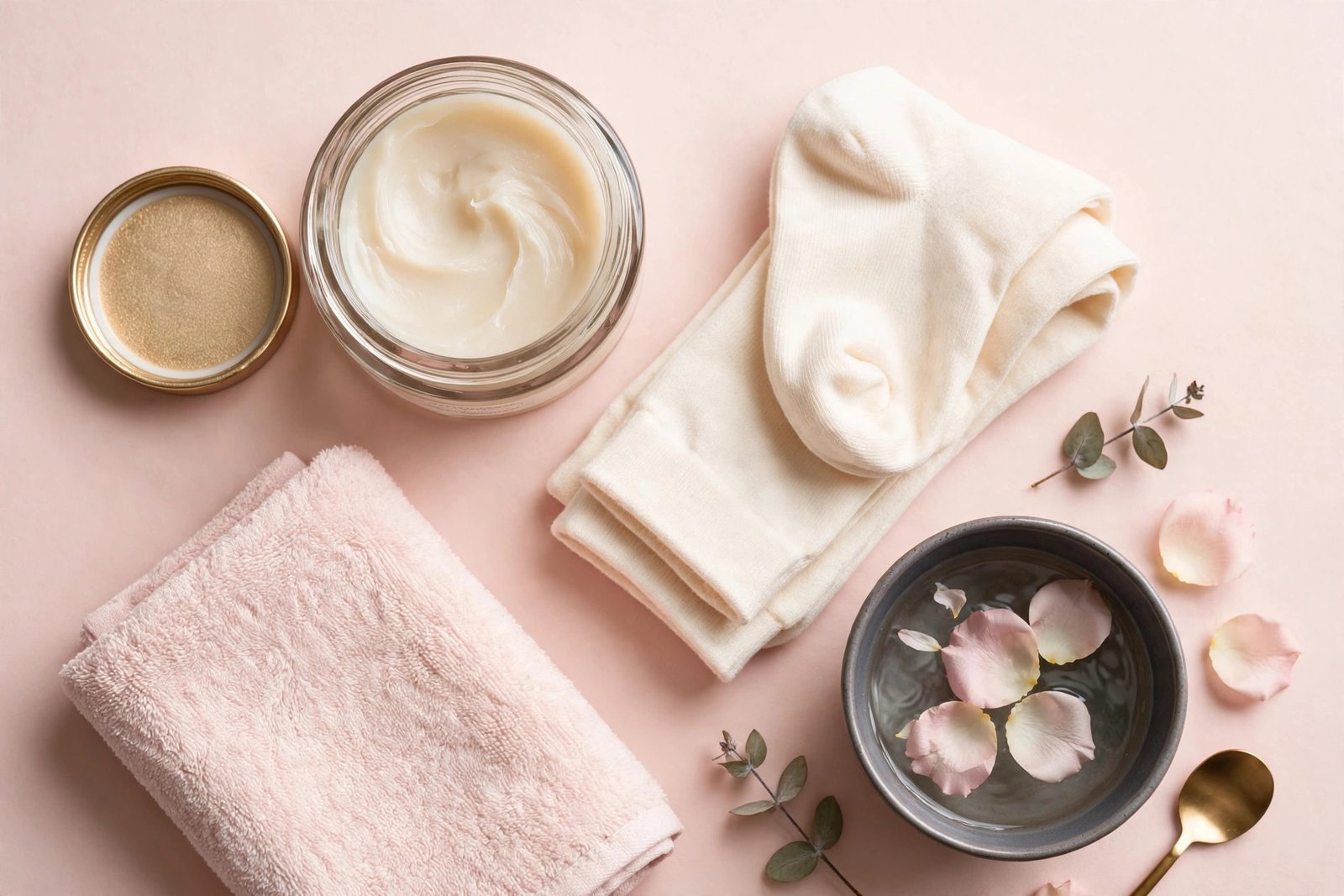
This is the technique that turns a good routine into a great one. After applying your urea cream and occlusive layer, put on a pair of clean cotton socks and leave everything on overnight. The socks create a warm, occlusive environment that multiplies absorption — it’s essentially an intensive overnight treatment for your heels.
How to do the overnight sock method properly:
1. Do your evening soak and gentle exfoliation (or just wash feet if you’re doing this nightly).
2. Pat feet mostly dry, leaving them slightly damp.
3. Apply urea cream generously to the heels and soles.
4. Layer petroleum jelly or a thick balm over the top.
5. Put on clean cotton socks (not too tight — you want comfort, not compression).
6. Sleep in them. In the morning, remove the socks and apply a light layer of moisturizer.
Do this nightly for 1–2 weeks for actively cracked heels. Most people see significant improvement within 7–10 days. Once heels are healed, drop to 2–3 times a week for maintenance, with daily plain moisturizing in between.
Tip: Dedicate a specific pair of socks to this — they’ll get greasy. Some people prefer silicone moisturizing socks or heel sleeves, which are washable and create an even better seal, but regular cotton socks work fine.
Other Remedies Worth Trying
Lanolin: A natural occlusive that’s exceptionally good at healing cracked skin — it’s the same ingredient used for cracked nipples in breastfeeding, which tells you how effective it is on fissures. Apply after your urea cream.
Liquid bandage for deep fissures: For cracks that are deep enough to catch or bleed, a liquid bandage product (available at any pharmacy) seals the fissure closed, reduces pain when walking, and lets it heal underneath. This is a practical bridge while the urea routine does its longer-term work.
Honey-based foot balms: Honey is a natural humectant with mild antibacterial properties. Some studies suggest honey can help with wound healing. As a foot balm ingredient it’s pleasant and reasonably effective, though not a replacement for urea on serious cracking.
Paraffin wax treatments: The warm wax dips offered at some salons create an excellent occlusive seal and feel wonderful. They’re a nice occasional treatment but impractical for regular home use — the sock method achieves similar occlusion for free.
What to Avoid
Aggressive pumicing or filing. The temptation with cracked heels is to grind away all the rough skin at once. This backfires: removing too much skin leaves the heel raw, and raw skin cracks worse as it heals. Gentle, gradual reduction plus urea is faster in the long run.
Foot peeling masks. Those plastic booties that cause your feet to shed sheets of skin over several days are too aggressive for already-cracked heels. The peeling can expose tender skin beneath the fissures and worsen pain. They’re designed for mildly rough feet, not damaged ones.
Going barefoot on hard floors. Barefoot walking increases friction and pressure on the heels. Wear cushioned slippers or socks at home while your heels are healing.
Picking or peeling flaky skin. Pulling at loose skin around cracks can tear into healthy skin and deepen fissures. Let exfoliation and urea do the removal work.
Ignoring your shoes. If you heal your heels and then go right back to unsupportive flip-flops, the cracks will return. Address the footwear cause, not just the symptom.
Preventing Cracked Heels From Coming Back
Healing cracked heels is only half the battle — keeping them healed is the other half. The maintenance routine is simpler than the treatment routine:
- Moisturize daily, even when your heels look fine. A 10% urea cream as daily maintenance prevents the dryness-thickening-cracking cycle from restarting.
- Exfoliate weekly with a pumice stone to keep thick skin from building up.
- Wear shoes with heel support. Save the backless sandals for short outings, not all-day wear. Cushioned insoles or heel cups help if you stand a lot.
- Stay hydrated and watch the seasons. Increase moisturizing in winter when indoor heating dries everything out.
- Check your feet regularly. Catching early dryness and treating it immediately is far easier than healing deep fissures later.
When Cracked Heels Need a Doctor
Most cracked heels respond to consistent home treatment within 2–3 weeks. See a podiatrist or dermatologist if:
- Cracks are deep, bleeding, or very painful.
- There’s no improvement after 3 weeks of diligent home care.
- You see signs of infection: increasing redness, swelling, warmth, or discharge.
- You have diabetes, circulation problems, or neuropathy. Reduced sensation and slower healing make cracked heels riskier, and professional guidance is important — don’t aggressively exfoliate or use strong chemical treatments without medical advice.
- Cracking comes with scaling, itching, or nail changes that suggest a fungal infection or eczema.
Key Takeaways
- Cracked heels are caused by the combination of dry skin, thickened callus, and mechanical stress — usually from open-backed shoes.
- The healing routine: soak, gently exfoliate, apply urea cream (20–25% for active cracking), seal with an occlusive, and sleep in socks.
- Urea is the single most effective ingredient for cracked heels — it moisturizes and breaks down thick skin simultaneously.
- The overnight sock method dramatically accelerates healing; most people see major improvement in 7–10 days of nightly use.
- Don’t aggressively pumice cracked heels — gradual reduction plus urea heals faster than grinding skin off.
- Prevent recurrence with daily moisturizing, weekly exfoliation, and supportive footwear.
- See a doctor for deep, bleeding, or non-healing cracks — especially if you have diabetes.
FAQ
How long does it take to get rid of cracked heels?
With consistent treatment (urea cream + overnight sock method nightly), most mild-to-moderate cracked heels improve noticeably within 7–10 days and heal substantially within 2–3 weeks. Deep fissures take longer — up to a month or more. Consistency matters more than intensity: daily treatment beats occasional aggressive sessions.
What’s the best cream for cracked heels?
Look for a foot-specific cream with 20–25% urea as the star ingredient for active cracking. Urea both hydrates and breaks down the thick skin that causes fissures. Our foot cream guide breaks down the key ingredients and popular formulas in detail.
Can cracked heels heal on their own?
Mild dryness can improve with seasonal changes, but established cracks rarely heal without treatment — the thickened skin around a fissure prevents it from closing, and every step reopens it. Active treatment (exfoliation + urea + occlusion) is needed to break the cycle.
Why do my cracked heels keep coming back every summer?
Open-backed sandals and flip-flops are the usual cause. They let the heel pad spread sideways with each step, stretching dry heel skin until it splits. If your heels only crack in sandal season, try sandals with heel straps or cushioned heel cups, and moisturize more diligently during those months.
Is it safe to use a pumice stone on cracked heels?
Yes, with a light touch and only on the thickened skin around the cracks — never directly on open fissures. The goal is gradual reduction of buildup, not aggressive removal. If cracks are deep or bleeding, skip exfoliation entirely until they’ve started healing, and be extra cautious if you have diabetes or circulation issues.
Love this? Pin it for later!