Cream Blush vs Powder Blush: Which Formula Is Right for You?
Cream blush vs powder blush is one of the most common dilemmas in makeup — and the honest answer is that neither formula is universally better. They do different things, suit different skin types, and create different finishes. Picking the right one (or learning to use both) comes down to understanding those differences rather than following trends.
This guide compares cream blush and powder blush across every factor that matters: finish, skin type compatibility, longevity, ease of application, shade range, and price. By the end, you’ll know exactly which formula belongs in your makeup bag — and when to reach for each. If you’re new to blush entirely, start with our complete [blush guide for beginners → blush-guide-for-beginners] for the fundamentals first.
Key Takeaways
- Powder blush is more forgiving and easier for beginners; cream blush gives a more natural, dewy finish.
- Dry and mature skin generally looks better in cream formulas; oily skin generally wears powder formulas longer.
- Cream blush must go on before powder products; powder blush can go before or after setting powder.
- On longevity, powder typically outlasts cream on oily skin, while cream outlasts powder on dry skin.
- Layering both — cream underneath, powder on top — gives luminosity plus staying power.
- Your undertone and skin depth matter more than formula when choosing a shade; see our [shade matching guide → how-to-choose-blush-shade-for-skin-tone].
The Quick Answer
Short on time? Here’s the decision in one paragraph: choose powder blush if your skin is oily or combination, you want the easiest possible application, you prefer a matte or satin finish, or you need maximum longevity through a long day. Choose cream blush if your skin is dry, dehydrated, or mature, you love a dewy, lit-from-within glow, you prefer a skin-like natural finish, or you want a multi-use product for cheeks and lips. Own both if you want versatility — they layer beautifully together, and different days call for different finishes.
The rest of this guide explains the why behind each recommendation, so you can adapt as your skin, seasons, and preferences change.
What Each Formula Actually Is
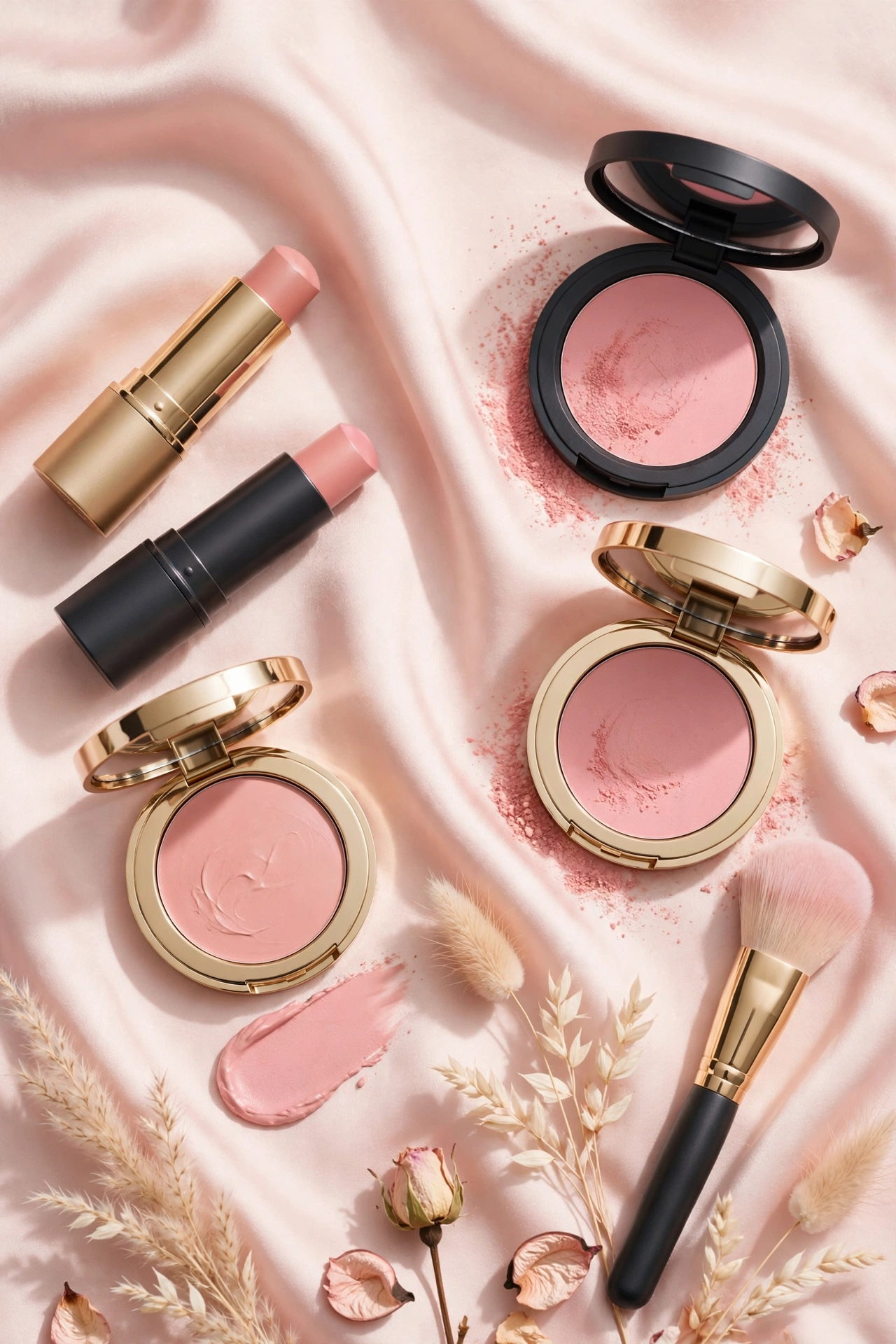
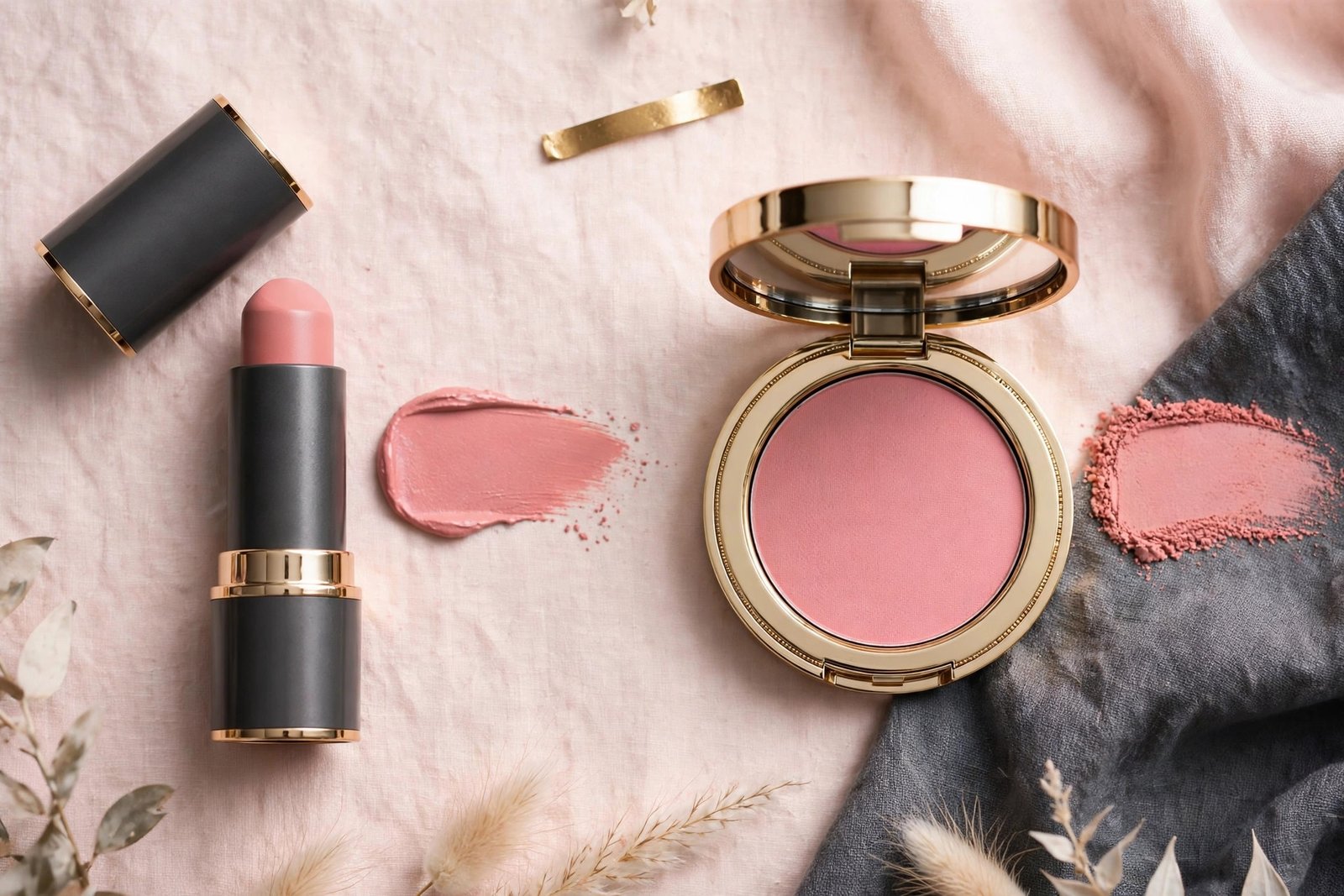
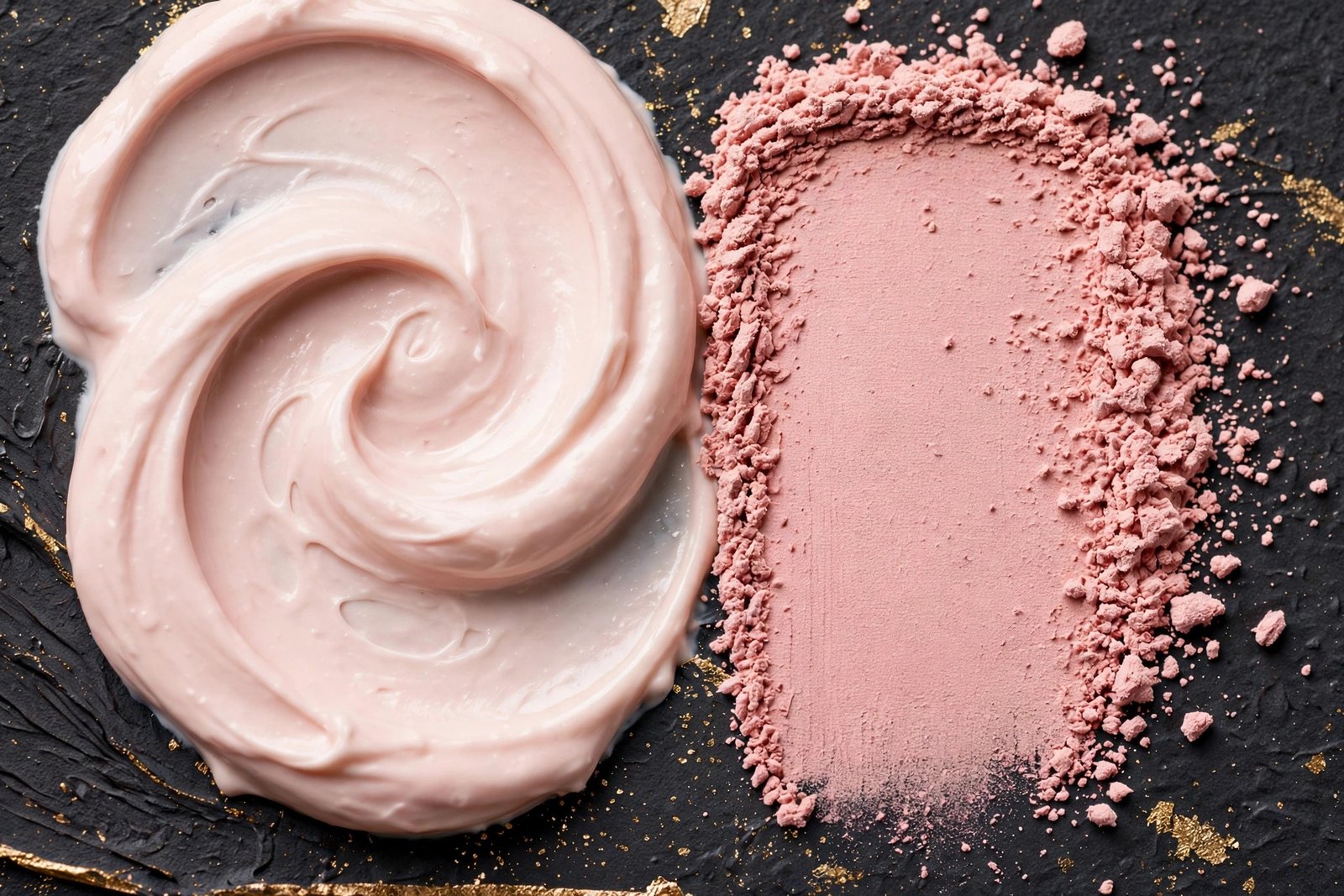
Powder blush is finely milled pigment pressed into a compact (or occasionally sold loose). It sits on top of the skin and is applied with a brush. Modern powder blushes range from completely matte to shimmer-flecked, but the defining trait is a dry formula that absorbs a little oil as it wears — which is exactly why oily skin tends to love it.
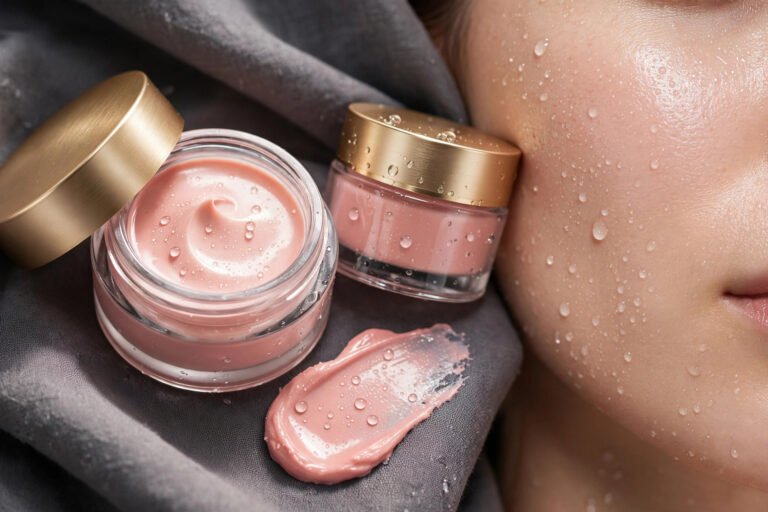
Cream blush is pigment suspended in an emollient, waxy, or gel-cream base. It comes in compacts, pots, tubes, and sticks. Instead of sitting on the skin, it melds with it — melting slightly with body heat and blending into foundation rather than layering over it. That melded quality is what creates the famous “second skin” effect, but it’s also why cream blush interacts more with the skin’s natural oils throughout the day.
Understanding this structural difference explains nearly every other difference between the two formulas. Powder adds a veil of color over the skin; cream becomes part of the skin’s surface. Neither is better — they’re simply different tools.
Finish: Dewy Glow vs Soft Matte
Finish is where the two formulas diverge most visibly, and it’s often the deciding factor.
Cream blush finish: Luminous, dewy, skin-like. Cream blush reflects light the way healthy, hydrated skin does, creating dimension without shimmer particles. On the cheek, it looks like a flush rising from within rather than color applied on top. This is why cream blush photographs so well in natural light and why it’s the darling of the “no-makeup makeup” and “clean girl” aesthetics. The trade-off is that on very oily skin, that dewiness can tip into looking shiny by midday.
Powder blush finish: Soft, velvety, and more obviously “makeup” in the best sense — polished and refined. Matte powder blush gives a classic, timeless flush; satin finishes add a whisper of radiance without true dewiness. Powder photographs beautifully under artificial light and flash, where dewy finishes can sometimes look greasy. On textured or dry skin, however, powder can emphasize flakiness and fine lines in a way cream doesn’t.
The verdict on finish: If your goal is “I woke up glowing,” cream wins. If your goal is “polished and perfected,” powder wins. Your skin’s natural finish should guide you — dry skin plus matte powder often looks flat and dull, while oily skin plus dewy cream often looks greasy by afternoon.
Which Suits Your Skin Type
This is the most practical section of the guide. Match your skin type to the formula, and most blush problems disappear.
Dry skin: Cream blush is the clear winner. Powder formulas can cling to dry patches, emphasize flakiness, and look cakey on dehydrated skin. Cream blush, especially hydrating formulas, adds color while keeping the skin looking supple. Our dedicated guide to the [best cream blush types for dry skin → best-cream-blush-for-dry-skin] breaks down exactly which hydrating formulas and formats to look for.
Oily skin: Powder blush is the safer bet. It absorbs a little excess oil as it wears and stays put far longer on oily complexions. Cream blush on very oily skin tends to break down and migrate by midday, especially in heat and humidity. If you love the cream look but have oily skin, the layering trick (cream under a light veil of powder blush or translucent powder) gives you the glow with the staying power.
Combination skin: Either works — apply strategically. Many people with combination skin use cream blush on the drier outer cheeks and skip or use powder on the oilier T-zone-adjacent areas. Or simply choose based on the finish you want that day.
Mature skin: Cream blush generally flatters mature skin more. As skin ages, it gets drier and develops fine lines; powder can settle into lines and emphasize texture, while cream blush keeps the complexion looking fresh and hydrated. Sheer, luminous cream formulas are particularly forgiving. That said, a finely milled satin powder blush applied lightly can also work beautifully — the key is avoiding heavy matte powders.
Sensitive or acne-prone skin: Formula matters less than ingredients here. Look for fragrance-free, non-comedogenic options in either formula. Powder blush applied with a clean brush is often the gentlest application method since it involves the least touching and tugging of the skin.
Longevity and Wear Time: Which Lasts Longer?
“Which lasts longer” doesn’t have a single answer — it depends on your skin.
On oily skin, powder blush typically lasts 6–8+ hours, while cream blush may start fading or migrating after 3–4 hours without setting. The skin’s own oils break down the emollient base of cream formulas.
On dry skin, the story flips. Cream blush melds with the skin and can last 6+ hours easily, while powder blush may look patchy or fade unevenly as the day goes on — not because the pigment disappears, but because it sits on dry texture that shifts.
On normal skin, both perform similarly at 5–7 hours, with powder having a slight edge in heat and humidity.
How to extend wear for either formula:
– Apply blush to a well-prepped base — moisturized (not greasy) skin holds color better.
– For cream blush: set lightly with translucent powder around (not directly over) the blush, or layer a matching powder blush on top.
– For powder blush: a makeup setting spray after application melts the powder into the skin and extends wear noticeably.
– Blot, don’t wipe, when touching up — pressing a blotting paper over the cheeks removes oil without disturbing color.
Ease of Application: Which Is More Beginner-Friendly?
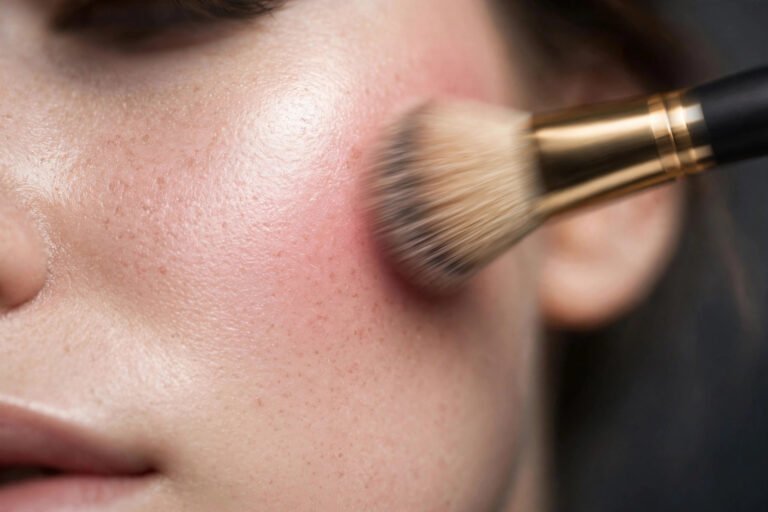
Powder blush wins for beginners, and it’s not close. The technique is intuitive: swirl a brush, tap off excess, sweep onto cheeks. Mistakes are easy to fix — too much color buffs away with a clean brush, and uneven application blends out with a few extra strokes. The dry formula gives you time; nothing sets or dries down, so you can take your time blending.
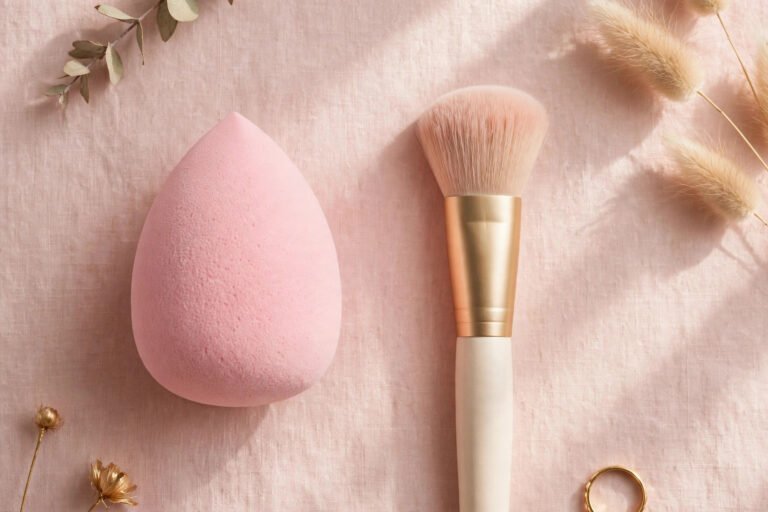
Cream blush has a learning curve. The product is more pigmented per dab, so over-application is easy. It needs to be blended promptly, especially liquid-cream hybrids that set quickly. Fingers, stippling brushes, and damp sponges each give different results, and beginners often struggle with patchiness where the cream grabs onto dry areas or disturbs foundation underneath. None of this is insurmountable — most people get comfortable within a week of daily use — but the first few applications can be frustrating.
The beginner path: start with powder to learn placement and blending without pressure (our [beginner’s blush guide → blush-guide-for-beginners] walks through the technique step by step). Once placement feels automatic, add a cream blush to your routine — you’ll already know where the color goes, so you only have to learn the new texture.
Shade Range, Price, and Other Practical Differences
Shade range: Powder blush wins on sheer variety — every brand makes powder blush in dozens of shades. Cream blush shade ranges are narrower, though they’re expanding every year as the dewy-skin trend continues. If you have a very specific shade in mind (a particular berry, a true terracotta), you’re more likely to find it in powder.
Price: Comparable at every tier. Drugstore powder and cream blushes both start around the same price points, and luxury versions of each cost similarly. Neither formula is inherently more expensive. For a sense of what popular formulas in each category offer, our [Rare Beauty vs Milani blush comparison → rare-beauty-soft-pinch-vs-milani-baked-blush] looks at a beloved liquid-cream formula against a classic baked powder.
Hygiene and shelf life: Powder blush lasts longer — typically 2+ years — because the dry formula doesn’t support bacterial growth the way moist formulas do. Cream blush lasts about 12 months after opening. Powder pans can also be sanitized with a quick spritz of rubbing alcohol; cream products can’t.
Portability: Stick and compact cream blushes are excellent for on-the-go touch-ups — no brush required, just fingers. Powder blush needs a brush, which makes midday touch-ups less convenient (though many compacts include a small brush).
Multi-use: Cream blush doubles as lip color beautifully — dabbed on lips, it gives a natural stain. Powder blush can work as eyeshadow in a pinch. Cream wins for versatility.
Can You Use Both? The Layering Technique
You don’t have to choose — and makeup artists rarely do. Layering cream under powder combines the best of both: the luminosity of cream with the staying power of powder.
How to layer:
1. Apply cream blush first, blended sheer — use about half the intensity you’d want in the final result.
2. Let it set for 30–60 seconds.
3. Lightly dust a matching (or slightly deeper) powder blush over the top with a fluffy brush.
4. The powder sets the cream, intensifies the color, and extends wear by hours.
This technique is especially useful for long days, events, humid weather, or oily skin that loves the cream look. The key is using a light hand with each layer — two sheer layers beat one heavy layer every time.
What never works: powder first, then cream on top. The cream grabs onto the powder unevenly, creating a patchy, cakey texture that’s nearly impossible to fix without starting over. Creams always go under powders. Always.
Frequently Asked Questions
Is cream blush or powder blush better for beginners?
Powder blush. It’s more forgiving — easier to control the amount, easier to blend, easier to fix mistakes, and it doesn’t disturb foundation underneath. Learn placement and blending with powder first, then experiment with cream once the technique feels natural.
Can I apply cream blush over powder foundation?
It’s risky. Cream over powder foundation can look patchy because the cream grabs onto the dry powder unevenly. If you wear powder foundation and want cream blush, apply the blush first and the foundation around it — or switch to a powder blush for the most seamless result.
Why does my cream blush disappear by midday?
Three likely culprits: oily skin breaking down the emollient base, applying over unset powder products, or simply applying too sheer a layer to begin with. Try layering a matching powder blush on top, setting the surrounding skin lightly, or switching to a longer-wear liquid-cream hybrid formula.
Does powder blush work on mature skin?
It can, with the right formula and technique. Choose finely milled satin or luminous powders over heavy mattes, apply with a light hand, and place color slightly higher on the cheekbones rather than on the apples (where smile lines can catch powder). That said, most mature skin looks fresher in cream formulas — it’s worth trying both and comparing in daylight.
Which formula is better for flash photography?
Powder blush, generally. Dewy cream finishes can reflect flash as shine or greasiness in photos, while powder gives a controlled, velvety finish that photographs consistently. If you’re doing cream blush for an event with photography, set it with a light veil of translucent powder or a matching powder blush on top.
Conclusion
Cream blush vs powder blush isn’t a contest with a winner — it’s a choice between two different effects. Powder gives you control, longevity, and polish; cream gives you luminosity, naturalness, and that coveted lit-from-within glow. Match the formula to your skin type first, your desired finish second, and your skill level third, and you’ll rarely go wrong.
Most blush lovers end up with both in their collection, reaching for powder on busy workdays and cream on weekends — or layering the two when they want it all. Whichever you choose, the fundamentals stay the same: the right [shade for your skin tone → how-to-choose-blush-shade-for-skin-tone], placed correctly for your [face shape → where-to-apply-blush-face-shape], blended until seamless. Nail those three, and the formula becomes the finishing touch, not the deciding factor.
blush guide for beginners
how to choose blush shade for skin tone
where to apply blush by face shape
best cream blush for dry skin
rare beauty soft pinch vs milani baked blush
Love this? Pin it for later!