Best Designer Perfume Dupes Worth Buying in 2026
Every fragrance lover has a mental list: the designer scents they adore and cannot quite justify. Maybe it is the warm, radiant glow of a certain red-bottle icon, or the cozy coffee-vanilla hug of a beloved evening scent. The good news in 2026 is that the dupe market has never been better — affordable brands have spent years refining their clones, and the closest matches now capture their inspirations with impressive fidelity.
But the dupe world is also full of noise. For every genuinely excellent match, there are ten bottles with inflated similarity claims and marketing that outruns the juice inside. This guide cuts through that noise. It focuses on the designer-to-dupe pairings that the fragrance community consistently endorses — the ones where independent reviewers, forums, and longtime collectors broadly agree the match is real — plus a framework for judging any dupe you are considering.
If you are new to the whole concept, start with our complete perfume dupes guide, which explains how dupes are made, where quality differs from originals, and how to test them properly before committing.
Key Takeaways
- The most reliable dupe pairings are the ones the fragrance community endorses repeatedly — look for consensus, not a single glowing review.
- Warm gourmand, vanilla, and amber scents tend to dupe most successfully; complex chypres and green florals are harder to copy well.
- Judge a dupe at three stages — opening, heart, and dry-down — because most dupes score highest on the opening.
- Discovery sets and decants let you compare dupe and original side by side for a few dollars before buying full bottles.
- Longevity is the most common trade-off: expect 4–6 hours from most dupes versus 8+ from designer originals.
- Buy dupes for trends and exploration; reserve full-price originals for your true signature scents.
What Makes a Dupe “Worth Buying”?
Before the pairings, it helps to define the bar. A dupe worth buying is not simply one that smells similar for the first ten minutes. The community’s most-trusted dupes tend to share several qualities.
Recognizable similarity. The dupe should be identifiable as the same scent family and character as the original — not just vaguely in the same neighborhood. The best ones make people who know the original do a double-take.
Decent performance. Similarity means little if the scent vanishes in an hour. The dupes worth buying generally offer at least moderate longevity (4+ hours on skin) and noticeable projection for the first couple of hours.
Pleasant dry-down. Even if the dry-down is simpler than the original’s, it should still smell good on its own — no harsh synthetics, no unpleasant sour or plasticky turn as it fades.
Honest branding. The best dupe houses are transparent: they name their inspiration openly (or the community knows it), disclose concentration, and never pretend to be the original brand. Avoid anything that mimics designer logos or packaging — that is counterfeit territory.
The Beloved Icons and Their Closest Affordable Twins
The pairings below are the ones that come up again and again in fragrance communities, review channels, and collector discussions. They represent broad consensus rather than any single reviewer’s opinion. Scent is personal, so treat these as starting points for your own skin testing — never as gospel.
The radiant amber-woody icon (Baccarat Rouge 540 style)
Few designer scents have spawned as many dupes as Maison Francis Kurkdjian’s Baccarat Rouge 540 — a radiant blend of saffron, amberwood, and fir resin that smells simultaneously airy and rich, sweet and mineral. It is one of the most recognizable luxury scents in the world, and its high price made it the single most-duplicated fragrance of the last decade.
The dupe landscape here is crowded, which is actually good news: competition has driven quality up. The most-discussed affordable matches capture the signature saffron-amberwood glow remarkably well in the opening — that burnt-sugar-meets-mineral radiance is the part dupes nail. Where they typically fall short is the original’s extraordinary projection and its long, shimmering dry-down; most affordable versions wear closer to the skin and fade sooner.
When evaluating Baccarat Rouge–style dupes, look for ones reviewers describe as capturing the “burnt sugar and saffron” character rather than just generic sweetness. The sweet-but-mineral tension is the whole identity of this scent — a dupe that is only sweet has missed the point.
The cozy coffee-vanilla icon (Black Opium style)
Yves Saint Laurent’s Black Opium — coffee, vanilla, and white florals over a warm base — became the defining going-out scent of a generation. Its dupe market is enormous, and this is one of the scent profiles that duplicates most successfully, because coffee and vanilla are relatively straightforward notes to reproduce affordably.
Community consensus holds that the best Black Opium–style dupes get the cozy coffee-vanilla heart very close — the part most people actually smell and love. The differences tend to show in the opening (the original’s sparkling pear-and-pink-pepper lift is harder to replicate cheaply) and in depth (the original’s base has a richness that budget versions simplify). For evening wear and nights out, most wearers find the best dupes deliver the experience that matters.
The joyful floral-gourmand icon (La Vie Est Belle style)
Lancôme’s La Vie Est Belle — iris, praline, and vanilla in a radiant, happy composition — is one of the best-selling women’s fragrances in the world, and its dupe market reflects that. The iris-praline combination is the signature here: powdery, sweet, and luminous all at once.
Dupes of this style generally perform well because the scent’s character comes from the interplay of a few clear notes rather than from rare materials. Reviewers commonly note that the best affordable versions capture the joyful, radiant sweetness that made the original famous. As with most dupes, the dry-down is simpler — the original’s iris develops a powdery elegance over hours that budget versions approximate rather than reproduce.
The fresh-floral icon (Daisy / Light Blue style)
Fresh, easy florals like Marc Jacobs Daisy and Dolce & Gabbana Light Blue are duped constantly, and honestly, this category is where dupes arguably offer the best value. These scents are built on bright, clean notes — citrus, white florals, light musk — that are inexpensive to reproduce. The originals themselves are not known for beast-mode longevity, so the dupe performance gap is small.
If you love fresh daytime scents, this is the category where you can most confidently buy the affordable version. The character of these perfumes lives in the bright opening and clean heart, which is exactly where dupes perform best.
The warm vanilla icon (various gourmand styles)
Warm vanilla-amber gourmands are the friendliest territory in all of dupedom. Vanilla is one of the most affordable notes in perfumery to reproduce convincingly, and the cozy, sweet character of these scents survives the budget translation better than almost any other family. If you are new to dupes and want a safe first purchase, start here — the hit rate is the highest in the business.
Vanilla also happens to be the ultimate layering note. A vanilla dupe worn over an unscented body oil or paired with a complementary scent gains richness and longevity that closes much of the gap with designer originals. Our vanilla perfume layering guide walks through combinations that make affordable scents smell far more expensive than they are.
How to Shop Dupes Without Getting Burned
Knowing which pairings have community consensus is only half the battle. Here is how to buy smart.
Start with a discovery set, not a full bottle
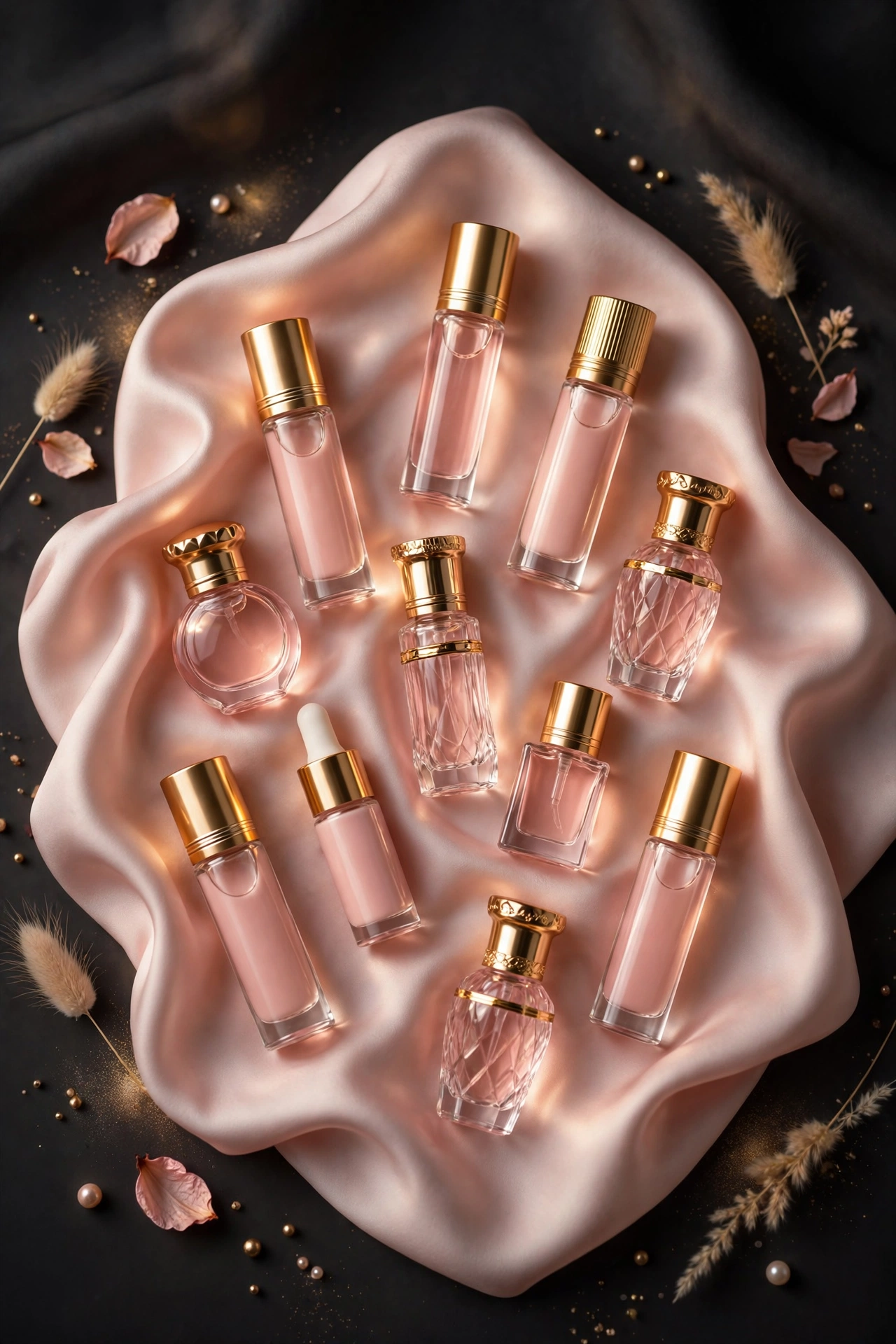
The single best habit in fragrance shopping is sampling before committing. Many reputable dupe houses sell discovery sets — five or six of their bestsellers in small vials — for roughly the cost of a takeout lunch. This lets you test multiple dupes on your skin over several days, which is infinitely more informative than reading similarity percentages online.
Do a side-by-side wear test
If you can get a decant of the designer original (decant sites sell small portions affordably), spray the dupe on one wrist and the original on the other. Check in at 15 minutes, 2 hours, and 5 hours. You will learn more from one afternoon of this than from fifty reviews. Our guide to choosing your first perfume covers testing technique in detail.
Read reviews for the right things
Ignore star ratings and look for specifics. Useful review language describes what the dupe captures (“the saffron opening is spot-on”) and where it diverges (“the dry-down goes powdery where the original stays ambery”). Be wary of reviews that declare a dupe “100% identical” — no dupe is, and reviewers who claim otherwise are either inexperienced or selling something.
Check the concentration
Many disappointing dupe experiences come down to comparing a dupe eau de toilette against a designer eau de parfum. Less fragrance oil means less longevity and projection, full stop. When a dupe underperforms, check whether you are comparing matching concentrations before concluding the dupe is bad.
The 2026 Dupe Market: What’s Changed
The dupe world does not stand still, and a few trends are worth knowing as you shop this year.
Quality keeps rising. Increased competition among dupe houses has pushed formulation quality up across the board. The gap between the best dupes and designer originals is narrower than it was five years ago — particularly in the opening and heart of a scent.
Transparency is improving. The better dupe brands now disclose concentrations, publish full note lists, and sell discovery sets as standard practice. Brands that hide basic information are increasingly the exception, and that is a useful quality signal.
Reformulations happen. Both designer originals and dupes get reformulated — ingredients get restricted, suppliers change. A legendary dupe match from two years ago may not describe the current bottle. When relying on older reviews, look for recent confirmations.
The dupe conversation has gone mainstream. What was once a niche internet subculture is now regular beauty media coverage. That is good for selection and competition, but it also means more marketing hype to filter. Community consensus — the same pairing recommended independently by many experienced noses — remains the most reliable signal.
Building a Smart Dupe Collection
Once you have tested a few dupes successfully, it is tempting to buy everything. A more strategic approach serves you better.
Cover your scent wardrobe, not your curiosity. Think in terms of occasions: a fresh daytime scent, a cozy evening scent, something for special occasions, something for warm weather. Four or five well-chosen dupes that cover your actual life beat twenty bottles that seemed like good deals.
Keep one slot for exploration. Fragrance is supposed to be fun. Alongside your reliable workhorses, keep one bottle in rotation that is purely experimental — a dupe of something outside your comfort zone. Some of the best signature scents are discovered by accident.
Revisit the originals for your favorites. If a dupe becomes something you reach for constantly — your de facto signature — consider whether the original is worth saving for. You have already done the hard work of confirming you love the scent profile; the original may reward that loyalty with the depth and longevity the dupe simplified.
Frequently Asked Questions
Which designer perfume has the best dupes?
Warm gourmand and vanilla-amber scents tend to have the most successful dupes, because their key notes are affordable to reproduce convincingly. The most-duplicated designer scent of the past decade is the radiant saffron-amberwood style popularized by Baccarat Rouge 540, and competition there has driven quality impressively high.
How close do the best dupes actually get?
The best dupes commonly capture 80–90% of the original’s character in the opening and heart, with the biggest differences appearing in the dry-down and longevity. Whether that gap matters depends on how you wear fragrance — if you reapply during the day, you may never notice it.
Are expensive dupes better than cheap ones?
Not necessarily, but there is a rough correlation. Ultra-cheap dupes often cut concentration and ingredient quality aggressively, while mid-priced dupe houses (still far below designer prices) tend to invest more in the formula. The sweet spot is usually a reputable dupe house’s core line rather than the absolute cheapest option.
Can I wear a dupe to a fancy event?
Absolutely. No one at the event can see your bottle, and a good dupe smells like itself — which is to say, like the scent character you chose. Apply it well (moisturized skin, pulse points, a touch on clothes), and it will perform beautifully for the evening.
Do dupes work for men’s fragrances too?
Yes — the dupe market covers masculine, feminine, and unisex scents alike. Fresh, woody, and amber-based masculine profiles dupe particularly well. The same rules apply: sample first, test on skin, and judge at multiple time points.
Where should I buy dupes to avoid fakes?
Buy directly from the dupe brand’s own website or from established retailers with clear return policies. Avoid marketplace sellers with no reviews, and never buy anything that copies a designer’s logo or bottle design — that is a counterfeit, not a dupe, and the contents are unregulated.
The Bottom Line: Consensus Is Your Compass
The dupe market rewards shoppers who follow consensus rather than hype. The pairings in this guide earned their reputations through years of independent noses reaching the same conclusions — that is the closest thing to a guarantee this industry offers. Sample before you commit, test on your own skin, and judge every dupe at the opening, the heart, and the dry-down.
For the full education on how dupes are made and where the real quality differences live, read the complete perfume dupes guide. And if this has sparked a deeper curiosity about fragrance beyond the designer icons, learning to discover niche fragrance is your next rabbit hole — it is where the most interesting smelling begins.
Love this? Pin it for later!