Jade Roller vs Gua Sha: Which Is Better for Your Skin? Honest Comparison
If you are shopping for your first facial tool, the jade roller vs gua sha debate is probably where you landed. Both promise de-puffing, glow, and a more sculpted look. Both are affordable. And they look like they do roughly the same thing — so which one should you actually buy?
The honest answer: they overlap, but they are not interchangeable. A jade roller is gentler, quicker, and easier for absolute beginners. A gua sha tool offers more pressure control, better sculpting along the jawline, and deeper tension release. Most people who try both end up preferring one — and this guide will help you figure out which one is yours before you spend a cent.
We will compare them head-to-head on pressure, sculpting ability, de-puffing, ease of use, and versatility, then give a clear recommendation for which to buy first.
Key Takeaways
- Jade rollers are gentler, faster, and more beginner-friendly; gua sha tools offer more pressure control and better sculpting.
- For de-puffing, both work — gua sha has a slight edge because you control the pressure and direction precisely.
- For jawline sculpting and tension release, gua sha wins clearly thanks to its edges and shape.
- For a quick cooling morning refresh, the jade roller wins on speed and simplicity.
- If buying only one tool, most beginners get more from a gua sha tool — but the roller is the safer pick for very sensitive skin.
- You do not need both; one good tool used consistently beats two gathering dust.
What Each Tool Actually Is
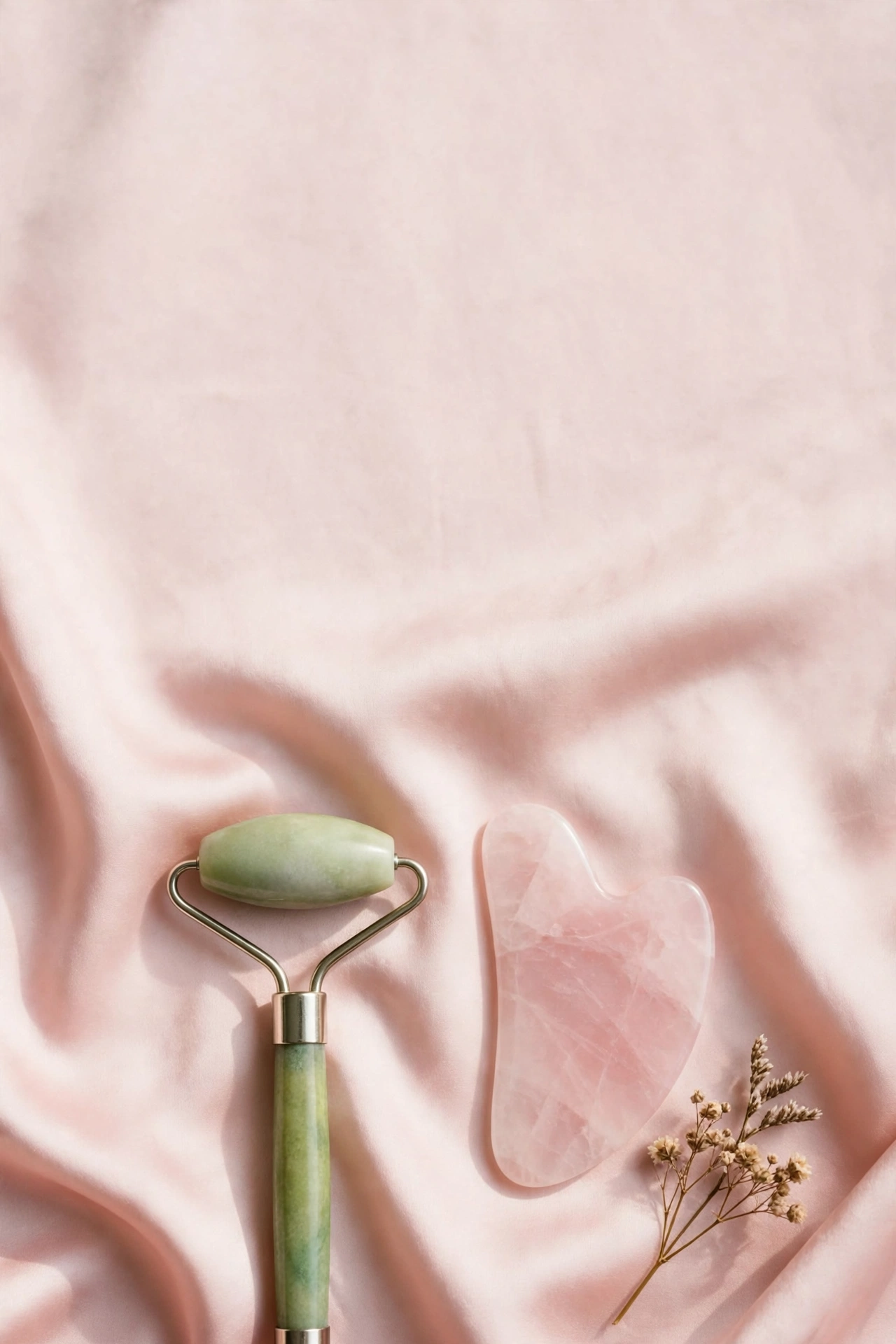
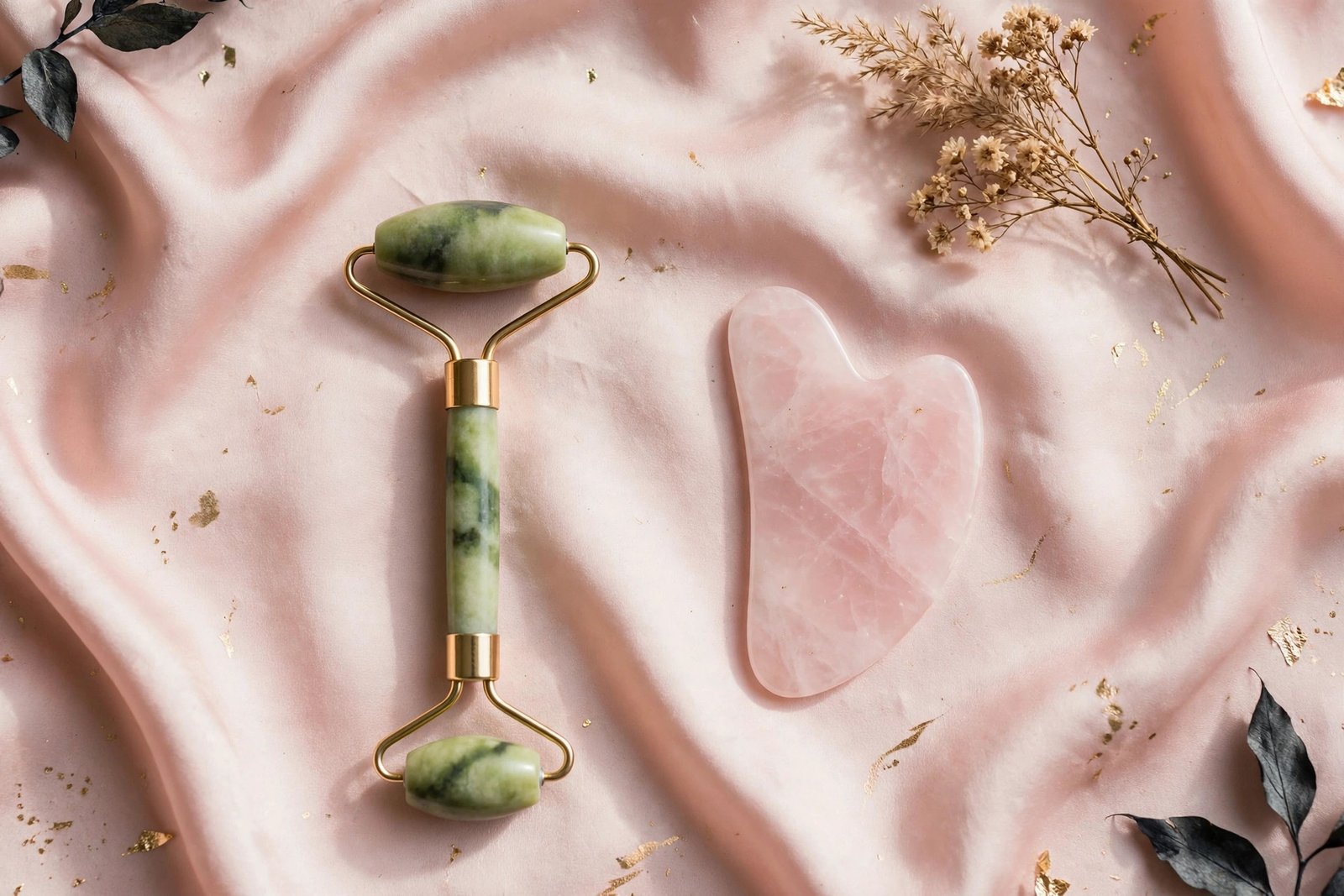
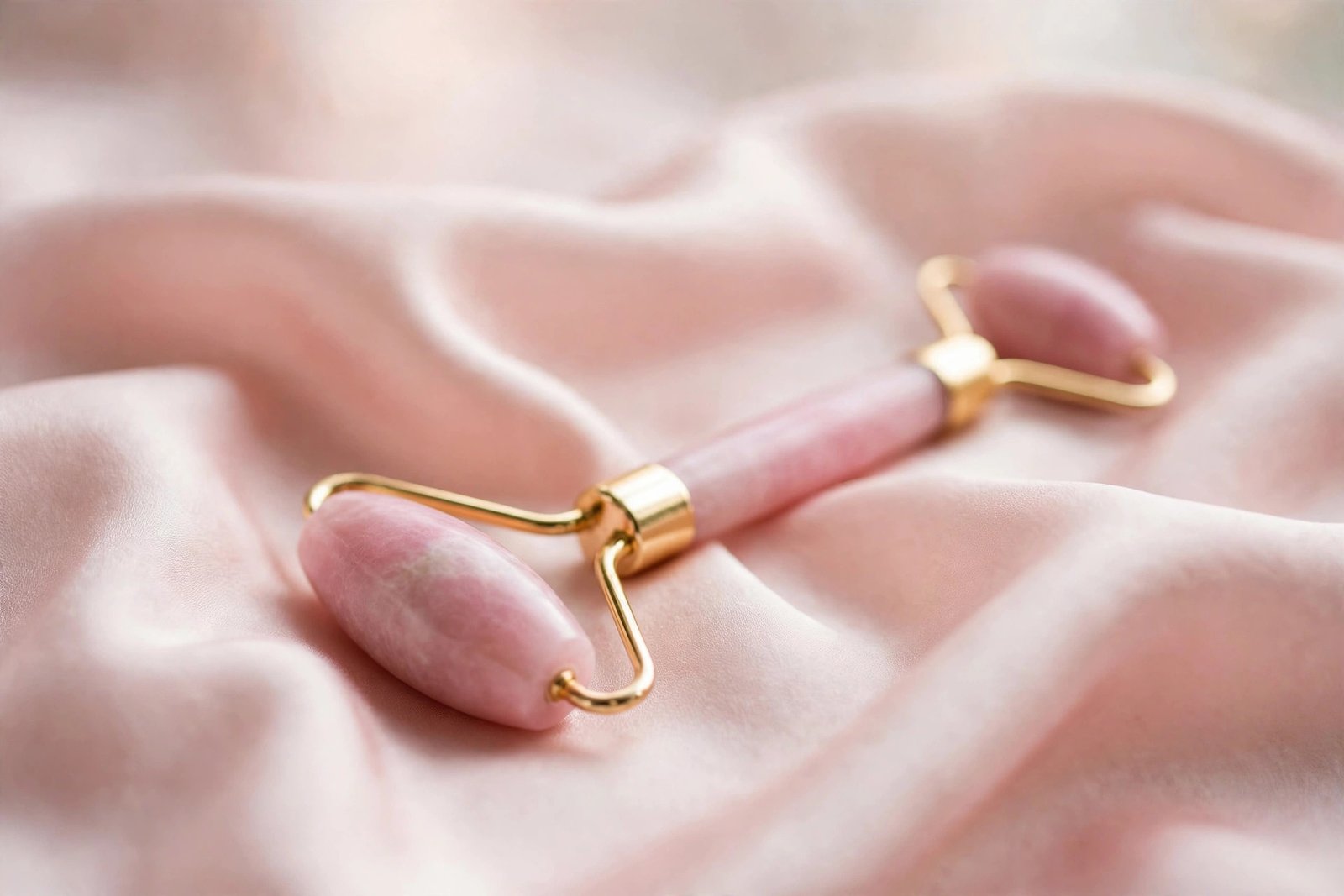
The jade roller is a small handheld tool with a smooth stone cylinder (traditionally jade, now often rose quartz, amethyst, or stainless steel) that rolls across the skin. Most have two ends: a large roller for cheeks, forehead, and neck, and a small roller for the under-eye area. You roll it back and forth or in outward strokes over oiled or moisturized skin.
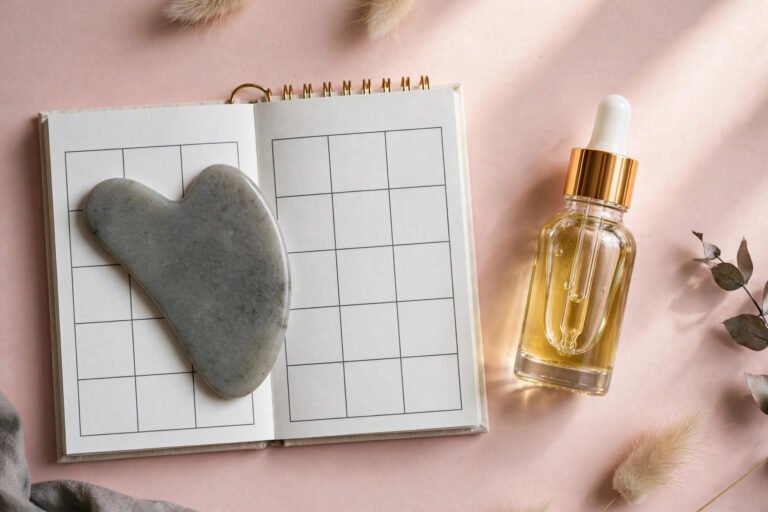
The gua sha tool is a flat, smooth-edged piece of stone or stainless steel — usually a wing or heart shape — that you sweep across the skin in slow, directional strokes. Unlike the roller, it does not move on its own; you control every millimeter of pressure, angle, and direction. Our full [gua sha guide for beginners → gua-sha-guide-for-beginners] covers the technique in detail.
Both tools need the same prep: clean skin and a facial oil or serum for slip. Neither should ever be used on dry skin.
Head-to-Head Comparison
Pressure Control: Gua Sha Wins
This is the biggest functional difference. A roller’s pressure is fixed by the tool’s design — you get gentle, even pressure and not much more. That is a feature for beginners (hard to overdo) and a limitation for everyone else.
Gua sha gives you complete control: feather-light under the eyes, medium-firm along the jawline. If you want to work out real tension in your masseters, the roller simply cannot deliver the focused pressure a gua sha edge can. Winner: gua sha.
Sculpting and Definition: Gua Sha Wins
“Sculpting” here means the temporary defined look from moving fluid and releasing tension — not permanent reshaping (neither tool does that). Gua sha’s edges are shaped for contours: the notch hugs the jawline, the wing sweeps the cheekbone. A roller is a cylinder; it glides over contours rather than defining them.
If a sharper-looking jawline and cheekbones are your goal, gua sha is the clearly better tool. Winner: gua sha.
De-Puffing: Close, Slight Edge to Gua Sha
Both tools move fluid and both reduce morning puffiness. The roller is pleasantly effective — cool stone rolled outward over the cheeks genuinely helps. But gua sha’s directional strokes and the crucial neck-drainage step give it a slight edge for stubborn puffiness, especially around the jaw and under the chin.
That said, the roller wins on one de-puffing front: the small end fits the under-eye area beautifully and feels wonderful cold from the fridge. For eye puffiness specifically, it is arguably the better tool. Overall winner: gua sha, by a nose — roller for under-eyes.
Ease of Use: Jade Roller Wins
The roller is nearly foolproof: roll it outward, done. There is very little technique to learn and almost no way to hurt yourself with it. Gua sha requires learning stroke direction, pressure levels, and a multi-step routine — not difficult, but a real learning curve.
If you want something you can use correctly on day one with zero research, the roller is it. Winner: jade roller.
Tension Relief: Gua Sha Wins
Rolling over a clenched jaw feels nice; slowly working a gua sha edge along it with deliberate pressure actually releases it. For temples, brow, and masseter tension, gua sha functions as a real massage tool while the roller is more of a pleasant glide. Winner: gua sha.
Speed: Jade Roller Wins
A full roller session takes 2–3 minutes. A proper gua sha routine takes 5–10. On rushed mornings, the roller is the tool you will actually reach for. Winner: jade roller.
Versatility: Gua Sha Wins
Gua sha tools come in shapes for every facial zone and can also be used on the neck, shoulders, and scalp. The roller does one motion everywhere. Winner: gua sha.
Sensitive Skin Friendliness: Jade Roller Wins
The roller’s fixed gentle pressure makes it the safer choice for reactive, rosacea-prone, or very sensitive skin. Gua sha can absolutely work for sensitive skin with light pressure — see the cautions in our [gua sha benefits guide → gua-sha-benefits-for-skin] — but the roller removes the main risk (pressing too hard) by design. Winner: jade roller.
The Scorecard
| Category | Jade Roller | Gua Sha |
|---|---|---|
| Pressure control | Gentle, fixed | Full control — wins |
| Sculpting/definition | Mild | Contoured edges — wins |
| De-puffing | Very good | Slight edge — wins |
| Under-eye puffiness | Wins (small roller) | Good |
| Ease of use | Wins (foolproof) | Learning curve |
| Tension relief | Pleasant | Deep — wins |
| Speed | Wins (2–3 min) | 5–10 min |
| Sensitive skin | Wins (safer) | Fine with care |
Gua sha takes more categories, but the roller wins the categories that matter most to true beginners: ease, speed, and safety.
Which Should You Buy First?
Buy the gua sha tool first if: you want sculpting and tension relief, you are willing to learn a short routine, puffiness is a real concern, and your skin is normal to resilient. It is the more capable tool and the better long-term investment.
Buy the jade roller first if: you are an absolute beginner who wants zero learning curve, your skin is sensitive or reactive, you mainly want a quick cooling morning refresh, or you know you will not stick with a 10-minute routine.
Buy both if: you genuinely enjoy facial massage as a ritual — roller for rushed mornings, gua sha for slow evenings. But be honest with yourself: one tool used three times a week beats two tools in a drawer.
Whichever you choose, the technique matters more than the tool. A gua sha used wrong is worse than a roller used right.
What to Look For When Buying
For either tool, the same quality rules apply:
- Smoothness first. Run a finger over every edge and surface. No rough seams, chips, or sharp spots — these scratch skin.
- Stone gua sha and rollers (rose quartz, jade, amethyst): choose based on feel and price, not healing claims. No stone type has proven skincare powers.
- Stainless steel versions of both tools stay cool longer, will not break if dropped, and sanitize easily — the practical choice if durability matters to you.
- Dual-ended rollers (large + small end) cover the whole face; single large rollers cannot do under-eyes well.
- For gua sha, the classic wing/heart shape is the most versatile first tool.
Avoid suspiciously cheap tools with visible seams or dye that rubs off — quality control matters more than stone type.
Can You Use Them Together?
Yes, and some people love the combination: a quick cold-roller pass in the morning for de-puffing, a slower gua sha session in the evening for tension. If you own both, that split plays to each tool’s strengths.
Do not use them back-to-back in the same session thinking it doubles the benefit — it does not. One good session with one tool is the goal; the second tool is for a different time of day or a different mood.
Frequently Asked Questions
Is a jade roller or gua sha better for beginners?
The jade roller is easier for absolute beginners — no technique to learn. But a gua sha tool is more versatile once you learn the basics, which takes one guided session. If you are willing to follow a routine, start with gua sha.
Can a jade roller slim your face?
No — and neither can gua sha. Both temporarily reduce puffiness, which can make the face look slimmer for hours. Neither changes bone structure or removes fat.
Do I need to refrigerate my jade roller?
It is not required, but a cool tool feels better and may help slightly more with puffiness. Ten minutes in the fridge (not the freezer) is enough. Never freeze stone tools — extreme cold can damage skin and crack stone.
How often should I use each tool?
The same guidance applies to both: 3–4 times per week is ideal for most people, with rest days. Our guide on [how often to use gua sha → how-often-should-you-use-gua-sha] covers frequency, session length, and overuse signs in detail.
Does the stone type matter — jade vs. rose quartz?
For skincare results, no. Choose based on smoothness, feel, and price. Marketing claims about specific stones’ energies or healing properties are not supported by evidence.
Can I use a jade roller over serum or just oil?
Either works as long as there is slip. A hydrating serum, facial oil, or moisturizer all provide enough glide. Avoid strong actives right before rolling, since massage can increase absorption and irritation.
The jade roller vs gua sha question has no universal winner — only the right tool for your skin, your patience, and your routine. Want capability and sculpting? Learn gua sha with our [beginner’s guide → gua-sha-guide-for-beginners]. Want simple and soothing? The roller is a fine choice. Either way, understand what these tools can realistically do in our honest breakdown of [gua sha benefits for skin → gua-sha-benefits-for-skin] — and keep expectations where they belong: pleasantly modest.
gua sha guide for beginners
gua sha benefits for skin
how often to use gua sha
Love this? Pin it for later!